How Blockchain Is Changing the Stock Ownership System?
2026-09-03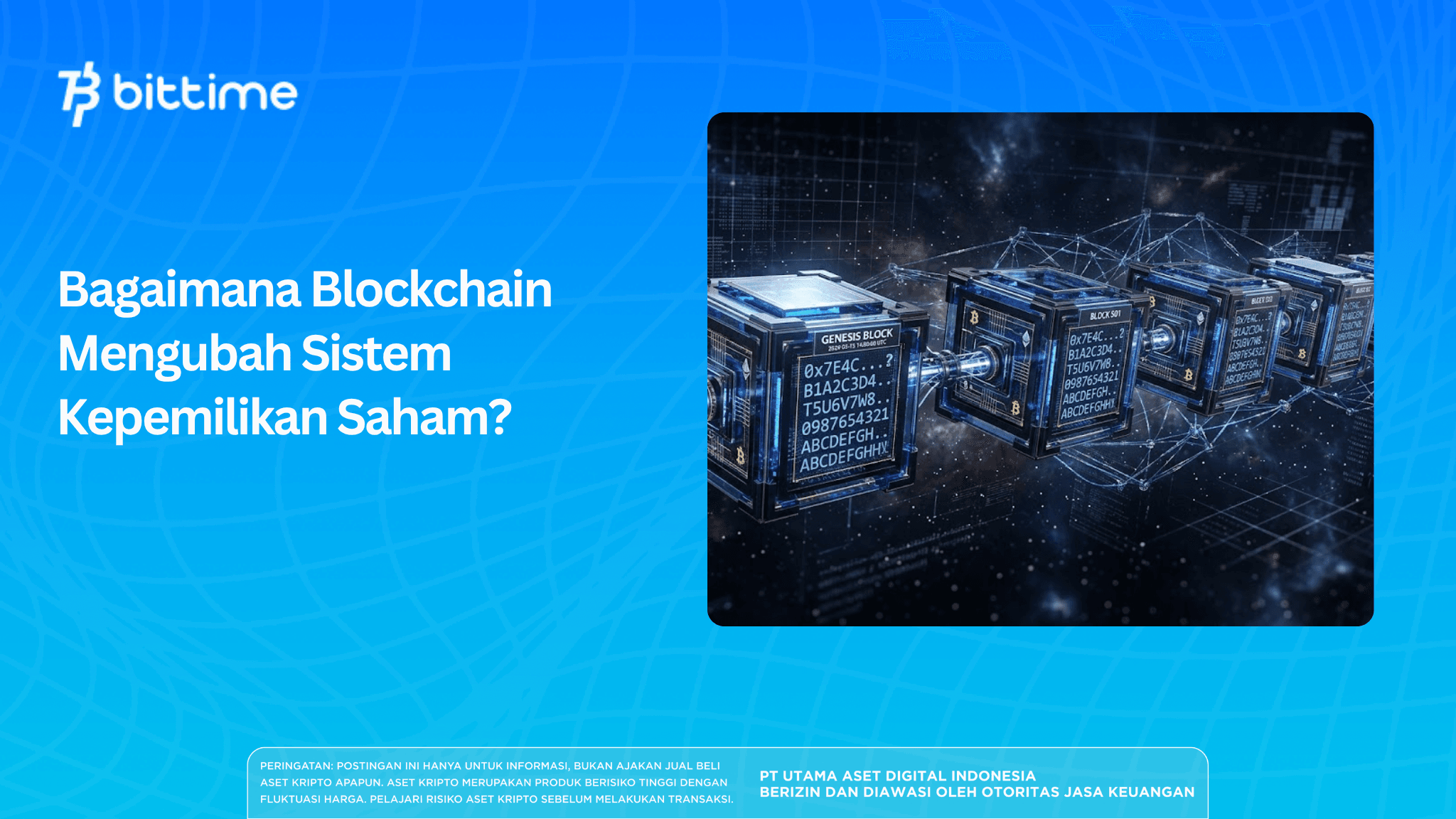
The US Securities and Exchange Commission (SEC) officially filed a proposal to overhaul transfer agent rules on 1 September 2026, a move that paves the way for blockchain to become a valid record of stock ownership.
This proposal is the first major revision since transfer agent regulations were adopted in the late 1970s and early 1980s, and marks a significant milestone for the direction of stock tokenization in global capital markets.
For investors who have long considered blockchain as merely an add‑on to the old financial system, this policy is tangible proof that the technology is beginning to be recognised as core infrastructure, no longer an experiment on the industry's fringes.
This change matters because for decades, who "legally" owns a share has always been determined by the transfer agent's records based on legacy systems. Now, that line is beginning to shift — and this shift has the potential to change how millions of investors worldwide, including those transacting through crypto platforms, view digital stock assets.
Key Takeaways
- SEC files the first major revision of transfer agent rules since the 1970s–1980s, opening the door for blockchain to become an official record of stock ownership.
- Digital wallet addresses cannot yet replace full names and physical addresses as shareholder identity requirements — the rules are still in a 60‑day public comment period.
- The tokenised asset (RWA) market is growing rapidly globally, and OJK is preparing a regulatory roadmap for asset tokenisation in Indonesia for the 2026–2031 period.
Stock Tokenization: How It Works and How It Differs from Traditional Stock Investing
Stock tokenization, simply put, is the process of converting ownership of public company shares into digital tokens recorded on a blockchain. Each token typically represents one share or a fraction of it, and its value moves in line with the underlying stock price.
There are two main models currently used in the industry. The first is the asset‑backed token model, where each token in circulation is fully backed by real shares held with a custodian — for example, xStocks from Backed Finance, which has already listed over 60 US stock and ETF tokens on the Solana network.
The second is the synthetic model, which mirrors stock prices via smart contracts without actually holding the underlying shares.
The synthetic model is precisely the one with a dark history: Mirror Protocol on the Terra blockchain collapsed along with the UST stablecoin in 2022, while Synthetix eventually halted similar products due to regulatory pressure, according to research from Yellow.com.
Read Also: The 10 Stablecoins with the Largest Volume in the World
It is important to note that token shareholders generally do not yet enjoy the full rights of traditional shareholders. Voting rights in shareholder meetings and cash dividend payments are usually not applicable — instead, some issuers credit dividends in the form of additional tokens.
So, although token prices "track" the underlying stock, the legal status of ownership remains a grey area — and it is precisely at this point that the new SEC proposal becomes relevant.
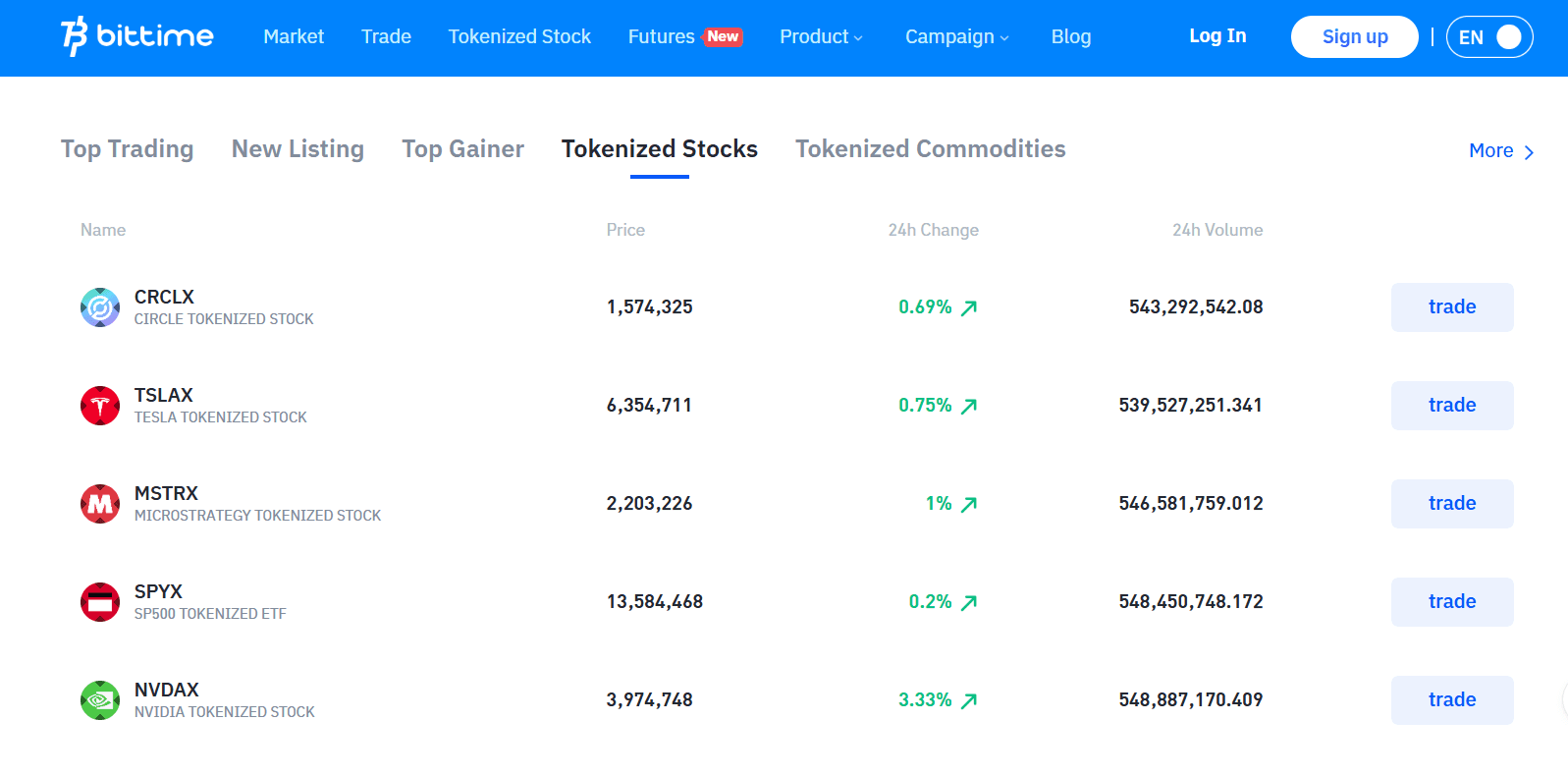
If you are interested in experiencing first‑hand what it's like to have exposure to global stocks through an OJK‑regulated crypto platform, Bittime already offers stock tokenization products from Ondo Finance such as NFLXon and SBUXon. Start registering a Bittime account now to start exploring these digital stock assets.
SEC Overhauls 50‑Year‑Old Rules: Blockchain Can Now Be Valid Proof of Ownership
The proposal filed by the SEC on 1 September 2026 explicitly allows blockchain or other distributed‑ledger technology to serve as the master securityholder file — the official document that determines who is the legal owner of a share.
According to CryptoSlate, this brings tokenized shares deeper into the heart of the system that determines legal ownership status, not merely as a parallel record or purely digital representation.
That said, the SEC does not mandate the use of blockchain. Transfer agents remain free to choose their record‑keeping technology, whether conventional database or distributed ledger, as long as the system remains secure, up‑to‑date, and accessible.
One thing remains unchanged: a single registered transfer agent still holds exclusive control over the official shareholder file and remains fully responsible for its accuracy and security.
Blockchain illustration. Source: Generated Image
Read Also: What Is Regulation Crypto Assets? SEC Rules for Token Fundraising
SEC Chair Paul Atkins said the proposal reflects the growing use of electronic communications and blockchain technology in securities offerings and share transfers, according to CryptoSlate.
Securitize, a registered transfer agent company that has already been using blockchain infrastructure and managing over $4 billion in assets, welcomed this as the regulatory direction they have been urging the SEC to adopt.
Interestingly, these rules do not yet make crypto‑wallet‑based share ownership the sole standard. The SEC still requires the full name and physical mailing address of the shareholder to be included in the official file — digital wallet addresses may become part of the identification data, but cannot yet replace those conventional identity requirements.
Commissioner Hester Peirce has even raised the option of using email or wallet addresses as substitutes for names and physical addresses under certain conditions, though this is still open for public comment for 60 days after the proposal is published in the Federal Register.
On‑Chain Transparency: What Changes for Investors and Capital Markets
One of the main attractions of financial blockchain is its transparent and tamper‑resistant nature. Every transaction and change of ownership is recorded on a distributed ledger that can be traced, unlike the old system that relied on manual reconciliation among many intermediaries.
For tokenized stocks, this transparency also brings practical benefits: settlement of trades, which typically takes two business days (T+2) in conventional markets, can be cut to minutes through on‑chain settlement.
However, transparency does not mean risk‑free. Investors still need to understand that holding tokenized stock means trusting two layers of parties: the platform where the tokens are stored, and the issuer or custodian holding the underlying shares.
As long as the legal status of tokenised share ownership is not fully clear in all jurisdictions, the SEC proposal recognising blockchain as a valid record is a step forward to close that gap — though the process is still long and awaits the outcome of public consultation.
Read Also: RWA Crypto 2026: Is Asset Tokenization Becoming More Popular?
This momentum is also felt in Indonesia. On 2 September 2026, the Financial Services Authority (OJK) revealed that the market value of tokenised real‑world assets (RWA) surged by about 256.7 per cent from the first quarter of 2025 to the first quarter of 2026, approaching US$33.5 billion by mid‑2026.
OJK is currently preparing the 2026–2031 Roadmap for Financial Sector Technology Innovation, Digital Financial Assets, and Crypto Assets (IAKD), which also covers tokenisation regulation — a signal that local regulators are also beginning to seriously consider how this blockchain‑based capital market technology can be safely adopted.
It should be noted that digital stock assets and tokenised products still carry volatility and regulatory risks that differ from conventional shares. Always conduct your own research before deciding to invest.
Conclusion
The SEC's proposal to overhaul transfer agent rules marks a crucial turning point for the future of digital Wall Street: blockchain now has an official path to being recognised as a valid record of stock ownership, though shareholder identity still requires a name and physical address for now.
The combination of on‑chain transparency, global RWA market growth, and OJK's move to prepare a tokenisation roadmap in Indonesia shows that blockchain‑based investment is moving from being just a crypto trend to becoming part of mainstream capital market infrastructure.
For investors, this is the right time to start understanding how tokenized stocks work before their adoption becomes more widespread.
Track US stock tokens: AMZON, AMDON, TSLAX, NFLXON MSFTON and many more — you can start trading on Bittime.
Bittime is a Digital Asset Trading Platform (PAKD) licensed and supervised by the Financial Services Authority — where you can buy Bitcoin in Indonesia and hundreds of other crypto assets starting from Rp10,000. The registration process is fast, secure, and can be started today.
Monitor the USDT to IDR conversion and real-time price movements of your favourite crypto assets. All are available in one crypto investment app that can be downloaded for free on the Play Store.
Ready to start? Register now at Bittime and execute your investment strategy with a platform trusted by millions of users in Indonesia.
FAQ
What is stock tokenization?
Stock tokenization is the process of converting ownership of public company shares into digital tokens recorded on a blockchain. The token's value tracks the price movement of the underlying stock.
Is a tokenized stock legally the same as a real stock?
Not yet fully the same in most jurisdictions, because token holders generally have a contractual claim through the issuer, not the status of a directly registered shareholder. The latest SEC proposal aims to close this legal gap by recognising blockchain as an official record of ownership.
Do token stock holders get voting rights and dividends?
Generally not like traditional stocks — most tokenized stocks do not confer voting rights at shareholder meetings. Dividends are typically credited as additional tokens rather than direct cash payments.
Is a crypto wallet address enough as proof of stock ownership according to the SEC?
Not yet. The SEC proposal still requires the shareholder's full name and physical address, with the wallet address being only supplementary data.
Can tokenized stocks be accessed by investors in Indonesia?
Several OJK‑regulated crypto platforms, including Bittime, already offer tokenized stock products such as those from Ondo Finance. However, investors still need to understand the volatility and regulatory risks before investing.
Disclaimer: The views expressed belong exclusively to the author and do not reflect the views of this platform. This platform and its affiliates disclaim any responsibility for the accuracy or suitability of the information provided. It is for informational purposes only and not intended as financial or investment advice.
.png)