Robinhood Chain Explorer vs Etherscan: What Are the Differences and Advantages?
2026-09-03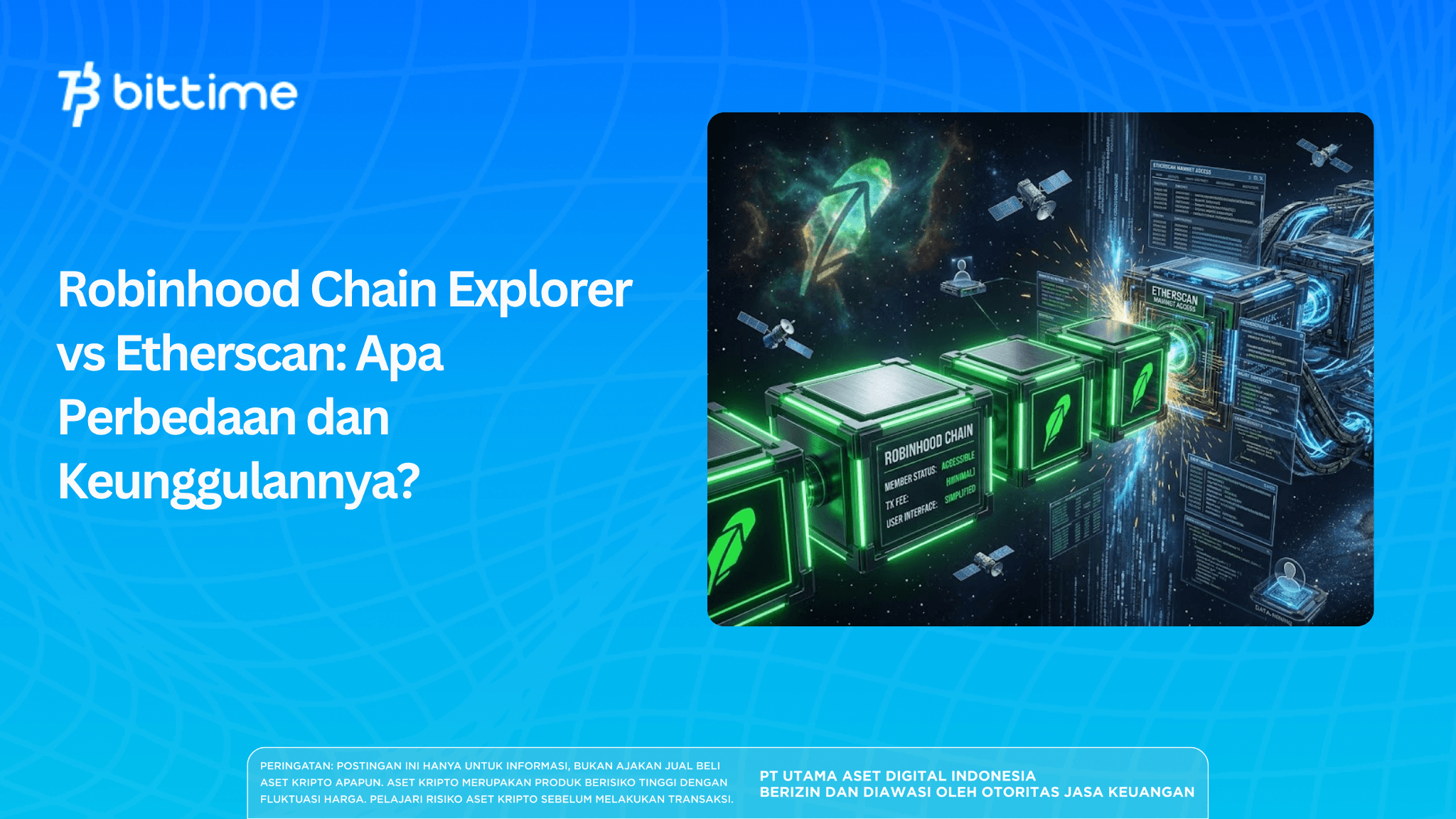
July 2026 marked an important milestone for the Ethereum Layer 2 ecosystem with the launch of Robinhood Chain, a network built using the Arbitrum stack for tokenising stocks and traditional assets.
With the birth of this new network, a practical question arises: which explorer should be used to track transactions, verify smart contracts, or monitor on‑chain activity?
Robinhood Chain Explorer (based on Blockscout) and Etherscan both serve as windows into blockchain transparency, but they serve different ecosystems.
This article thoroughly examines the fundamental differences, the strengths of each platform, and practical guidance on choosing the right explorer for your on‑chain crypto transaction checking needs.
Key Takeaways
- Robinhood Chain Explorer uses Blockscout and only supports Robinhood Chain (an Arbitrum‑based Ethereum Layer 2), while Etherscan focuses on Ethereum mainnet and selected EVM networks.
- Blockscout offers self‑hosted options and enterprise hosting (EaaS), whereas Etherscan is a fully hosted service with paid premium APIs.
- Both explorers provide smart contract verification, input data decoding, and event logs parsing to help developers and non‑technical users understand on‑chain activity.
Understanding Robinhood Chain Explorer and Etherscan
Robinhood Chain Explorer is the official blockchain explorer for Robinhood Chain, the Layer 2 network launched by Robinhood in July 2026. This explorer is built using the Blockscout platform and can be accessed at robinhoodchain.blockscout.com.
As of 3 September 2026, Robinhood Chain recorded impressive statistics:
- Total transactions: 539,104,574
- Total addresses: 17,539,139
- Average block time: 0.1 seconds
- Daily transactions: 12.43 million
- Gas fees: about $0.01 per transaction
The Robinhood Chain mainnet Chain ID is 4663, with the testnet using a separate explorer at explorer.testnet.chain.robinhood.com. It is important to note that only robinhoodchain.blockscout.com is the official explorer listed in Robinhood's developer documentation.
Etherscan, on the other hand, is the pioneer blockchain explorer for Ethereum, having been operational since 2015. As of the same date, Ethereum data shows:
- ETH price: $2,394.08
- Market Cap: $292.11 billion
- Total transactions: 3.715 billion (21.4 TPS)
- Median gas price: 0.069 Gwei (< $0.01)
- Last finalized block: 25,896,130
In 2025, the Etherscan team launched 25 new features, including expanded explorer support for various emerging Layer 1 designs, infrastructure enhancements, and new tools for developers.
Read Also: List of Top Robinhood Chain Tokens to Add to Your Watchlist
Fundamental Differences: Model, Networks, and Hosting
Business Model and Accessibility
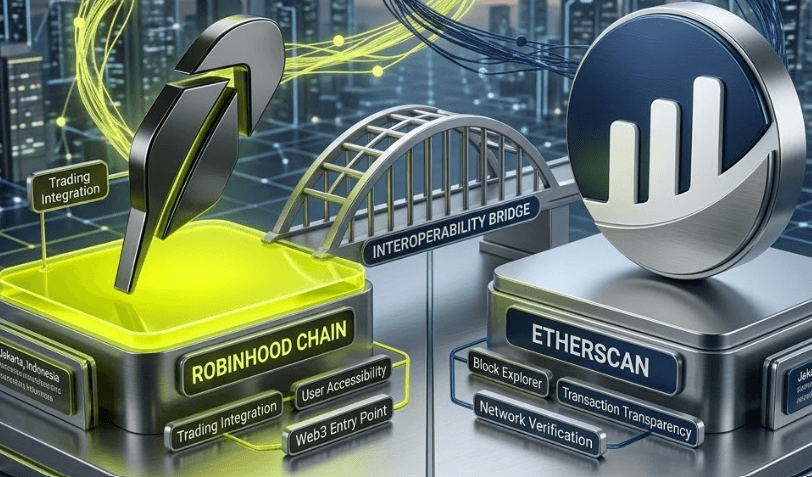
Robinhood Chain Explorer (Blockscout) follows an open‑source model that can be self‑hosted or used through enterprise services. Blockscout supports more than 1000 EVM‑compatible networks, including Layer 1, Layer 2, Layer 3, optimistic rollups, and ZK rollups.
Etherscan operates as a proprietary hosted service — users cannot host their own Etherscan instance, but access a fully managed service run by the Etherscan team. The platform focuses on Ethereum mainnet and selected EVM networks, with multichain support continuously being expanded.
Hosting Options
Blockscout offers two deployment paths:
- Explorer as a Service (EaaS): Enterprise‑grade hosting for production with full technical support
- Autoscout: A self‑service launchpad for instant, self‑managed explorer deployment
Etherscan does not provide self‑hosted options. All access is through infrastructure managed directly by the Etherscan team, with paid premium APIs for enterprise needs.
Read Also: Tokenized Stocks vs Regular Stocks: Definition, Differences, and How to Buy
API Compatibility
Both platforms provide APIs for programmatic access to on‑chain data:
Blockscout:
- REST v1 API (legacy)
- REST v2 API (recommended)
- GraphQL API
- Etherscan‑compatible API to ease migration
Etherscan:
- REST API
- JSON‑RPC
- GraphQL API
- Dedicated endpoints for contract verification and token data
For developers migrating from Etherscan, Blockscout provides dedicated documentation and compatibility endpoints to minimise code changes.
Read Also: 10 Free Bitcoin Mining and Faucet Sites 2026, Which Are Legit?
Key Features and Use Cases
Smart Contract Verification
Both explorers allow developers to publish Solidity/Vyper source code to be verified against deployed bytecode. Once verified, users can:
- Read the contract's source code publicly
- Interact directly with the contract through the explorer interface (read/write contract)
- View event logs and decode transaction input data
Etherscan remains the industry standard for contract verification on Ethereum, while Blockscout offers a similar experience with greater hosting flexibility.
Read Also: 10+ Best AI Coins 2026: List of Artificial Intelligence‑Themed Crypto!
Automatic Input Data Decoding
One of the most useful features for non‑technical users is automatic decoding of transaction input data. If the contract's source code is verified, the explorer can:
- Display the function name that was called
- Show the arguments passed in a human‑readable format
- Convert raw hex data into parameters that humans can understand
This feature is extremely helpful when checking on‑chain crypto transactions to understand what is actually happening behind a transaction hash that looks like a string of random characters.
Event Logs Parsing
Both platforms display smart contract event logs, allowing tracking of activities such as:
- ERC‑20 and ERC‑721 token transfers
- Contract ownership changes
- NFT minting or burning
- Specific function executions within dApps
For on‑chain researchers and institutional investors, event logs are a critical data source for tracking asset flows and large wallet activity.
Multichain Support
Blockscout excels in the sheer number of supported networks — over 1000 EVM chains can be explored through different Blockscout instances. Some examples of popular networks using Blockscout:
- Ink Chain (Kraken Layer 2): explorer.inkonchain.com
- Robinhood Chain: robinhoodchain.blockscout.com
- Hundreds of other chains in the L2 and L3 ecosystem
Etherscan is more selective, focusing on quality over quantity. The networks supported by Etherscan are generally major chains with high activity and mature developer ecosystems.
Start Your Crypto Journey on Bittime
If you are just beginning to explore the blockchain world and want to understand how on‑chain transactions work, a platform like Bittime can be a safe gateway to buy your first digital assets and start learning how to use explorers to track transactions.
How to Use a Blockchain Explorer for Beginners
Basic Steps for Checking Transactions
- Obtain the transaction hash from your wallet or exchange
- Open the appropriate explorer (Robinhood Chain Explorer for Robinhood Chain transactions, Etherscan for Ethereum)
- Enter the transaction hash in the search bar
- Check the details such as status (success/failed), sender/receiver addresses, amount transferred, and gas fees
Verifying a Smart Contract
If you are interacting with a new dApp or token:
- Search for the contract address in the explorer
- Check whether the contract is verified (there is a "Contract" tab with source code)
- Read the source code or use the "Read Contract" feature to understand available functions
- Check the event logs to see the contract's activity history
Case Study: Ink Chain Workflow
The official Ink Chain documentation (another Layer 2 that also uses Blockscout) recommends the following workflow for beginners:
- Add Ink Chain to your wallet
- Transfer a small amount of ETH to Ink
- Confirm the balance on the Blockscout explorer
- Open a verified dApp through the official directory
- Perform a small, understood transaction
- Check the transaction hash on Blockscout to understand what happened
A similar approach can be applied when using Robinhood Chain Explorer for the first time.
Read Also: Top 10 RWA Crypto Asset Tokenisations in the World
Security and Fake Explorer Risks
One important risk when using a blockchain explorer is phishing via fake sites. An article from Weex (August 2026) warns that searching for "Robinhood Chain explorer" can show misleading results — only robinhoodchain.blockscout.com is the official explorer.
Best Practices to Avoid Scams
- Always verify the explorer URL from official project documentation or trusted sources
- Do not click explorer links from untrusted sources (Twitter DMs, suspicious emails, flashy paid ads)
- Check data consistency (total transactions, latest block) with other official sources if in doubt
- Bookmark the official explorer after verifying its authenticity for quick future access
Development Trends 2025‑2026
The blockchain explorer ecosystem continues to evolve with several key trends:
- Multichain Support: Explorers are increasingly supporting many networks in a single interface, making it easier for users who interact with multiple chains.
- Richer APIs: Providers like Blockscout and Etherscan continue to expand API endpoints to support more complex developer needs.
- Integration with Developer Tooling: Explorers are increasingly integrated with IDEs, smart contract frameworks, and deployment platforms to streamline development workflows.
- Focus on Non‑Technical UX: Features like automatic input data decoding and event logs visualisation make explorers more accessible to non‑developer users.
Conclusion
Robinhood Chain Explorer and Etherscan are both vital as windows into blockchain transparency, but they serve different needs. Robinhood Chain Explorer (based on Blockscout) is the right choice for transactions on Robinhood Chain, offering the advantages of hosting flexibility and support for 1000+ EVM networks.
Etherscan remains the industry standard for Ethereum with mature infrastructure and comprehensive features. Understanding these differences helps you choose the right crypto explorer and use on‑chain transaction checking features more effectively.
Check the prices of Bitcoin (BTC), Ethereum (ETH), XRP, Solana (SOL), GRAM, and BNB, and also top memecoins DOGE. You can trade directly on Bittime!
Bittime is a Digital Asset Trading Platform (PAKD) licensed and supervised by the Financial Services Authority — where you can buy Bitcoin in Indonesia and hundreds of other crypto assets starting from Rp10,000. The registration process is fast, secure, and can be started today.
Monitor the USDT to IDR conversion and real-time price movements of your favourite crypto assets. All are available in one crypto investment app that can be downloaded for free on the Play Store.
Ready to start? Register now at Bittime and execute your investment strategy with a platform trusted by millions of users in Indonesia.
FAQ
What is the main difference between Robinhood Chain Explorer and Etherscan?
Robinhood Chain Explorer uses Blockscout and only supports Robinhood Chain (an Arbitrum‑based Layer 2), while Etherscan focuses on Ethereum mainnet and selected EVM networks with a fully hosted model.
Can Blockscout be self‑hosted?
Yes, Blockscout offers self‑hosted options via Autoscout or enterprise hosting through Explorer as a Service (EaaS).
How do I check a transaction on Robinhood Chain?
Open robinhoodchain.blockscout.com, enter the transaction hash or wallet address in the search bar, then check details such as status, amount, and gas fees.
Does Etherscan support networks other than Ethereum?
Etherscan supports a few selected EVM networks, but its primary focus remains on Ethereum mainnet with mature infrastructure quality.
What is input data decoding in a blockchain explorer?
Input data decoding is a feature that converts raw hex data from a transaction into readable function names and arguments, provided the contract source code is verified.
Are there risks with using fake explorers?
Yes, fake explorer sites can be used for phishing — always verify the URL from official project documentation and avoid clicking links from untrusted sources.
Disclaimer: The views expressed belong exclusively to the author and do not reflect the views of this platform. This platform and its affiliates disclaim any responsibility for the accuracy or suitability of the information provided. It is for informational purposes only and not intended as financial or investment advice.
.png)