Popular Tokenized Stocks in 2026: Technology Stocks Become Investor Favorites
2026-07-21
Tokenized stocks are gaining popularity in 2026, allowing investors to gain exposure to American stocks through blockchain networks. Technology stocks, semiconductors, and AI-related companies are among the most popular options.
Key Takeaways
- The market value of tokenized stocks has grown more than fivefold in a year, accompanied by increased on-chain transfer activity.
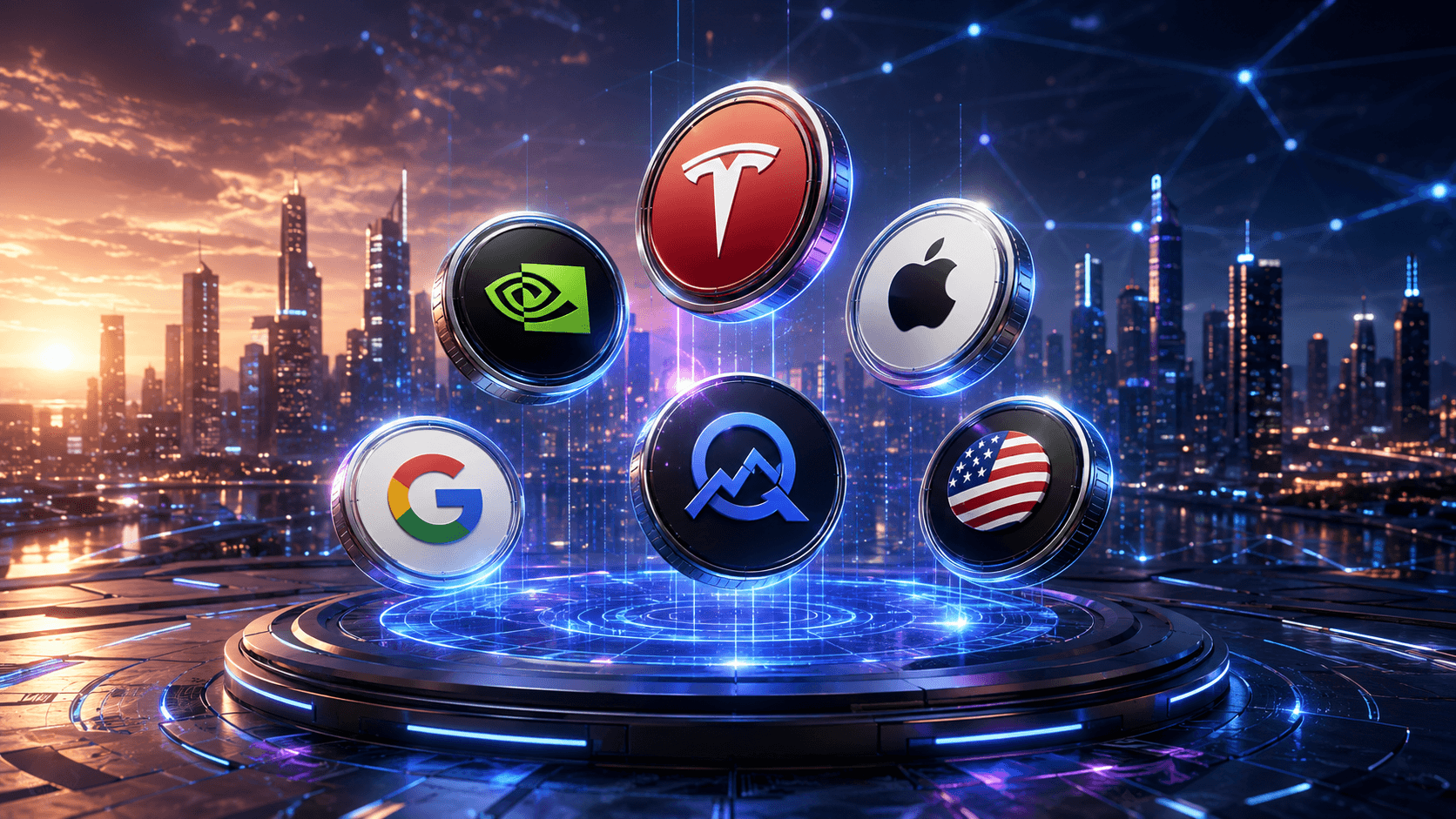
- Products based on Nvidia, Tesla, Alphabet, Apple, Nasdaq 100, and S&P 500 are in high demand due to the AI narrative and the growth of the technology.
- Tokenized shares generally provide economic exposure, but do not necessarily provide the same voting rights, direct ownership, or protections as ordinary shares.
What Is Tokenized Stock?
Tokenized stocks are blockchain tokens designed to represent the economic value of stocks, ETFs, or other capital market instruments. Each product can be issued with a different structure, but generally, the token's price follows the underlying asset.
For example, Nvidia stock tokens attempt to mirror the value of Nvidia shares traded on US stock exchanges. These tokens can then be stored in wallets, transferred via blockchain, or used in supported decentralized finance applications.
Sumber: Generated by AI
The issuer typically holds the underlying shares or assets through a custodian. The issuer then mints tokens based on the value or amount of the assets held as reserves.
The general structure of a blockchain stock token involves:
- Stocks or ETFs as underlying assets.
- Token issuer.
- Custodian who holds assets.
- Smart contract for minting and burning tokens.
- Trading platform.
- Auditor or provider of reserve reports.
- Token redemption mechanism.
Despite using blockchain, tokenized equity remains tied to the traditional financial system. Prices, dividends, stock splits, trading halts, and corporate actions still depend on the company and its underlying stock market.
Read also:What Is GOOGLX? How to Buy Alphabet Tokenized Stock on Bittime
Why Will Tokenized Stocks Be Popular in 2026?
The growth of tokenized stocks doesn't just stem from increases in the underlying stock price. Numerous new products will be released throughout 2025 and 2026, making more capital market assets available on-chain.
The market capitalization of tokenized stocks reached approximately US$1.7 billion at the end of June 2026, up from US$329 million a year earlier. More than half of this capitalization came from products that hadn't been available a year earlier, indicating that growth was also driven by new issuances.
Its monthly transfer activity reached approximately US$9.22 billion in June 2026, up more than 170 times compared to June 2025. This figure includes trading, transfers between wallets, and the use of tokens as assets in DeFi applications.
Some of the reasons tokenized stocks are becoming increasingly popular include:
Access in Small Fractions
Users don't have to buy a whole share. Tokens can be purchased in fractions, making high-priced shares more accessible.
Longer Trading Hours
Some products can be traded outside of US trading hours. However, 24/7 availability depends on the platform and liquidity.
Faster Transaction Completion
Token transfers can be completed via the blockchain without waiting for the conventional capital market transaction settlement process.
Supporting Self-Custody
Some tokens can be withdrawn to a personal wallet. Investors can store and transfer assets without having to rely on a centralized trading account.
Integration with DeFi
Certain tokens can be used in liquidity pools, lending markets, structured products, or as collateral. This feature expands the functionality of stocks beyond simply being bought and sold assets.
Read also:Tokenized Stock Capitalization Hits a Record US$2.3 Billion, Ondo Finance Controls 41% of the Market
Technology Stocks Become Investor Favorites
The growth of tokenized stocks in 2026 is heavily influenced by interest in technology and artificial intelligence. The AI and chip category will grow from less than US$1 million in June 2025 to approximately 15.5% of the total tokenized stock market a year later.
Large-cap technology stocks also increased their market share from 0.6% to 10.6%. Meanwhile, ETFs and index-based products grew from 4.5% to 17.3% during the same period.
This trend shows that investors aren't just looking for tokens directly related to the crypto industry. They also want on-chain exposure to companies generating revenue from chips, cloud computing, software, digital advertising, and electric vehicles.
Read also:7 Reasons You Should Start Investing in Tokenized Stocks
Tokenized Stock Popular 2026
The following list is not a personal investment recommendation. Products were selected based on the popularity of the underlying assets, their availability in the tokenization ecosystem, and their relevance to 2026 market trends.
1. Nvidia Tokenized Stock
Nvidia has become one of the most closely watched assets due to its position in the AI chip industry. Products like NVDAx allows users to gain exposure to Nvidia stock movements through blockchain tokens.
Demand for its tokens is linked to the growth of data centers, GPUs, AI model training, and global computing needs. However, Nvidia's high valuation also makes its products sensitive to earnings reports, changes in technology company capital spending, and chip competition.
2. Tesla Tokenized Stock
Products such as TSLAx offers exposure to Tesla stock. The company attracts investors because of its combination of electric vehicles, energy storage, robotics, AI, and autonomous technology.
Tesla's stock volatility makes its tokenized stock widely traded. However, high fluctuations also increase risks, especially when the token is traded outside of prime stock market hours.
3. Alphabet Tokenized Stock
Tokens such as GOOGLx Following Alphabet's economic exposure, Google's parent company has businesses in advertising, cloud, video, software, and AI development.
Alphabet is considered attractive because its core business already generates substantial cash flow. However, investors should still consider AI development costs, search engine competition, and regulatory pressures.
4. Apple Tokenized Stock
AAPLx provides exposure to Apple's stock movements. Its popularity is supported by the strength of its brand, device ecosystem, digital services, and global customer base.
Apple tends to have lower volatility than some speculative tech stocks. However, device sales growth, AI expansion, supply chain dynamics, and consumer demand still influence its price.
5. Amazon Tokenized Stock
Amazon's stock tokens attract investors looking to track the growth of e-commerce, cloud computing, digital advertising, and AI. Amazon Web Services is a key component of its investment thesis.
Risks include high infrastructure spending, retail margin pressure, and cloud competition.
6. Microsoft Tokenized Stock
Microsoft's tokenized products provide exposure to the company's software, cloud services, and AI ecosystems. The integration of AI into productivity services and Azure makes Microsoft a key part of the 2026 technology narrative.
Investors need to assess whether AI revenue growth can offset the large data center buildout and computing costs.
7. Nasdaq 100 Tokenized ETF
Products such as QQQx following the Nasdaq 100 ETF. This instrument provides exposure to a variety of large technology companies in one token.
QQQx can be an option for users who don't want to rely on a single stock. However, this index remains heavily concentrated in technology companies, so sector corrections could depress its value.
8. S&P 500 Tokenized ETF
SPYx follows the exposure of the S&P 500 ETF. This product has broader diversification because it includes companies from the technology, financial, healthcare, industrial, energy, and consumer sectors.
These tokens can be used to gain exposure to the US stock market in general. The risks remain dependent on economic conditions, interest rates, corporate earnings, and global market sentiment.
9. Coinbase Tokenized Stock
COINx represents exposure to Coinbase stock. This product is widely watched by crypto investors because the company's performance is linked to digital asset trading volume, crypto prices, stablecoins, and regulatory developments.
COINx has dual risks because it is influenced by both the stock market and the crypto industry cycle.
10. Strategy Tokenized Stock
Strategy's stock tokens, formerly known as MicroStrategy, provide exposure to companies that hold large Bitcoin reserves.
Its movements are often more volatile than Bitcoin due to the impact of BTC's price, financing structure, share issuance, debt, and the company's business. These products are more suitable for investors who understand the correlation between stocks and crypto assets.
Read also:SK Hynix vs. Micron: Which AI Memory Stock Is More Attractive?
What is xStocks?
xStocks are a series of tokenized stocks and ETFs that use the "x" suffix in their tickers. Examples include TSLAx, NVDAx, AAPLx, GOOGLx, QQQx, and SPYx.
Each xStock is designed with 1:1 underlying asset backing. The underlying stock or ETF is held by a custodian, while the tokens are issued through a separate legal structure. The product is available natively on several networks, including Solana, Ethereum, Arbitrum, and other compatible networks.
The xStocks ecosystem reached 100 products in March 2026 after launching with 60 stocks and ETFs. Total trading volume since June 2025 has surpassed US$25 billion, and its developers are targeting over 500 products by the end of 2026.
Some of the characteristics of xStocks include:
- 1:1 underlying asset support.
- Can be stored in a personal wallet.
- Supports fractional ownership.
- Can be moved between compatible applications.
- Dividends are reflected through an increase in the token balance.
- Stock splits and corporate actions are processed through on-chain mechanisms.
- Issuance and redemption follow specified market hours.
Trading through centralized platforms is generally available 24/7, five days a week. After being withdrawn to a personal wallet, tokens can be traded on-chain on weekends if there's liquidity in the pool.
Read also:SK Hynix Prepares for US$29 Billion Listing, Focuses on Attracting AI Investors
Are Tokenized Stocks the Same as Real Stocks?
Not always. Tokenized stocks can provide similar economic exposure, but the holder's legal rights depend on the issuance structure.
With common stock, investors are registered as owners or beneficial owners through a broker and custodian system. Their rights may include:
- Voting rights.
- Dividend.
- Shareholder information.
- Legal protection of capital markets.
- Participation in corporate actions.
Stock token holders generally don't have direct voting rights. xStocks provides price exposure, but not shareholder rights like voting. Dividends are processed through token balance adjustments.
Ondo products also do not provide voting rights or statutory information rights. Holders gain economic exposure and can redeem tokens based on the value of the underlying asset.
Therefore, the term “tokenized shares” should not be directly interpreted as an identical copy of the original shares.
Read also: US Stock Tokenization: Hold Your Favorite US Stocks and Get Rewards Every Day
Advantages of Tokenized Stock Investment
Global Access
Tokens allow investors in eligible jurisdictions to gain exposure to American stocks without using conventional brokerage mechanisms.
Fractional Ownership
Users can purchase based on nominal value, not the number of whole shares.
Wallet Flexibility
Certain products can be moved from the trading platform to a personal wallet.
DeFi Integration
Tokenized equity can be used as collateral, added to liquidity pools, or used in on-chain financial products.
Longer Trading Hours
Investors can respond to market developments outside of Wall Street trading hours, as long as the platform and liquidity are available.
Read also:Tokenized Stock Dividends: Here's How They Work
Tokenized Stock Risks to Consider
Issuer Risk
Investors depend on the issuer's ability to maintain reserves, meet redemption obligations, and implement the legal structure as per the offering documents.
Custodial Risk
The underlying shares are held by a custodian. Operational or legal issues, account freezes, or bankruptcy may impact the tokens.
No Shareholder Rights
Most products provide only economic exposure. Holders do not necessarily receive voting rights, shareholder communications, or direct claim rights to the public company.
Liquidity Risk
Tokens can have less liquidity than real stocks. Large sell orders can potentially result in high slippage.
Price differences
When stock exchanges close, token prices can fluctuate based on on-chain demand. These prices may differ from the underlying stock's closing price and adjust again when the market reopens.
Smart Contract Risks
Errors in code, bridges, wallets, or DeFi applications can lead to losses even if the underlying assets remain safe.
Regulatory Changes
Tokenized stocks are securities-related products. Regulatory changes may restrict their trading, transfer, redemption, or availability in certain countries.
Stablecoin Risks
Purchases and redemptions often involve stablecoins. Investors also face risks associated with stablecoins, the network, and the conversion process.
Tax Risk
Profits, reinvested dividends, cross-chain transfers, and token redemptions may give rise to different tax liabilities in each jurisdiction.
Read also:Buy US Stocks via Crypto, Get 7% Daily Rewards at Bittime
How to Buy Tokenized Stocks
1. Select Product and Publisher
Determine whether the product comes from xStocks, Ondo, or another provider. Don't choose based solely on the ticker, as multiple issuers can create tokens that mimic the same stock.
2. Check Area Eligibility
Please read country restrictions and user requirements. Tokenized stocks are not available in all regions, and some products are only available to verified investors.
3. Complete Identity Verification
Centralized platforms typically require KYC. This process can include identity documents, proof of address, and source of funds checks.
4. Deposit Funds
Users can deposit fiat money, crypto, or stablecoins according to the methods supported by the platform.
5. Find the Right Ticker
Check the issuer name and ticker suffix. AAPLx, for example, differs from fake tokens that simply use the Apple name.
6. Check Prices and Fees
Compare token prices with underlying stocks. Check spreads, transaction fees, gas fees, slippage, and withdrawal fees.
7. Determine Storage Method
Tokens can be stored on the platform or withdrawn to a wallet if supported. Ensure the wallet uses the appropriate network.
8. Monitor Corporate Actions
Check how the issuer handles dividends, stock splits, mergers, delistings, and ticker changes.
To stay up-to-date on tokenized stocks, RWA, and digital asset market news, you can register with Bittime and read the latest updates. Check the official availability of each product and understand its legal structure before making a transaction.
Read also:How to Buy Tokenized US Stocks in Indonesia: Legal, Safe, & Practical 2026!
How to Check the Security of Tokenized Stocks
Before buying, perform the following checks:
- Identification of the issuing legal entity.
- Read the prospectus and offering documents.
- Ensure assets have backup support.
- Find custodian information.
- Check the report or proof of the proposal.
- Match smart contract address.
- Compare token supply to underlying assets.
- Learn the dividend mechanism.
- Check redemption rights.
- Read geographic restrictions.
- Check market liquidity.
- Understand the rights that are not granted to the holder.
Don't buy a token just because its ticker or logo resembles a well-known company. Anyone can create a token with the name Nvidia, Apple, Tesla, or Microsoft without having any stock reserves.
Are Tokenized Stocks Suitable for Investment?
Tokenized stocks can be suitable for investors who need fractional access, extended trading hours, on-chain storage, and integration with DeFi.
However, this product is less suitable for investors who:
- Requires direct voting rights.
- Want the protection of a traditional broker.
- Don't understand wallet and blockchain.
- Unable to check publisher.
- Not prepared to face the risks of smart contracts.
- Requires liquidity as deep as the major stock markets.
- Live in an ineligible region.
Interested in accessing tokenized stock more practical? Register an account at Bittime, complete identity verification, and then start trading the assets of your choice according to your strategy and risk profile. Learn about each token, be aware of market volatility, and use funds you're willing to risk before trading.
Conclusion
Tokenized stocks are one of the fastest-growing segments of real-world assets in 2026. Their capitalization has increased more than fivefold in a year, while on-chain transfer volumes have surged as issuers, networks, and trading platforms have expanded.
Technology stocks are a favorite, particularly those based on Nvidia, Tesla, Alphabet, Apple, Amazon, and Microsoft. Investors are also using ETF tokens like QQQx and SPYx to gain more diversified exposure.
xStocks boasts 1:1 asset support and cross-platform interoperability. Ondo tokenized stocks use a total-return tracker model that incorporates dividends into the token's economic value.
While offering flexible access, tokenized shares don't always provide the same rights as real shares. Check the issuer, reserves, custodian, legal documents, liquidity, and redemption mechanisms before purchasing.

Bittime is a licensed and regulated Digital Financial Asset Trader (PAKD) supervised by Indonesia’s Financial Services Authority (OJK) — where you can buy Bitcoin in Indonesia and hundreds of other crypto assets starting from just Rp10,000. The registration process is fast, secure, and you can get started today.
Track USDT to IDR conversions and monitor your favorite crypto assets in real time. Everything is available in one crypto investment app that you can download for free on the Play Store
Ready to start? Register now on Bittime and execute your investment strategy with a platform trusted by millions of users in Indonesia.
FAQ
What is tokenized stock?
Tokenized stocks are blockchain tokens that provide economic exposure to stocks or ETFs. These can be either tokens backed by underlying assets or value-tracking instruments.
Do tokenized stocks pay dividends?
It depends on the product. Some issuers reinvest dividends through balance adjustments or token value adjustments, rather than paying them out in cash.
Do stock token holders have voting rights?
Generally not. Many products provide price exposure without the voting and information rights common shareholders have.
What is the difference between xStocks and Ondo tokenized stocks?
xStocks emphasizes 1:1 asset collateral with balance adjustments for corporate actions. The Ondo product uses a total-return tracker that incorporates after-tax dividends into its economic value.
Are tokenized stocks safe?
Their security depends on the issuer, custodian, reserves, smart contracts, liquidity, and legal regulations. Stock tokens still carry risks even if they are backed by underlying assets.
Disclaimer: The views expressed belong exclusively to the author and do not reflect the views of this platform. This platform and its affiliates disclaim any responsibility for the accuracy or suitability of the information provided. It is for informational purposes only and not intended as financial or investment advice.

.png)