Tokenized Stocks Increasingly Eyed by Traditional Exchanges, What is the Future of Blockchain-Based Shares?
2026-09-04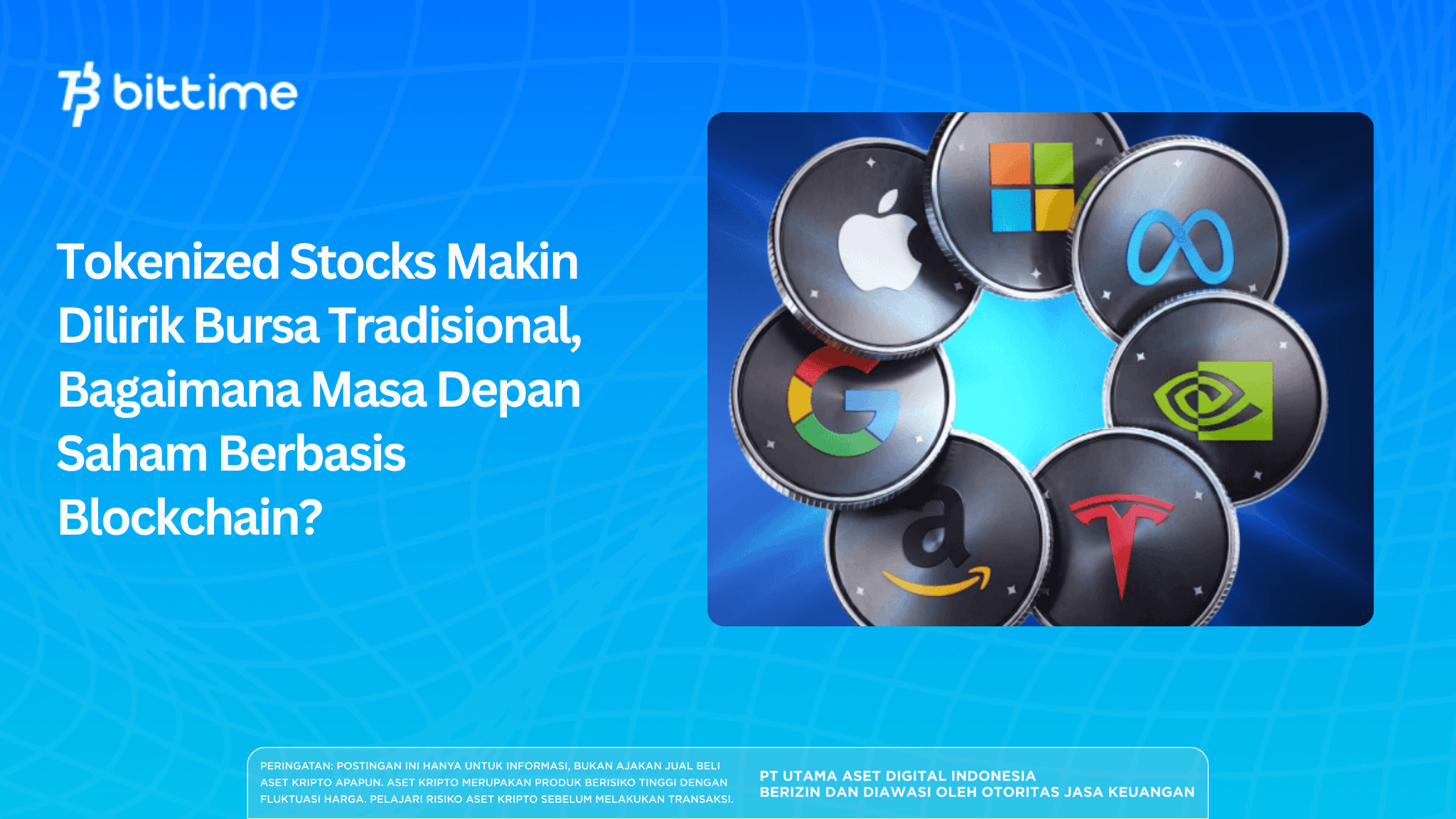
The world's largest stock exchanges are starting to seriously bring shares into the blockchain world. The London Stock Exchange (LSE) recently announced the development of a UK tokenized equity structure alongside a partnership with Payward, the parent company of Kraken, to introduce tokenized stocks that can be traded 24 hours a day on the LSE 24 venue starting in 2027.
This move marks a new chapter in the evolution of capital markets: public equities that have only existed within traditional settlement systems are now beginning to experiment with digital representations that are more flexible, faster, and globally accessible.
Key Takeaways
- LSEG launches a UK tokenized equity structure to expand capital market access while maintaining shareholder rights and governance standards.
- The partnership with Payward paves the way for listing xStocks (1:1 tokenized representations of shares) on LSE 24 in 2027, subject to regulatory approval.
- The DSD and DiSH infrastructure serve as the backbone for settlement and servicing of digital securities within the LSEG ecosystem.
What Are Tokenized Stocks and Why Are Traditional Exchanges Starting to Take Interest?
Tokenized stocks or tokenized shares are digital representations of shares traded on traditional exchanges, issued as tokens on a blockchain. Each token represents ownership of the underlying security at a 1:1 ratio, meaning their price performance tracks the original shares listed on the exchange.
These blockchain-based shares can be transferred between wallets, centralized exchanges (CEX), and on-chain applications more easily than traditional shares.
Tokenization also offers programmability, enabling integration with DeFi protocols, smart contracts, and other digital infrastructure, as well as 24/7 access since blockchains do not have closing hours like conventional exchanges.
Also Read: What is Ondo Tokenized Stock? List of Available Assets on Bittime
Traditional exchanges like LSEG are beginning to explore stock tokenization to expand their global investor base, particularly retail and institutional investors who are more comfortable with digital-native infrastructure.
This move also aims to improve settlement efficiency by reducing the time and cost of transaction settlement compared to traditional T+2 or T+1 systems, while opening opportunities for new products such as tokenized equities that can be used as collateral in lending protocols or liquidity pools on DEX.
LSE plc CEO Julia Hoggett emphasized that tokenization must evolve in a way that maintains trust, rights, and the role of regulated markets.
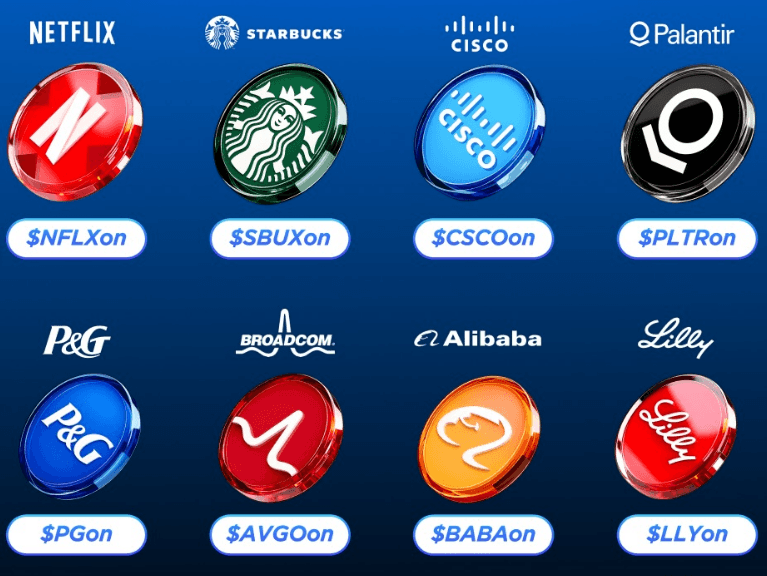
Tokenized Stocks on Bittime
Want to know more about tokenized stocks? Register now on Bittime and start trading and investing.
The Mechanics of Tokenized Stocks: From Traditional Shares to On-Chain Tokens
The process of converting traditional shares into tokenized shares involves several layers of infrastructure and regulatory compliance.
The issuer or appointed party (e.g., Payward for xStocks) holds the underlying shares in regulated custody, then issues tokens representing ownership of those shares at a 1:1 ratio. Each token in circulation must have an equivalent underlying share in reserve, ensuring price integrity and redemption capability.
LSEG is developing two key infrastructure components to support equity asset tokenization.
The LSEG Digital Securities Depository (DSD) serves as a record of ownership for digital securities, an infrastructure for the issuance, transfer, servicing of assets, and settlement of tokenized securities, as well as a bridge between traditional markets and the blockchain ecosystem supporting multi-chain and interoperability.
Also Read: Tokenized Stocks vs Traditional Shares: Definition, Differences, and How to Buy
Meanwhile, the LSEG Digital Settlement House (DiSH) provides 24/7 cash settlement in multi-currency via DiSH Cash (commercial bank deposits on the DiSH ledger), Delivery-versus-Payment (DvP) and Payment-versus-Payment (PvP) mechanisms for transactions involving digital assets, as well as the real cash leg for settling tokenized stock and other digital asset transactions.
LSE 24 is a 24-hour trading venue specifically designed for blockchain-based shares like xStocks.
Current plans include the tokenization of LSE's top 100 companies as xStocks by Payward, with availability on the Kraken platform and xStocks Alliance partners within weeks of the announcement. Listing and trading on LSE 24 is targeted to begin in 2027, subject to regulatory approval.
One of the biggest challenges in stock tokenization is ensuring that the token remains compliant with capital market regulations and maintains shareholder rights.
LSEG emphasizes that the UK tokenized equity structure is designed to maintain shareholder rights, including dividend, voting, and corporate information rights, meet regulatory obligations such as AML (Anti-Money Laundering), KYC, and operational resilience, and uphold existing public market governance standards, rather than replacing them with a looser model.
Arjun Sethi, Co-CEO of Payward, stated that tokenization is not just about expanding access, but changing how shares are issued, traded, settled, and moved.
Also Read: Top 10 Crypto Asset Tokenizations (RWA) in the World
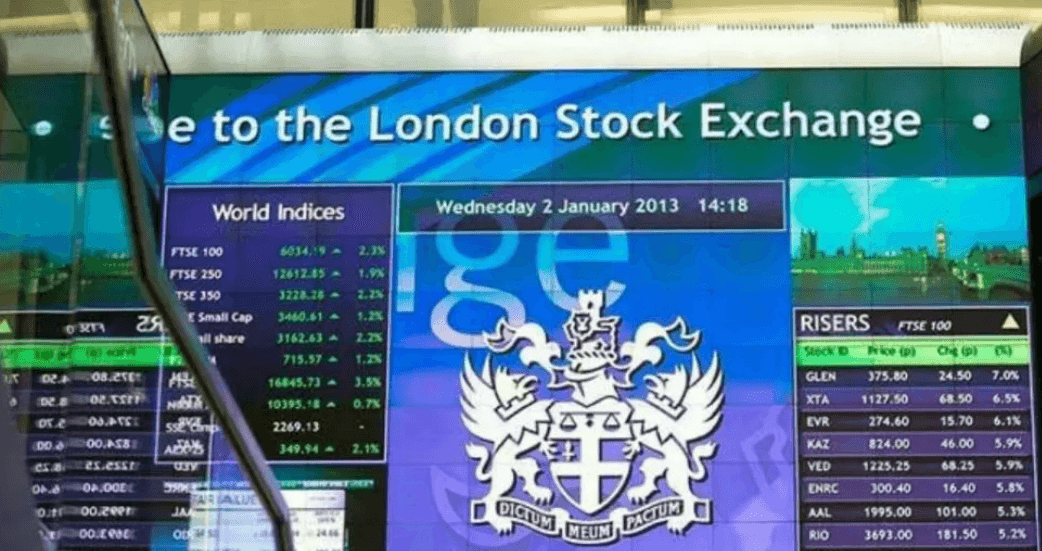
London Stock Exchange. Source: Antara
Impact of the LSEG and Payward Partnership on the Digital Equity Ecosystem
The partnership between LSEG and Payward is not just about listing products, but an exploration of an architecture that connects regulated market infrastructure with the on-chain ecosystem.
LSEG and Payward are exploring how crypto wallets and Payward partner infrastructure can connect with LSEG's regulated ecosystem to facilitate seamless connectivity between tokenized equities and traditional infrastructure, providing a more familiar user experience for investors accustomed to crypto applications.
This partnership builds a route for issuers and investors to further leverage private and public blockchains while still meeting regulatory obligations.
Some expected benefits include deeper liquidity through access to global investors across various jurisdictions, operational efficiency thanks to faster settlement and lower costs, and product innovation such as tokenized equities that can be integrated with DeFi protocols.
LSEG is examining how DSD can support the settlement and servicing of tokenized securities, while DiSH provides 24/7 cash settlement for transactions involving xStocks and other digital assets, creating a complete cycle from issuance, trading, settlement, to asset servicing within a single coordinated ecosystem.
Also Read: How Blockchain is Changing the Share Ownership System
The Global Asset Tokenization Trend: From RWA to Public Equities
LSEG's move is part of a larger trend in global asset tokenization, often referred to as Real World Assets (RWA) on-chain.
Tokenization of private assets such as real estate, private equity, and private bonds has been explored earlier, but the focus is now shifting to public equities from major exchanges like LSE, NYSE, and Nasdaq.
Infrastructure like DSD, DiSH, and LSE 24 signals that tokenization is no longer an experiment, but is becoming enduring market infrastructure.
Julia Hoggett from LSEG stated that tokenization has the potential to change how investors access and how issuers use financial markets, provided it is developed in a way that maintains trust and regulatory market standards.
Also Read: Robinhood Chain Hits Record US$85 Million, Tokenized Stocks Take the Throne
Several trends can be gleaned from this development, including the convergence of traditional exchanges and crypto infrastructure, where stock exchanges no longer see blockchain as a threat, but as a complementary infrastructure that can improve efficiency and accessibility.
This tokenized stocks model can be traded on 24-hour venues like LSE 24. This allows investors in different jurisdictions to access equities outside conventional market hours. Also, liquidity is no longer fragmented solely during traditional trading hours, and tokenized equities can move more freely between venues, wallets, and DeFi applications (while still complying with regulations).
If the LSEG model is successful, it could become a blueprint for other exchanges looking to bring public equities on-chain without compromising regulatory standards.
Also Read: How to Buy SpaceX Tokenized Stock (SPCXx) on Bittime
Conclusion
The development of the UK tokenized equity structure by LSEG, along with the strategic partnership with Payward, marks a new chapter in the evolution of global capital markets. Tokenized stocks are no longer just a theoretical concept, but an infrastructure being built with the support of DSD, DiSH, and LSE 24 to deliver blockchain-based shares that can be traded 24 hours a day while maintaining shareholder rights and regulatory standards.
You can start trading on Bittime while monitoring tokenized stocks: AMZON, AMDON, TSLAX, NFLXON MSFTON and many more!
Bittime is a Digital Financial Asset Trader (PAKD) platform licensed and supervised by the Financial Services Authority — where you can buy Bitcoin in Indonesia and hundreds of other crypto assets starting from Rp10,000. The registration process is fast, secure, and can be started today.
Monitor USDT to IDR conversion and the price movements of your favorite crypto assets in real-time. All available in one crypto investment app that you can download for free on the Play Store.
Ready to start? Register now on Bittime and execute your investment strategy with a platform already trusted by millions of users in Indonesia.
FAQ
What are tokenized stocks?
Tokenized stocks are digital representations of traditional shares issued as tokens on a blockchain with 1:1 backing against the underlying shares.
How does the stock tokenization mechanism work?
The underlying shares are held in regulated custody, then tokens representing ownership of those shares are issued at a 1:1 ratio, with settlement through infrastructure like DSD and DiSH.
Why are traditional exchanges starting to explore tokenization?
Exchanges like LSEG see tokenization as a way to expand global investor access, improve settlement efficiency, and open up new product opportunities in the digital ecosystem.
What is LSE 24?
LSE 24 is a 24-hour trading venue owned by LSEG, planned to list and trade xStocks (tokenized stocks) starting in 2027, subject to regulatory approval.
Do tokenized stocks maintain shareholder rights?
Yes, the LSEG tokenized equity structure is designed to maintain shareholder rights such as dividends, voting, and corporate information, while complying with capital market regulations.
What is Payward's role in this partnership?
Payward will tokenize LSE's top 100 companies as xStocks and provide infrastructure for connectivity between LSEG's regulated ecosystem and on-chain platforms.
Disclaimer: The views expressed belong exclusively to the author and do not reflect the views of this platform. This platform and its affiliates disclaim any responsibility for the accuracy or suitability of the information provided. It is for informational purposes only and not intended as financial or investment advice.

.png)