UBER Stock Strengthens as Wayve Robotaxi Debuts in London
2026-09-04 
At eight in the morning London time, a Ford Mustang Mach-E cruised slowly along the narrow streets of Westminster, with the driver's hands on the wheel only on standby, not actually controlling the steering wheel.
That moment marked the debut of Uber's first robotaxi in the British capital, the result of a collaboration with Wayve, a Cambridge-based artificial intelligence company. The day after the launch, UBER stock was also boosted, closing up 1.61% at $76.45 on Wednesday trading, then adding another 0.6% in after-hours to $76.89.
Uber's business expansion and the positive market response have attracted the attention of investors and automotive industry observers. How does the Uber-Wayve partnership work, and how much potential impact could it have on Uber's stock price going forward? Here's the breakdown.
What Is the Wayve Robotaxi and How Did Uber Launch It in London?
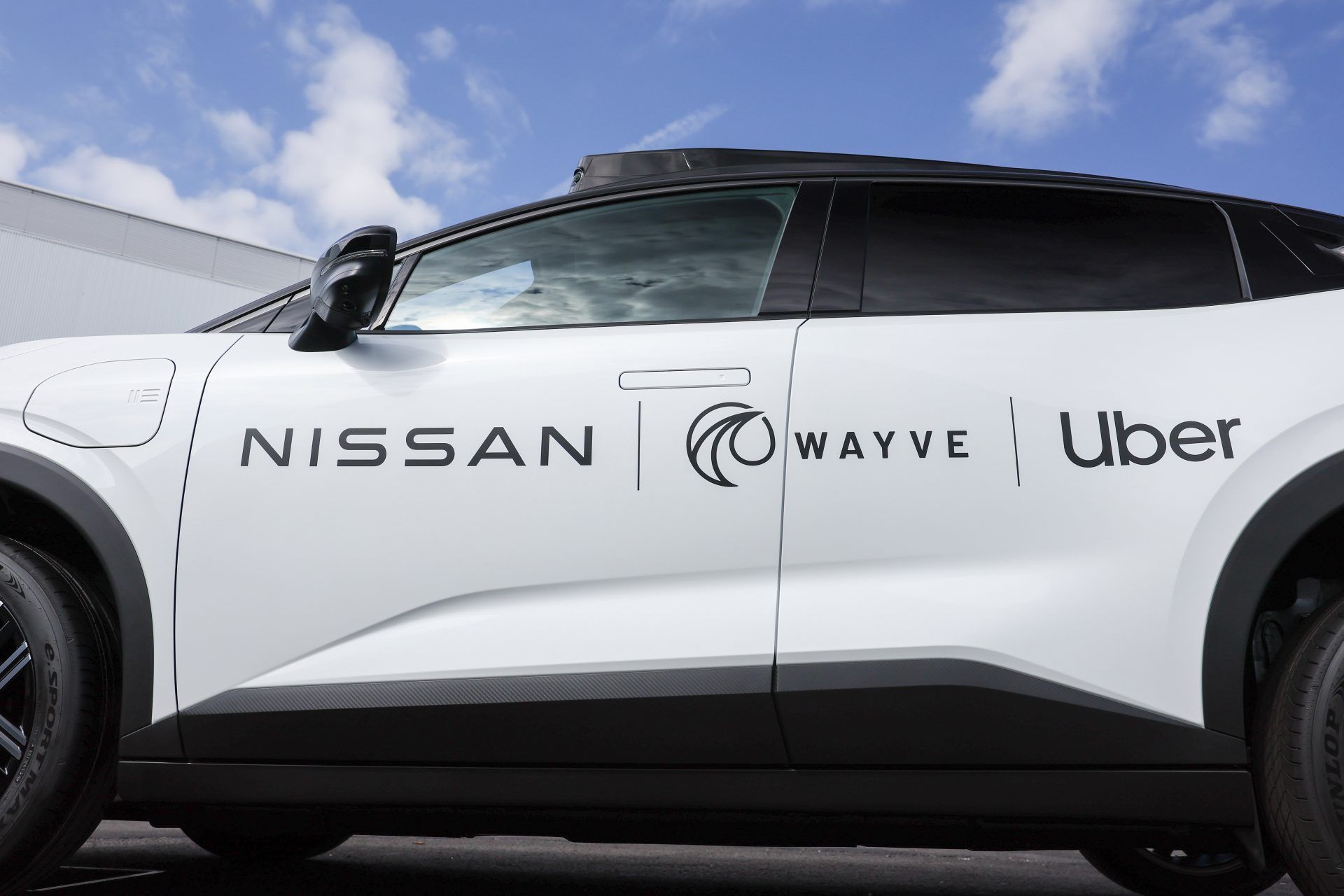
Source: Wayve
Wayve robotaxi operates using a fleet of electric Ford Mustang Mach-E vehicles equipped with Wayve's AI Driver technology.
Unlike most AV systems that rely on HD maps and specific sensors, Wayve's technology is designed to learn driving patterns directly from video data and real-time road conditions, making it more adaptive to changing weather and routes.
The initial fleet size remains limited. Blockonomi noted fewer than 20 units in operation, while Technology.org and Time News gave a more specific figure of 15 licensed vehicles.
Customers ordering UberX, Uber Comfort, or Uber Electric through the app may be matched with one of these robotaxis at no extra cost, and they can still decline and switch to a human‑driven vehicle.
What distinguishes this phase from fully autonomous robotaxis is the presence of a licensed safety operator in the driver's seat. This operator is ready to take control or hit the brakes whenever necessary.
According to Sarfraz Maredia, Head of Autonomous Mobility at Uber, the company is still awaiting approval from UK regulators before it can remove the need for safety drivers, and there is no clear timeline for when that will happen.
If you're interested in following developments in sectors like this and also want to explore opportunities in the digital asset market, you can register an account at Bittime to start investing on a platform that is officially licensed by OJK.
Why Did UBER Stock Strengthen After the Launch?
The market reaction to this launch was fairly positive despite its still‑small scale. Uber's stock price rose 1.61% at Wednesday's close to $76.45, then continued to gain 0.6% in after‑hours to $76.89.
This increase reflects investor optimism toward Uber's expansion into the autonomous vehicle segment, a sector viewed as one of the company's long‑term growth catalysts.
Bullish sentiment toward Uber stock is also evident from Wall Street analysts. Blockonomi reported a consensus rating of Strong Buy, with 29 Buy recommendations, three Holds, and zero Sells over the past three months.
The average analyst price target stands at $104.04, about 36% above the current price at that time. This data aligns with reports from TIKR and Barchart, which around the same period also recorded a consensus target in the $104–$106 range with a majority of Buy or Outperform ratings.
It is important to note that this stock rise occurred amid margin pressures from the business model shift in the UK that had previously trimmed Uber's revenue growth over the past few quarters. This means the London robotaxi launch is not merely symbolic, but a signal that Uber continues to drive revenue diversification amid existing operational challenges.
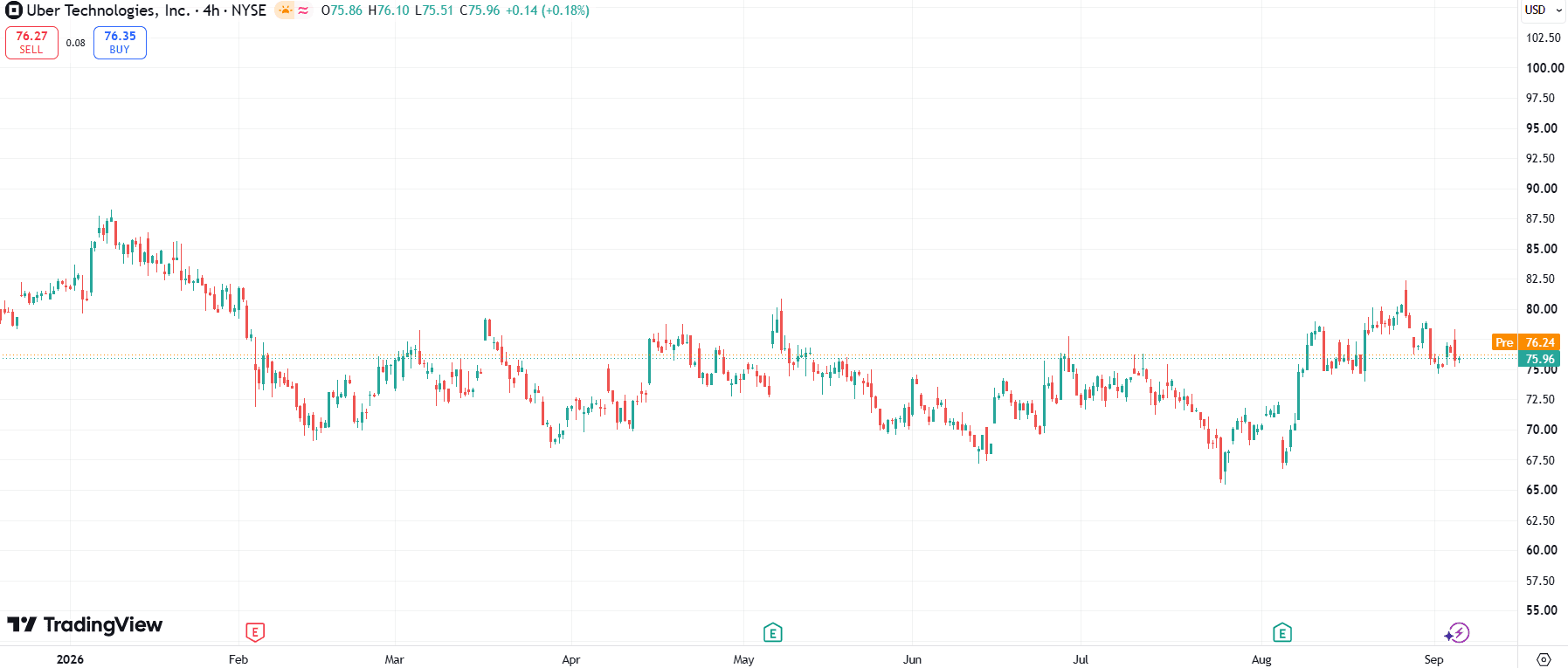
UBER stock price today, 4 September 2026. Source: TradingView
Also Read: Nvidia's $500 Billion AI Funding – Will AI Crypto Tokens Also Benefit?
Uber and Wayve's Strategy for Global Robotaxi Expansion
The Uber‑Wayve partnership actually dates back to 2024, marked by an initial investment from Uber into the AI company. Uber's chosen business model is quite characteristic: instead of building its own self‑driving technology, the company prefers to partner with various AV developers.
This pattern gives partners like Wayve instant access to Uber's established customer base, while Uber itself avoids the burden of costly research and development.
London becomes Uber's second European city to get robotaxi service, after Zagreb which earlier launched a partnership with China's Pony.AI. Outside Europe, Uber already operates fully driverless Baidu vehicles in Dubai.
According to reports from EVMagazine and BusinessCloud, the Uber‑Wayve partnership is planned to expand to more than 10 global markets, with Tokyo mentioned as the next city through a collaboration with Nissan.
The funding scale behind Wayve is also substantial. The company closed a $1.2 billion Series D round in February 2026, plus an additional milestone‑based investment commitment from Uber, bringing the total to $1.5 billion.
This round valued Wayve at $8.6 billion, with a list of investors that includes SoftBank Vision Fund 2, Microsoft, Nvidia, and major automakers such as Mercedes‑Benz, Nissan, and Stellantis, according to data from Reuters and LBC.
Also Read: BIS Unveils New Potential for XRP Ledger in Digital Financial Systems
Challenges and Regulation for Autonomous Vehicles in London
Operating London autonomous taxis is no easy task. The city has narrow streets dating back centuries, heavy congestion, and complex interactions with buses, cyclists, and e‑scooter riders — conditions far different from US cities like San Francisco or Los Angeles, where robotaxis have rolled out more smoothly.
One incident during early trials illustrated this complexity. According to a report from Technology.org, a journalist testing the service experienced a moment when the car suddenly braked with an internal alarm sounding after the rear door of a parked van on a narrow street unexpectedly opened.
The safety driver immediately took over. Wayve said that action was purely the driver's decision, and that the system was actually confident enough to handle similar situations.
On the regulatory side, the UK government through the Department for Transport is still preparing the official framework for full autonomous vehicle operations, with a target completion around 2027.
The earlier target that was initially mentioned to be achievable by the end of 2026 is now considered less realistic. This situation makes London an increasingly crowded robotaxi competition arena, as Alphabet's Waymo and Baidu are also preparing similar commercial services in the same city, according to reports from Bloomberg and TechCrunch.
Also Read: 10 Free Bitcoin Mining and Faucet Sites 2026 – Which Ones Are Legit?
Conclusion
The debut of the Uber‑Wayve robotaxi in London marks a significant step in the expansion of Uber's robotaxi business in Europe, while also providing positive sentiment to UBER stock movement, which closed higher after the announcement.
Although the fleet is still limited and safety drivers are still required, the strong funding support for Wayve and the expansion plans to more than 10 cities globally demonstrate Uber's seriousness in developing the autonomous vehicle segment.
With analyst ratings predominantly Strong Buy and price targets significantly above current levels, the driverless car sector is worth monitoring as one of the company's medium‑term growth catalysts.
Monitor US stock tokens: AMZON, AMDON, TSLAX, NFLXON MSFTON and many more – you can start trading at Bittime.

Bittime is a Digital Asset Trading Platform (PAKD) licensed and supervised by the Financial Services Authority — where you can buy Bitcoin in Indonesia and hundreds of other crypto assets starting from Rp10,000. The registration process is fast, secure, and can be started today.
Monitor USDT to IDR conversion and real‑time price movements of your favorite crypto assets. All available in one crypto investment app that you can download for free from the Play Store.
Ready to start? Sign up now at Bittime and execute your investment strategy on a platform trusted by millions of users in Indonesia.
FAQ
What is the Wayve robotaxi?
The Wayve robotaxi is an autonomous taxi service that uses Wayve's AI Driver technology, developed by the British artificial intelligence company, and is operated via a fleet of electric Ford Mustang Mach‑E vehicles in partnership with Uber.
When was the Uber‑Wayve robotaxi launched in London?
The service was officially launched in early September 2026, making London Uber's second European city to receive robotaxi service after Zagreb.
Are Uber's robotaxis in London already driverless?
Not yet. Each vehicle still has a licensed safety operator who can take over control at any time, because regulatory approval for fully driverless operation is still pending.
What is the price target for UBER stock according to analysts?
The average analyst price target is around $104, with a consensus Strong Buy rating, implying a potential upside of about 36% from the trading level at the time this news was published.
Who are the investors behind Wayve?
Key investors in Wayve include SoftBank Vision Fund 2, Microsoft, Nvidia, and Uber, along with automakers such as Mercedes‑Benz, Nissan, and Stellantis, which participated in the $1.5 billion Series D funding round.
Disclaimer: The views expressed belong exclusively to the author and do not reflect the views of this platform. This platform and its affiliates disclaim any responsibility for the accuracy or suitability of the information provided. It is for informational purposes only and not intended as financial or investment advice.

.png)