RLUSD Lags Behind PYUSD as Corporate Stablecoin Competition Heats Up
2026-04-19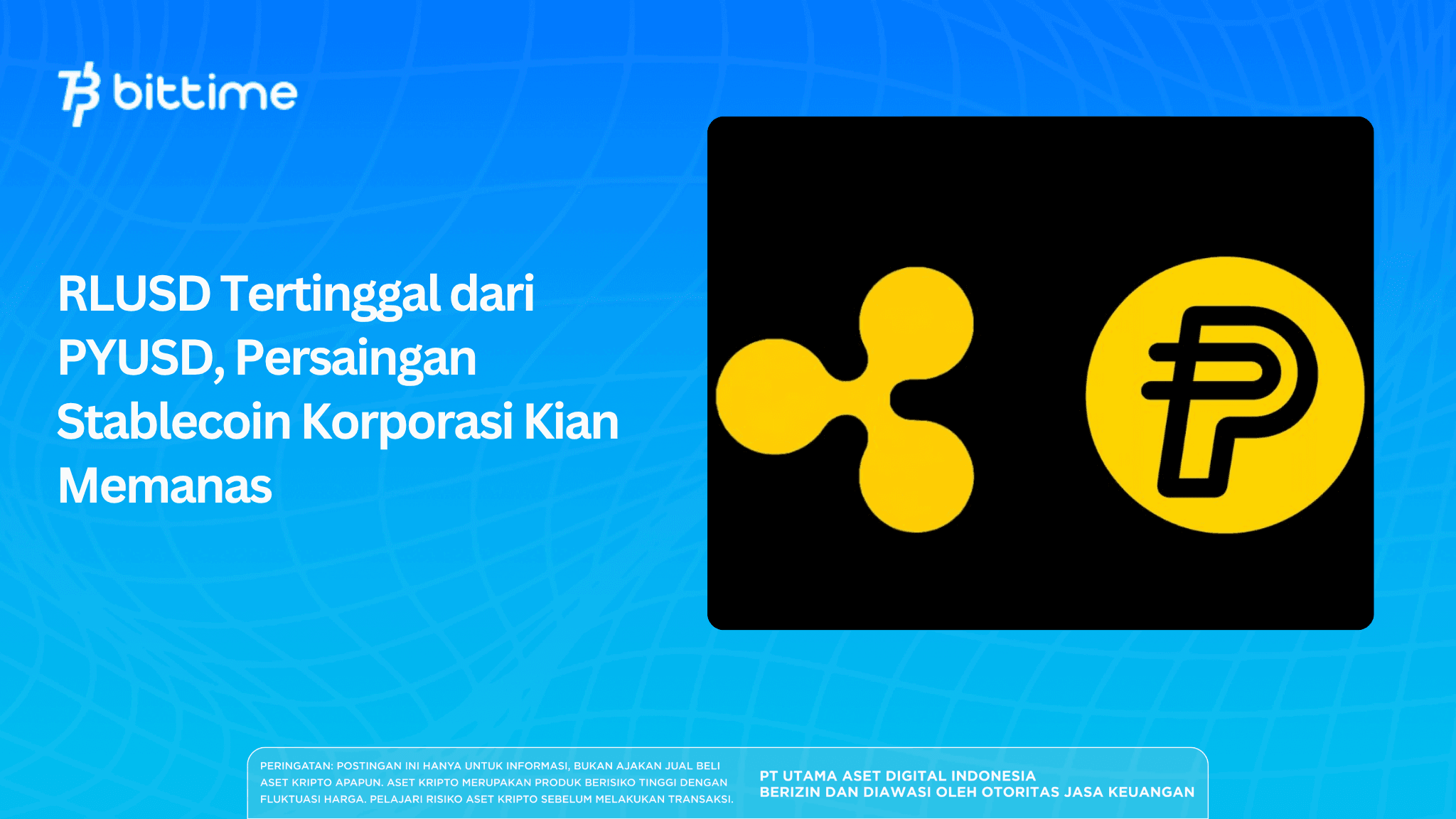
Have you noticed how two major companies are battling it out with their own stablecoins? PYUSD from PayPal is now far ahead of RLUSD from Ripple. As of April 2026, PYUSD’s market capitalization has reached about 4.11 billion US dollars, while RLUSD sits at around 1.43 billion US dollars. These numbers show PYUSD clearly leading the corporate stablecoin segment.
This article explains the full PYUSD versus RLUSD competition, the latest developments, the factors driving growth, and how the corporate stablecoin market is expected to evolve in 2026. All data comes from the most recent market reports so you can understand the situation clearly and calmly.
Key Takeaways
- PYUSD from PayPal holds a market capitalization of about 4.11 billion US dollars as of April 2026, while RLUSD stands at 1.43 billion US dollars.
- PYUSD is now available in 70 global markets since March 2026, far wider than RLUSD’s main focus on institutional use.
- Corporate stablecoin competition is getting hotter in 2026, with PYUSD leading in consumer distribution and RLUSD strong on the institutional side.
Register at Bittime now and start trading crypto with a fast, safe, and easy process in the app.
What Are PYUSD and RLUSD
PYUSD is the stablecoin issued by PayPal, also known as the PayPal stablecoin. Each PYUSD token is worth exactly one US dollar and is fully backed by reserves of US dollars, short-term US government bonds, and cash equivalents held separately. The token runs on the Ethereum blockchain and is used for fast transfers and payments inside the PayPal ecosystem.
Meanwhile, RLUSD is Ripple’s stablecoin, also pegged at one US dollar. Launched at the end of 2024, it quickly gained attention because of its strict regulation in New York. The token operates on multiple blockchains and is designed mainly for institutional financial needs.
Both are part of the corporate stablecoin category — stablecoins issued by large traditional companies rather than pure crypto projects. Their goal is the same: to provide a stable one-dollar value while using the strength of their parent companies. PYUSD takes advantage of PayPal’s more than 400 million users worldwide. RLUSD relies on Ripple’s long-established network with banks and financial institutions.
The main difference lies in strategy. PYUSD focuses more on everyday users and cross-border payments. RLUSD targets use as collateral in institutional financial products. In 2026 both continue to grow, but PYUSD currently leads in market size.
Read also : USDT/IDR vs USDC/IDR Comparison for Local Arbitrage Strategy
PYUSD vs RLUSD: Direct Comparison
Let us compare them side by side in simple terms. PYUSD’s market capitalization stands at 4.11 billion US dollars — nearly three times larger than RLUSD’s 1.43 billion US dollars. These figures show PYUSD has a much stronger foothold in the market right now.
PYUSD has grown extremely fast. From under 500 million dollars at the start of 2025, it has now passed 4 billion dollars. One big driver was its expansion to 70 global markets in March 2026. PayPal users in many countries can now use PYUSD directly to send money or hold value without high fees.
RLUSD is also growing, but at a slower pace. After launch it briefly reached nearly 1.6 billion dollars before settling at the current level. Its strength is on the institutional side. Ripple recently acquired Hidden Road for 1.25 billion dollars. With this acquisition, RLUSD can now be used as collateral in prime brokerage services. This means RLUSD is better suited for large companies that need liquidity and full regulatory compliance.
Here are the main differences in list form:
- Market size: PYUSD is much larger.
- Target users: PYUSD serves everyday consumers and daily payments, while RLUSD focuses on institutions.
- Distribution: PYUSD reaches 70 markets, RLUSD is more focused on bank partners.
- Growth from 2025 to 2026: PYUSD rose more than 600 percent, RLUSD grew steadily but more slowly.
Overall, PYUSD wins in scale and ease of access, while RLUSD excels in institutional depth. This healthy competition keeps both innovating.
Read also : List of 15+ Euro Stablecoins 2026
PYUSD Expansion and Factors Driving Growth
PYUSD’s expansion has become one of the biggest stories in 2026. In March, PayPal announced that PYUSD is now available in 70 markets around the world. This step gives far more people easy access to send money across borders quickly and cheaply. Many users choose PYUSD because it is already built directly into the PayPal app they use every day.
Another helpful factor is the full backing of PayPal as a global payments giant. Users can swap PYUSD for regular dollars without any hassle. In addition, PYUSD is starting to appear in several DeFi platforms and merchant payment systems. All of this keeps transaction volume rising steadily.
On the other side, RLUSD relies on Ripple’s established strength in traditional finance. Partnerships with major banks and the Hidden Road acquisition open doors for RLUSD to be used as collateral in advanced financial products. Even though its market capitalization is smaller, RLUSD has strong potential among institutions that need fully regulated stablecoins.
In the 2026 stablecoin market, both are contributing to a bigger trend: large companies entering crypto with their own stablecoins. This makes corporate stablecoins more trusted than regular ones. PYUSD is currently in the lead, but RLUSD still has room to grow through its institutional channel.
Read also : What Is USDu? Getting to Know the Yield-Generating Stablecoin from the Unitas Protocol
Corporate Stablecoin Market in 2026
The corporate stablecoin market is becoming busier in 2026. The total market capitalization of all stablecoins is already very large, and the corporate portion — including PYUSD and RLUSD — continues to take a bigger share. PYUSD and RLUSD are clear examples of how technology and fintech companies are trying to play a bigger role in this space.
PYUSD benefits from PayPal’s mature network. Ordinary users feel safe because of the familiar PayPal name. RLUSD benefits from Ripple’s long history of working with banks. The two strategies are different but equally effective in their own segments.
This year we are seeing PYUSD expand into more countries and RLUSD increase its use in institutional financial services. This competition is good for the market because it pushes innovation, transparency, and better regulatory compliance.
For investors in Indonesia, both stablecoins offer a new way to hold stable dollar value without opening a foreign bank account. You can follow their progress on local exchanges that support them. One thing is clear: the competition between PYUSD and RLUSD will continue and will make the corporate stablecoin market even more interesting throughout 2026.
Conclusion
RLUSD is indeed lagging behind PYUSD in market capitalization, but the corporate stablecoin competition is far from over. PYUSD leads with 4.11 billion dollars and expansion into 70 markets, while RLUSD remains strong in its institutional path. In 2026 both continue to grow and give users more choices.
Corporate stablecoins like PYUSD and RLUSD show that big companies can help shape the future of digital money. Keep following their progress, choose what fits your needs, and always do your own research before investing. We hope this explanation helps you understand the current stablecoin market dynamics more clearly. Happy and wise investing!
FAQ
What is PYUSD?
PYUSD is PayPal’s stablecoin worth one US dollar and backed by dollar reserves and government bonds.
What are the current market capitalizations of PYUSD and RLUSD?
As of April 2026, PYUSD is around 4.11 billion US dollars and RLUSD is around 1.43 billion US dollars.
Why is PYUSD ahead of RLUSD?
PYUSD has much wider distribution across 70 markets and PayPal’s large everyday-user network.
What is RLUSD’s main strength?
RLUSD focuses on financial institutions and can be used as collateral in prime brokerage services.
What is the outlook for the corporate stablecoin market in 2026?
Competition is heating up, with PYUSD and RLUSD complementing each other in consumer and institutional segments.
Disclaimer: The views expressed belong exclusively to the author and do not reflect the views of this platform. This platform and its affiliates disclaim any responsibility for the accuracy or suitability of the information provided. It is for informational purposes only and not intended as financial or investment advice.

.png)