What Is USDu? Getting to Know the Yield-Generating Stablecoin from the Unitas Protocol
2026-03-17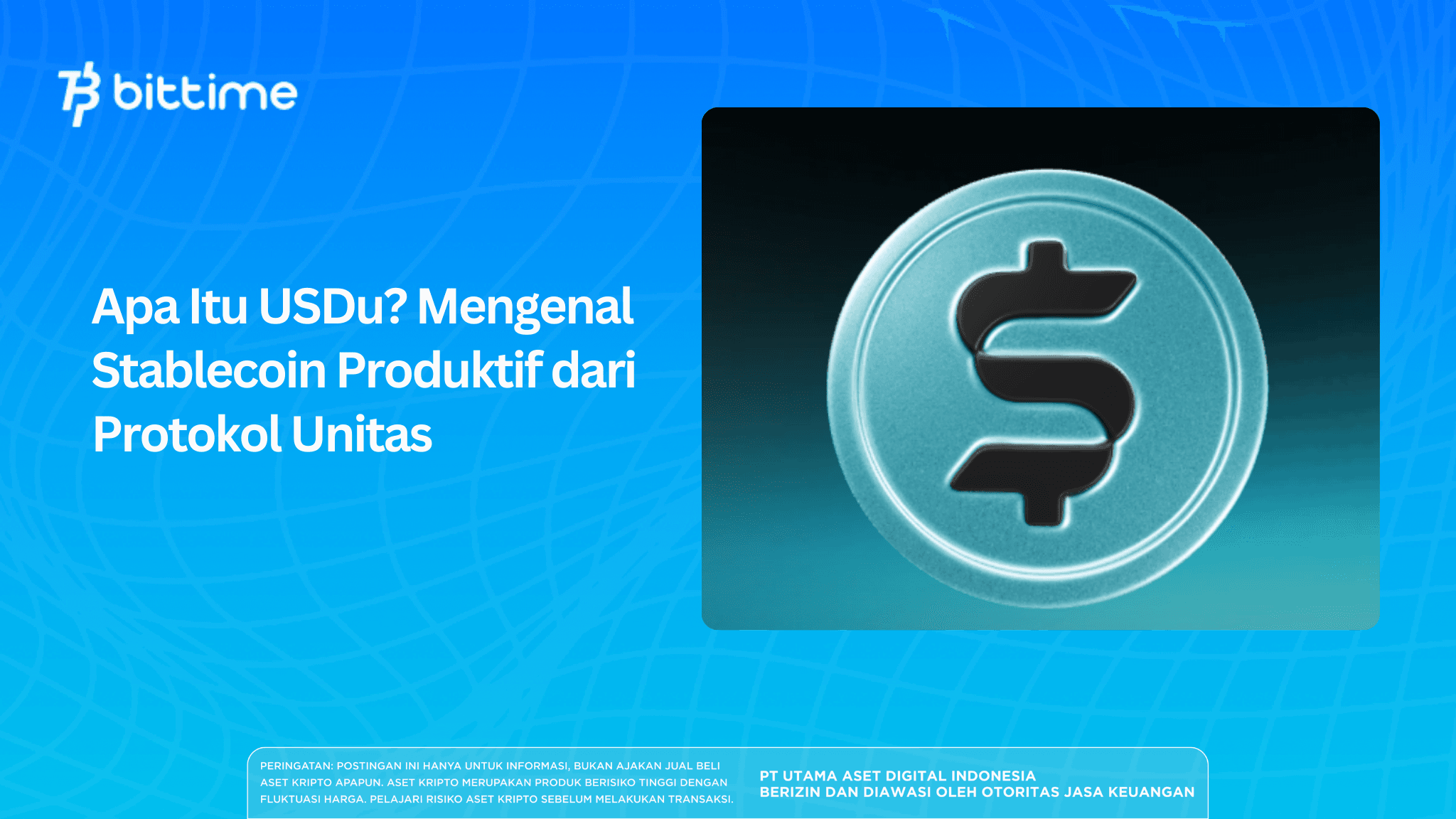
Most stablecoins do one thing well: hold their value. But in an era where on-chain yields are very real and increasingly transparent, simply pegging to $1 is no longer the whole story.
Unitas is a protocol that takes a different approach — it combines dollar stability with active yield generation, all without relying on directional price bets. The result is USDu, a stablecoin that not only stays stable but also works for its holders. Here's what you need to know.
Key Takeaways:
- USDu is an overcollateralized stablecoin soft-pegged to $1, live on both Solana and Binance Smart Chain (BSC).
- sUSDu is its savings counterpart, historically generating 8–15% APR in USD terms through a delta-neutral JLP arbitrage strategy.
- Unitas is backed by Susquehanna, Amber Group, Stanford Blockchain Builders Fund, and the Solana Foundation, with independent smart contract audits and an active Immunefi bug bounty program.
What Is Unitas?
Unitas is the on-chain "dollar + yield" infrastructure developed by Unipay. At its core sits a JLP delta-neutral arbitrage engine — a strategy that captures yield from trading activity on Jupiter Perps without taking on directional price exposure.
The Jupiter Liquidity Provider (JLP) Pool supplies liquidity to traders on Jupiter Perps and earns value from three sources: index asset appreciation (SOL, ETH, WBTC, USDC), trader PnL when positions close at a loss, and 75% of all platform fees redistributed hourly.
Unitas amplifies this by purchasing JLP as collateral while simultaneously opening matched short perpetual positions — locking in the fee revenue stream while hedging away price risk. The outcome is a market-neutral yield that is transparent, scalable, and derived from real trading demand.
What Is USDu and sUSDu?
USDu is the primary stablecoin in the Unitas ecosystem, overcollateralized and soft-pegged to $1. Minting USDu carries a 0% fee, and when a user mints, the protocol automatically opens a short perp position to maintain delta neutrality. Most retail users access USDu through supported DEX liquidity pools such as Orca, rather than minting directly.
sUSDu is the yield-bearing savings token minted when users stake USDu. Its exchange rate rises continuously as the protocol distributes JLP fee revenue, funding rate premiums from the short leg of the trade, and protocol fees.
Historically, this has produced an APR of 8–15% in USD terms — a competitive figure in today's DeFi landscape. Unstaking triggers a 7-day cooldown before USDu becomes withdrawable, a standard mechanism used to protect protocol liquidity stability.
Multichain, Security, and Governance
Unitas currently operates on Solana and BSC, with cross-chain expansion via LayerZero planned for later in 2025. The protocol's native governance token, UP (contract address on EVM: 0x00007Ac313f4f4C1AD809E8A4Ca42bc613AA0000), gives holders voting rights over risk parameters, yield allocation policies, and the potential activation of protocol fee distribution.
On the security side, Unitas employs multiple independent smart contract audits, an Immunefi bug bounty program, and an Off-Exchange Settlement (OES) custody system that limits counterparty risk from trading venue failures.
Protocol governance is managed by a Guardian Council (5-of-9 multisig) for emergency actions and the Unipay DAO for broader parameter decisions. Revenue is split 80% to sUSDu holders, 10% to an Insurance Fund, and 10% to the Treasury.
Conclusion
Unitas presents a compelling case for what a stablecoin can be — not just a parking spot for capital, but an active participant in on-chain markets.
By extracting yield from real trading fees through a delta-neutral structure, USDu and sUSDu offer a transparent and auditable path to USD-denominated returns. For intermediate DeFi investors looking beyond simple holding strategies, Unitas is worth a closer look.
FAQ
1. What is Unitas?
Unitas is a DeFi protocol that provides on-chain savings infrastructure using a delta-neutral JLP arbitrage strategy to generate USD-denominated yield without directional market exposure.
2. What is the difference between USDu and sUSDu?
USDu is the base stablecoin pegged to $1. sUSDu is the staked version — its value increases over time as the protocol distributes yield to stakers.
3. How much yield can I earn with sUSDu?
Historically, sUSDu has generated 8–15% APR in USD terms, depending on Jupiter Perps trading volume and prevailing funding rates.
4. Which blockchains does Unitas support?
Unitas is currently live on Solana and BSC, with cross-chain expansion to other EVM networks via LayerZero in the pipeline.
5. Is Unitas safe to use?
Unitas has undergone independent smart contract audits and runs an active Immunefi bug bounty. That said, all DeFi protocols carry inherent risks including smart contract vulnerabilities and potential peg deviation — always review the official documentation before participating.
Disclaimer: The views expressed belong exclusively to the author and do not reflect the views of this platform. This platform and its affiliates disclaim any responsibility for the accuracy or suitability of the information provided. It is for informational purposes only and not intended as financial or investment advice.

.png)