List of 15+ Euro Stablecoins 2026
2026-03-23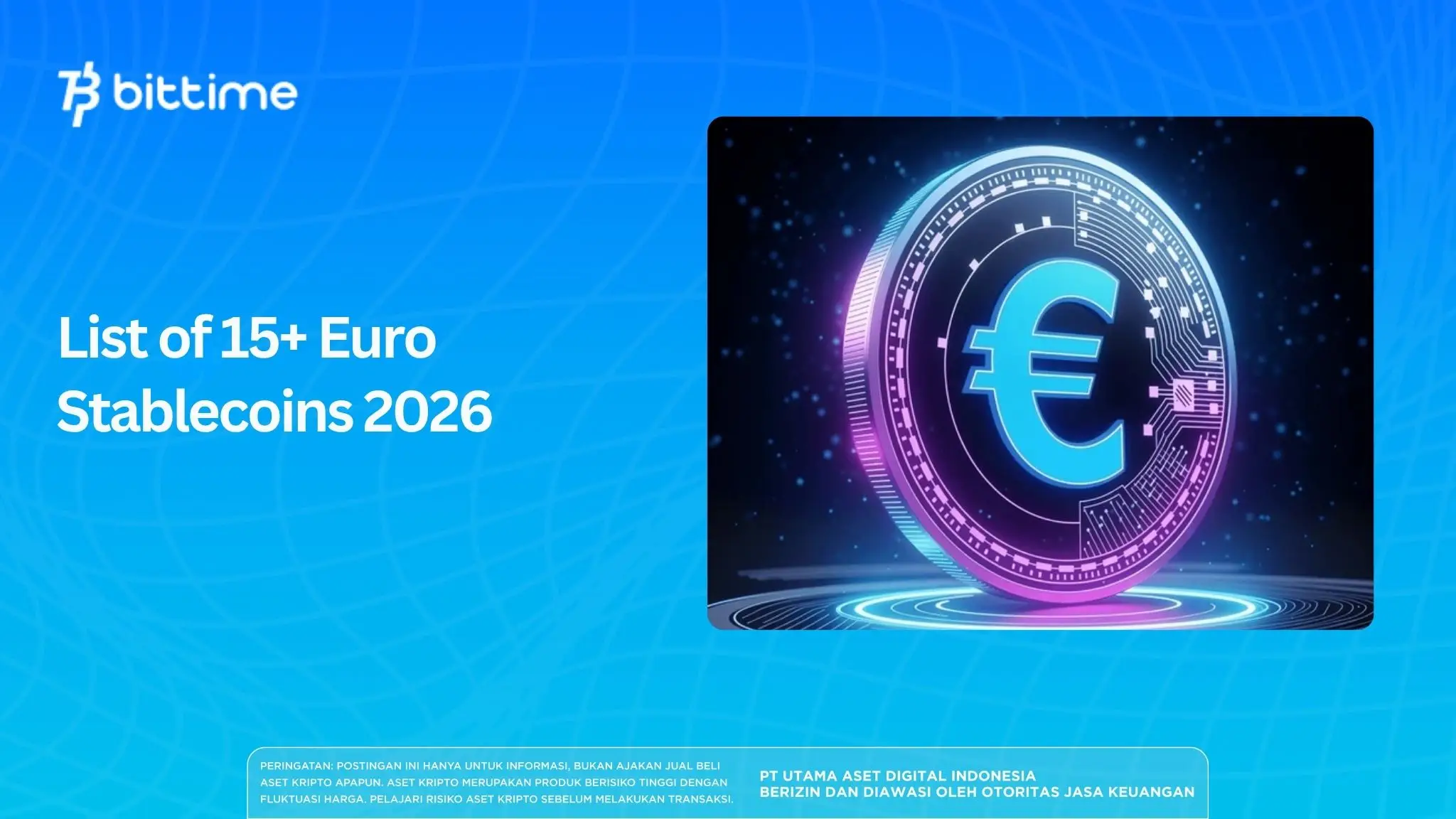
Although the euro is the currency of a €19 trillion economic zone serving around 350 million people, euro stablecoins currently represent less than 1% of the total global stablecoin market.
But this is changing rapidly.
As of June 2025, CoinGecko has listed over 20 euro stablecoins with a combined market cap of over $477 billion, and wallet adoption is up 53% globally.
The MiCA regulation, which came into full effect in December 2024, was a major catalyst, forcing exchanges to delist non-compliant tokens and encouraging users to switch to regulated euro stablecoins.
This article summarizes all the important euro stablecoins you need to know in 2026.
Key Takeaways
Of the 10 largest stablecoins by market cap, only USDC is MiCA-compliant, and Circle's EURC is the only fully MiCA-compliant tier-1 euro stablecoin currently.
A consortium of 12 of Europe's largest banks, including ING, UniCredit, BNP Paribas, CaixaBank, and BBVA, is preparing a joint euro stablecoin called Qivalis, scheduled to launch in the second half of 2026.
USDT remains non-MiCA compliant and has been delisted from many European exchanges, leaving EU users who still hold USDT at risk of further restrictions.
Register at Bittime now and start trading crypto with a fast, safe, and easy process in the app.
What Is a Euro Stablecoin and Why Is It Important?
Euro stablecoins are digital assets that track the value of the euro (EUR), designed to maintain a value as close to €1 as possible.
Most are backed 1:1 by euros held in regulated bank accounts, while some use tokenized bonds or reserve baskets to maintain their peg.
MiCA sets strict rules for stablecoins in the EU: 1:1 full reserves, issuers must be licensed as credit or e-money institutions, regular audits and transparent reporting are mandatory.
From March 2026, E-Money Token custody and transfer services may require MiCA authorization and a separate payment service license, a layered but increasingly clear framework.
Read also:What Is USDu? Getting to Know the Productive Stablecoin from the Unitas Protocol
Complete List of 15+ Euro Stablecoins 2026
EURC (Euro Coin by Circle)
EURC is a fully MiCA-compliant euro stablecoin issued by Circle, backed 1:1 by euros held in regulated European financial institutions with publicly published monthly attestations.
Available on Ethereum, Solana, Avalanche, Base, and Stellar, it is the euro stablecoin with the most robust regulatory compliance currently available and the preferred choice for users who prioritize legal certainty in the EU.
EURS (STASIS Euro)
STASIS Euro is a fiat-backed euro stablecoin with MiCA compliance, offering high transparency with daily verification and quarterly audits by BDO Malta.
Available on Ethereum, Polygon, Algorand, XRP Ledger, Arbitrum, and Gnosis. One of the oldest euro stablecoins with a long operational history and integrated with over 30 DeFi and CeFi platforms in over 175 countries.
EURI (Banking Circle)
EURI is a euro stablecoin issued by Banking Circle for cross-border payments, MiCA compliant and designed for institutional payments infrastructure.
Its primary focus is efficient B2B settlement and cross-border transfers for fintech companies and financial institutions.
EURCV (EUR CoinVertible by Societe Generale-Forge)
EURCV is a MiCA-compliant euro stablecoin issued by Societe Generale-Forge, a subsidiary of one of Europe's largest banks, backed 1:1 by euro cash deposits with daily reserve disclosure.
Built on Ethereum to traditional financial standards. Designed for institutional applications with strict collateral compliance and full asset segregation.
EURe (Monerium EUR emoney)
EURe is a fully regulated e-money token issued as legal tender by Monerium, a licensed e-money institution in the European Economic Area. Holders have the right to redeem tokens directly to their bank accounts via SEPA transfer.
Available on Ethereum, Gnosis, Polygon, Arbitrum, and Linea, the only euro stablecoin legally classified as e-money with immediate redemption rights.
EURR (StablR Euro)
StablR Euro is a euro stablecoin issued by StablR, built on Ethereum using ERC-20 smart contracts and designed from the ground up to meet MiCA compliance standards.
Fully backed by euro reserves held in regulated EU financial institutions. Still in its early stages of development but demonstrating a strong commitment to regulatory alignment.
Read also:What is the USAT Stablecoin? Why is it specifically for the US market?
EURQ (Quantoz Euro)
Quantoz Euro is issued by Quantoz Payments, a licensed Electronic Money Institution regulated by the Dutch central bank (DNB). It operates on Ethereum and EVM-compatible chains and is supported by platforms like Kraken.
The primary focus on enterprise use cases includes real-time treasury operations, B2B settlements, and programmable cross-border payments.
EURA (Angle Protocol)
The decentralized euro stablecoin built on Ethereum differs from centralized alternatives in that it uses an over-collateralized mechanism with crypto assets.
Available on multiple chains, including Polygon and Optimism, it offers a unique proposition for users who prioritize decentralization in the euro stablecoin.
EURT (Euro Tether)
Euro Tether is issued by Tether, the company behind USDT. It's available on Ethereum and TRON, with deep liquidity backed by Tether's global brand.
However, EURT is not yet fully MiCA compliant and faces the risk of being delisted on European exchanges, its circulation remains relatively low at around $6.2 million.
AGEUR (Angle Protocol Euro)
Another version of the euro stablecoin Angle Protocol that uses an algorithmic liquidity mechanism.
Available on multiple chains, including Ethereum, Polygon, and Optimism, it's more suitable for DeFi users familiar with on-chain protocols than for regular retail users.
XEUR
A euro stablecoin built on the XRP Ledger, leveraging the high speed and low fees of the Ripple network for cross-border euro transfers.
Targeting the institutional payments segment that requires fast settlement in euro denominations.
CEUR (Cell Euro)
A native euro stablecoin on the Celo blockchain designed for mobile payments in emerging markets.
Leveraging Celo's smartphone-optimized infrastructure with ultra-low gas costs, the primary target is users in Africa and Eastern Europe.
Read also:BUILDon: Project $B, Utility USD1, and Its Ecosystem
jEUR (Jarvis Network)
A synthetic euro stablecoin issued by Jarvis Network, backed by USDC and using Chainlink oracles to maintain the EUR/USD peg.
Available on Polygon, Ethereum, and several other chains, it offers deep DeFi liquidity through integration with Curve Finance.
GLASS (VNX Euro)
Euro stablecoin issued by VNX, a Liechtenstein-based asset tokenization company.
Fully backed by euros held in regulated Swiss bank accounts with regular audits. Targeting institutional users in the DACH region (Germany, Austria, Switzerland).
PAR (Parallel Finance Euro)
An overcollateralized algorithmic euro stablecoin from the Parallel Finance ecosystem on Polkadot. It uses a similar model to DAI but is denominated in euros.
Suitable for users who want DeFi exposure to the euro without relying on a centralized custodian.
Upcoming: Qivalis (2026)
A consortium of 12 major European banks operating as Qivalis is preparing a joint euro stablecoin scheduled to launch in the second half of 2026.
Its members include ING, UniCredit, BNP Paribas, CaixaBank, and BBVA. The stablecoin will maintain a 1:1 backing, with at least 40% of its reserves in bank deposits and the remainder in high-quality eurozone sovereign bonds from diversified countries.
Qivalis is a direct response from traditional European banking to the dominance of dollar-based tokens in global digital payments, and with institutional support of that caliber, it has the potential to be the most widely distributed euro stablecoin ever.
Conclusion: Which is Safest to Use?
For the highest regulatory compliance in the EU: EURC, EURI, EURCV, EURe and EURQ are all officially licensed under MiCA or an equivalent e-money framework.
For the deepest DeFi liquidity: EURS, AGEUR, and jEUR offer the broadest integration with DeFi protocols.
For institutional cross-border payments: EURCV, EURQ, and EURe offer the most mature settlement infrastructure for corporate needs.
Avoid EURT for use in the EU until its MiCA status is clarified, the risk of delisting from European exchanges is too real to ignore.
How to Buy Crypto on Bittime?

Want to trade sell buy Bitcoins and crypto investment easily? Bittime is here to help! As an Indonesian crypto exchange officially registered with Bappebti, Bittime ensures every transaction is safe and fast.
Start with registration and identity verification, then make a minimum deposit of IDR 10,000. After that, you can immediately buy your favorite digital assets!
Check the exchange rate BTC to IDR, ETH to IDR, SOL to IDR and other crypto assets to find out today's crypto market trends in real-time on Bittime.
Also, visit the Bittime Blog for interesting updates and educational information about the crypto world. Find reliable articles about Web3, blockchain technology, and digital asset investment tips designed to enrich your crypto knowledge.
FAQ
Is there a stablecoin for the euro?
Yes, there are over 15 active euro stablecoins in 2026 — ranging from EURC (Circle), EURS (STASIS), EURe (Monerium), to EURCV (Societe Generale), each with different backing and licensing.
Which euro stablecoin is the most secure and MiCA compliant?
EURC, EURe, EURQ, EURCV, and EURI are the euro stablecoins with the most solid MiCA compliance — all issued by licensed institutions with regular audits and full reserves.
What is Qivalis and when was it launched?
Qivalis is a euro stablecoin created by a consortium of 12 major European banks including ING, UniCredit, and BNP Paribas, scheduled to launch in the second half of 2026 with a 1:1 backing of euros and eurozone sovereign bonds.
Is EURT (Euro Tether) safe to use in the European Union?
Not recommended at this time — EURT is not yet MiCA compliant and is already facing delisting on several European exchanges, further limiting its access and liquidity in the EU market.
Who issues the largest euro stablecoin?
Circle issues EURC, STASIS issues EURS, Monerium issues EURe, and Societe Generale-Forge issues EURCV — these four are the euro stablecoins with the most mature adoption and infrastructure today.
Disclaimer: The views expressed belong exclusively to the author and do not reflect the views of this platform. This platform and its affiliates disclaim any responsibility for the accuracy or suitability of the information provided. It is for informational purposes only and not intended as financial or investment advice.

.png)