USDT/IDR vs USDC/IDR Comparison for Local Arbitrage Strategy
2026-04-17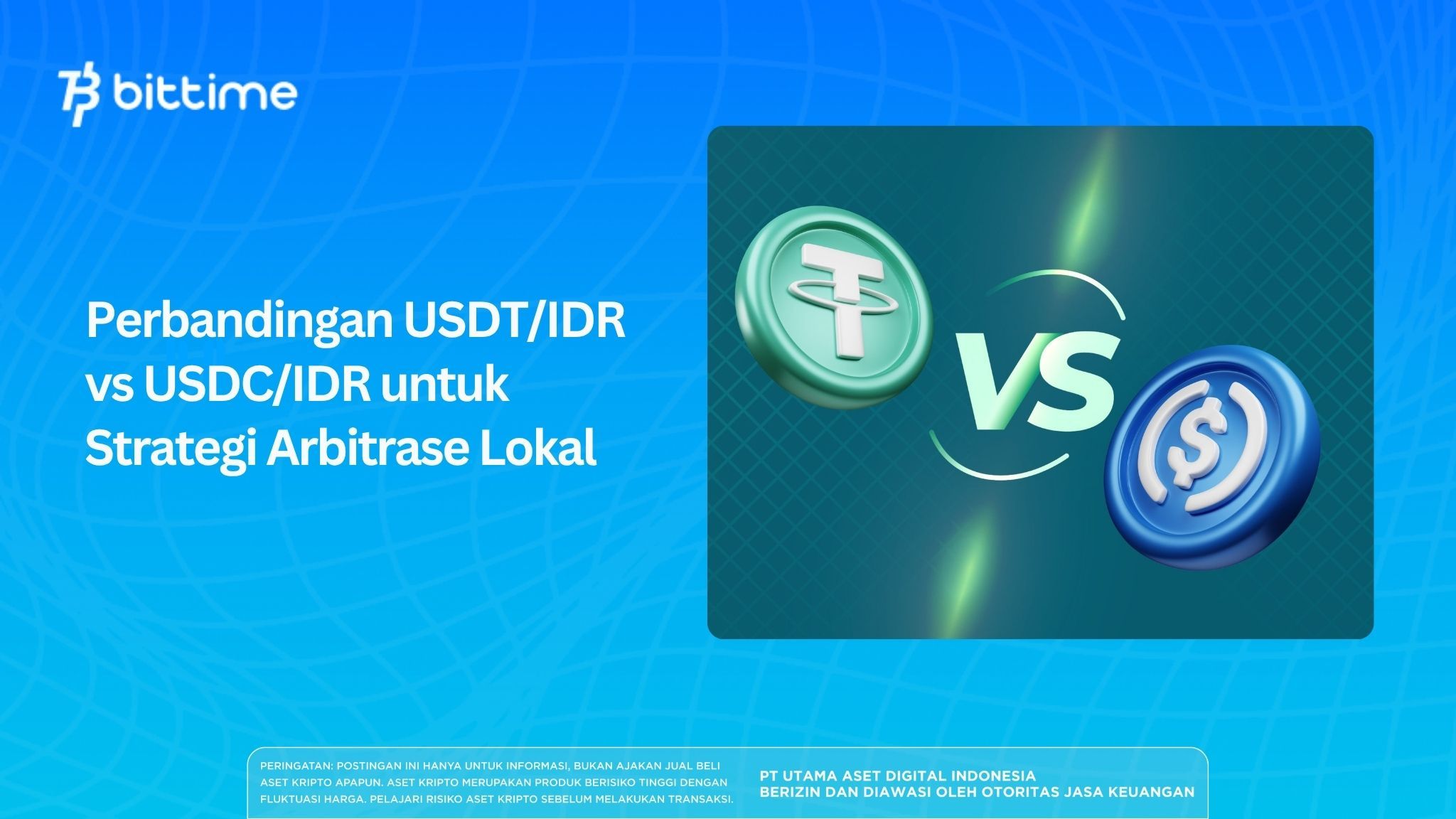
Bittime - In Indonesia, the two most popular stablecoin on exchanges for rupiah transactions are USDT and USDC. Both are pegged to the US dollar. However, their liquidity, transparency, and suitability for local arbitrage strategies differ significantly.
This article will thoroughly examine the comparison between USDT/IDR and USDC/IDR, plus how you can leverage both to profit from price differences across local exchanges.
Key Points
- Trading USDT in the USDT/IDR pair has higher liquidity, making it easier to execute for quick arbitrage.
- USDC/IDR tends to be more stable and transparent, suitable for transfers between exchanges with a more predictable risk of price differences.
- Local arbitrage strategies rely on price differences in stablecoins across various Indonesian exchanges; the key to success is transaction speed and cost.
Register at Bittime now and start trading crypto with a fast, safe, and easy process in the app.
Why is Local Arbitration Attractive in Indonesia?
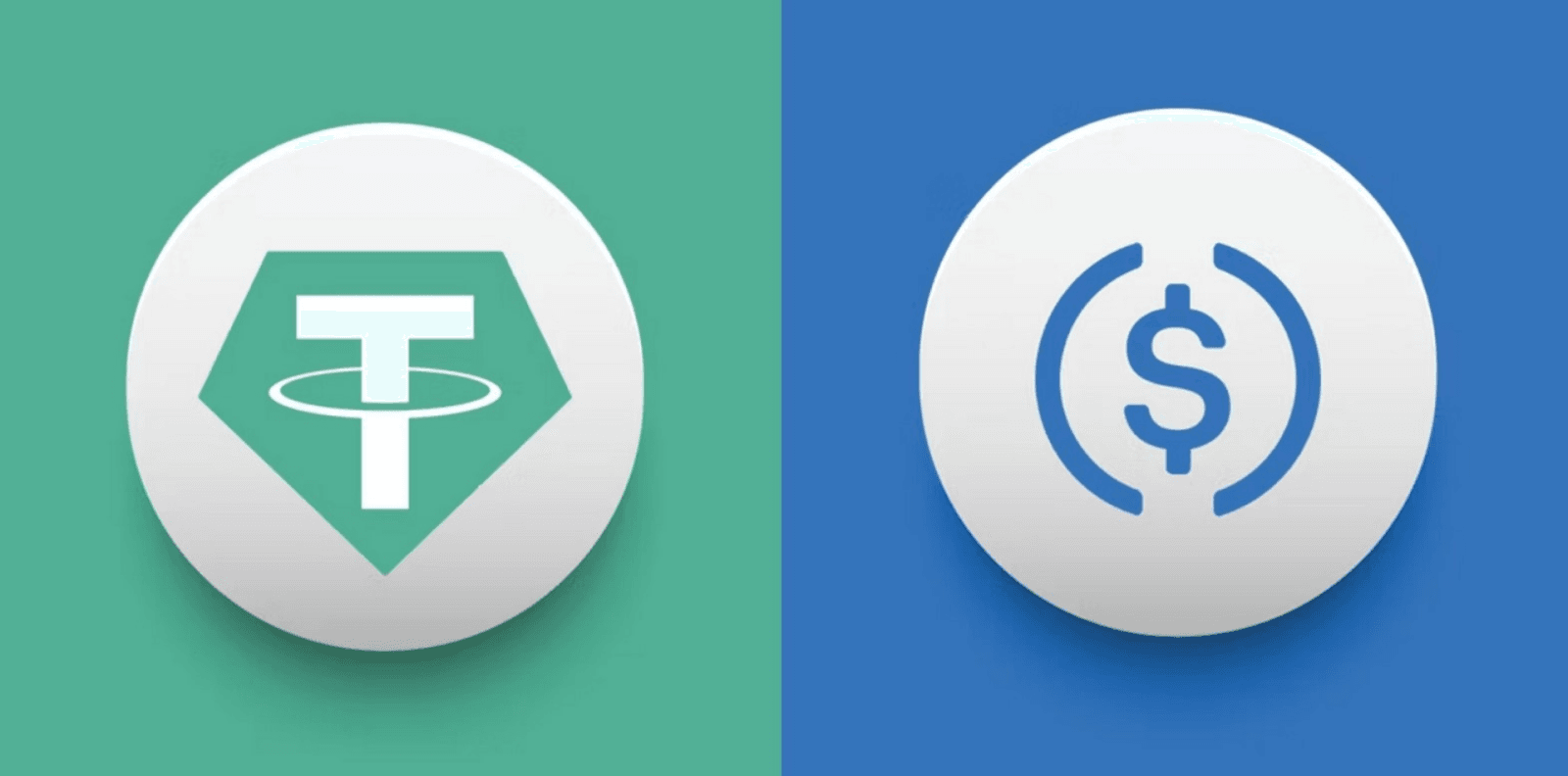
In Indonesia, there are many crypto exchange platforms that provide USDT/IDR pairs and USDC/IDR. The prices of these two pairs are not always exactly the same in every place.
Sometimes USDT is sold for more on exchange A but cheaper on exchange B. The same is true for USDC. Price differences, which can reach 1% to 3% under certain conditions, present a golden opportunity. You can buy where it's cheap and sell where it's expensive.
Simple in concept, but requires fast execution as arbitrage opportunities typically only last a matter of minutes.
So, which is more profitable, USDT/IDR or USDC/IDR? The answer depends on liquidity, transfer fees, and the speed of the blockchain network you're using. Let's examine each one.
Read also: The 10 Stablecoins with the Largest Volume in the World
Understanding USDT/IDR and USDC/IDR
USDT/IDR is a trading pair between Tether (USDT) and the Indonesian Rupiah. USDT is the world's largest stablecoin with a market capitalization of over $150 billion.
It is issued by Tether Limited and is available on various blockchain networks such as TRC-20 (Tron), ERC-20 (Ethereum), and Solana.
USDC/IDR is a pairing between USD Coin (USDC) and the Indonesian Rupiah. USDC is managed by Circle and Coinbase through the Centre Consortium. Its main advantage is transparency: monthly independent audits ensure a 1:1 balance between US dollars and government bonds.
For trading on Indonesian exchanges, both pairs are always available. However, USDT trading volume is typically much higher than USDC. This means that when you want to sell large amounts of USDT, it's easier to find buyers. Conversely, USDC has less demand in the local market.
Detailed Comparison for Arbitration
Let's compare the two from the most relevant side for local arbitrage strategy:
The table above shows that USDT/IDR has the edge in terms of liquidity and ease of execution. For local crypto arbitrage, speed and certainty of order fulfillment are paramount.
You don't want to get caught buying USDC at a low price, only to find that there are no buyers when you try to sell elsewhere.
Read also: US Government Meeting to Discuss Crypto & Stablecoin Regulation in 2026
Arbitrage Strategy with USDT/IDR
The most common arbitrage strategy uses USDT for several reasons. First, almost all local exchanges, including Bittime, have a large USDT/IDR pair.
Second, USDT transfer fees between exchanges can be reduced by choosing the TRC-20 network, which charges only around 1 USDT or less. Third, TRC-20 confirmation speeds are extremely fast, ideal for pursuing fleeting opportunities.
Practical steps:
- Monitor prices USDT/IDR on Bittime differently.
- Identify the price difference. For example, on exchange A, the USDT/IDR buy price is Rp17,100, while on exchange B, the USDT/IDR sell price is Rp17,250. The difference is 150 rupiah, or approximately 0.87%.
- Buy USDT on exchange A using rupiah.
- Withdraw USDT to your personal wallet, then transfer it to exchange B. Choose the cheapest network.
- Sell USDT on exchange B into rupiah.
- Repeat. Ensure that the net profit after transfer fees and trading costs is still positive.
However, it's important to remember that some local exchanges impose withdrawal times or daily limits. Make sure you understand each platform's rules.
Strategy with USDC/IDR: When is it Suitable?
Although USDC/IDR is less liquid, it doesn't mean it's useless. You can use USDC for arbitrage when the price difference is wide.
Because USDC is traded less frequently, platforms sometimes experience price lags or overstocking. In such cases, the difference can reach 2% to 3%.
Additionally, IDR stablecoins like USDC are preferred by institutional investors or those who prioritize transparency. If you plan to hold funds for a longer period while waiting for an opportunity, USDC is safer from the risk of reserve disputes.
For transfers, use the Solana or Algorand networks for USDC. Transfer fees are very low, often under $0.01, and the speed is comparable to TRC-20.
Unfortunately, not all local exchanges support USDC withdrawals via this fast network. Check first.
USDT vs USDC Comparison in Terms of Security and Regulation
When comparing USDT and USDC, it's also important to consider regulatory aspects. USDC is subject to strict US financial regulations. Circle, as the issuer, is supervised and audited.
Meanwhile, USDT has been fined several times by regulators for perceived lack of transparency. In the short term, the risks for both stablecoins are minimal. However, for strategies involving holding funds for weeks, USDC offers greater peace of mind.
Tips for Successful Local Arbitration
- Use multiple accounts on different local exchanges for fast execution.
- Keep an eye on transfer and trading fees. Small profits can be wiped out by fees.
- Focus on USDT/IDR for beginners because it has the most guaranteed liquidity.
- Take advantage of low-cost networks like TRC-20 for USDT or Solana for USDC.
- Avoid peak hours when the blockchain network is congested, as fees can spike.
- Use stablecoins for consistent trading, don't switch to volatile cryptos during arbitrage.
Read also: USAT vs USDT vs USDC: Which Stablecoin is Superior?
Conclusion
Both USDT/IDR and USDC/IDR can be used for local arbitrage strategies in Indonesia. However, in terms of liquidity and convenience, USDT/IDR is the preferred choice for most traders.
Large trading volumes enable faster buy-sell execution and more competitive pricing. Meanwhile, USDC/IDR can be an alternative when the price difference is particularly favorable, especially for those who prioritize transparency.
The key to successful arbitrage isn't just about choosing a stablecoin, but also about speed, discipline, and understanding costs. Happy hunting for opportunities.
How to Buy Crypto on Bittime?
Want to trade sell buy Bitcoins and crypto investment easily? Bittime is here to help! As an Indonesian crypto exchange officially registered with Bappebti, Bittime ensures every transaction is safe and fast.
Start with registration and identity verification, then make a minimum deposit of IDR 10,000. After that, you can immediately buy your favorite digital assets!
Check the exchange rate BTC to IDR, ETH to IDR, SOL to IDR and other crypto assets to find out today's crypto market trends in real-time on Bittime.
Also, visit the Bittime Blog for interesting updates and educational information about the crypto world. Find reliable articles about Web3, blockchain technology, and digital asset investment tips designed to enrich your crypto knowledge.
FAQ
What are the main differences between USDT/IDR and USDC/IDR for arbitrage?
USDT/IDR has higher liquidity, resulting in faster execution. USDC/IDR is more transparent but has smaller trading volume on Indonesian exchanges.
Which is more profitable for short-term trading?
USDT/IDR is more profitable because the spread is tighter and you can enter and exit positions easily.
Is there a risk of depegging on both stablecoins?
Historically, USDC depreciated to $0.95 in 2023 due to the banking crisis, but recovered. USDT has also experienced slight declines. However, these occurrences are very rare and usually resolve quickly.
Disclaimer: The views expressed belong exclusively to the author and do not reflect the views of this platform. This platform and its affiliates disclaim any responsibility for the accuracy or suitability of the information provided. It is for informational purposes only and not intended as financial or investment advice.
.png)