Loopring (LRC) Closed: Causes and Impacts for Holders
2026-07-10
News Loopring (LRC) the closure is a major concern for Ethereum ecosystem users, especially those who still hold assets on Loopring Layer 2 or hold LRC tokens.
On June 28, 2026, the Loopring team announced the termination of its DEX trading services, automated market maker (AMM), and relay services that had been supporting network activity. The official website also now states that Loopring is no longer operational.
Key Takeaways
- Loopring is shutting down its DEX and Layer 2 operations due to low adoption, technological limitations, and being unable to compete with the more flexible zkEVM network.
- LRC tokens are not automatically lost, but the closure of the ecosystem reduces its utility, liquidity, and fundamental prospects.
- Users with assets on Loopring L2 need to check for balance announcements and fund distributions to their Ethereum Layer 1 addresses.
Why is Loopring (LRC) Closed?
This closure doesn't mean that every LRC token will be immediately removed from the blockchain. LRC remains an ERC-20 token that can be held in wallets or traded on exchanges that still support it.
However, the primary service that provided the token's real functionality has ceased. Therefore, holders must distinguish between the Loopring platform's closure and the LRC token's existence as a digital asset.
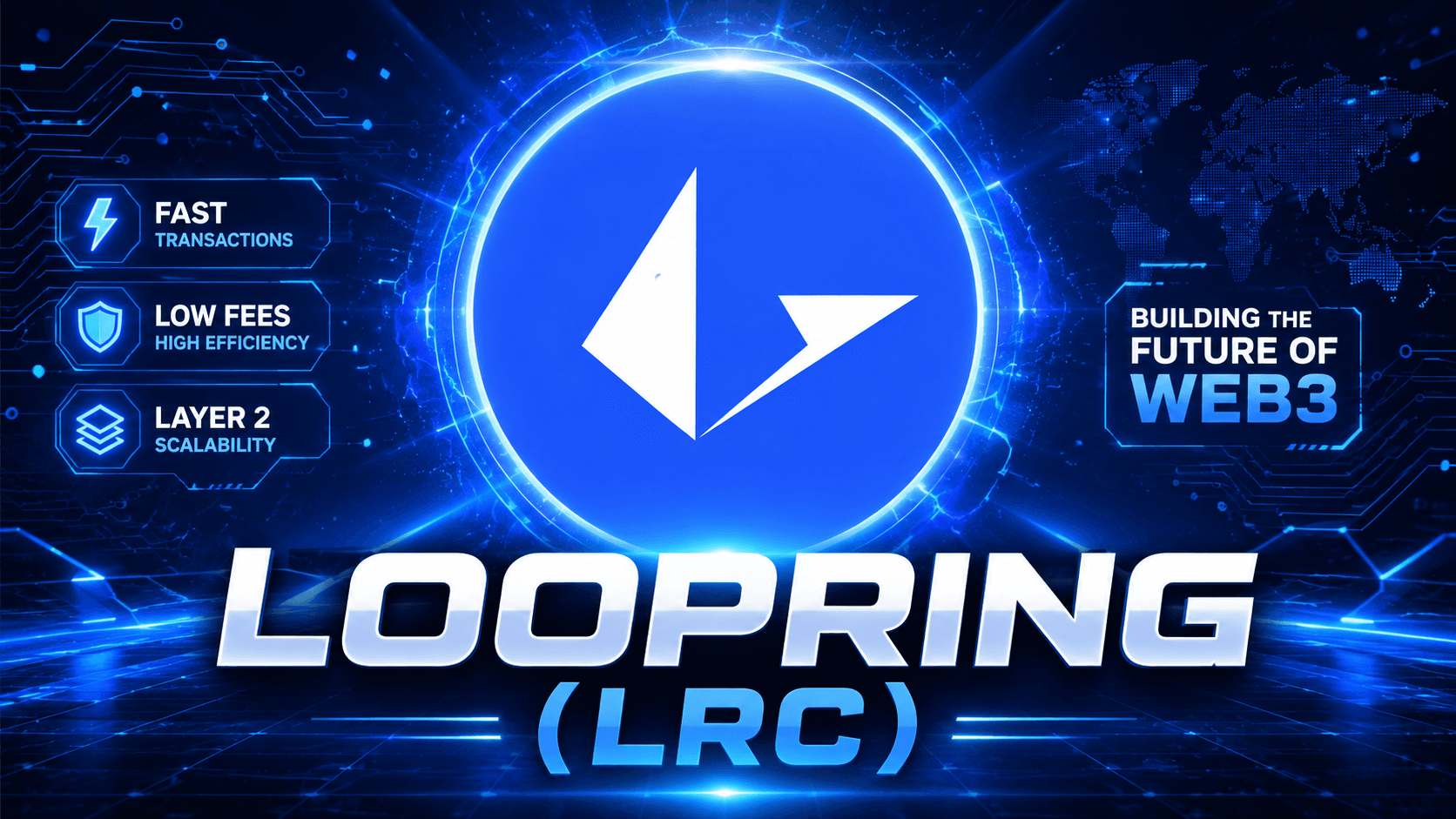
Sumber AI Generated Image
Loopring is not a small project that emerged without a track record. This protocol is among the pioneers of the use of zk-rollup technology to increase Ethereum's capacity. Loopring once offered faster and cheaper transactions while maintaining Ethereum's security.
However, being a pioneer doesn't always guarantee sustainability. In its closure announcement, the Loopring team acknowledged three major issues that made the project's operations unsustainable.
Read also:Robinhood Token: List of 10 Trending Memecoins on DexScreener
1. Loopring failed to gain sufficient adoption
The most fundamental reason is low actual usage. The Loopring team openly admits that the platform never achieved significant adoption.
At its peak in November 2021, Loopring's total value locked (TVL) approached US$760 million. By the time of closing, it had dropped to around US$8 million. This decline indicated that liquidity and user activity had shrunk by nearly 99% from their peak levels.
DEXs require transaction volume, liquidity, and active users to remain relevant. Without these, protocol revenues decline, incentives for liquidity providers weaken, and network maintenance costs become increasingly difficult to justify.
2. Loopring architecture lags behind zkEVM
Loopring was developed as a zk-rollup focused on specific functions, primarily trading, payments, and asset exchange. The architecture was effective for its time, but lacked a virtual machine that supported network-wide composability Ethereum Virtual Machine.
These limitations prevent developers from building a wide variety of DeFi applications with the same flexibility as on modern zkEVM networks. Meanwhile, competitors like zkSync, Scroll, and Starknet are expanding with a broader ecosystem of apps, smart contracts, lending, derivatives, games, and financial products.
Loopring ultimately faced structural problems. Its technology was capable of performing certain functions efficiently, but lacked the flexibility to keep up with industry developments.
3. Weak in business development
The Loopring team acknowledges that they are stronger as engineers than as business operators. They are capable of developing innovative technology, but have not succeeded in translating that innovation into user growth and a sustainable business model.
In the crypto industry, good technology requires distribution, marketing, partnerships, a community, and a monetization strategy. Even technically superior products can fall behind when users don’t see a compelling reason to switch from other platforms.
This situation is exacerbated by a decline in exchange support for LRC. A number of delistings and trading suspensions have narrowed market access and reduced the token’s liquidity.
Read also:Trump Gains $1.2 Billion vs. Retail Losses $3.81 Billion: The TRUMP Token Drama
What Loopring Services Are Being Closed?
Loopring's announcement doesn't just affect one trading pair. The outage encompasses core components of the ecosystem, namely:
- Trading services on Loopring DEX.
- Automated market maker and liquidity pool.
- Relayer that processes network activity.
- Infrastructure Loopring Layer 2.
- User products that depend on the network.
Previously, the Loopring Wallet service was also discontinued in mid-2025. The DEX closure in June 2026 marked the final stage of Loopring's operational downsizing. The project's official website even stated that Loopring was no longer operational.
This means this isn't just a temporary maintenance issue or version migration. Loopring has entered the permanent deprecation process.
Read also:The US Strategic Bitcoin Reserve is Hampered, What's Going On?
Are LRC Tokens Also Lost?
LRC tokens don't automatically disappear when Loopring shuts down. As an ERC-20 token, LRC remains recorded on the Ethereum blockchain and can still be transferred between wallets as long as the Ethereum network is operational.
However, there is a big difference between tokens that still exist technically and tokens that still have economic utility.
Prior to the shutdown, LRC was connected to protocol activity, incentives, fees, staking, liquidity, and the operation of Loopring-based exchanges. When its core product ceased operations, this utility-based demand also weakened.
Therefore, the closure of Loopring poses several risks for LRC:
- There are fewer fundamental reasons to hold tokens.
- Decreased trading liquidity.
- Increased risk of delisting from other exchanges.
- The potential for buying and selling spreads to widen.
- Extreme volatility due to low market depth.
- The difficulty of rebuilding investor confidence.
Historically, LRC had reached around US$3.75 in November 2021. By the close, its value was around one US cent, down more than 99% from its high.
Impact of Loopring (LRC) Closing for All Holders
The impact experienced by each holder varies. This depends on where the LRC is held and the type of position held.
Sumber AI Generated Image
Holders who store assets on Loopring Layer 2
This group should pay the most attention to the asset distribution process. The Loopring team plans to return users' funds directly to the Ethereum Layer 1 address associated with their account.
In an official update, Loopring stated it was returning approximately US$7.17 million to 31,393 recipients. The initial distribution covered 71 of the 89 assets recorded in the snapshot.
Users must ensure that the wallet address they are using is still accessible. Losing the seed phrase or private key can prevent access to funds sent to Layer 1.
Holder LRC di centralized exchange
LRC held on centralized exchanges are not included in Loopring Layer 2 asset returns. Users are subject to the policies of each exchange.
Holder needs to check:
- Does the exchange still support LRC trading?
- Is the LRC deposit still available?
- Are withdrawals to Ethereum wallets still open?
- Time limit before trading stops.
- The network used when making a withdrawal.
Coinbase, for example, has announced plans to cease trading of LRC on August 7, 2026. The announcement states that user assets will remain accessible and withdrawable after trading is halted.
Other exchange policies may vary. Don't assume all platforms will have the same schedules or procedures.
Liquidity providers and AMM position holders
Liquidity pool positions don't need to be manually liquidated by users. The Loopring team stated that AMM positions will be converted to their underlying tokens based on the conditions upon service termination.
The final value is then entered into the user's balance list. This process reduces technical overhead, but users must still verify that the recorded token amount is correct.
Holders with small balances
Loopring sets a minimum distribution threshold of US$10. Accounts with a final value below this threshold are excluded from the batch delivery process.
This policy poses a problem for users with small remaining balances. Although the nominal value of each account is limited, the total amount can be quite large if multiple users are involved.
Read also:BonkDAO US$20 Million Stolen via Malicious Proposal: What Happened?
How Does the Loopring Refund Process Work?
The Loopring team chose a centralized distribution method to resolve asset returns. This differs from the self-exit mechanism typically characteristic of non-custodial services.
The process includes several stages.
1. Snapshot and balance calculation
Loopring calculates the final balance of all Layer 2 accounts. This data includes spot tokens, ETH, ERC-20 assets, and liquidity pool position conversion results.
2. Publication of balance list
The final list is published so users can verify asset amounts and recipient addresses. Users are given approximately two weeks to report any discrepancies.
3. Smart contract updates
The smart contract was modified so that only whitelisted and team-controlled addresses could move assets out of Layer 2. This step enabled mass distribution in multiple batches.
4. Distribution to Ethereum Layer 1
Funds are sent to the Ethereum address associated with the Loopring account. Users don't need to send proof or pay gas fees, as the distribution costs are covered by the Loopring team.
While seemingly convenient, this process is more centralized than a standalone withdrawal mechanism. Users must rely on snapshot data and team-based distribution.
Read also:GORP Rises Sharply, Where Can You Buy Global Oil Recovery Program (GORP)?
What Should LRC Holders Do Now?
Not all shareholders need to make the same decisions. However, the following steps can reduce risk.
- Check the official Loopring source
Use the official Loopring website and official X account. Avoid distribution links sent via private messages, Telegram, or newly created accounts. - Make sure the Ethereum wallet is still accessible
Check the seed phrase, wallet device, and Ethereum address associated with your Loopring account. Never share your private key with anyone. - Verify balance in distribution list
Match the spot balance and the AMM position conversion results. Report any discrepancies while the review period is open. - Monitor exchange policies
Check the trading, deposit, and withdrawal deadlines. Don't wait until the last deadline, as the network or exchange may experience queues. - Re-evaluate the reasons for holding LRC
Don't just rely on the purchase price as the basis for your decision. Consider remaining utility, liquidity, exchange support, and potential new developments. - Beware of refund scams
Shutdown projects are often exploited by scammers. Don't connect your wallet to sites claiming to offer "LRC refund claims" without official confirmation.
To keep up with market changes and other crypto asset news, you can register at Bittime and check for the latest news updates regularly.
Always match the information found with the project's official announcements before making any financial decisions.
Read also:What Is The Black Queen (ANSEMWIFE)? A New Meme Coin on Solana
Is LRC Still Worth Keeping?
There's no single answer for all holders. The decision depends on their risk profile, purchase price, position size, liquidity needs, and confidence in the potential future use of LRC.
However, fundamentally, Loopring's closure removes a core product that previously supported the token's narrative. This situation differs from a typical price correction when the network is still developing and users are growing.
Holders also need to consider liquidity. Tokens still recorded on the blockchain aren't necessarily easy to sell in large quantities. The fewer exchanges and market makers supporting LRC, the higher the risk of slippage and spread loss.
Buying simply because the price has dropped more than 99% isn't a sufficient strategy either. A low price doesn't automatically mean it's undervalued. A decline can reflect a loss of demand, utility, income, and market confidence.
Read also:Hyperliquids Increasingly Dominant, Perpetual Futures Open Interest Reaches US$4.3 Billion
Lessons from the Loopring Closure
The Loopring case demonstrates that technological superiority has a shelf life. A project can be a pioneer, but still lose ground when competitors offer more flexible technology and a more active ecosystem.
Crypto investors should not only assess:
- Transaction speed.
- Low costs.
- Popularity in the previous cycle.
- Highest price of all time.
- The biggest partnership ever announced.
Also pay attention to actual usage, number of developers, application growth, protocol revenue, liquidity, fee structure, and the team's ability to execute business development.
Loopring helped demonstrate that zk-rollups can be used to increase Ethereum's capacity. Its technological contributions remain significant. However, historical contributions aren't always enough to maintain a token's economic value.
Conclusion
The news of Loopring's (LRC) closure marks the end of one of the early projects introducing zk-rollup technology to the Ethereum ecosystem. Low adoption, architectural limitations, weak business development, zkEVM competition, and reduced exchange support were the primary factors behind the decision.
LRC tokens won't automatically disappear, but the closure of DEXs and Layer 2 tokens reduces utility and increases liquidity risk. Users who still have funds in Loopring should check their balance list, ensure access to their Ethereum wallet, and follow the official distribution process.
Don't delay asset verification and avoid using unverified refund links. Stay updated on Bittime and always refer to official announcements.
Bittime is a licensed and regulated Digital Financial Asset Trader (PAKD) supervised by Indonesia’s Financial Services Authority (OJK) — where you can buy Bitcoin in Indonesia and hundreds of other crypto assets starting from just Rp10,000. The registration process is fast, secure, and you can get started today.
Track USDT to IDR conversions and monitor your favorite crypto assets in real time. Everything is available in one crypto investment app that you can download for free on the Play Store
Ready to start? Register now on Bittime and execute your investment strategy with a platform trusted by millions of users in Indonesia.
FAQ
Is Loopring really closed?
Yes, Loopring has shut down its DEX, AMM, relayer, and Layer 2 operations. Loopring's official website also states that the project is no longer operational.
Will LRC tokens disappear after Loopring closes?
Not automatically. LRC remains listed as an ERC-20 token on Ethereum, but its utility and market support may continue to decline after Loopring's core product is discontinued.
How to get back funds in Loopring Layer 2?
The Loopring team distributes assets to the Ethereum Layer 1 addresses associated with user accounts. Holders are required to check the official balance list and report any errors during the verification period.
Will all balances be refunded?
Batch distribution only covers accounts with a minimum final value of US$10. Balances below that limit are excluded, according to procedures announced by the team.
Does the holder have to sell LRC immediately?
This decision depends on the risk profile and circumstances of each holder. Consider remaining utility, liquidity, exchange support, and delisting risk before acting.
Disclaimer: The views expressed belong exclusively to the author and do not reflect the views of this platform. This platform and its affiliates disclaim any responsibility for the accuracy or suitability of the information provided. It is for informational purposes only and not intended as financial or investment advice.
.png)