SpaceX Post-IPO Sharp Price Correction: Factors Depressing Price
2026-06-22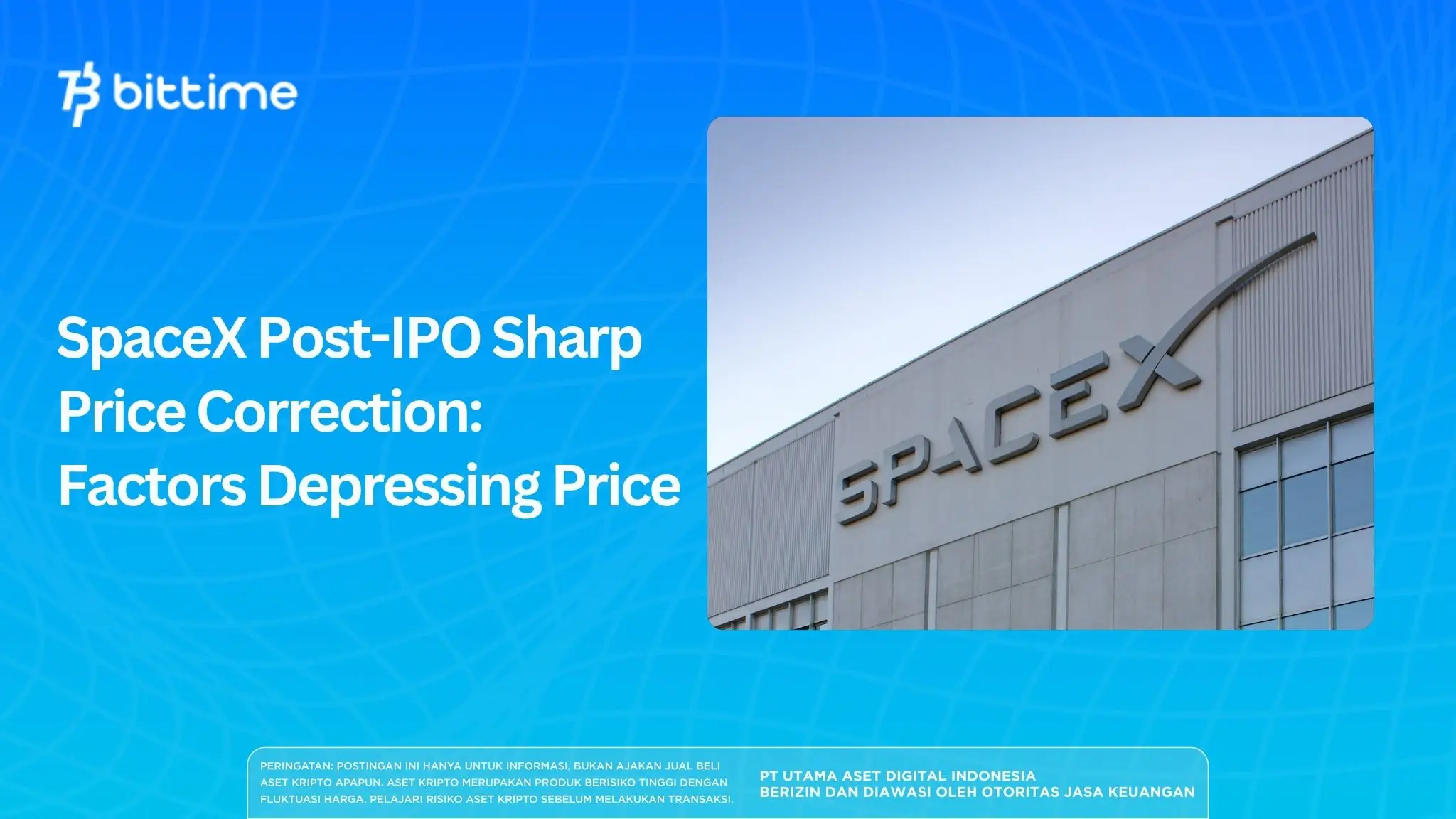
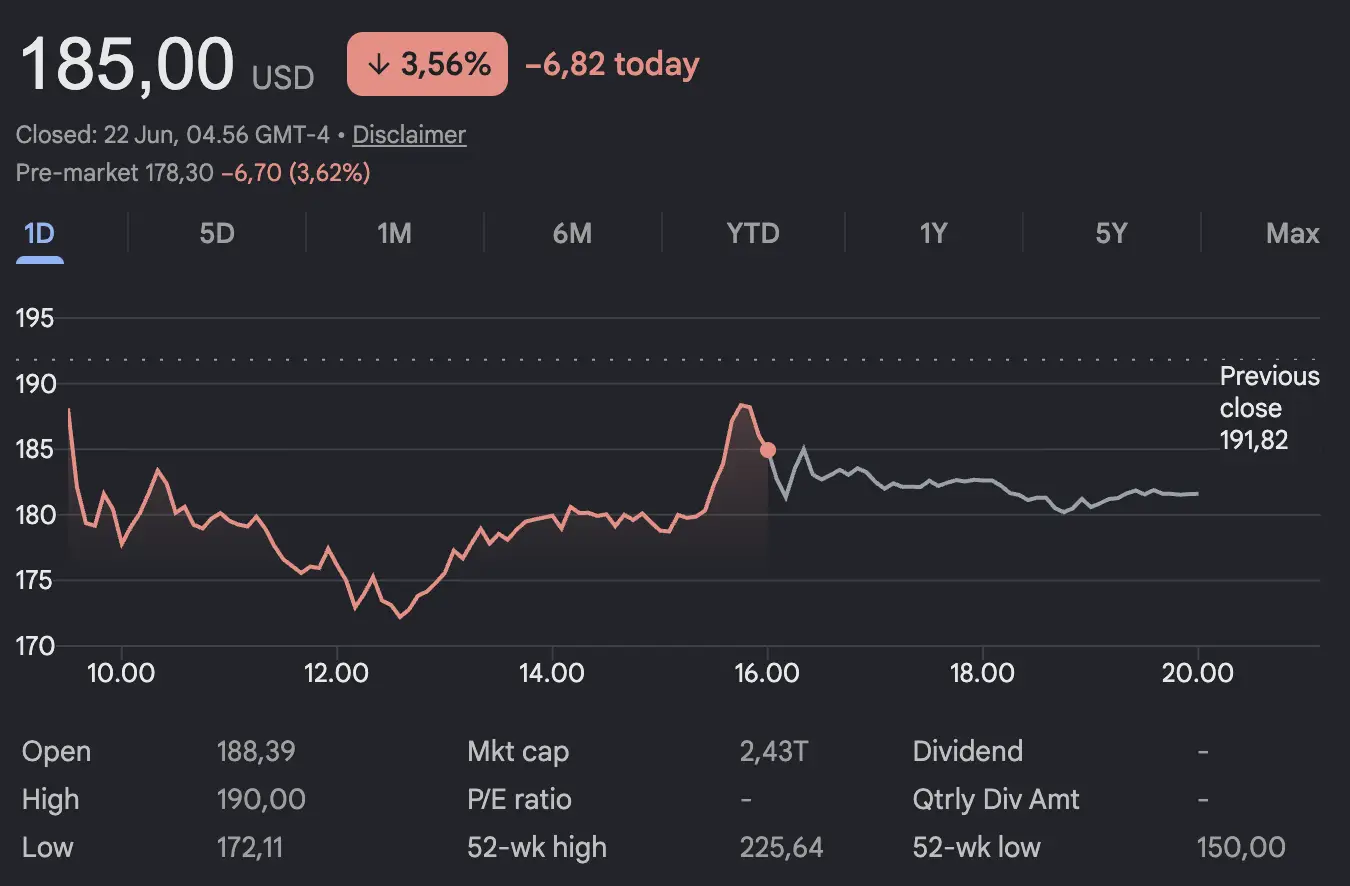
SpaceX stock price down from a peak of $225 to $185 after the largest IPO in history, though still 23% above its opening price of $150.
This correction was triggered by three main factors: acquisitionsCursora $60 billion valuation that sparked market skepticism, a gradual lock-up period schedule that would release a new supply of shares over the next few months, and a valuation that Morningstar deemed overvalued with a fair value of just $62 per share.
Although Oppenheimer raised its target to $250 after the acquisition, this analytical discrepancy indicates high uncertainty.
This article will examine the factors driving down SpaceX's price and what investors should watch for going forward.
Key Points
SpaceX's price fell from a peak of $225 to $185 after the largest IPO in history, though it is still 23% above its opening price of $150.
A gradual lock-up period will release 20-30% of shares before the Q2 report, plus 28% afterward, potentially depressing prices as supply increases.
Morningstar rates SpaceX overvalued with a fair value of $62/share, while Oppenheimer raised its target to $250 following the Cursor acquisition.
Register at Bittime now and start trading crypto with a fast, safe, and easy process in the app.
SpaceX IPO 2026: A Smooth Start, Then a Correction
SpaceX officially listed on the Nasdaq on June 12, 2026 with the largest IPO in history, raising over $87 billion at a valuation of $1.77 trillion.
The opening price was $150, jumped to $170 the same day, and reached a peak of $225 on June 16.
However, a correction soon followed. On June 17, the stock fell 5%, followed by a 3.75% drop on June 18.
On June 19, the price held at $185, still 23% above the opening price but far from the peak.
What Made SpaceX's Stock Price Drop Sharply?
Factor 1: Cursor Acquisition and Market Reaction
On June 16, SpaceX announced its $60 billion acquisition of Anysphere, the startup behind the AI coding agent Cursor. This announcement triggered a decline the following day.
Cursor is an AI coding tool that allows developers to write code faster. For SpaceX, this strengthens its position at "every layer of the AI stack," according to Oppenheimer analyst Timothy Horan.
But the market appears to be responding skeptically to the acquisition price or its impact on cash flow.
Read also:The Biggest IPO in History? Interesting Facts Behind SpaceX
Factor 2: Lock-up Period and New Supply
This is the biggest factor that could push prices down in the next few months.
Spacex after listing has an unusual lock-up schedule:
- 20-30% of shares will be released before the Q2 report (July-August 2026).
- 7% additional after 70, 90, 105, 120, or 135 days.
- 28% more after Q2 report.
- The remaining 180 days after the IPO.
As more shares enter the market, supply increases. Demand may not keep pace, depressing prices.
A 1-3% drop post-lock-up is common, but with this gradual schedule, the pressure could last for months.
Early investors and employees, including Founders Fund, DFJ Growth, Fidelity, and thousands of employees who have been waiting for liquidity for years, will likely sell at the first opportunity.
Read also:SPCXx Price Prediction: Can SpaceX Stock Token Hit $250?
Factor 3: Overvalued Valuation
Morningstar rates SpaceX overvalued with a fair value of $62 per share, about 66% below its current price. In a best-case scenario, Morningstar estimates a fair value of $169.
SpaceX currently has a price-to-sales (P/S) ratio of around 125x, well above the tech sector average of 8x.
With losses of $4.9 billion in 2025 and $4.3 billion in Q1 2026, this valuation is difficult to justify fundamentally.
On the other hand, Oppenheimer raised its target from $190 to $250 following the Cursor acquisition.
There is a wide difference between analysts, indicating high uncertainty.
Check the prices of tokenized stocks like Amazon Tokenized Stock Ondo (AMZON), Netflix Tokenized Stock Ondo (NFLXON), Microsoft Tokenized Stock Ondo (MSFTON), and more—only on Bittime.
Factor 4: Large IPOs Often Underperform
History shows that large IPOs often underperform after an initial surge. Studies show that IPOs with valuations above $10 billion only rise an average of 3.5% from their opening price after 12 months, even those that surge in the first week.
SpaceX's correction may be just the beginning.
Q2 earnings will be the next test: if investors are dissatisfied with performance or projections, selling pressure could increase..
Read also:How to Buy SpaceX Tokenized Stock (SPCXon): SpaceX Ondo Stock Token Guide
Conclusion
SpaceX's price fell from $225 to $185 after the largest IPO in history.
Three main factors weighed: the Cursor acquisition, which sparked skepticism, a lock-up period that would release new supply, and a valuation deemed overvalued by Morningstar ($62 fair value) despite Oppenheimer's optimistic ($250 target).
For investors, this is a waiting period. The lock-up period and Q2 report will determine the price's next direction. History shows that large IPOs often underperform after the initial hype, and SpaceX may be no exception.
Keep an eye on other stock tokens like AMZON, AMDON, and NFLXON, as well as MSFTON, and then you can start trading on the most comprehensive crypto exchange, Bittime.
Bittime is a licensed and regulated Digital Financial Asset Trader (PAKD) supervised by Indonesia’s Financial Services Authority (OJK) — where you can buy Bitcoin in Indonesia and hundreds of other crypto assets starting from just Rp10,000. The registration process is fast, secure, and you can get started today.
Track USDT to IDR conversions and monitor your favorite crypto assets in real time. Everything is available in one crypto investment app that you can download for free on the Play Store
Ready to start? Register now on Bittime and execute your investment strategy with a platform trusted by millions of users in Indonesia.
FAQ
Why is SpaceX's price dropping?
The correction from $225 to $185 was triggered by the Cursor acquisition, lock-up period, and overvalued valuation.
What is a lock-up period?
A period during which early investors and employees cannot sell shares. After the period ends, new supply enters and can depress the price.
When does the SpaceX lock-up end?
Phased: 20-30% before Q2, 28% after Q2, the remainder 180 days after IPO.
Is SpaceX still overvalued?
Morningstar assessed the fair value at $62/share. However, Oppenheimer raised the target to $250.
How much is SpaceX worth now?
$185 per share (June 19, 2026), down from a peak of $225 but still 23% above the opening price of $150.
What is a Cursor?
SpaceX acquired an AI coding agent for $60 billion to strengthen its position in the AI stack.
Is SpaceX profitable?
Not yet. Losses of $4.9 billion in 2025 and $4.3 billion in Q1 2026.
When is SpaceX's Q2 financial report?
July-August 2026. This will be the first test for investors.
Disclaimer: The views expressed belong exclusively to the author and do not reflect the views of this platform. This platform and its affiliates disclaim any responsibility for the accuracy or suitability of the information provided. It is for informational purposes only and not intended as financial or investment advice.

.png)