Futures Trading for Beginners: How It Works, Tips, and Risks
2026-08-11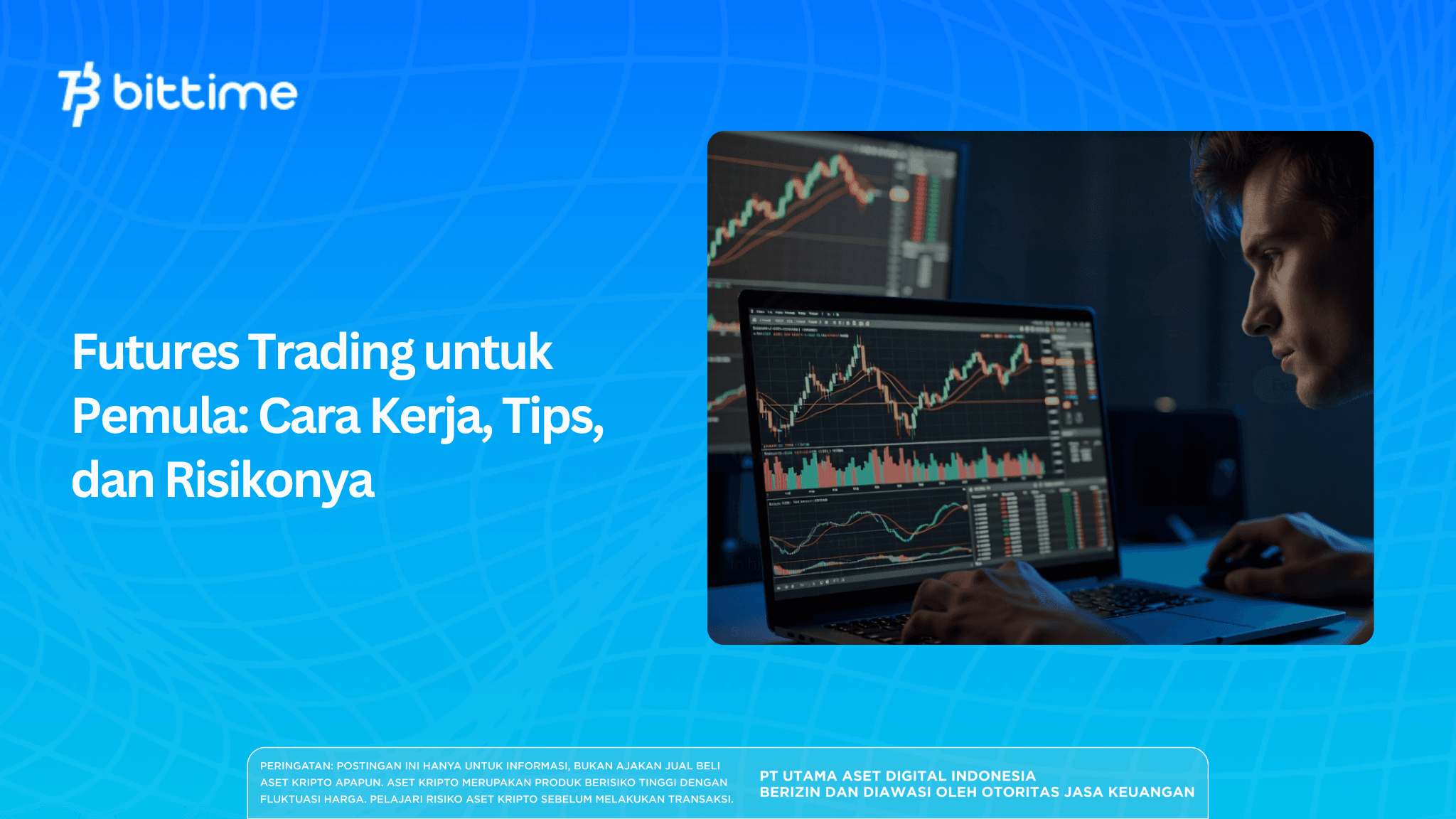
Derivative transactions now account for the largest share of daily crypto asset trading volume, far surpassing regular spot trading.
This phenomenon is no coincidence — an instrument called futures trading offers something that spot trading does not: the ability to profit from both rising and falling markets, with significantly less capital than the actual position size.
For beginner traders who have just heard of this term, futures trading often sounds complicated and high-risk. However, once you understand the mechanics, the basic concept is actually quite simple to learn.
Key Takeaways
- Futures trading allows traders to lock in an asset's price for a future transaction, with the option to open long (buy) or short (sell) positions.
- Leverage amplifies potential profits as well as losses, making risk management via stop orders and position sizing the key to account longevity.
- Perpetual futures in the crypto market differ from traditional futures as they have no expiry date and rely on a funding rate to keep the price close to the spot price.
What Is Futures Trading and How Does It Work?
A futures contract is an agreement between two parties to exchange an asset at a predetermined price on a specified future date.
The contract buyer is obligated to purchase the underlying asset, while the seller is obligated to sell it — this is binding, not merely an option. According to IG.com, a UK-based CFD provider, this characteristic distinguishes futures from options contracts, where the obligation applies to only one party.
In practice, most retail traders — including those in the crypto market — do not actually receive or deliver physical assets. They speculate on the price movement of the contract through trading platforms, then close their positions before or at maturity to realize profits or losses.
Register now on Bittime with a fast, secure, and easy process so you can start trading futures!
A simple example: a trader expects Bitcoin's price to rise over the next month. They open a long position on a BTC futures contract with a certain amount of leverage.
If their prediction is correct, they profit from the price difference multiplied by their position size — but if they're wrong, losses also increase proportionally to the leverage used, minus spread and funding costs.
If you want to try this feature directly, you can register an account on Bittime, an OJK-licensed crypto exchange platform that provides a futures market with competitive leverage options.
Why Do Traders Choose Futures Instruments?
There are several reasons why futures trading remains popular despite its significant risks:
- Leverage. Traders can gain significantly larger market exposure than the (margin) capital deposited. IG notes that profits and losses are determined by the total position size, not just the margin used to open the position — meaning potential losses can exceed the initial capital.
- Directional flexibility. Traders can take long positions when confident prices will rise, or short when confident prices will fall — unlike conventional spot investing, which generally only profits when prices rise.
- Hedging. Traders who already hold crypto assets in a spot wallet can open short futures positions to protect their portfolio's value when the market is potentially declining, without needing to sell their assets.
- Deep liquidity. High transaction volumes make it easier to execute orders close to desired prices, especially for traders with large position sizes.
Also Read: How to Trade Futures on Bittime for Beginners
Strategies and Risk Management from Experienced Traders
Trading futures without a plan is a recipe for rapid losses. Charles Schwab in its trader education guide summarizes several principles that apply universally, including in the crypto market:
- Create a trade plan before entering a position. Determine profit targets and an exit plan from the start, so decisions aren't made when emotions — fear or greed — are running high because a position is already open.
- Use stop orders, not "mental stops." Setting loss limits in your head is too easily ignored when the market moves quickly. It should be noted, CME Group explains that stop orders on futures are not always executed exactly at the desired price due to price protection points — price range limits that prevent execution at extreme levels.
- Size positions gradually. New traders should start with small sizes and increase allocation only after their strategy proves consistent, rather than using all their capital on a single position.
- Don't be afraid to take short positions. Trading opportunities arise in both rising and falling markets — focusing too much on finding buying opportunities alone can unnecessarily limit your strategy.
- Consider a margin call as an alarm, not a reason to add funds. A margin call usually indicates that a position has been losing for a while. Adding funds to hold a position moving in the wrong direction often only delays a larger loss.
Also Read: Futures Trading: History and How It Works
Futures Trading in Crypto Markets: How Is It Different from Traditional Futures?
On traditional exchanges like CME, futures contracts have a fixed expiry date and are settled based on the spot price on that date. The crypto market has a modified version called perpetual futures, and this is what most crypto traders use daily.
Crypto.news explains that perpetual futures have no expiry date at all, so positions can be held indefinitely as long as the account margin is sufficient.
To keep the contract price from deviating too far from the actual market price, there is a mechanism called the funding rate — periodic payments between long and short position traders that push the contract price back toward the spot price.
Also Read: Bittime Futures: Complete Guide to Crypto Derivative Trading in Indonesia
Some important terms you must understand before opening a perpetual futures position:
- Mark price vs index price. The mark price is used by the exchange system to calculate when a position will be liquidated, while the index price is the average spot price from several major exchanges. Cryptoslate notes that the difference between the two is often a source of confusion for beginner traders.
- Liquidation. According to industry analysis related to perpetual futures liquidation mechanisms, the higher the leverage used, the smaller the price movement margin required before an account is forcibly liquidated by the system.
- Margin. Whether actively topping up margin or having a sufficiently large initial margin, both help absorb market volatility and keep positions away from the liquidation price.
Because there is no expiry date, perpetual futures traders need to be more disciplined in monitoring the funding rate and margin ratio compared to traditional futures traders who have a "natural time limit" through the expiry date.
Also Read: Stop Market vs Stop Limit for Futures Risk Management, Don't Choose Wrong
Conclusion
Futures trading offers flexibility that spot trading does not — from the ability to profit in both rising and falling markets, to leverage that amplifies exposure with limited capital.
But this flexibility comes with conditions: a solid understanding of the mechanics, disciplined risk management, and the awareness that losses can exceed initial capital if leverage is used carelessly.
For beginners, the safest step is to start with small position sizes, understand how margin and liquidation work, and familiarize themselves with stop orders before entering high-leverage positions.

Ready to trade with two-way opportunities? Try Bittime Futures and start trading crypto derivatives right from the Bittime market
Bittime is a licensed Digital Financial Asset Trader (PAKD) platform supervised by the Financial Services Authority — where you can buy Bitcoin in Indonesia and hundreds of other crypto assets starting from Rp10,000. The registration process is fast, secure, and can be started today.
Monitor the USDT to IDR conversion and the real-time price movements of your favorite crypto assets. All available in one crypto investment app that can be downloaded for free on the Play Store.
Ready to start? Register now on Bittime and execute your investment strategy on a platform already trusted by millions of users in Indonesia.
FAQ
What is futures trading?
Futures trading is the activity of buying and selling contracts that lock in the price of an asset for a transaction on a specific future date. Traders can take long or short positions depending on their price direction prediction.
What is the difference between futures and options?
A futures contract obligates both parties to exchange the asset at the agreed price upon maturity. An options contract only obligates one party to transact if the other party chooses to exercise their right.
Can beginners start trading futures directly?
Yes, but it's recommended to start with small position sizes and low leverage while understanding how margin and liquidation work. Practicing on a demo account also helps before using real funds.
What is the funding rate in perpetual futures?
The funding rate is a periodic payment between long and short position traders that keeps the perpetual contract price close to the spot price. Its value can be positive or negative depending on market sentiment direction.
What is the minimum capital needed to start trading futures?
The minimum capital varies depending on the platform and the contract size chosen, including micro contracts which have smaller values. It's best to check the margin requirements on each exchange before opening a position.
Is futures trading high-risk?
Yes, especially due to the use of leverage which can amplify losses beyond the initial capital if the market moves against the position. Risk management such as stop orders and position sizing is very important to control this risk.
Disclaimer: The views expressed belong exclusively to the author and do not reflect the views of this platform. This platform and its affiliates disclaim any responsibility for the accuracy or suitability of the information provided. It is for informational purposes only and not intended as financial or investment advice.

.png)