Perpetual Futures vs Quarterly Futures What's the Difference?
2026-07-30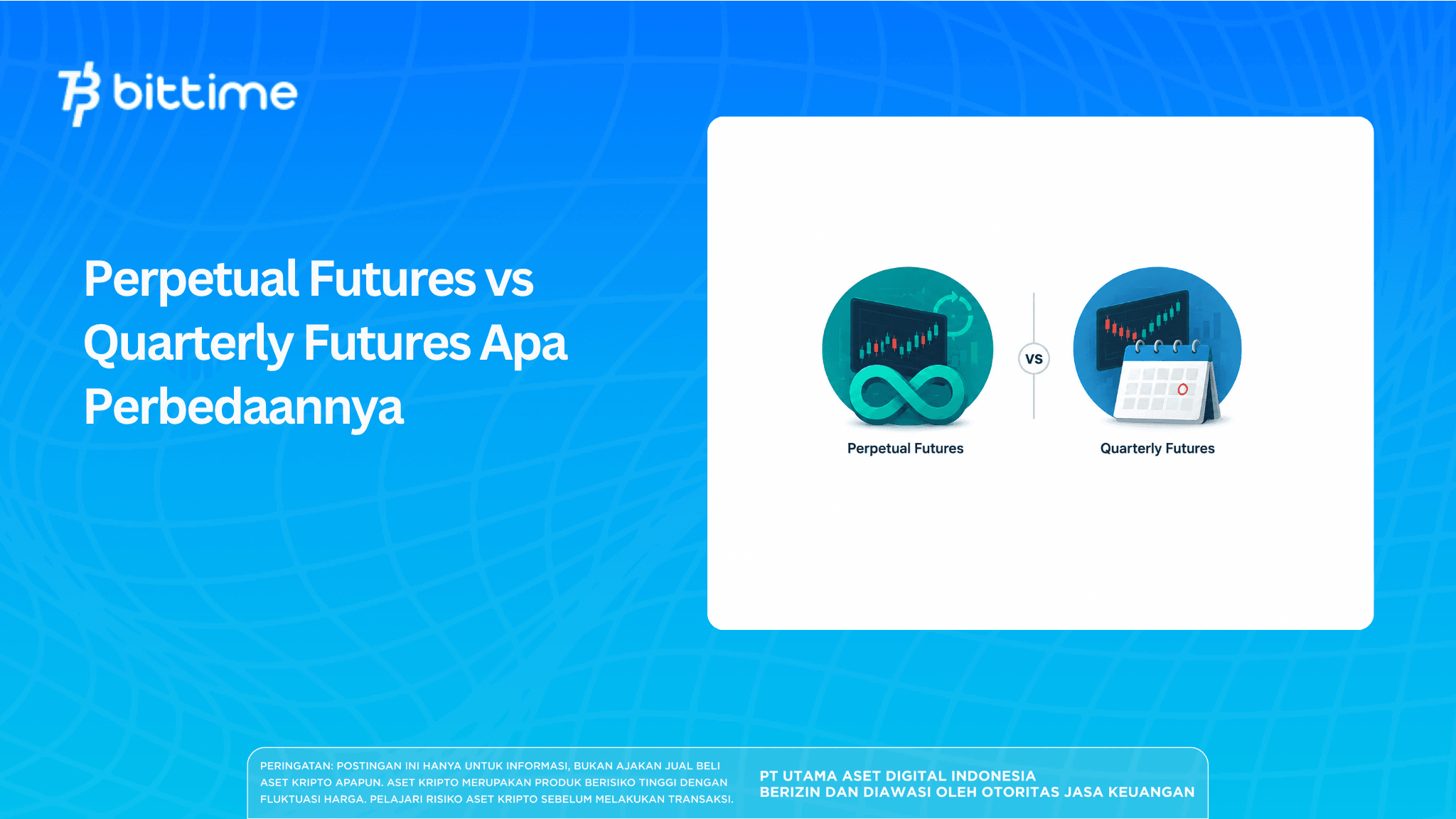
Both perpetual futures and quarterly futures allow futures traders to take positions on cryptocurrency price movements without owning the underlying asset. However, they differ in terms of expiration dates, funding rates, rollover requirements, and fee structures.
Understanding these differences is essential before choosing a crypto futures contract that fits your strategy and risk tolerance.
Key Takeaways
- Perpetual futures have no expiration date, whereas quarterly futures expire at a predetermined time.
- Perpetual futures use a funding rate to help keep the contract price close to the spot price.
- Contract selection should consider position duration, costs, hedging needs, and the ability to manage risk.
What Are Perpetual Futures?
Perpetual futures are derivative contracts with no expiration date. Traders can maintain long or short positions as long as their margin is sufficient and the position is not liquidated. This feature makes perpetual futures popular for day trading, scalping, and swing trading.
Crypto perpetual futures contracts rely on a funding rate. This mechanism involves periodic payments between long and short traders. When the funding rate is positive, long traders generally pay short traders. When it is negative, short traders generally pay long traders.
The funding rate helps reduce the price gap between perpetual contracts and the spot market. It is not fixed because it reflects the balance of positions and prevailing market conditions. Traders who hold positions for extended periods need to account for funding fees, trading fees, and potential slippage.
Read also: Strategies for Taking Profits in a Bear Market with Crypto Futures
Understanding Quarterly Futures and Expiration Dates
Quarterly futures are futures contracts that expire on a specific date, usually following a quarterly cycle. As a contract approaches expiration, traders can close their positions, wait for settlement, or transfer their exposure to the next contract.
This transfer is called a rollover. Traders close the contract that is nearing expiration and then open a contract for the next period. This process may create spreads, slippage, and price differences between contracts.
Quarterly futures generally do not use periodic funding rates. However, traders still need to account for trading fees and the basis, which is the difference between the futures price and the spot price.
Their fixed expiration dates make these contracts common for hedging or strategies with a defined time horizon.
Register with Bittime, learn about the Futures feature, and follow the latest crypto news to support your market analysis. Make sure you understand leverage, funding rates, margin, and liquidation risk before opening a position.
Read also: Differences Between Crypto Spot and Futures Trading for Beginners
Differences Between Perpetual Futures and Quarterly Futures
Expiration Date
Perpetual futures have no expiration date, whereas quarterly futures have a fixed end date. Holders of quarterly futures need to manage their contracts before or at maturity.
Funding Rates and Fees
Perpetual futures have a funding rate that may become either a cost or income. Quarterly futures do not use periodic funding rates, but rollovers and changes in the basis can still affect returns.
Relationship with the Spot Price
Perpetual futures prices are kept close to spot prices through funding rates and price indices. Quarterly futures may trade at a premium or discount and generally converge toward the settlement price as expiration approaches.
Rollover
Perpetual futures do not require rollover because the contracts do not expire. With quarterly futures, a rollover is necessary when traders want to maintain exposure after the existing contract expires.
Strategic Uses
Perpetual futures tend to suit active and flexible trading. Quarterly futures are more relevant for hedging, basis trading, or positions tied to a specific period.
Read also: Futures Open Interest: How to Read Market Trends and Sentiment
Advantages and Risks of Both Crypto Futures Contracts
Perpetual futures offer flexibility because traders do not need to monitor a contract calendar. The drawback is that funding fees can accumulate and reduce profits when positions are held for a long time.
Quarterly futures provide a definite settlement date and do not impose periodic funding rates. However, traders need to understand expiration, basis, liquidity, and rollover costs.
Both still carry similar risks:
- Leverage amplifies both profits and losses.
- Insufficient margin can trigger liquidation.
- High volatility can cause slippage.
- A position without an exit plan can result in substantial losses.
Read also: Facing a Margin Call in Crypto Futures? Take These Steps to Avoid Liquidation
Choosing Perpetual Futures or Quarterly Futures for Crypto Trading
Perpetual futures may be considered when traders need flexible positions and can monitor funding rates regularly. Quarterly futures are more suitable when a strategy has a clear time target or requires hedging through a specific period.

Source: AI-Generated Image
Before choosing, answer these four questions:
- How long will the position be held?
- What total costs may arise?
- Does the position require a settlement date?
- What loss limit and position size are considered safe?
Do not choose a contract simply because the leverage looks attractive. Set an entry level, profit target, stop-loss level, and maximum risk before opening a position.
Now that you understand the differences between perpetual futures and quarterly futures, you can explore futures trading on Bittime, the first crypto platform to obtain a futures license from CFX through a fully completed licensing process under OJK supervision.
Conclusion
Perpetual futures and quarterly futures differ in their expiration dates, funding rates, rollover requirements, and pricing structures.
Perpetual futures are more flexible, but funding costs can accumulate. Quarterly futures have a clear expiration date without periodic funding rates, but they require rollover management.
Choose a contract based on your strategy, position duration, hedging needs, and ability to control risk. Learn how the mechanism works first and use the latest market information as a consideration, not as the sole basis for a decision.

Maximize your opportunities in both bull and bear markets with Bittime Futures. Sign up and start trading now!
Bittime is a licensed Digital Financial Asset Trader (PAKD) platform supervised by Indonesia’s Financial Services Authority (OJK) — where you can buy Bitcoin in Indonesia and hundreds of other crypto assets starting from Rp10,000. The registration process is fast and secure, and you can get started today.
Monitor the USDT-to-IDR conversion and track the price movements of your favorite crypto assets in real time. Everything is available in one crypto investment app that can be downloaded for free from the Play Store.
Ready to get started? Register with Bittime now and execute your investment strategy on a platform trusted by millions of users in Indonesia.
FAQ
Do perpetual futures have an expiration date?
No. A position can be maintained as long as the margin is sufficient and it is not liquidated.
What is the purpose of the funding rate?
The funding rate helps keep the perpetual contract price close to the spot price. Payments are exchanged between long and short traders.
Are quarterly futures free of fees?
No. These contracts still involve trading fees, spreads, slippage, and potential rollover costs.
Which is more suitable for beginners?
Both are high-risk because they can use leverage. Beginners need to understand margin, liquidation, and risk management before trading.
When are quarterly futures more attractive?
Quarterly futures may be considered for hedging or strategies with a specific time horizon, especially when traders want to avoid periodic funding rates.
Disclaimer: The views expressed belong exclusively to the author and do not reflect the views of this platform. This platform and its affiliates disclaim any responsibility for the accuracy or suitability of the information provided. It is for informational purposes only and not intended as financial or investment advice.

.png)