BLOOM Singapore Partners with Malaysia and Thailand, What Will Be the Impact?
2026-10-26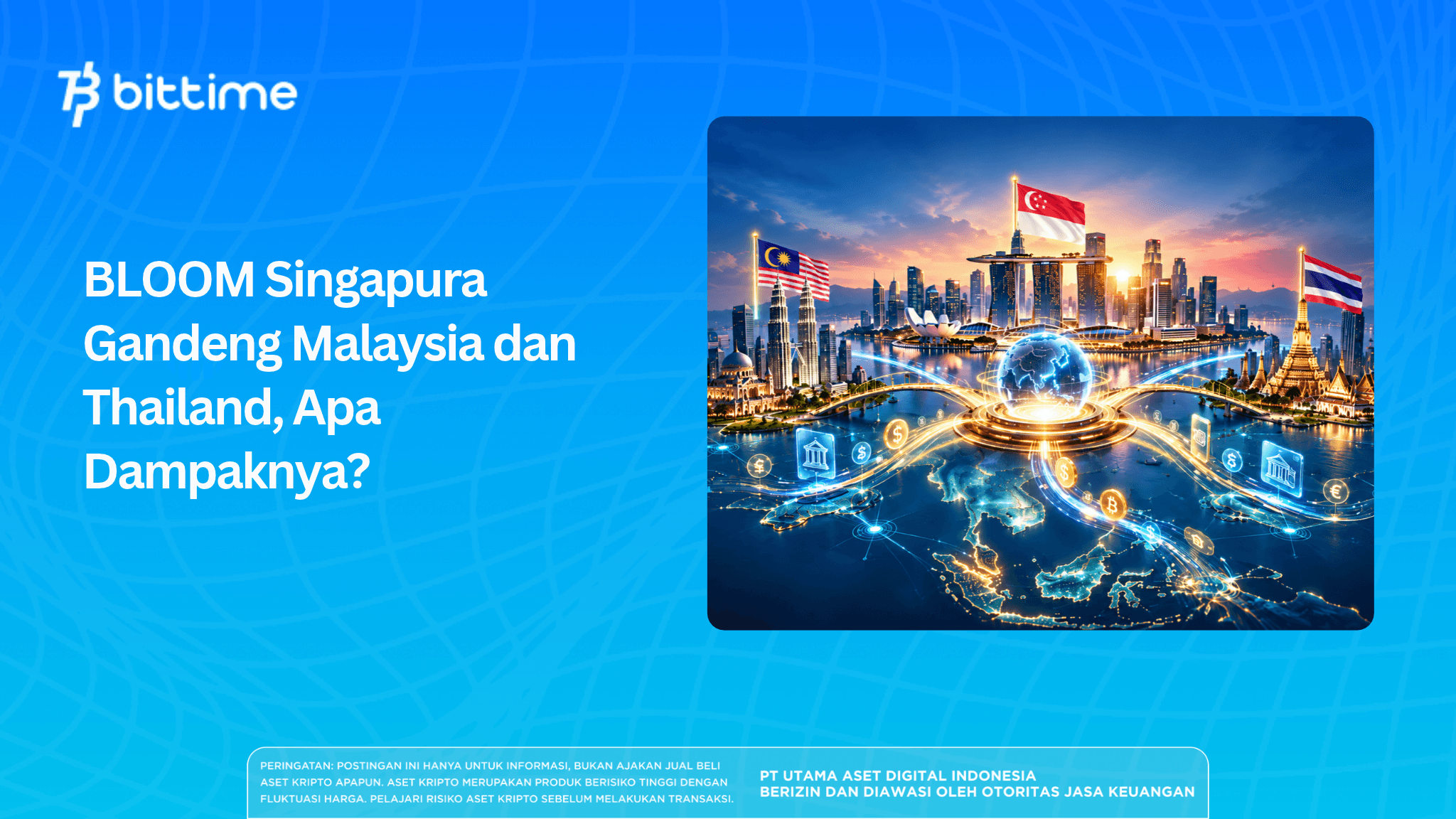
Singapore's BLOOM initiative is expanding cooperation after the central banks of Malaysia and Thailand joined to help develop policy approaches for digital money payments. Announced on October 23, 2026, this development raises an important question: what could change in the way money moves across borders?
For businesses, the challenge is tangible: overseas payments involve different systems, currencies, and regulations. BLOOM aims to help financial institutions connect these processes through the use of digital money, including tokenized bank deposits and stablecoins that meet regulatory requirements.
Key Takeaways
- The central banks of Malaysia and Thailand have joined BLOOM to support policy development for cross-border digital money payments.
- The initiative covers tokenized bank deposits and stablecoins that meet regulatory requirements.
- The benefits for users depend on service implementation, supported currencies, costs, and regulations in each country.
What Is Singapore's BLOOM Initiative?
BLOOM stands for Borderless, Liquid, Open, Online, Multi-currency. The Monetary Authority of Singapore, or MAS, leads this initiative to develop settlement infrastructure using digital money.
The term “settlement” refers to the process in which a transfer of funds is fully completed under the system's rules. Sending a payment instruction and completing the transfer of money are two separate stages.
BLOOM brings together policymakers and industry participants to develop a shared approach. The aim is to prevent financial institutions from having to build all technical arrangements and partnerships from scratch whenever they want to connect with a new partner.
BLOOM is therefore not the name of a coin you can buy or a transfer app you can download immediately. Its focus is on the systems and arrangements that enable different forms of digital money to be used for payments.
Read also: CoinDCX Hack: 15.99 Million USDT Lost After Initially Being Called a False Alarm
Why Have Malaysia and Thailand Joined BLOOM?
Bank Negara Malaysia and the Bank of Thailand have joined MAS as policymakers. Their involvement helps cross-border discussions take each jurisdiction's oversight needs and regulations into account.
Technology alone is not enough to make international payments run smoothly. The institutions involved also need to understand which forms of digital money are acceptable, which checks must be carried out, and each party's responsibilities.
For example, service providers in the sending and receiving countries must have appropriate procedures for verifying identities and processing transactions. Differences in procedures can create extra work, even when both parties already use similar technology.
This is where cooperation between central banks becomes relevant. They can help align policy approaches without removing financial institutions' obligation to comply with local regulations.
However, central bank participation does not automatically mean that every product offered by BLOOM participants is government-guaranteed. Each service still needs to be assessed based on its issuer, terms of use, and applicable protections.

How Does BLOOM Support Cross-Border Payments?
BLOOM promotes the development of a shared framework for accepting, exchanging, and settling digital money payments. This framework is expected to make it easier for financial institutions to work together across jurisdictions.
One requirement is to enable different systems to connect with one another. In payments, this capability is often called interoperability.
Imagine a company in Malaysia needs to pay a supplier in Thailand. Before the payment is completed, the service providers need to ensure that funds are available, the recipient meets the requirements, and a currency exchange mechanism can be used.
More consistent arrangements between institutions could simplify some of the work involved in connecting services. This example illustrates cross-border payment needs; it is not evidence that a particular service is already available through BLOOM.
BLOOM discussions also cover transaction controls, such as identity checks and the application of certain limits. This means that digital payment development still requires oversight processes.
Read also: Why JPMorgan Blocks AI Agents From Customer Accounts
What Role Do Stablecoins and Tokenized Bank Deposits Play?
Both terms relate to digital money, but they have different foundations. Understanding the distinction helps you assess what is actually being developed.
Stablecoins for payments
Stablecoins are designed to maintain their value by referencing a particular asset, usually a currency such as the US dollar. In payments, price stability matters because senders and recipients need certainty about the amount of funds involved.
However, the name “stablecoin” does not guarantee that all such products are of equal quality. Their reserves, issuers, redemption mechanisms, and terms of use need to be examined.
In the context of BLOOM, discussions cover stablecoins that meet regulatory expectations. This does not mean that every stablecoin traded on the market can automatically be used.
Tokenized bank deposits
Tokenized bank deposits are digital representations of deposits held at a bank, expressed as tokens. The underlying relationship remains a customer's claim against the issuing bank.
The token format allows these deposits to be used in transaction systems that support recording and transferring tokens. However, holders' rights and how the deposits can be used depend on the product terms and applicable regulations.
These deposits also differ from central bank digital currency, or CBDC. The issuer and the party with obligations to the holder are important distinctions to consider.
Read also: LayerZero Zero Mainnet Set to Launch on November 30: Get to Know lzATLAS
3 Potential Impacts of BLOOM on Businesses and Users
BLOOM's impact is easier to understand by looking at the problems it aims to solve. Success is measured not simply by a growing number of participants, but by whether the services developed actually make transactions easier.
1. Reducing the work needed to connect services
Banks and payment companies need technical and operational agreements before they can work together. If each relationship uses very different arrangements, development can consume substantial resources.
A shared approach could reduce this repeated work. For businesses, the resulting benefit could be more accessible payment service options as providers begin implementing it.
2. Helping companies manage funds
Companies operating in several countries need to manage the availability of funds in multiple currencies. They must also estimate when outgoing payments and incoming funds will actually settle.
More connected settlement systems could help manage these needs. Their value will become apparent if companies gain information and access to funds that better match their operating schedules.
3. Creating opportunities for cost savings
More consistent arrangements can help financial institutions reduce development and integration costs. However, savings at the provider level may not immediately translate into lower transfer fees.
Customer costs are also affected by exchange rates, transaction checks, currency availability, and service policies. Claims of savings therefore need to be demonstrated by comparing the total costs of services that are already operating.
Read also: Samsung and Solana: USDC Coming Soon to 82 Million Galaxy Devices
What Challenges Still Need to Be Addressed?
Connecting payment systems requires more than the ability to send tokens. Funds must be receivable, usable, and exchangeable according to recipients' needs.
First, the availability of funds, or liquidity. Payments can be delayed if providers do not have enough funds in the required currency at a particular time.
Second, certainty of settlement. The parties need to know when a payment is considered complete and who is responsible if an error or dispute occurs.
Third, system security. Access management, data protection, and disruption handling must develop alongside the technology.
Fourth, differences in regulations. A service that meets the requirements in one country may not be able to offer the same functions in another.
These four factors are general requirements in the development of digital money payments. Discussing them helps assess service readiness; it does not indicate that BLOOM has experienced these problems.
Can the Public Already Use BLOOM?
The announcement that the central banks of Malaysia and Thailand have joined does not establish that a single BLOOM service is available to the entire public. User access depends on the products offered by participating institutions.
If related services are offered in the future, you can check these five things before using them:
- Service provider: who manages the transactions and handles complaints?
- Destination country: is the payment route you need supported?
- Currency: in what form are funds sent and received?
- Total cost: what are the transaction fees, exchange rate spread, and withdrawal fees?
- Transaction terms: how long does the process take, and how are payment problems handled?
This checklist is more useful for decision-making than simply looking at the technology's name. A service suited to large companies may not be appropriate for small personal transfers.
Read also: SEC Proposes New Crypto Custody Rules: Key Points
What Does This Mean for Indonesia?
Digital payment developments in neighboring countries are relevant to Indonesian businesses with customers, suppliers, or partners in the region. Changes in service options may affect how they receive and send payments.
However, the information underlying this article has not confirmed Bank Indonesia's participation in BLOOM. The involvement of Malaysia and Thailand also does not automatically give Indonesian users access to services.
Watch for announcements about service providers, supported countries, and user requirements. This information will help distinguish opportunities that can already be used from development plans.
What Developments Should You Watch Next?
The next stage is best assessed through evidence of implementation. Cooperation announcements will be more meaningful if accompanied by clearly defined services, actual use, and comparable results.
Indicators worth watching include:
- Payment routes and currencies that are becoming supported.
- The types of users who can access services.
- Settlement times and transaction costs.
- Mechanisms for exchanging or cashing out digital money.
- Explanations of user protections and dispute handling.
For readers following digital asset developments, BLOOM provides context on the use of technology in payments. A company's participation in this initiative alone is not enough to conclude that a particular token's price will rise.
Conclusion
Singapore's BLOOM initiative is expanding cooperation on digital money payments by involving the central banks of Malaysia and Thailand. Its focus is on helping financial institutions work across systems and regulations, using tokenized bank deposits and stablecoins that meet regulatory requirements.
The benefits will become clearer when services become available and their results can be measured. For you, the most important factors to examine before assessing their usefulness are access, costs, settlement times, and user protections.
If you want to start exploring digital asset services, you can sign up for Bittime and learn about its features and risks before making transactions.

Bittime is a Digital Financial Asset Trader (PAKD) platform licensed and supervised by Indonesia's Financial Services Authority — where you can buy Bitcoin in Indonesia and hundreds of other crypto assets starting from IDR 10,000. Registration is quick and secure, and you can get started today.
Track the conversion of USDT to IDR and the price movements of your favorite crypto assets in real time. Everything is available in one crypto investment app that you can download for free from the Play Store.
Ready to get started? Sign up for Bittime now and put your investment strategy into action with a platform trusted by millions of users in Indonesia.
FAQ
What is Singapore's BLOOM initiative?
BLOOM is an initiative led by MAS to develop infrastructure for digital money settlement. The program involves policymakers and industry participants in discussions about both domestic and cross-border payments.
Why have the central banks of Malaysia and Thailand joined BLOOM?
Both are supporting policy discussions on cross-border digital money payments. Their involvement helps the development of a shared approach take each country's regulations and oversight needs into account.
What role do stablecoins play in cross-border payments through BLOOM?
Stablecoins are one of the forms of digital money within BLOOM's scope, alongside tokenized bank deposits. Their use remains subject to regulatory requirements and support from the services being developed.
Could BLOOM make international transfers cheaper?
BLOOM could help providers reduce integration and service development costs. However, its effect on customer fees needs to be demonstrated, as transfer costs also include exchange rates and other components.
Can people in Indonesia already use BLOOM?
The information underlying this article does not yet confirm the availability of BLOOM services to people in Indonesia. Availability needs to be checked through service provider announcements, including destination countries and access requirements.
Disclaimer: The views expressed belong exclusively to the author and do not reflect the views of this platform. This platform and its affiliates disclaim any responsibility for the accuracy or suitability of the information provided. It is for informational purposes only and not intended as financial or investment advice.

.png)