Futures Trading: Contracts, Leverage, and Long Short Explained
2026-08-21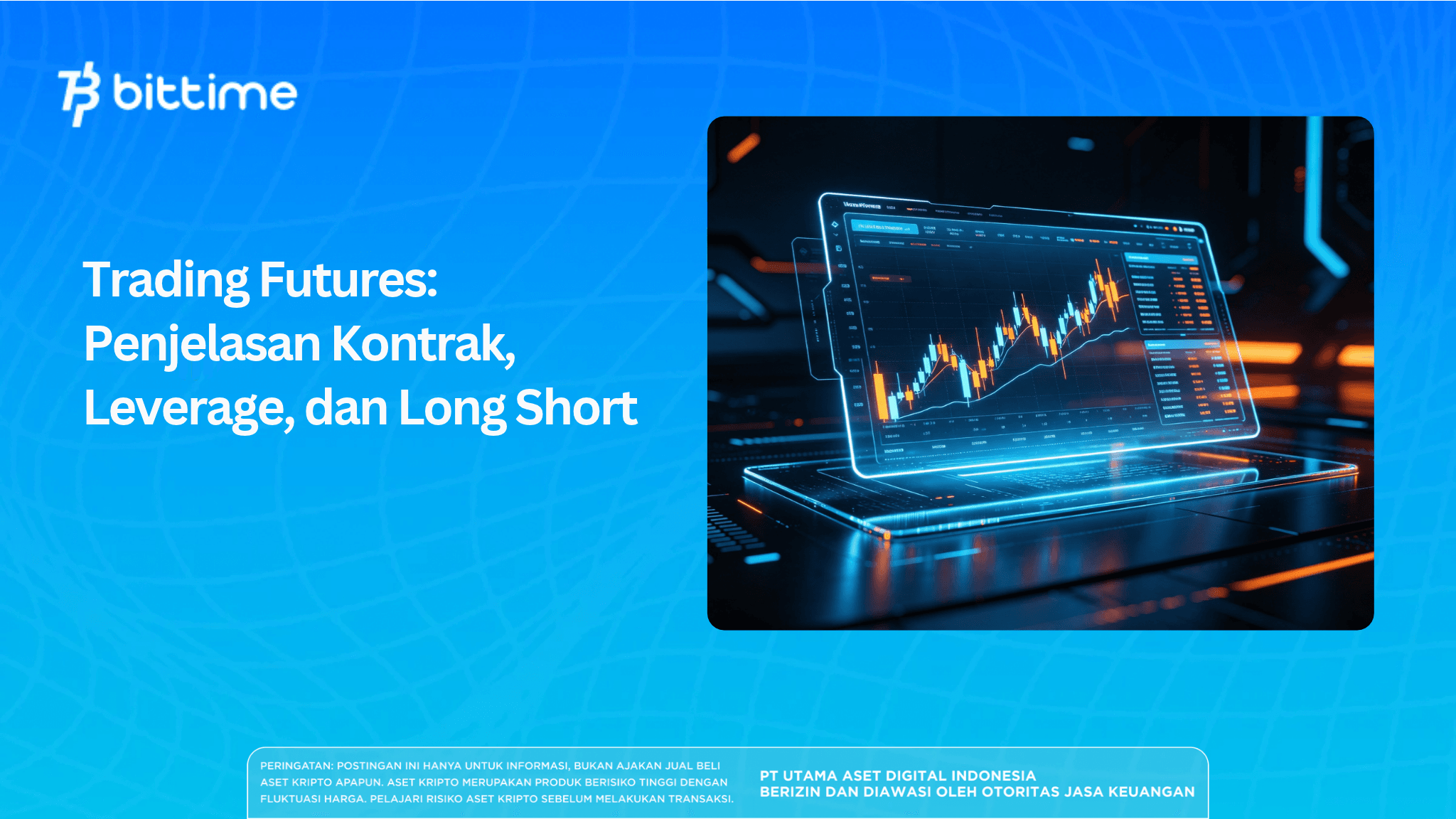
Futures trading is one of the most popular derivative instruments in the crypto market, allowing traders to speculate on asset price movements without actually owning them.
With mechanisms such as contracts, leverage, and long short positions, futures trading offers high flexibility along with significant risks. The trading volume of crypto futures continues to grow rapidly, with certain platforms alone processing $187 billion in a single month in April 2026.
Key Takeaways
- Futures trading uses contractual agreements to buy or sell an asset at a set price and time, with perpetual variants that have no expiry date.
- Leverage allows traders to control larger positions than their own capital, amplifying potential profits as well as losses proportionally.
- A long position is taken when a trader predicts price increases, while a short position is taken when predicting price decreases; both can be combined with leverage.
What Is a Contract in Futures Trading?
A contract in futures trading is a standardized agreement between two parties to buy or sell an underlying asset at a predetermined price in the future.
In the crypto world, the most popular variant is perpetual futures (or perps), which have no expiry date so traders can hold positions as long as they wish as long as margin is sufficient.
The price of futures contracts is kept close to the spot market price through the funding rate mechanism, which is a periodic payment exchanged between long and short position holders.
When the contract trades above the spot price, the funding rate is positive and long holders pay short holders. Conversely, if it is below the spot price, short holders pay long holders.
Also read: Futures Liquidation Conditions: When Can a Trader's Position Be Liquidated?
Explanation of Leverage in Futures Trading
Leverage in futures trading is a technique that allows traders to open positions with a value much larger than the capital deposited as collateral. Leverage is expressed as a ratio such as 2x, 5x, 10x, up to 50x or more depending on the platform and the asset being traded.
For example, with $1,000 capital and 10x leverage, a trader can open a position worth $10,000. If the price moves 1% in their favor, the profit becomes $100, equivalent to 10% of the initial capital.
However, if the price moves 1% against them, the loss is also 10% of the capital. The higher the leverage used, the narrower the gap between the entry price and the liquidation point.
Two margin concepts to understand:
- Initial margin: The collateral required to open a position, calculated as position size divided by leverage.
- Maintenance margin: The minimum collateral limit that must be maintained for the position to remain open; if it falls below this limit, liquidation occurs.
Cross Margin vs Isolated Margin
Futures platforms generally offer two margin modes. Cross margin uses the entire account balance as joint collateral for all open positions, where unrealized profits from one position can cover losses in another. Isolated margin limits collateral to a specific position only, so losses are locked to the allocated amount and do not affect other account balances.
Also read: How to Protect Your Spot Crypto Portfolio with Futures
The Concept of Long and Short in Futures Trading
Long and short positions are at the core of futures trading strategies. In a long position, a trader buys a contract with the expectation that the asset price will rise. If the prediction is correct, the trader can close the position at a higher price and pocket the difference as profit. A long position is suitable when analysis shows a bullish trend or strengthening price momentum.
Conversely, a short position is taken when the trader predicts the asset price will fall. The mechanism involves borrowing the asset to sell at the current price, then buying it back at a lower price to return the loan.
The difference between the selling and buying prices becomes the profit for the short trader. Short positions provide the flexibility to profit even when the market is undergoing a sharp decline or correction.
A real example occurred in October 2025 when the crypto market experienced a drastic decline in a short period. About $19 billion in leveraged crypto positions were liquidated, most of which were long positions that failed to survive. In contrast, traders who opened short positions at the same time gained significant profits from the price drop.
To start your futures trading journey safely and get the latest market updates, you can also register on Bittime and monitor market updates regularly. Use analysis as research material, not the sole basis for investment decisions.
Also read: Perpetual Futures vs Quarterly Futures: What's the Difference?
Risks and Management in Futures Trading
Although offering significant profit potential, futures trading carries risks that should not be overlooked. High leverage can wipe out all capital in a small price movement alone. At 50x leverage, an adverse price move of only about 1.5-2% is enough to trigger liquidation.
Fees also need attention, including trading fees, spreads, funding fees calculated based on the full position size, and additional fees in case of liquidation. For positions held over a long period, funding fees can accumulate to a significant amount relative to the capital at stake.
Conclusion
Futures trading offers significant profit opportunities through flexible contracts, adjustable leverage, and the ability to take long and short positions in any market condition.
Understanding the explanation of contracts, how leverage works, and the dynamics of long and short positions is the foundation that must be mastered before diving into this market. Remember that leverage amplifies both sides of the coin – profit and loss – so strict risk management is the key to trading sustainability.
For those who want to learn more and practice safely, register on Bittime to get access to educational resources and professional trading tools.

Bittime is a Digital Financial Asset Trader (PAKD) platform licensed and supervised by the Financial Services Authority — where you can buy Bitcoin in Indonesia and hundreds of other crypto assets starting from Rp10,000. The registration process is fast, secure, and can be started today.
Monitor USDT to IDR conversions and the price movements of your favorite crypto assets in real time. All available in one crypto investment app that can be downloaded for free on the Play Store.
Ready to start? Register now on Bittime and execute your investment strategy with a platform trusted by millions of users in Indonesia.
FAQ
What is a contract in futures trading?
A futures contract is a standardized agreement to buy or sell an asset at a set price and time. The perpetual variant, most popular in crypto, has no expiry date and uses a funding rate to keep the price close to the spot market.
How does leverage work in futures trading?
Leverage allows traders to control a larger position than their own capital at a certain ratio, for example 10x. This amplifies both profits and losses proportionally, with the risk of liquidation if margin is insufficient.
What is the difference between long and short positions?
A long position is taken when predicting price increases, by buying a contract and selling it at a higher price. A short position is taken when predicting price decreases, by borrowing the asset to sell and then buying it back at a lower price.
What is liquidation in futures trading?
Liquidation occurs when the margin balance falls below the minimum required. The platform will automatically close the position to prevent further losses, and the trader may lose the entire allocated collateral.
What is the difference between cross margin and isolated margin?
Cross margin uses the entire account balance as joint collateral for all positions. Isolated margin limits collateral to a specific position only, so losses are locked and do not affect other account balances.
Disclaimer: The views expressed belong exclusively to the author and do not reflect the views of this platform. This platform and its affiliates disclaim any responsibility for the accuracy or suitability of the information provided. It is for informational purposes only and not intended as financial or investment advice.

.png)