Solana vs Ethereum: Why Solana Leads RWA Wallet Adoption While Ethereum Holds the Capital
2026-03-09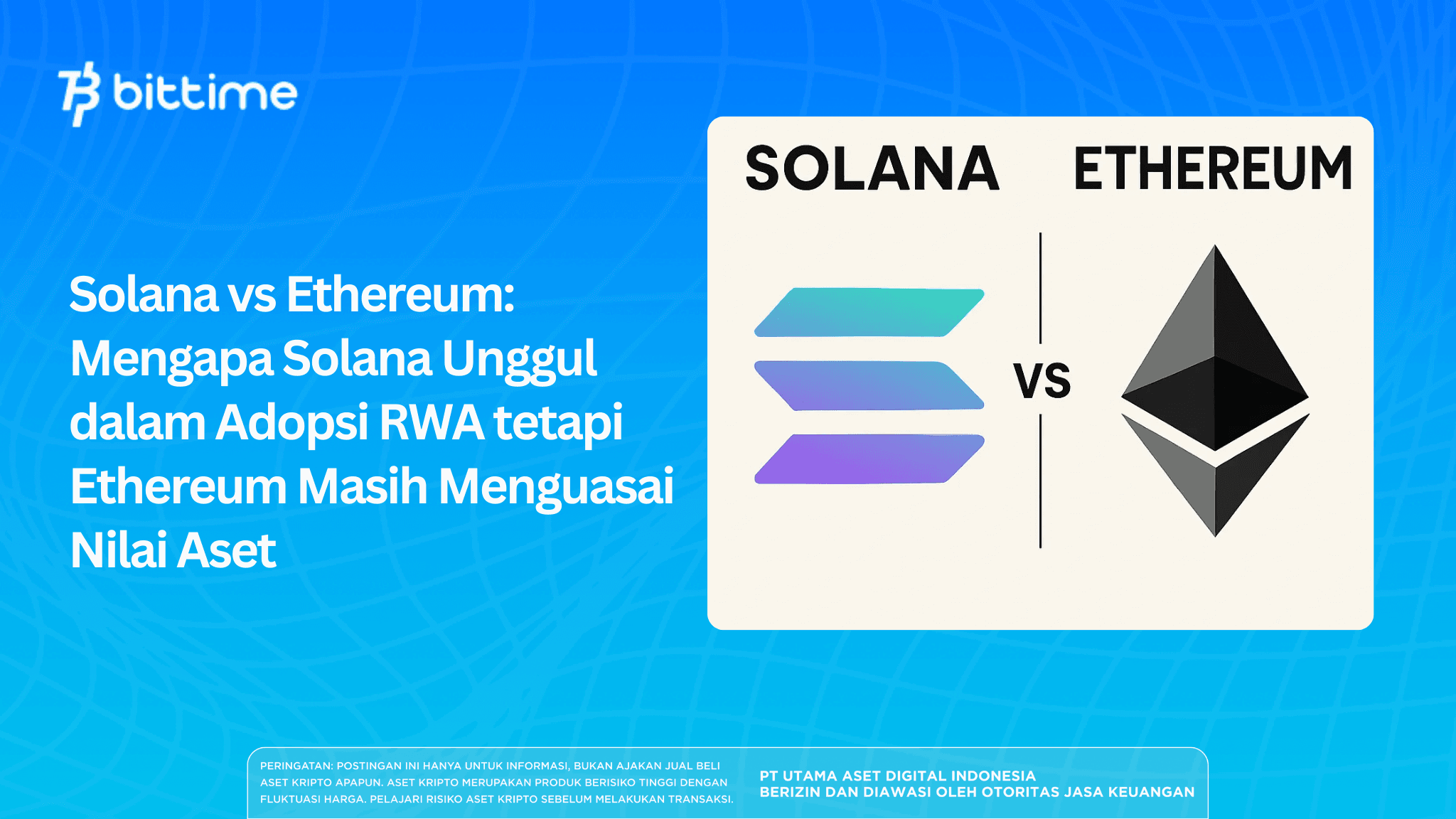
The competition between solana vs ethereum continues to shape the future of the blockchain industry. Both networks play major roles in decentralized finance (DeFi), tokenized assets, and the broader crypto ecosystem. However, recent developments suggest a shift in how users interact with blockchain platforms—especially in the growing market of Real World Assets (RWA).
The solana blockchin ecosystem has recently shown strong growth in wallet adoption for tokenized assets. This means more users are interacting with decentralized applications that represent real-world assets such as commodities, bonds, and tokenized gold on-chain.
At the same time, Ethereum continues to dominate in terms of capital locked in these assets, indicating that large institutional investors still prefer its mature infrastructure.
This dynamic creates an interesting contrast: Solana leads in user participation and activity, while Ethereum still controls the majority of financial value in the RWA market.
Key Takeaways
- Solana RWA adoption is growing rapidly, especially in wallet activity and user participation.
- In the solana vs ethereum landscape, Ethereum still holds the majority of capital locked in tokenized assets.
- Market trends show increasing interest in solana crypto due to faster transactions and lower fees.
Why Solana RWA Adoption Is Growing Rapidly
One of the most significant developments in the crypto market is the rise of solana RWA adoption. Real World Assets (RWA) refer to physical or traditional financial assets that are represented on blockchain networks.
Examples include:
- tokenized gold
- government bonds
- real estate assets
- commodity-backed tokens
The solana blockchin has become a popular platform for these assets because of its high-speed infrastructure and low transaction costs. Compared with many other networks, Solana can process thousands of transactions per second with minimal fees, making it attractive for applications requiring frequent interactions.
Another factor driving growth is the increasing number of crypto wallets interacting with RWA protocols on Solana. More users are experimenting with decentralized finance tools, tokenized commodities, and blockchain-based asset ownership.
For developers, Solana also offers an ecosystem that supports scalable decentralized applications. As a result, new projects focused on tokenization and digital asset infrastructure continue to launch on the network.
This surge in activity shows that solana crypto is becoming an important platform for real-world asset experimentation and adoption.
Ethereum Still Dominates the Value of Tokenized Assets
Despite Solana’s rapid growth in user activity, Ethereum still dominates when it comes to total value locked (TVL) in tokenized assets.
The main reason is that Ethereum has a long-established ecosystem with deep liquidity and strong institutional trust. Many large financial institutions and blockchain companies continue to build their tokenization platforms on Ethereum because of its security, decentralization, and mature infrastructure.
For example, many tokenized asset projects—including stablecoins, bonds, and gold-backed tokens—are still primarily issued on Ethereum.
This creates an interesting scenario in the solana vs ethereum competition:
- Solana leads in user adoption and wallet activity
- Ethereum leads in capital and institutional investment
In other words, Solana is attracting more everyday users and smaller transactions, while Ethereum continues to attract large-scale capital flows.
Both ecosystems therefore play complementary roles in the evolving blockchain economy.
Market Signals: Sell Pressure and Rising Tokenized Gold Volume
Recent market data also shows that solana crypto has experienced periods of sell pressure. This does not necessarily indicate weakness in the network itself but rather reflects normal market dynamics in the cryptocurrency sector.
At the same time, interest in tokenized commodities—especially tokenized gold—has increased significantly. Some reports suggest trading volume for tokenized gold assets has surged dramatically as investors seek exposure to digital representations of traditional safe-haven assets.
This trend could indirectly benefit the solana blockchin ecosystem. As more investors explore blockchain-based asset tokenization, demand for faster and cheaper networks may continue to grow.
In the long term, this could further strengthen Solana’s position in areas like decentralized finance, digital asset trading, and real-world asset tokenization.
However, Ethereum’s strong institutional presence means the competition between these two networks will likely remain intense.
Kesimpulan
The evolving solana vs ethereum landscape highlights how different blockchain networks can serve different roles in the crypto economy.
The solana blockchin is gaining momentum in RWA wallet adoption thanks to its high speed, scalability, and low transaction costs. This makes it attractive for developers and everyday users interacting with tokenized assets.
Meanwhile, Ethereum continues to dominate in terms of total capital and institutional adoption. Its mature ecosystem and long-standing reputation provide a strong foundation for large-scale financial projects.
As the market for solana RWA and other tokenized assets continues to grow, both networks are likely to remain key players in the future of blockchain-based finance.
FAQ
1. What is Solana RWA?
Solana RWA refers to real-world assets that are tokenized and traded on the Solana blockchain.
2. Why is Solana gaining adoption in the RWA market?
Because the Solana blockchain offers fast transaction speeds and very low fees compared to many other networks.
3. How does Solana compare to Ethereum?
In the solana vs ethereum comparison, Solana leads in wallet activity and adoption, while Ethereum still holds most of the capital.
4. Why does Ethereum still dominate tokenized assets?
Ethereum has a more mature ecosystem, deeper liquidity, and strong institutional support.
5. What role does Solana crypto play in the future of blockchain?
Solana crypto is expected to remain a major platform for high-speed decentralized applications and real-world asset tokenization.
How to Buy Crypto on Bittime?

Want to trade sell buy Bitcoins and crypto investment easily? Bittime is here to help! As an Indonesian crypto exchange officially registered with Bappebti, Bittime ensures every transaction is safe and fast.
Start with registration and identity verification, then make a minimum deposit of IDR 10,000. After that, you can immediately buy your favorite digital assets!
Check the exchange rate BTC to IDR, ETH to IDR, SOL to IDR and other crypto assets to find out today's crypto market trends in real-time on Bittime.
Also, visit the Bittime Blog for interesting updates and educational information about the crypto world. Find reliable articles about Web3, blockchain technology, and digital asset investment tips designed to enrich your crypto knowledge.
Disclaimer: The views expressed belong exclusively to the author and do not reflect the views of this platform. This platform and its affiliates disclaim any responsibility for the accuracy or suitability of the information provided. It is for informational purposes only and not intended as financial or investment advice.

.png)