SK Hynix vs. Micron: Which AI Memory Stock Is More Attractive?
2026-07-13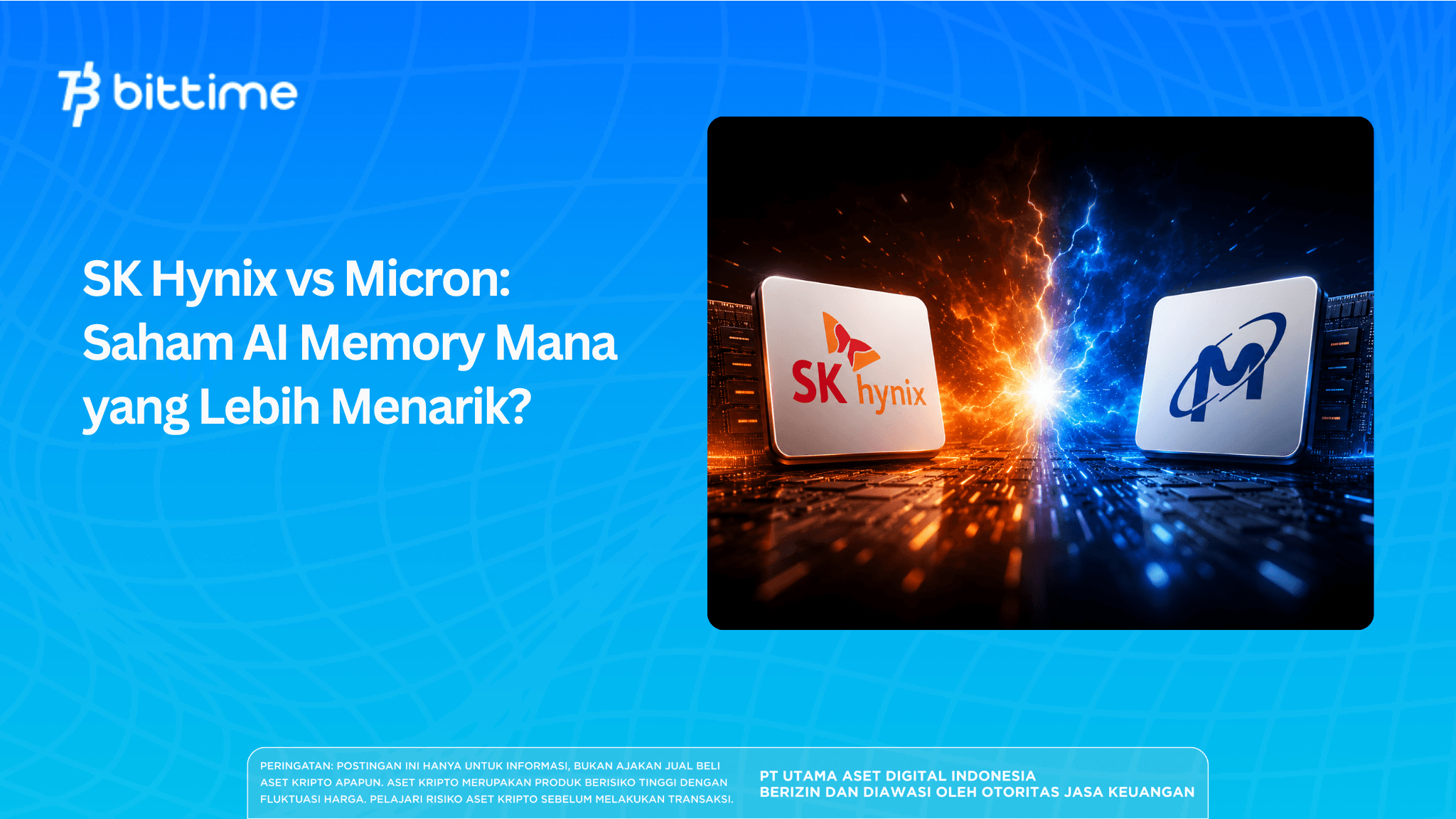
Competition SK Hynix vs Micron increasingly relevant as memory demand for AI data centers continues to grow.
Both offer exposure to the high-bandwidth memory (HBM) market, but have different technological positions, business profiles, and investment risks.
Key Takeaways
- SK Hynix is more attractive to investors who prioritize HBM leadership and direct exposure to AI infrastructure growth.
- Micron offers a broader memory portfolio, established US market access, and growth potential from HBM, DRAM, NAND, and data center storage.
- The best choice depends on risk tolerance, valuation at purchase, customer concentration, and confidence in the sustainability of AI capital expenditures.
Why Is AI Memory an Important Investment Theme?
The development of artificial intelligence is not only increasing the demand for GPUs and accelerators. AI system also require large memory capacity, high bandwidth, low latency, and better energy efficiency.
This is where high-bandwidth memory comes in. HBM is created by stacking multiple layers of DRAM chips vertically and connecting them via high-speed data paths. This architecture allows AI processors to access data faster than conventional memory.
The need for HBM increases with the growth of AI models, the length of context windows, the complexity of reasoning processes, and the use of multi-agent systems.
The bottleneck in AI performance is no longer just computing power, but also how quickly and efficiently data can be moved to the processor.
Sumber AI Generated Image
HBM also has attractive business characteristics for memory manufacturers. This product requires stacking technology, thermal control, advanced packaging, complex testing, and high production success rates or yields. These technical barriers make the HBM market more difficult to enter than the commodity DRAM market.
However, investors should remain cautious. High demand could prompt manufacturers to aggressively build new capacity. If supply growth outpaces demand, memory prices and profit margins could come under further pressure.
Read also: Samsung, SK Hynix, and Micron Face Lawsuits Over Alleged RAM Supply Manipulation
SK Hynix Stock: Leader in the HBM Memory Market
Main attraction SK Hynix stock The company's position as a leader in HBM technology lies in its leadership. The company has built its leadership through its experience producing HBM3, HBM3E, and developing the next generation, HBM4.
SK Hynix completed development of HBM4 and prepared for production in 2025. The product uses 2,048 input-output lines, twice as many as the previous generation. The company also reported a more than 40% increase in power efficiency compared to the previous generation.
The ability to produce HBM at high volumes is crucial. Having a good design isn't enough if a company can't maintain yield, quality, thermal consistency, and on-time delivery to hyperscaler customers and AI accelerator manufacturers.
Want to gain exposure to US shares? Sign up to Bittime and start investing via tokenised stocks.
SK Hynix's Financial Performance is Supported by High-Value Products
The momentum of AI memory has been reflected in SK Hynix's financial report. In fiscal 2025, the company posted revenue of approximately 97.15 trillion won and operating profit of approximately 47.21 trillion won. HBM revenue reportedly more than doubled compared to the previous year.
This shift in revenue composition is significant. In traditional memory cycles, manufacturers' performance is heavily dependent on price movements for commodity DRAM and NAND. HBM's growth allows SK Hynix to derive a larger contribution from high-value products, achieve stronger technological differentiation, and potentially generate better margins.
SK Hynix also expanded global investor access through the listing of American Depositary Receipts on Nasdaq in July 2026. The listing increases the company's visibility in the United States capital markets and reduces access barriers previously faced by some international investors.
Read also: Buy US Stocks via Crypto, Get 7% Daily Rewards at Bittime
Key Advantages of SK Hynix
Some factors that support SK Hynix's investment thesis include:
- Leadership in the development and production of HBM.
- Strong position in the AI accelerator and server supply chain.
- Large-scale production capability of HBM3E and HBM4.
- Growth in premium product contribution to revenue.
- Potential increase in demand from increasingly memory-intensive AI models.
- Development of advanced packaging facilities in South Korea and the United States.
SK Hynix also has manufacturing experience that could be a significant advantage as the industry transitions from HBM3E to HBM4. Generational transitions typically require adjustments to design, manufacturing processes, materials, packaging, and customer validation.
Risks of Buying SK Hynix Stock
HBM's leadership doesn't make this stock risk-free.
The first risk is customer concentration. HBM demand is heavily influenced by a small number of accelerator manufacturers and large cloud companies. Changes to product roadmaps, chip launch delays, or supplier diversification could impact order volumes.
The second risk is the reliance on the sustainability of AI investments. If technology companies reduce data center capital spending, HBM demand could grow slower than market expectations.
The third risk stems from the cyclical nature of the memory industry. SK Hynix continues to generate revenue from conventional DRAM and NAND. Prices for these products could decline if industry supply increases too rapidly.
ADR investors also need to pay attention to exchange rate risks, regulatory differences, securities custody structures, and possible price fluctuations between the ADR and its underlying shares in South Korea.
Read Also: Tokenised stock assets available on Bittime
Micron Stock: An HBM Challenger with a Broader Portfolio
Micron stock offers a slightly different approach. The company does compete in HBM, but its business exposure also includes server DRAM, NAND, data center SSDs, consumer device memory, automotive, and embedded solutions.
This diversification can be advantageous. The growth of AI not only creates demand for HBM for accelerators, but also increases the need for server DRAM, storage, enterprise SSDs, and high-capacity memory for inference processing.
In the third quarter of fiscal 2026, Micron reported data center revenue exceeding US$25 billion. Data center SSD revenue also surpassed US$5 billion. The company stated that DRAM and NAND demand continues to outstrip supply, and tight conditions are expected to persist through the calendar year 2027.
Keep tracking other stock tokens such as AMZON, AMDON, and NFLXON as well as MSFTON, then you can start trading on the trusted exchange, only on Bittime.
Micron Begins Accelerating HBM4 Production
Micron is no longer just a small contender in the HBM market. The company reports that its 12-high HBM4 volume ramp-up is twice as fast as its 12-high HBM3E ramp-up. Micron also states that it has shipped HBM4 with revenue exceeding US$1 billion.
These developments indicate that the technological gap between SK Hynix and Micron could be narrowing. Large customers generally don't want to rely too heavily on a single supplier, especially for critical components like HBM. A multi-sourcing strategy could open up opportunities for Micron to gain additional market share.
Micron has also signed 16 strategic customer agreements spanning the data center, consumer, and automotive markets. These agreements provide volume commitments and supply visibility over a multi-year period.
Read also: Trump Stores $50 Million Worth of Bitcoin in a Cold Wallet
Micron's Main Advantages
Micron has a number of advantages that may be attractive to investors:
- Broader portfolio across DRAM, HBM, NAND, and SSD.
- Relationships with data center, automotive, consumer device, and industrial customers.
- Shares are traded directly on the United States market.
- Potential support for US semiconductor industry policy.
- The rapid growth of HBM4 production.
- Long-term customer contracts that can increase revenue visibility.
- Exposure to cloud AI as well as AI on devices, automotive, and edge computing.
Compared to SK Hynix, Micron's investment thesis isn't entirely dependent on dominance in a single product category. Investors still gain exposure to AI memory, but through multiple layers of data infrastructure.
Risks of Buying Micron Stock
Micron faces direct competition from SK Hynix and Samsung. Pursuing HBM capacity requires significant capital expenditures, advanced packaging, and increased yields. Production delays or failure to meet customer standards could jeopardize contract winnings.
Diversification can also be a weakness when the NAND or consumer memory market weakens. Strong HBM performance doesn't necessarily offset price declines in other segments.
The next risk is valuation. Stocks that have risen sharply on AI expectations may still correct even if the company reports earnings growth. The stock market assesses both actual results and future expectations. Good performance isn't necessarily enough when valuations already reflect a very optimistic scenario.
Sumber AI Generated Image
SK Hynix vs Micron Stock: A Comparison of the Most Important Factors
1. HBM Technology Leadership
SK Hynix still has the edge in terms of its production track record and perceived HBM leadership. The company built scale early on HBM3 and HBM3E and is preparing for the transition to HBM4.
Micron is showing strong progress, but its investment thesis relies more on its ability to capture market share and consistently increase production.
Winners on this factor: SK Hynix.
2. Business Diversification
Micron generates revenue from a wider range of application categories and end markets. The company sells not only memory for AI accelerators but also server DRAM, data center SSDs, automotive, consumer devices, and embedded systems.
SK Hynix also has DRAM, NAND, and enterprise SSD businesses, but its current investment sentiment is more strongly tied to the company's position in HBM.
Winners on this factor: Micron.
3. Direct Exposure to AI Memory
Investors seeking the most direct exposure to HBM's leadership might be more interested in SK Hynix. The company's earnings growth has been significantly boosted by increased sales of high-value HBM products.
Micron is gaining broader AI exposure. Profits can be derived from HBM, server DRAM, SSDs, edge AI, and automotive.
Winners on this factor: SK Hynix for pure HBM, Micron for a broader AI memory ecosystem.
4. Revenue Visibility
Micron has strategic customer agreements that can help stabilize volume, pricing, and customer relationships. These agreements have the potential to mitigate some of the volatility common in the memory industry.
SK Hynix has a strong strategic position in the HBM supply chain, but its concentration on large accelerator customers must still be monitored.
Winners on this factor: Micron, especially in terms of long-term contract structures.
5. Stock Accessibility
Micron has long been traded on the Nasdaq under the ticker MU. The stock has a more established trading history, analyst coverage, and derivative instruments.
SK Hynix's ADRs make the company's shares more accessible to global investors, but as a newly listed instrument, volatility and price discovery may be higher in the initial period.
Winners on this factor: Micron.
6. Valuation
Valuations shouldn't be judged solely on the current price-to-earnings ratio. The memory industry is cyclical, so earnings at the peak of the cycle can make the P/E ratio appear very low.
Investors need to compare:
- Forward P/E based on normalized earnings.
- Enterprise value to EBITDA.
- Free cash flow after capital expenditure.
- HBM capacity growth.
- Sustainable gross margin.
- Return on invested capital.
- Inventory value and potential memory price declines.
- Growth expectations have been reflected in stock prices.
Stocks with lower P/Es aren't necessarily cheaper when earnings are peaking. Conversely, stocks with higher valuations can remain attractive if their technology and market share growth are more sustainable.
Read Also: Can You Buy U.S. Stocks with Just IDR 10,000? Here's the Difference Between Tokenized Stocks
Which is better, SK Hynix or Micron?
For investors who want more aggressive exposure to HBM memory and are willing to accept the risk of customer concentration, memory cycles, and ADR volatility, SK Hynix looks more attractive. HBM's technological superiority and manufacturing experience give the company a position that is difficult to match in the short term.
Micron is better suited for investors seeking broader diversified exposure to AI memory. The company's growth stems not only from HBM, but also from server DRAM, NAND, data center SSDs, automotive, and AI devices.
The practical options can be summarized as follows:
- Choose SK Hynix when your primary thesis is HBM dominance and AI accelerator growth.
- Choose Micron when you prioritize diversification, US market liquidity, and long-term customer contracts.
- Consider both if you want to reduce the risk of choosing one winner in the HBM competition.
- Avoid buying just because the stock price is rising or because the AI theme is popular.
Before making a decision, review the latest financial statements, management guidance, capital expenditure estimates, HBM4 progress, yield developments, and market valuation. This article is for informational purposes only and is not a recommendation to buy or sell any specific stock.
Use market information as additional research material, not as the sole basis for decision making.
Read Also: How to Invest in Global Stocks with a Small Amount of Capital Through Tokenized Stocks
Factors to Monitor After Buying AI Memory Stock
Investment theses should be evaluated periodically. Some indicators to monitor are:
- HBM revenue growth and its contribution to total revenue.
- The speed of production transitions from HBM3E to HBM4.
- Production yield and ability to meet customer standards.
- Capital expenditure for factories and advanced packaging.
- Growth in capital spending by cloud companies and data center operators.
- Changes in prices of conventional DRAM and NAND.
- The development of competitors, especially Samsung.
- Concentration of revenue on large customers.
- Free cash flow after investment needs.
- Stock valuation compared to normalized earnings throughout the cycle.
Investors also need to distinguish between actual demand growth and market expectations. A company can post strong revenue growth, but its stock price will still decline if the results fall short of analyst expectations.
Conclusion
In comparison, SK Hynix vs Micron, SK Hynix has a stronger advantage in HBM leadership, manufacturing experience, and direct exposure to AI infrastructure development. Micron offers a more diversified portfolio, an established US investor base, and growth opportunities in HBM, DRAM, NAND, and data center storage.
Overall, SK Hynix is more attractive to aggressive investors who believe HBM's growth will remain strong., whereas Micron is more suitable for investors seeking AI memory exposure with broader business diversification..
The final decision shouldn't be based solely on which company has the best technology. Entry price, valuation, cash flow, capital expenditure requirements, customer risk, and the industry's position in the memory cycle are equally important. Monitor both companies' latest reports before committing capital.

Gain exposure to shares in leading technology companies through tokenised stocks like AAPLX, MSFTON or GOOGLX only on Bittime!
Bittime is a licensed and regulated Digital Financial Asset Trader (PAKD) supervised by Indonesia’s Financial Services Authority (OJK) — where you can buy Bitcoin in Indonesia and hundreds of other crypto assets starting from just Rp10,000. The registration process is fast, secure, and you can get started today.
Track USDT to IDR conversions and monitor your favorite crypto assets in real time. Everything is available in one crypto investment app that you can download for free on the Play Store
Ready to start? Register now on Bittime and execute your investment strategy with a platform trusted by millions of users in Indonesia.
FAQ
Which is better, SK Hynix or Micron?
SK Hynix has a stronger HBM leadership, while Micron offers product diversification and more established US market access. The best choice depends on your risk profile and valuation at the time of purchase.
Is SK Hynix an AI stock?
Yes. SK Hynix is a major manufacturer of memory for servers and AI accelerators, including HBM3E and HBM4. However, the company remains exposed to DRAM and NAND cycles.
Does Micron manufacture HBM?
Yes. Micron produces HBM and has ramped up production of HBM4. The company also sells DRAM, NAND, data center SSDs, and a variety of other memory solutions.
Why is HBM important for artificial intelligence?
HBM provides high bandwidth, helping AI accelerators move and process data quickly. Without sufficient memory, GPU performance can be hampered by data transfer bottlenecks.
Are AI memory stocks still attractive?
The outlook remains attractive if data center investment and AI demand continue to grow. However, investors should consider valuations, production capacity expansion, memory price cycles, and the risk of a slowdown in capital spending.
Disclaimer: The views expressed belong exclusively to the author and do not reflect the views of this platform. This platform and its affiliates disclaim any responsibility for the accuracy or suitability of the information provided. It is for informational purposes only and not intended as financial or investment advice.

.png)