S&P Global Ratings Indonesia Maintains BBB/A-2 Rating, Here Are Today's Stock Recommendations!
2026-07-14
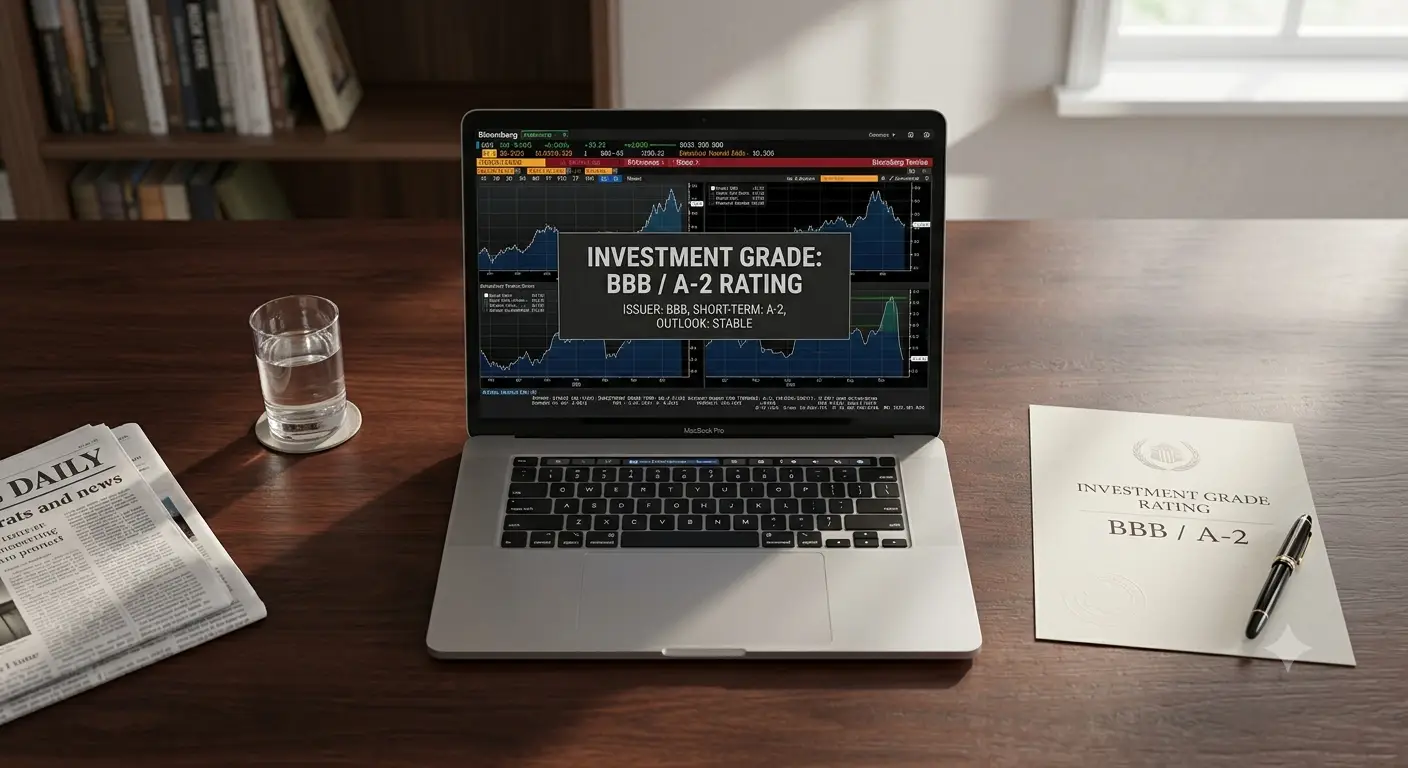
S&P Global Ratings kIndonesia's credit rating remains at BBB for long-term debt and A-2 for short-term debt, with a stable outlook.
This decision indicates that the rating agency still considers Indonesia's economic fundamentals to be quite strong and the government's ability to maintain fiscal stability remains intact.
For investors, this news is not just an assessment of economic conditions.
A country's credit rating can also influence global investors' risk perceptions, funding costs, and capital flows to the stock and bond markets.
So, what does a BBB/A-2 rating mean for Indonesia, and which stock sectors have the potential to benefit from positive sentiment?
Key Points
S&P maintained Indonesia's rating at BBB/A-2 with a stable outlook, confirming that investment grade status remains intact.
This decision supports positive sentiment towards financial markets, particularly through the perception of risk remaining low.
Banking, infrastructure, and blue chip stocks are potentially more sensitive to improving investor confidence.
What Does a BBB/A-2 Rating Mean for Indonesia?
Source: AI
The BBB rating shows that Indonesia is still in the investment grade category, namelya group of countries that are considered to have adequate capacity to meet their financial obligations.
AsMeanwhile, A-2 is a short-term debt rating that reflects the capacityrelatively strong short-term payments.
For global institutional investors, investment grade status is an important factor in determining whether a country is worthy of inclusion in their investment portfolio.
Macro conditions such as credit ratings can influence market sentiment Register at Bittime to keep up with market developments.
Why Did S&P Maintain a Stable Outlook?
In its report, S&P assessed that Indonesia is still supported by several main factors, including:
Government fiscal discipline.
The prospect of relatively stable economic growth.
Credible monetary policy.
The level of government debt is still under control compared to many other countries.
A stable outlook means S&P sees no compelling reason to upgrade or downgrade the credit rating in the near term if economic conditions develop as expected.
What Impact Will It Have on the Stock Market?
Directly, the S&P decision does not automatically make stock prices rise.
However, investment grade ratings help maintain foreign investor confidence,especially on the Indonesian bond and stock markets.
If country risk perceptions remain low, government and corporate funding costs also tend to be more manageable.
In the long term, these conditions can be a supporting factor for capital market growth.
Therefore, news like this usually has more influence on market sentiment than on the performance of a particular issuer.
Read Also:Is AADI Stock Worth Buying? Business Analysis, Dividends, Valuation, and Risks
Which Stock Sectors Have the Potential to Benefit?
While no single stock directly benefits from the S&P decision, some sectors are generally more sensitive to improving macro sentiment.
1. Banking
Large banks have the potential to gain positive sentiment if foreign capital flows increase and economic activity continues to grow.
2. Infrastructure
Sustainable development prospects can support companies in the construction and infrastructure sectors if financing conditions remain conducive.
3. Blue Chip Stocks
Large-cap issuers, which are the primary targets of institutional investors, are usually the first to benefit when sentiment towards Indonesia improves.
However, investment decisions still need to consider the fundamentals of each company, not just macro sentiment.
Read Also:RANS Entertainment IPOs on the IDX: Here's the Schedule, RANS Share Price, and How to Buy
Does This Rating Guarantee the IHSG Will Rise?
No.
Credit rating is one factor that influences the market, but not the only one.
The movement of the IHSG remains influenced by:
Global interest rates.
The Fed's policy.
Commodity prices.
Issuer performance.
Foreign capital flows.
Geopolitical conditions.
Therefore, maintainingnkan investment grade rating is more appropriately viewed as a positive foundation for the market rather than a catalyst that guarantees share price increases.
Read Also: Why Does the IHSG Fluctuate? Here Are the Driving Factors
Conclusion
S&P Global Ratings' decision to maintain Indonesia's rating at BBB/A-2 with a stable outlook indicates that Indonesia's economic fundamentals are still considered quite strong.by international rating agencies.
For investors, this news has the potential to maintain confidence in Indonesia's financial markets and support positive sentiment, especially in sectors sensitive to foreign capital flows.
However, investment decisions should still be based on fundamental analysis of the company and overall market conditions, not just one macro indicator.

Gain exposure to shares in leading technology companies through tokenised stocks like AAPLX, MSFTON or GOOGLX only on Bittime!
Bittime is a licensed and regulated Digital Financial Asset Trader (PAKD) supervised by Indonesia’s Financial Services Authority (OJK) — where you can buy Bitcoin in Indonesia and hundreds of other crypto assets starting from just Rp10,000. The registration process is fast, secure, and you can get started today.
Track USDT to IDR conversions and monitor your favorite crypto assets in real time. Everything is available in one crypto investment app that you can download for free on the Play Store
Ready to start? Register now on Bittime and execute your investment strategy with a platform trusted by millions of users in Indonesia.
FAQ
What does the BBB rating from S&P mean?
BBB shows that Indonesia is still in the investment grade category with the ability to meet its financial obligations deemed adequate.
What does stable outlook mean?
A stable outlook means S&P does not expect a change in the credit rating in the near term if economic conditions develop as expected.
Does a BBB rating guarantee an increase in the JCI?
No. Credit ratings are only one factor that influences market sentiment.
What sectors have the potential to benefit?
Banking, infrastructure, and blue chip stocks are generally more sensitive to improving macro sentiment.
Why is investment grade important?
Investment grade status helps maintain global investor confidence and can support capital flows into Indonesia's financial markets.
Disclaimer: The views expressed belong exclusively to the author and do not reflect the views of this platform. This platform and its affiliates disclaim any responsibility for the accuracy or suitability of the information provided. It is for informational purposes only and not intended as financial or investment advice.

.png)