SpaceX Stocks Plunge After Initial Report, What's the Cause?
2026-08-06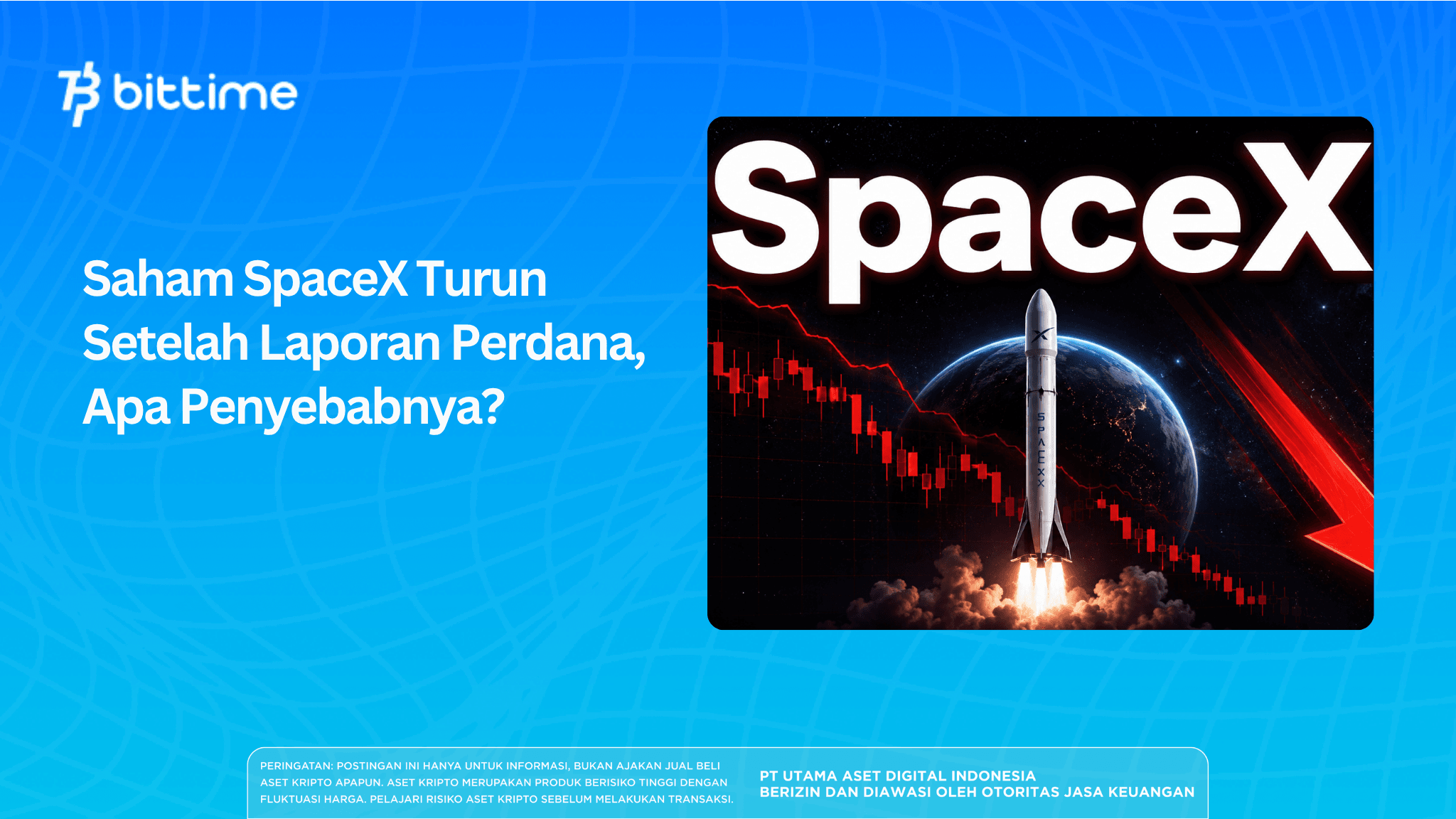
SpaceX Stock fell after the company released its first financial report, an initial test of public investors’ expectations. Market attention was focused not only on revenue and profit, but also on the scale of spending on artificial intelligence, Starlink development, rocket launches, and long-term infrastructure projects.
This negative reaction shows that investors assess financial reports based on the gap between actual results and expectations, not simply on whether the company’s business is growing.
Key Takeaways
- SpaceX stock can fall even when revenue is growing if costs and expansion spending are higher than expected.
- Investors are beginning to demand proof that major investments in AI, Starlink, and infrastructure can generate sustainable cash flow.
- The outlook for SPCX still depends on customer growth, launch success, margins, and disciplined capital allocation.
What Happened to SpaceX Stock?
SpaceX shares came under pressure after the company published its first report. The move reflected a reset in expectations after investors had previously assigned a high valuation to growth in the space, satellite internet, and future technology businesses.
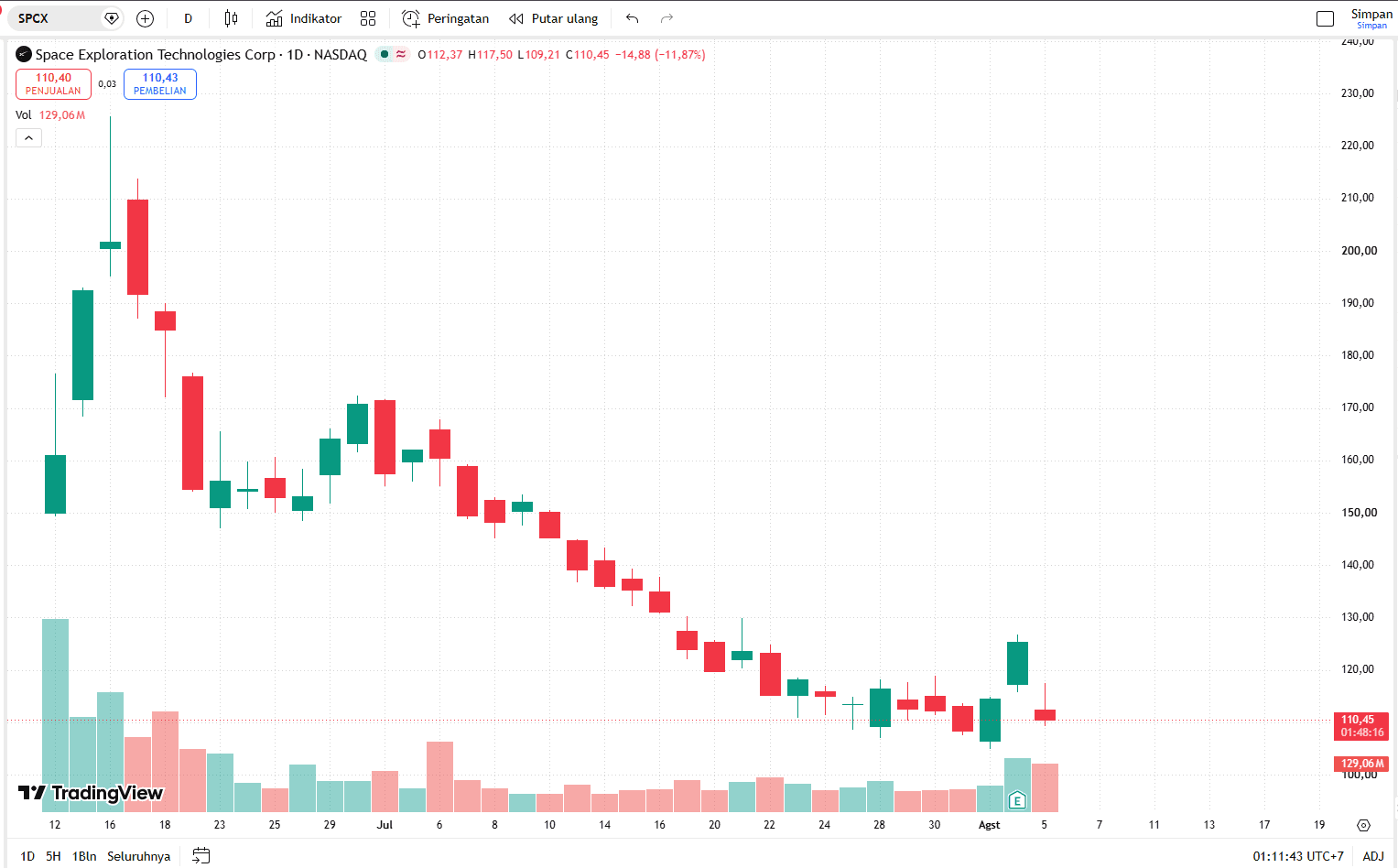
A first financial report often has a major impact on a company that has recently entered the public market. Investors get their first chance to compare the growth narrative with actual revenue, expenses, margins, and cash flow.
In SpaceX’s case, the market appears to be focusing on the scale of development costs and investment requirements. The company operates capital-intensive businesses ranging from rocket and satellite construction to ground stations, data centers, and research into new technologies.
Read also: SpaceX Buys Rp16 Trillion Worth of Gas Turbines for AI: What Is Elon Musk Planning?
Why Did SpaceX Stock Fall?
The decline in SpaceX stock was likely not caused by a single factor. Markets usually respond to a combination of actual results, prior expectations, and the outlook communicated by management.
AI and Infrastructure Spending Is Extremely High
One of the main areas of concern is the company’s heavy spending on artificial intelligence and supporting infrastructure. These investments may include data centers, computing capacity, networks, hardware, and automated system development.
Heavy spending can strengthen the company’s position over the long term. However, investors will question when those investments will begin to generate meaningful revenue or efficiency gains.
If costs rise faster than revenue, margins and cash flow may come under pressure. This often triggers stock selling, especially when the company’s valuation already reflects highly optimistic growth assumptions.
Investor Expectations Were Too High
SpaceX has a strong brand and a technology track record that attracts market attention. As a result, investors may set high expectations for growth, profitability, and company guidance.
Even a reasonably strong report can be viewed as disappointing if it does not exceed analysts’ projections. This is common among high-growth stocks with premium valuations.
A stock price reflects more than current conditions. It also reflects expectations for revenue and profit over the coming years. When those assumptions change, the valuation can adjust quickly.
Pressure on Margins
Rocket launch and satellite constellation businesses have high operating costs. The company must manufacture equipment, conduct launches, replace satellites, and keep the network running.
Although Starlink can generate recurring revenue, customer growth also requires additional investment. Investors will watch whether higher revenue leads to stronger margins rather than merely expanding the scale of the business.
Management Guidance Was Less Aggressive
A stock can fall when a company’s revenue or earnings guidance comes in below market expectations. Investors use that guidance to update valuation models and assess the pace of future growth.
If management emphasizes higher costs or a longer investment period, the market may conclude that profitability will be delayed.
To follow developments in technology stocks, global markets, and digital assets, you can register with Bittime and read the latest news before making a decision. Continue comparing information and align your strategy with your risk profile.
How Is SpaceX Performing in 2026?
SpaceX’s 2026 performance should be analyzed across several business lines rather than through a single revenue figure. The company operates launch services, satellite internet, government contracts, and space technology development.
Starlink as a Revenue Engine
Starlink is one of the company’s most visible revenue sources because it uses a subscription model. Customer growth can strengthen recurring revenue and help finance network expansion.
However, the quality of that growth depends on customer acquisition costs, equipment subsidies, service pricing, and the need to launch new satellites. Rapid user growth does not necessarily translate immediately into higher profit.
Rocket Launch Business
A high launch frequency can generate revenue from commercial customers and government agencies. Rocket reusability can also reduce the cost per launch.
Investors should monitor mission schedules, success rates, production capacity, and the contribution of long-term contracts. Delays or technical failures can affect revenue and market sentiment.
Long-Term Investments
Projects such as Starship require ongoing research and testing. These investments may create significant opportunities, but their economic benefits may not be visible in the near term.
For investors, the key question is whether the company has sufficient cash flow and a strong enough balance sheet to fund ambitious projects without weakening financial stability.
Investor Sentiment Toward SPCX Stock
SpaceX investor sentiment can be divided into two groups. Short-term investors may focus on high costs, valuation, and the risk of margin compression. Long-term investors may view the correction as an opportunity if they believe in Starlink’s growth and SpaceX’s launch technology leadership.
Key indicators to monitor include:
- Analyst price target revisions
- Changes in revenue and earnings forecasts
- Trading volume after the report
- Company guidance for the next quarter
- Starlink customer growth
- Capital expenditure and free cash flow
- Execution of the launch schedule
Sentiment can shift quickly. Therefore, a one-day decline is not enough to determine the stock’s direction over the next several months.
Read also: SPCX Stock Drops After Its IPO, Then Rebounds: What Investors Need to Know
SPCX Stock Analysis: Healthy Correction or Risk Signal?
A correction may be considered healthy if the stock had risen too quickly while the company’s fundamentals continued to improve. In that situation, the decline helps bring the valuation closer to realistic expectations.
However, a correction can signal risk if the report shows weakening demand, continuously declining margins, spending without clear returns, or a need for additional financing.
Investors should compare:
- Revenue growth versus cost growth
- Operating margins from one period to the next
- Capital expenditure versus cash flow
- Valuation relative to other technology and space companies
- Management targets versus prior results
Buying solely because the price has fallen can be risky. A lower price is not necessarily cheap if earnings forecasts are also declining.
Read also: SPCXx vs SPCXon: Two Tokens, One Asset — Which One Fits You?
SpaceX Stock Outlook
The outlook for SPCX remains supported by the company’s position in the launch and satellite internet industries. If Starlink continues to add customers, launch activity remains consistent, and AI investments improve efficiency, the company could strengthen its long-term growth.
On the other hand, the main risks include:
- Continuously rising capital expenditure
- Uncertainty over returns from AI investments
- Launch failures or delays
- Competition in satellite internet
- Regulatory pressure
- A high valuation
- Dependence on long-term projects
Keep tracking other stock tokens such as AMZON, AMDON, and NFLXON as well as MSFTON, then you can start trading on the trusted exchange, only on Bittime.
Is SpaceX Stock Worth Buying After the Decline?
The answer depends on price, valuation, and investment objectives. Long-term investors can assess whether the correction provides a sufficient margin of safety, while short-term traders should watch trends, volume, and support levels.
Do not rely solely on brand popularity or optimism about the space industry. Study the company’s financial statements, cash flow, margins, debt, and management guidance.
A gradual buying strategy can reduce timing risk, but it does not eliminate the possibility of losses. Investment decisions should still be based on analysis rather than fear of missing out.
Read also: SPCX Falls Below $135 and Erases IPO Gains: Has SpaceX’s Bitcoin Holding Become a Burden?
Conclusion
SpaceX stock fell after its first report because the market evaluated more than revenue growth alone. The scale of AI spending, capital requirements, margin pressure, and company guidance were important factors in investors’ reaction.
The correction does not automatically mean SpaceX’s outlook has deteriorated. Starlink, the launch business, and space technology still offer substantial growth opportunities. However, the company must prove that these investments can generate sustainable cash flow and profits.
Investors should monitor upcoming reports, customer growth, margins, capital expenditure, and progress on major projects. Do not buy simply because the share price has fallen; make sure the valuation is appropriate for the risks and growth potential.

Gain exposure to shares in leading technology companies through tokenised stocks like TSLAX, MSFTON or GOOGLX only on Bittime!
Bittime is a licensed Digital Financial Asset Trader (PAKD) platform supervised by Indonesia’s Financial Services Authority (OJK) — where you can buy Bitcoin in Indonesia and hundreds of other crypto assets starting from Rp10,000. Registration is fast and secure, and you can get started today.
Track the USDT-to-IDR conversion and the real-time price movements of your favorite crypto assets. Everything is available in one crypto investment app that can be downloaded for free from the Play Store.
Ready to get started? Register with Bittime now and execute your investment strategy on a platform trusted by millions of users in Indonesia.
FAQ
Why did SpaceX stock fall after its first report?
The stock fell because investors focused on costs, AI spending, margins, and management guidance. Growing results can still disappoint if they fall short of market expectations.
What did SpaceX’s financial report show?
The report showed business progress alongside substantial investment needs. The latest revenue, profit, and spending figures should be compared with analysts’ forecasts.
Will SpaceX stock recover?
A recovery will depend on future performance, Starlink growth, margins, cash flow, and market sentiment. There is no guarantee that the price will rebound quickly.
What are the main risks of SPCX stock?
The risks include a high valuation, heavy capital spending, project delays, competition, and uncertainty over returns from technology investments.
Is SpaceX stock worth buying during the decline?
A correction can present an opportunity if the fundamentals are strong and the valuation is more reasonable. Investors still need to assess the report, the risks, and their own investment strategy.
Disclaimer: The views expressed belong exclusively to the author and do not reflect the views of this platform. This platform and its affiliates disclaim any responsibility for the accuracy or suitability of the information provided. It is for informational purposes only and not intended as financial or investment advice.

.png)