Gold Price After Interest Rate Hike, Here's Goldman Sachs' Projection
2026-09-22
The warning from Goldman Sachs from mid-year finally proved right. This giant investment bank had warned that gold prices could fall to $4,440 per ounce if The Fed raised interest rates twice in fall 2026—and the first hike actually occurred on September 16.
Spot gold prices immediately weakened for three consecutive days, closing at $4,271.8 per ounce, the lowest level in more than a month. The question now on investors' minds: where will gold prices go after this rate hike, and is Goldman Sachs' gold price prediction still relevant to hold?
This article summarizes Goldman Sachs' latest gold price projection along with the factors shaping it.
Key Takeaways
- Spot gold prices fell for three consecutive days to $4,271.8 per ounce on September 16, 2026, after The Fed raised interest rates by 25 basis points to the 3.75%-4% range.
- Since June 2026, Goldman Sachs had already cut its year-end target from $5,400 to $4,900 per ounce, with a deeper downside scenario to $4,440 if the Fed raised rates twice this fall—a scenario now beginning to materialize.
- Central bank buying, projected to remain solid at around 50 tons per month, is one supporting factor amid pressure from high interest rates and a stronger US dollar.
Why Did Gold Prices Fall After The Fed's Rate Hike?
Based on reporting by Gotrade Indonesia citing Bloomberg Technoz and FX Leaders, spot gold prices briefly plunged about $100 to below $4,300 per ounce as soon as The Fed officially announced a 25 basis point rate hike to the 3.75%-4% range on September 16, 2026—the first hike since September 2023. Silver was also dragged down below $64 per ounce.
The mechanism is fairly simple: higher interest rates increase the opportunity cost of holding gold, a precious metal that produces no interest at all.
When instruments such as government bonds offer more attractive yields, some investors shift there. This condition was clearly visible in the movement of US Treasury yields, which also rose after the announcement—the 10-year tenor briefly approached the 5% level.
Another factor adding pressure: the strengthening US dollar. Because gold prices are denominated in dollars, a stronger dollar makes gold more expensive for buyers outside the United States, which also weighs on demand.
Read Also: How to Buy Digital Gold Safely, Cheaply, and Easily on Bittime
What made sentiment even heavier was that The Fed's median interest rate projection for the end of 2026 rose to 4.1% from 3.8% in June, signaling the possibility of one more 25 basis point hike before the end of the year.
The hawkish tone of Fed Chair Kevin Warsh's communication reinforced those expectations, while also being the main catalyst for why gold prices after this rate hike remained under pressure for three consecutive days.
For those who want to diversify their portfolio into instruments other than precious metals, crypto assets can be one option worth learning more about through an official OJK-licensed platform such as Bittime.
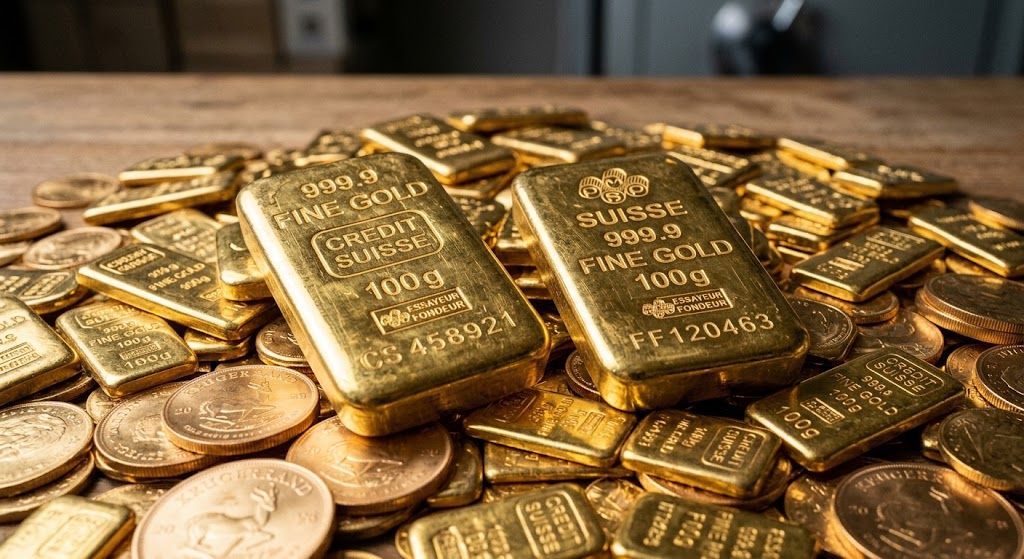
Goldman Sachs' Gold Price Projection: From $5,400 to a $4,440 Scenario
The journey of Goldman Sachs' gold price projection throughout 2026 is actually a story in itself that explains why their warning about interest rate hikes felt so timely.
- January 2026: Goldman raised its year-end target to $5,400 per ounce, supported by a very strong gold rally early in the year—prices briefly set a record near $5,600.
- March 2026: the $5,400 target was maintained even though markets were turbulent due to geopolitical tensions in the Middle East.
- June 18-19, 2026: Goldman Sachs cut the target to $4,900 per ounce, down $500 from the previous target. Analysts Lina Thomas and Daan Struyven cited two main reasons: Goldman economists delayed The Fed's last two rate cuts to 2027 (meaning zero cuts throughout 2026), and Warsh's hawkish tone at his first FOMC meeting as chair eased market concerns about central bank independence—a factor that usually supports gold demand as a macro policy hedge.
- In the same report, Goldman Sachs explicitly gave a stress-test scenario: if The Fed raised interest rates twice in fall 2026, the combined pressure from interest-rate-sensitive ETF net selling and weakening macro hedge demand could push year-end gold prices down to $4,440 per ounce—almost $500 below their base target.
The September 16 rate hike is the first hike from the "twice" scenario Goldman warned about three months earlier.
With The Fed's own dot plot projection signaling one more hike before year-end, the $4,440 per ounce scenario is now an increasingly relevant reference for investors to watch, no longer just a paper simulation.
Read Also: BIS Reveals New Potential for XRP Ledger for the Digital Financial System
Balancing Factors: Geopolitics and Central Bank Buying
Although pressure from high interest rates is real, it does not mean all factors point in one direction. Geopolitical tensions spilling over from the US-Israel-Iran war into Saudi Arabia—including Houthi attacks on oil processing facilities—pushed world oil prices above $100 per barrel.
This kind of energy price increase usually adds inflationary pressure, which historically has actually increased gold's appeal as a hedge asset.
On the other hand, Goldman Sachs maintained the view that central bank gold buying will be an important support regardless of the direction of interest rates.
Read Also: Popular Tokenized Stocks 2026: Technology Stocks Become Investor Favorites
The bank projects official-sector buying averaging around 50 tons per month throughout 2026 and 40 tons per month in 2027, driven by the trend of developing-country central banks diversifying foreign exchange reserves from the US dollar into gold—a structural trend that has been underway for several years and does not simply stop because of one interest rate decision.
The combination of these two opposing flows is what makes the future direction of gold prices difficult to pin down in one direction.
The question posed by Bloomberg Technoz—"is it time to sell or buy?"—does not yet have a definite answer, and depends heavily on the next US inflation data as well as The Fed's consistency in realizing the projected further rate hike signals.
Read Also: 10+ Best AI Coins 2026: Here Is the List of Artificial Intelligence-Themed Crypto!
Conclusion
Goldman Sachs' gold price projection throughout 2026 shows a real shift from optimism early in the year ($5,400 per ounce) to a more cautious stance once The Fed reversed from cuts to hikes ($4,900 per ounce, with a downside scenario to $4,440 if hikes continue twice).
The September 16, 2026 rate hike that immediately pressured gold prices for three consecutive days to $4,271.8 per ounce shows the scenario Goldman warned about since June is beginning to materialize.
However, balancing factors such as geopolitical tensions and still-solid central bank buying leave the future direction of gold prices open, depending on inflation data and The Fed's next move.
Check prices Bitcoin (BTC), Ethereum (ETH), XRP, Solana (SOL), GRAM, and BNB, as well as the leading memecoin DOGE. You can trade directly on Bittime!

Bittime is a Digital Financial Asset Trader (PAKD) platform licensed and supervised by the Financial Services Authority — where you can buy Bitcoin in Indonesia and hundreds of other crypto assets starting from IDR 10,000. The registration process is fast, secure, and can be started today.
Monitor the conversion USDT to IDR and your favorite crypto asset price movements in real time. Everything is available in one crypto investment app that can be downloaded for free on the Play Store.
Ready to start? Register now on Bittime and execute your investment strategy with a platform trusted by millions of users in Indonesia.
FAQ
Why did gold prices fall after The Fed raised interest rates?
Higher interest rates increase the opportunity cost of holding gold, which does not generate interest, so instruments such as bonds become more attractive. The strengthening US dollar that usually accompanies a rate hike also weighs on gold prices because it makes gold more expensive for buyers outside the US.
What is Goldman Sachs' gold price projection for the end of 2026?
Goldman Sachs' current base target is $4,900 per ounce for the end of 2026, down from the previous target of $5,400. Goldman also gave a stress-test scenario that prices could fall to $4,440 per ounce if The Fed raises interest rates twice in fall 2026.
Has Goldman Sachs' gold price decline scenario already happened?
The September 16, 2026 rate hike is the first hike from the "two hikes" scenario that Goldman Sachs warned about since June. The Fed's own projection signals the possibility of one more hike before the end of the year, so the scenario has not been fully confirmed but is getting closer.
What is keeping gold prices from falling further?
Central bank gold buying, projected to remain solid at around 50 tons per month throughout 2026, is the main support. Geopolitical tensions pushing oil prices higher also have the potential to increase gold's appeal as an inflation hedge asset.
What should investors monitor for the next direction of gold prices?
The two main determining catalysts are the next US inflation data and The Fed's consistency in realizing the projected further rate hike signals. These two factors will determine whether Goldman Sachs' $4,900 or $4,440 scenario is closer to reality.
Disclaimer: The views expressed belong exclusively to the author and do not reflect the views of this platform. This platform and its affiliates disclaim any responsibility for the accuracy or suitability of the information provided. It is for informational purposes only and not intended as financial or investment advice.

.png)