Meta Quietly Launches Stablecoin Payment Service
2026-05-03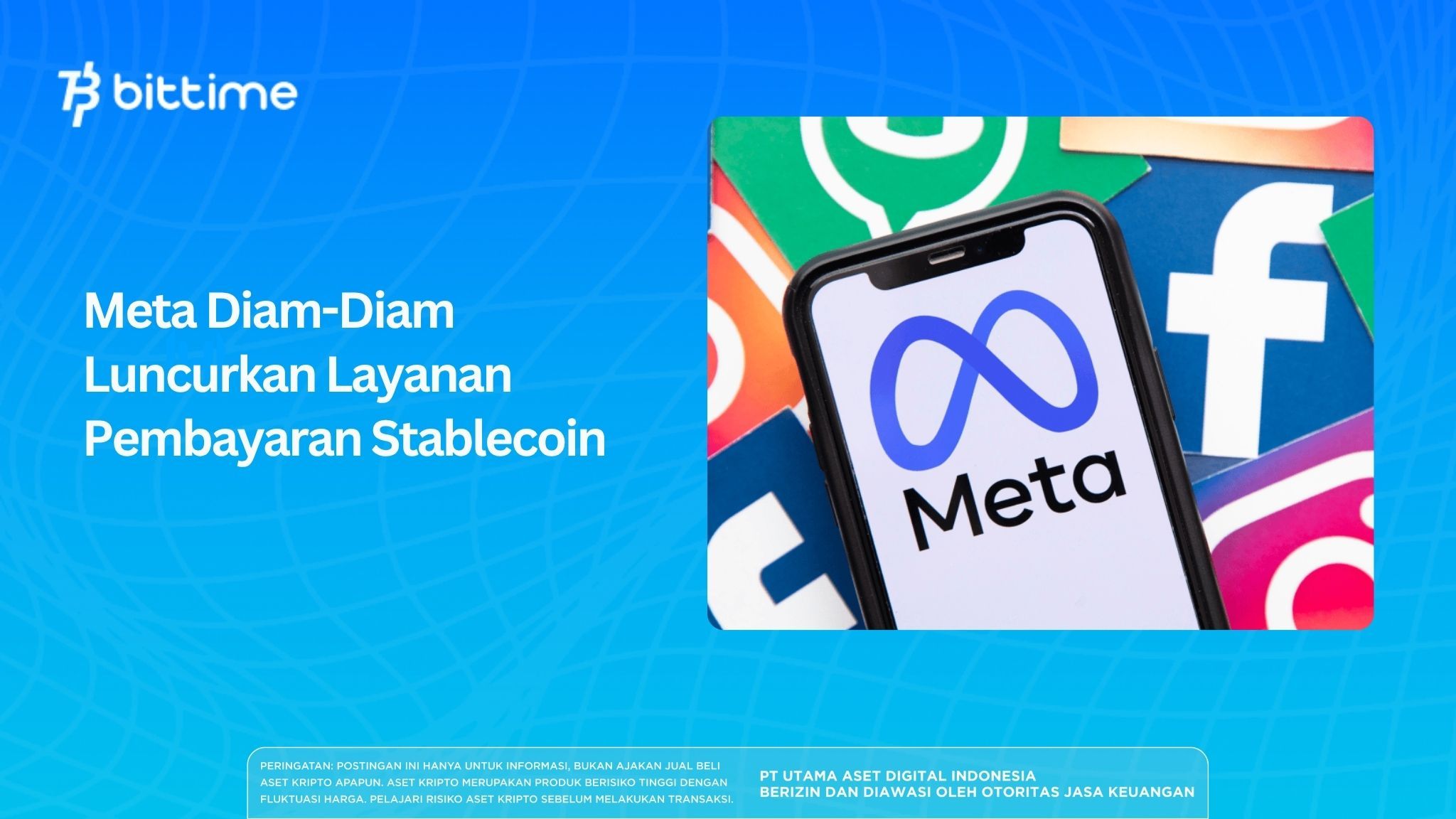
Bittime - Meta is said to be starting to roll out payment-based stablecoin for some creators in Colombia and the Philippines. The program uses USDC and runs on the Solana and Polygon blockchain networks.
Although it is not yet a global service, this step shows that Meta is re-looking at digital assets as part of the future payment system, especially for the need for faster and more flexible cross-border payments.
Key Points
- Meta begins testing creator payments using USDC.
- The service is available on Solana and Polygon for select regions.
- Meta's stablecoin program has the potential to expand to many countries.
Register at Bittime now and start trading crypto with a fast, safe, and easy process in the app.
Meta Returns to Stablecoins After Libra's Failure
Meta's latest move is noteworthy because it comes about four years after the company halted its controversial stablecoin project called Libra, which was later renamed Diem.
The project was initially introduced in 2019 with the grand ambition of bringing a digital currency that could be used by billions of Meta users.
However, the plan has faced strong opposition from regulators and policymakers. Concerns have arisen over Meta's massive user base, which could potentially impact the financial system.
In 2022, the Diem project was finally discontinued.
Now, Meta's approach looks different. The company isn't launching its own stablecoin, but instead using USDC, a US dollar stablecoin already widely used in the crypto industry. In this way, Meta appears to be taking a more practical and cautious approach.
Read also: Brazil Blocks Stablecoins: Here's What You Need to Know
How Meta Stablecoin Payments Work
In an update to the Meta website, stablecoin payments are available to select creators in Colombia and the Philippines. Creators who choose this option will be prompted to enter a third-party crypto wallet address into Facebook's payments platform.
This means that Meta doesn't directly provide crypto wallets for users. The company only provides payment channels, while asset storage is handled through creators' own crypto wallets. Furthermore, Meta doesn't offer USDC exchange services for local currencies.
This is important to understand. Creators receiving payments in USDC will need to manage the subsequent processes themselves, including storing, transferring, or exchanging the stablecoin through other services available in their region.
To support specific reporting aspects, Meta is also partnering with Stripe on crypto-specific tax matters. Stripe confirmed the partnership to Fortune.
This partnership demonstrates that Meta is not going it alone, but is instead partnering with payment players who already have experience in digital financial infrastructure.
Why Did Meta Choose USDC, Solana, and Polygon?
USDC was chosen because this stablecoin is designed to mirror the value of the US dollar. In payment systems, stablecoins like USDC are often considered attractive because their value is relatively more stable than cryptocurrencies like Bitcoin or Ethereum.
Meanwhile, Solana and Polygon were chosen as the networks supporting the payment. Both are known in the crypto industry as blockchain networks frequently used for fast transactions and more efficient fees than some other major networks.
Polygon Labs CEO Marc Boiron said the future of marketplace payments is being built on blockchain infrastructure like Polygon. He also said the Meta stablecoin payments program is expected to expand to over 160 countries by the end of the year.
From Solana's perspective, Catherine Gu, Head of Product at the Solana Foundation, stated that Solana has become a leading platform for internet-based payments.
This statement reinforces the idea that blockchain is starting to be seen as a payment infrastructure, not just a place for trading crypto assets.
Read also: Meta Supports USDC Settlements and Polygon's Solana Wallet for Creators
Payment Services Using Meta Stablecoins Become New Signals
Appearance payment services using stablecoin Meta. This signals that major tech companies are reopening the space for digital assets. This time, the focus is not on building their own currencies, but rather on integrating existing stablecoins into their payment systems.
This approach could be more readily accepted because Meta doesn't need to create a new instrument that would raise significant concerns like Libra. By using USDC, Meta can leverage the existing stablecoin infrastructure and test whether creators truly need this type of payment option.
For creators, stablecoins can provide an alternative payment option, especially for those working across borders or in areas with limited financial access.
However, these benefits still depend on the ease of use of crypto wallets, the availability of exchange services, and the regulations in each country.
Stablecoin Trend Gaining Strength in Large Companies
Meta isn't the only major company starting to look at stablecoins. The source text mentions that companies like Airbnb, X, Apple, and Google are also exploring ways to integrate stablecoins into their payment technologies.
Following the passage of the GENIUS Act in 2025, which established a regulatory framework for US dollar-backed stablecoins, a number of companies began to take more concrete steps.
Shopify has begun allowing merchants to accept USDC payments. Western Union has also announced plans to offer stablecoins on the Solana network.
On the other hand, DoorDash is partnering with payment blockchain startup Tempo to open up the opportunity to pay drivers using stablecoins.
This development shows that stablecoins are increasingly being discussed as a means of payment, not just a crypto instrument for traders.
Read also: USDT/IDR vs USDC/IDR Comparison for Local Arbitrage Strategy
A More Supportive Regulatory Environment
One major difference between the Libra era and MetaTrader's current trajectory is the regulatory environment. When Libra was introduced, stablecoins were still viewed with trepidation. Many considered the project too big and too fast.
Now, the situation seems more open. Stablecoins have developed rapidly, their numbers have increased dramatically, and their use has become more widespread.
With a clearer regulatory framework in the United States, large companies have more room to test stablecoin-based services.
However, this doesn't mean the risks are gone. Stablecoin payments remain subject to compliance, taxation, user protection, wallet security, and volatility in the crypto ecosystem.
Therefore, the limited launch in Colombia and the Philippines could be read as a trial step before Meta makes a bigger decision.
How to Buy Crypto on Bittime?

Want to trade sell buy Bitcoins and crypto investment easily? Bittime is here to help! As an Indonesian crypto exchange officially registered with OJK, Bittime ensures every transaction is safe and fast.
Start with registration and identity verification, then make a minimum deposit of IDR 10,000. After that, you can immediately buy your favorite digital assets!
Check the exchange rate BTC to IDR, ETH to IDR, SOL to IDR and other crypto assets to find out today's crypto market trends in real-time on Bittime.
Also, visit the Bittime Blog for interesting updates and educational information about the crypto world. Find reliable articles about Web3, blockchain technology, and digital asset investment tips designed to enrich your crypto knowledge.
FAQ
What did Meta launch regarding stablecoins?
Meta has begun testing creator payments using the USDC stablecoin in Colombia and the Philippines.
What stablecoin does Meta use?
Meta uses USDC for its creator payment program.
Which blockchain network does this payment run on?
Meta stablecoin payments are available through the Solana and Polygon networks.
Does Meta exchange USDC to local currency?
No. Meta does not provide USDC to local currency conversion services. Creators will need to manage this through a third-party service.
Why is this move important for the crypto industry?
This move shows that big tech companies are starting to explore stablecoins again as part of a digital payment system.
Disclaimer: The views expressed belong exclusively to the author and do not reflect the views of this platform. This platform and its affiliates disclaim any responsibility for the accuracy or suitability of the information provided. It is for informational purposes only and not intended as financial or investment advice.

.png)