Trezor Hit by Data Breach, Are Hardware Wallets Also Threatened?
2026-08-14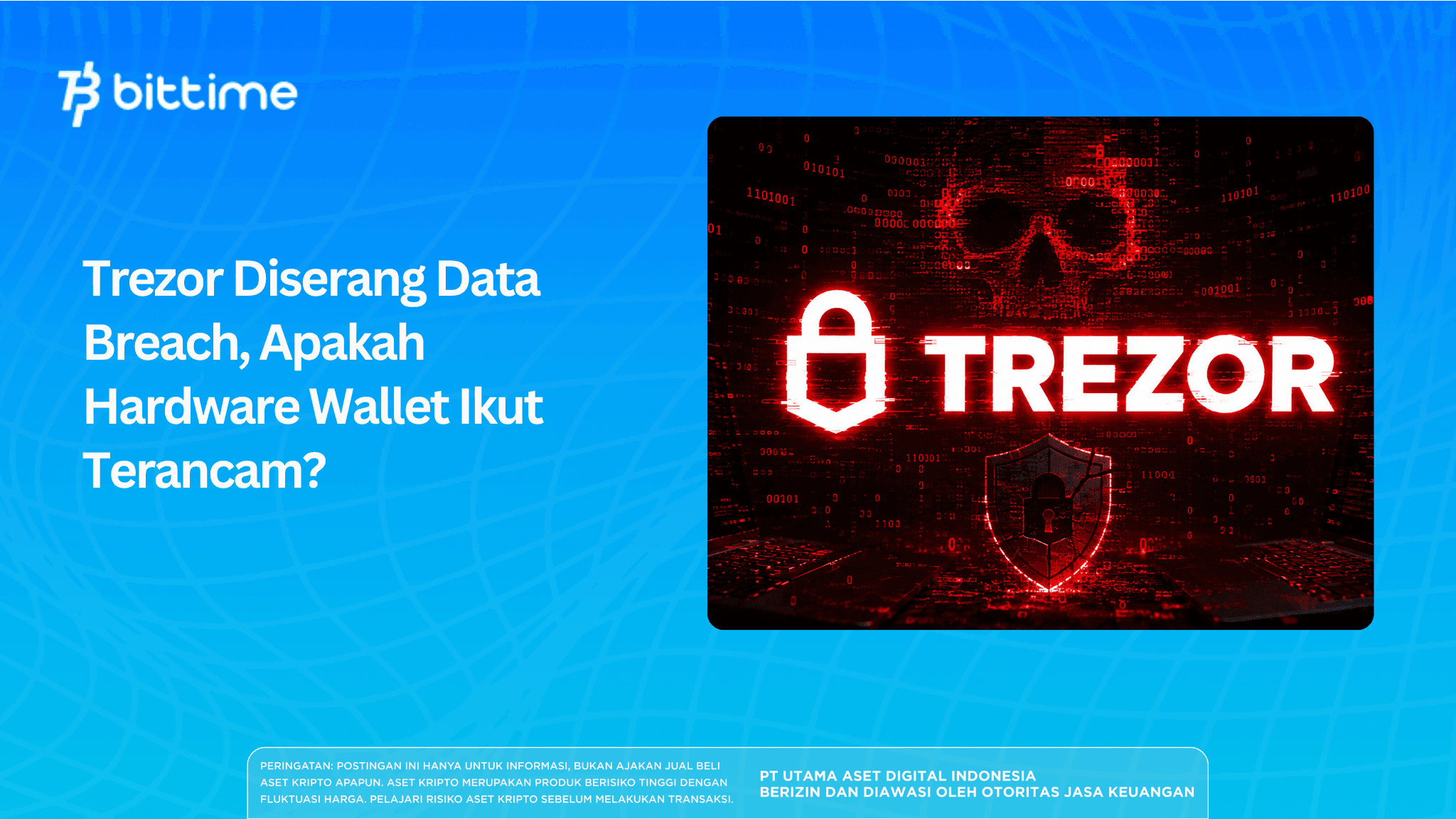
Trezor's data breach drew attention after one of the company’s shipping partners suffered unauthorized access that exposed the personal data of 13,689 customers. The affected information included names, email addresses, phone numbers, and shipping addresses.
Although serious from a privacy perspective, the incident did not compromise hardware wallets, private keys, or users’ wallet backups. The biggest risk now comes from phishing and targeted attacks against customers whose data was exposed.
Key Takeaways
- A total of 13,689 customers were affected by the Trezor customer data breach, with 11,742 customers having more extensive data exposed.
- Trezor systems, hardware wallet devices, private keys, and wallet backups were not reported to have been compromised.
- The main risk after the breach is phishing via email, phone calls, and even physical mail aimed at stealing users’ recovery seeds.
What Happened in the 2026 Trezor Data Breach?
The latest incident did not result from a direct compromise of Trezor’s hardware wallet systems. The breach occurred in the system of one of its fulfillment and shipping partners that handles customer orders.
A total of 13,689 customers were affected. Of these, 11,742 customers had their full names, email addresses, phone numbers, and shipping addresses exposed. Another 1,947 customers were partially affected, with information such as names, cities of residence, and email addresses exposed.
The affected customers received orders between May 10 and August 8, 2026, in the United States, United Kingdom, Sweden, Colombia, Brazil, Italy, and Portugal.
Also read: Best Crypto Wallets in Indonesia 2026: A Guide to Choosing a Secure Crypto Wallet
Was Trezor Hacked, and Are Hardware Wallets at Risk?
The distinction needs to be made clearly. A Trezor customer data leak does not mean Trezor hardware wallets were successfully compromised.
Available information indicates that Trezor’s internal systems, hardware wallet devices, private keys, and wallet backups were not affected by the incident. The exposed data came from the order fulfillment and shipping process.
Hardware wallets are designed to keep private keys isolated from online systems. Because private keys are not part of customers’ shipping data, a leaked name or address does not automatically give an attacker access to Bitcoin or other crypto assets stored through the wallet.
So, someone who only has a user’s name, email address, phone number, and home address still cannot move crypto from the wallet.
The problem is that this information can be used to launch follow-up attacks.
Also read: Wallet Tracking for Beginners: Practical Tips for Tracking "Smart Money" Without Falling Into FOMO
Why Is the Trezor Data Leak Still Dangerous?
The biggest danger from the Trezor security breach lies in attackers’ ability to carry out far more convincing phishing attempts.
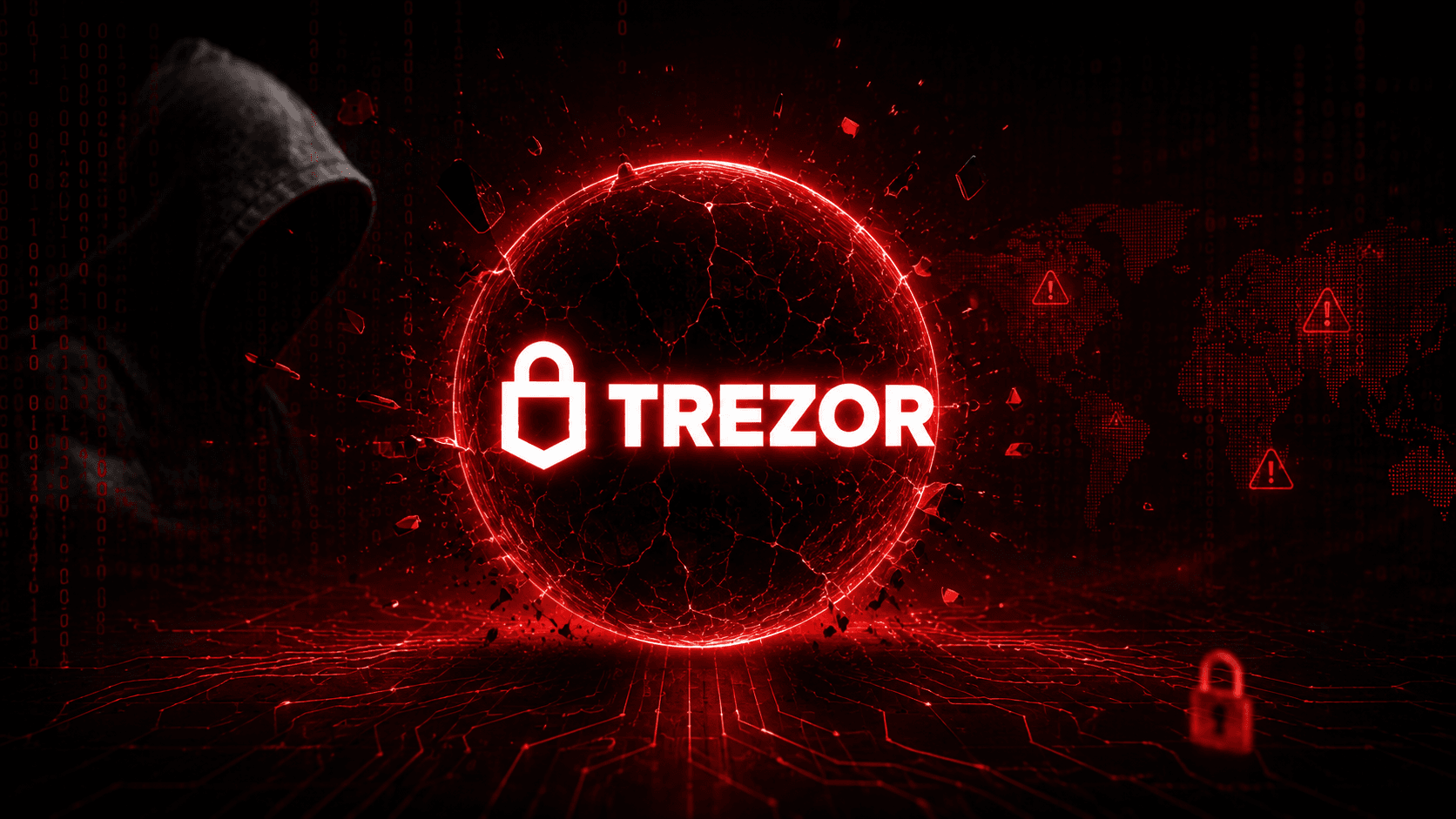
Source: AI-Generated Image
For example, an attacker may already know that someone has purchased a hardware wallet. They may also know the person’s full name, email address, phone number, and shipping address.
That information can be used to create messages such as:
- fake security notifications;
- requests to update firmware;
- claims that the user’s wallet must be verified;
- calls from fake customer support representatives;
- emails containing links to fake Trezor websites;
- physical letters containing fake QR codes;
- requests to enter a recovery seed to “restore” an account.
Trezor’s security guidelines emphasize that any request to provide a wallet backup, PIN, password, or secret code should be treated as a scam.
Also read: Beware of the StilachiRAT Trojan: New Malware Targeting Crypto Wallets in Google Chrome!
Was the Trezor Recovery Seed Leaked?
There is no indication that users’ recovery seeds or wallet backups were leaked in this incident. That information should not be stored in a shipping database in the first place.
This is the most important distinction between a company data breach and a wallet compromise.
A recovery seed is usually the primary key for restoring access to a wallet. If the seed falls into someone else’s hands, an attacker may be able to restore the wallet on another device and take the assets.
Therefore, users should always remember one simple principle: never enter a recovery seed into a website, online form, email, or unverified application.
Any request to provide a recovery seed for a security check, account upgrade, wallet verification, or data-breach compensation should be treated as a red flag.
Also read: Non-Custodial Crypto Wallets: Definition, Explanation, and Key Differences
Why Weren’t All Trezor Customers Affected?
One factor that limited the scale of the 2026 Trezor breach was its 90-day data retention policy.
The company’s privacy policy states that shipping-related data such as names, addresses, phone numbers, and email addresses is stored for 90 days. After that period, data from completed orders is deleted from the company’s and fulfillment partner’s systems unless there is an unresolved issue with the order.
As a result, data belonging to older customers was no longer available in the database affected by the incident.
This kind of data-minimization policy shows why personal-information retention periods are an important part of security. Data that has already been deleted cannot be stolen in a later attack.
Also read: Coldcard Hack: 1,367 BTC Stolen, What Caused It and What Was the Impact?
What Should Users Do After the Trezor Breach?
Users do not need to immediately move their assets simply because their personal data was exposed. Instead, the main focus should be on staying alert to social engineering.
Some steps users can take include:
- Never give your recovery seed to anyone.
- Do not open security links from suspicious emails or SMS messages.
- Check the website address before downloading an application or firmware.
- Do not trust calls claiming to be customer support if they ask for your seed.
- Verify transactions directly on the hardware wallet screen.
- Use a separate email address for crypto services when possible.
- Be wary of physical letters asking you to scan a QR code to verify your wallet.
Affected customers should also be more cautious about communications that use their personal information. A message that knows your name or home address does not necessarily mean it actually came from the company.
Also read: 7 Most User-Friendly USDT Wallets in Indonesia for 2026
Physical Risks From the Trezor Customer Data Breach
A leaked shipping address creates additional risks beyond those associated with an ordinary email leak. The data can identify someone as a potential crypto owner while also revealing where the device was delivered.
In 2026, threats to digital-asset owners are not limited to online attacks. Industry data shows that cases of violence and physical theft targeting crypto owners are also becoming a growing concern.
For this reason, Trezor is developing an anonymous shipping option intended to reduce the link between a hardware wallet purchase and a home address or real-world identity. The rollout in the European Union is targeted to begin in September 2026.
Are Hardware Wallets Still Safe?
The Trezor data breach does not prove that the hardware wallet concept has failed. Instead, the incident shows that self-custody security has multiple layers.
A hardware wallet can help protect private keys from online attacks, but user security also depends on protecting the recovery seed, staying alert to phishing, securing devices, and maintaining identity privacy.
In other words, a hardware wallet can reduce one type of risk but cannot eliminate every form of threat.
If you want to follow developments in crypto security, hardware wallets, Bitcoin, and the latest hacking cases, you can register with Bittime and check the latest crypto news updates so you can identify security threats that require attention more quickly.
Conclusion
The 2026 Trezor data breach exposed the personal information of 13,689 customers through a shipping partner’s system. The affected data included names, email addresses, phone numbers, and shipping addresses, but hardware wallets, private keys, and wallet backups were not reported to have been compromised.
Therefore, the main threat is not a direct wallet breach, but phishing, social engineering, and potential targeted attacks against crypto owners.
Users should increase their vigilance and never give their recovery seed to anyone. As long as private keys and recovery seeds remain secure, a personal-data leak by itself does not give attackers direct access to move assets from a hardware wallet.

Bittime is a licensed Digital Financial Asset Trader (PAKD) platform regulated and supervised by Indonesia’s Financial Services Authority (OJK) — where you can buy Bitcoin in Indonesia and hundreds of other crypto assets starting from IDR 10,000. Registration is fast and secure, and you can get started today.
Track the conversion of USDT to IDR and the real-time price movements of your favorite crypto assets. Everything is available in one crypto investment app that can be downloaded for free from the Play Store.
Ready to get started? Register with Bittime now and execute your investment strategy on a platform trusted by millions of users in Indonesia.
FAQ
What Happened in the Trezor Data Breach?
One of Trezor’s shipping partners suffered unauthorized access that exposed the personal data of 13,689 customers. The leaked information included names, email addresses, phone numbers, and shipping addresses for most of the affected customers.
Were Trezor Hardware Wallets Also Hacked?
There were no reports that hardware wallet devices were compromised in this incident. Trezor’s systems, private keys, and wallet backups were stated to be unaffected.
Can Trezor Users’ Crypto Be Stolen Because of the Data Breach?
The leaked personal data does not provide direct access to crypto. However, attackers can use that data for phishing attempts and try to steal recovery seeds.
Was the Trezor Recovery Seed Also Leaked?
No. Recovery seeds or wallet backups were not among the information reported to have been exposed.
What Should Trezor Users Do?
Be cautious of emails, phone calls, SMS messages, or letters asking you to verify your wallet. Never provide your recovery seed, PIN, or password, and never enter them into a website sent through a suspicious message.
Disclaimer: The views expressed belong exclusively to the author and do not reflect the views of this platform. This platform and its affiliates disclaim any responsibility for the accuracy or suitability of the information provided. It is for informational purposes only and not intended as financial or investment advice.

.png)