What Is Address Poisoning? Beware of Cryptocurrency Sending Mistakes
2026-08-14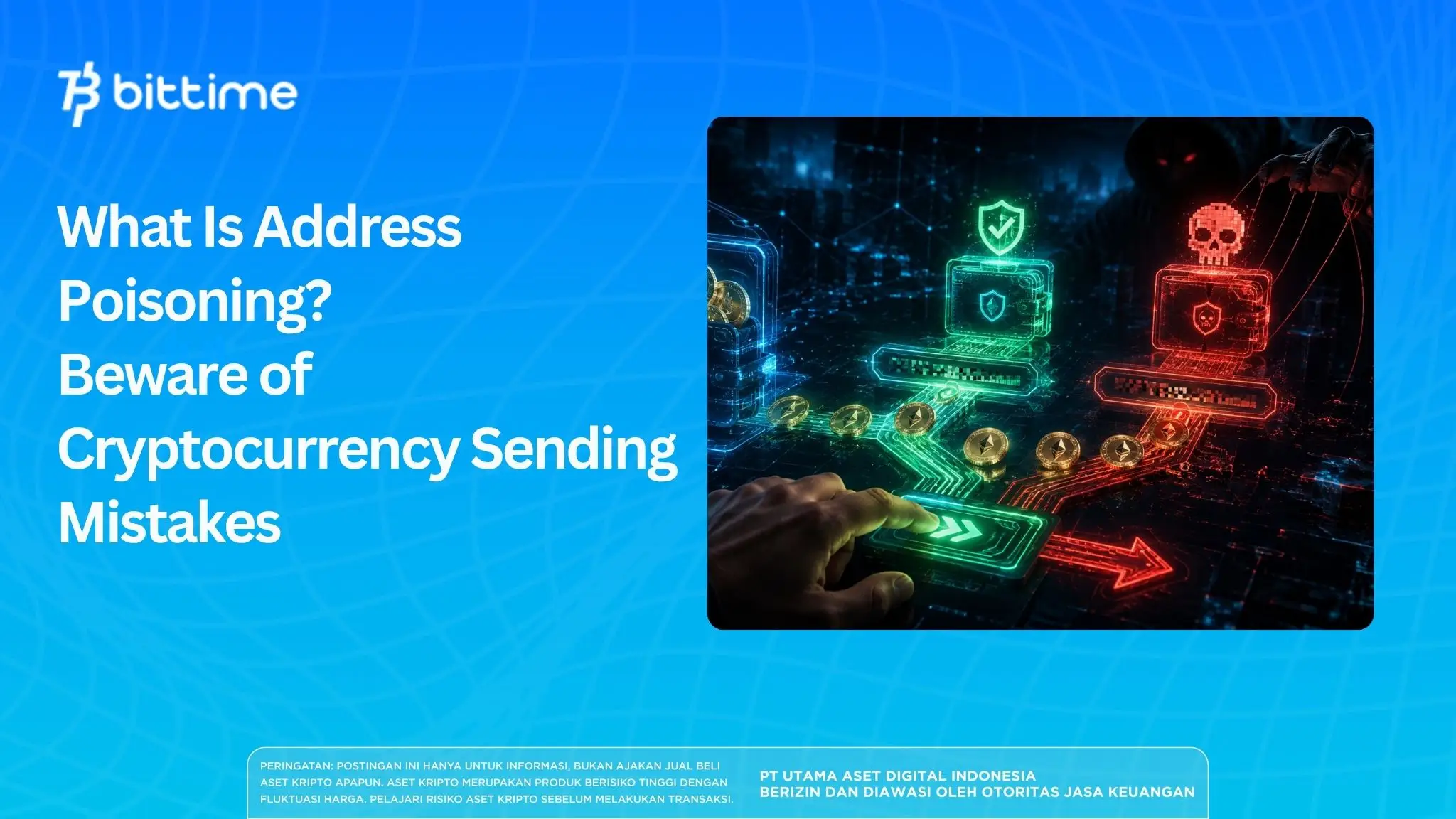
Sending crypto aset It's convenient, but one mistake in the wallet address can result in funds going to the wrong party.
One of the modes that takes advantage of user habits when copying addresses is address poisoning, namely an attack by planting a fake address into the transaction history victim.
The risk is not just a technical possibility.
In August 2026, a userlost around100,000 USDT after sending funds to a fake address that has beenh was in his transaction history for about 66 days.
Key Takeaways
Address poisoning scamcreate a fake address that looks similar to a real wallet commonly used by victims.
The perpetrators usually enter these addresses through very small or zero value transactions.
The main prevention is to check the destination address completely and not to use the transaction history as an address book.
What is Address Poisoning?
Source: AI
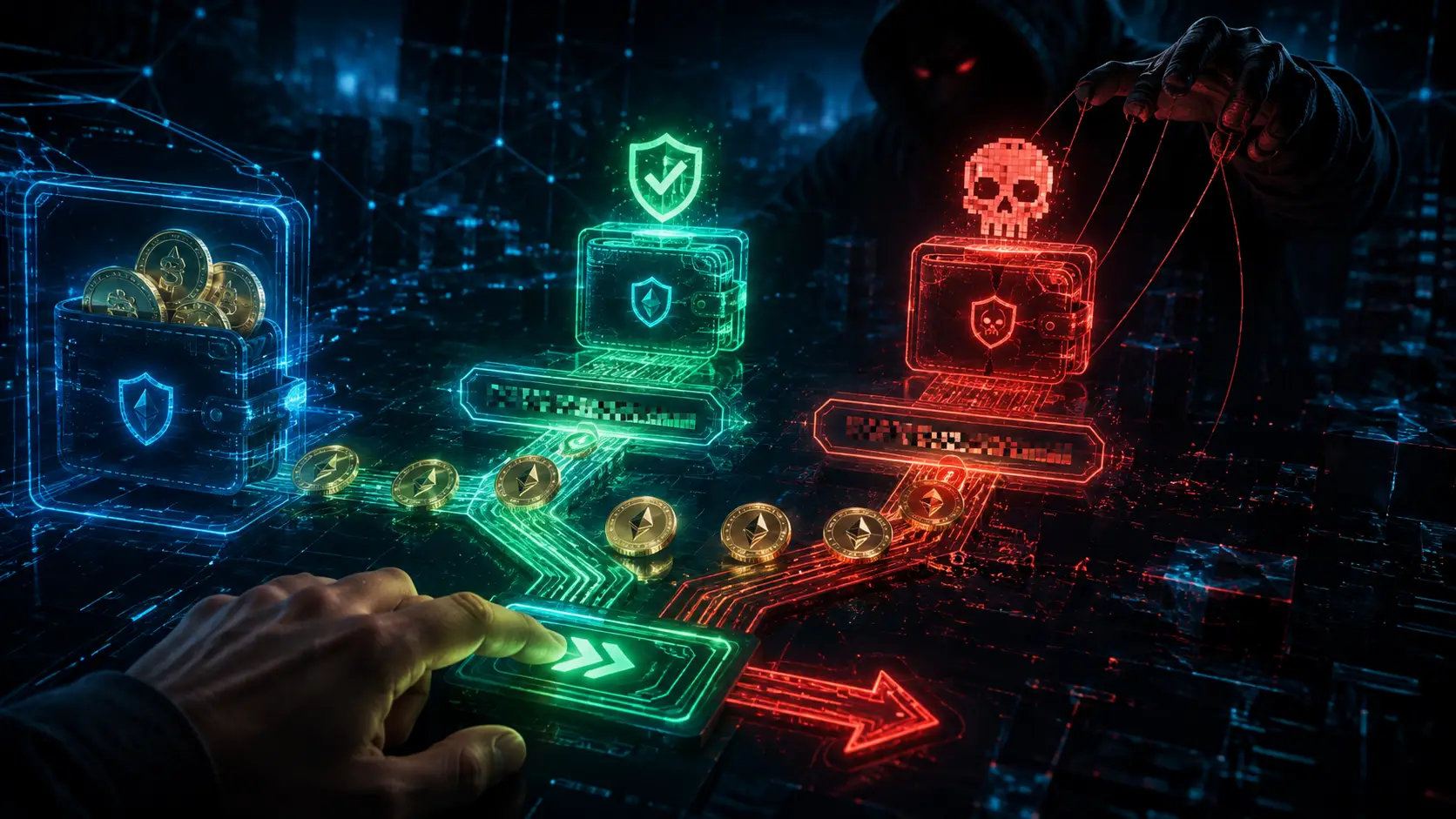
What is address poisoning? IThis is a crypto fraud method that aims to make users choose the wrong recipient address when making subsequent transfers.
The perpetrator generates a new wallet address whose first and last characters resemble the original address of the victim or a party with whom he frequently transacts.
After that, the attacker sends a small transaction or zero-value transaction so that the fake address appears in the transaction history.
Modus address poisoning crypto of does not always require stealing seed phrases, private keys, or passwords.
The perpetrators actually rely on user carelessness when copying and pasting addresses from transaction history.
Read Also: How to Trade on Bittime Easily!
How Does an Address Poisoning Scam Work?
The first stage usually begins when the perpetrator observes public blockchain transactions.
After seeing a wallet regularly sending funds to a specific address, an attacker can create a vanity address whose beginning and end sections look similar.
Next, the dummy address is sent to the target via a small or zero value transaction.
As a result, the address poisoning wallet looks like a normal transaction among many previous activities.
The problem arises when the victim wants to send funds again and takes the destination address from the transaction history.
Because wallet interfaces often shorten addresses by showing only the first and last characters, users can mistake fake addresses for real ones.
If the victim sends assets to that address, the confirmed on-chain transaction is generally irreversible.
This is why simple copy-paste mistakes can lead to huge losses.
Read Also: 7 Effective Crypto Trading Methods for Beginners, Complete with Tips and Tricks
Address Poisoning Case Causes Losses of 100,000 USDT
Danger in address poisoning fraud seen in the case reported on August 11, 2026.
A user sent approximately 100,000 USDT to a fake wallet that had previously been placed in his transaction history.
According to reports citing Cyvers, the address had been planted around 66 days before the victim finally made a wrong transfer.
The victim allegedly took the address from history without comparing the overall character with the actual goal.
After the funds are disbursedReceived, the attacker exchanged the 100,000 USDT for approximately52,8 ETH.Cyvers believes the conversion was likely done to reduce the risk of stablecoin funds being frozen by their issuers.
This case showsthat address poisoning scam cryptocan be designed aslong-term attack.
The attacker simply waits until the victim one day makes a large transaction using a fake address that has long been stored in the history.
Read Also: Futures Trading for Beginners: How It Works, Tips, and Risks
Why Can Fake Addresses Look So Convincing?
Crypto addresses consist of long strings of characters, making them nearly impossible for most users to memorize. For practical reasons, wallet applications often shorten the address display.
For example, a user might only see the first and last few characters.
The attacker then tries to create an address that has a similar pattern in those visible portions.
Banxa explainsthat address poisoning crypto wallettake advantage of two habitsat once: copy the address from the transaction history and only verify the characters at the end.
Therefore, the examination0x12...89ABjust isn't enough.
Two addresses can have nearly identical prefixes and suffixes but still be completely different wallets.
Want to start buying and trading crypto assets through a local platform? Register at Bittime, then always make sure the deposit and withdrawal addresses are correct before making a transfer.
MetaMask Address Poisoning: There's a Warning System
MetaMask has added special protection against address poisoning MetaMask.
When a user wants to send funds, the wallet can compare the destination address with the addresses in the transaction history.
If the first and last characters look very similar but the middle part is different, MetaMask may display a blocking warning before the transaction is sent.
MetaMask can also provide a warning when a user is about to make a transaction with an address that has never been used before.
However, automated alerts do not replace manual verification.
Users still need to ensure the recipient address is correct before pressing the confirmation button.
Read Also: Beware of Honeypot Scams in the Crypto World
How to Avoid Address Poisoning
The most effective step is not to copy the destination address directly from the transaction history.
Take the address from the recipient source, for example the official deposit page of the exchange or the destination wallet that is currently open.
Check more than just the first and last four characters.
MetaMask actually advises users to pay attention to the middle section because that is the part that often differs in poisoned addresses.
For frequently used addresses, save the verified address to the Contacts feature or address book.
Hardware wallet users should also match the address displayed on the device before signing a transaction.
For large transactions, Banxa recommends conducting a test transfer with a small nominal amount first.
However, the address for the main transaction should still be double-checked because an attacker can plant a fake address after the test transaction is completed.
Read Also:How to Identify Fake Tokens that are Scams?
Address Poisoning is Different from Wallet Hacking
Kesalahpahaman common is to assume that the emergence of suspicious transactions meansaddress poisoning wallethas been hacked.
In fact, anyone can send transactions to public address on the blockchain without gaining access to the victim's private key.
Address poisoning is more accurately understood as social engineering that exploits appearance and transaction habits.
The new wallet completely lost funds when the user accidentally authorized a transfer to the attacker's address.
Therefore, receiving a suspicious small or zero-value transaction does not automatically mean that the assets in the wallet are lost.
What you need to do is ignore that address and not use it as a reference for future transfers.
Read Also:Learn Crypto Trading: Understanding Trading Pairs, Market Orders, Order Books, and Limit Orders
Conclusion
Address poisoning is a simple but dangerous mode because it does not requires direct access to the victim's account.
The attacker simply creates a similar-looking address, inserts it into the transaction history, and then hopes the user copies it incorrectly.
The case of the 100,000 USDT loss shows that attacks can be prepared weeks before they succeed.
Since confirmed crypto transactions are difficult to reverse, address verification is a security measure that should not be skipped.
Use the address book, take the address from the original source, check the middle characters, and do a test transfer for a large amount.
A few seconds to double check is much cheaper than losing assets due to address poisoning scam.
Bittime is a licensed and regulated Digital Financial Asset Trader (PAKD) supervised by Indonesia’s Financial Services Authority (OJK) — where you can buy Bitcoin in Indonesia and hundreds of other crypto assets starting from just Rp10,000. The registration process is fast, secure, and you can get started today.
Track USDT to IDR conversions and monitor your favorite crypto assets in real time. Everything is available in one crypto investment app that you can download for free on the Play Store
Ready to start? Register now on Bittime and execute your investment strategy with a platform trusted by millions of users in Indonesia.
FAQ
What is address poisoning in crypto?
Address poisoning is a scam that plants a fake wallet address into the victim's transaction history so that the address is copied incorrectly in subsequent transactions.
Can address poisoning steal private keys?
Not directly. This method doesn't require a private key because its success depends on the victim knowingly sending funds to a fake address.
Does a small, unknown transaction mean the wallet is hacked?
Not always. Address poisoning attackers often send small or zero-value transactions simply to make the fake address appear in the transaction history.
How does MetaMask detect address poisoning?
MetaMask compares the destination address with transaction history and can warn if addresses look very similar but have different characters.
What is the safest way to prevent misdirected crypto?
Do not take addresses from transaction history, verify full characters, use the address book, and do a test transfer for large value transactions.
Disclaimer: The views expressed belong exclusively to the author and do not reflect the views of this platform. This platform and its affiliates disclaim any responsibility for the accuracy or suitability of the information provided. It is for informational purposes only and not intended as financial or investment advice.
.png)