AI Helps with Theses and College Study: Perfect for Millennials and Gen Z
2025-09-25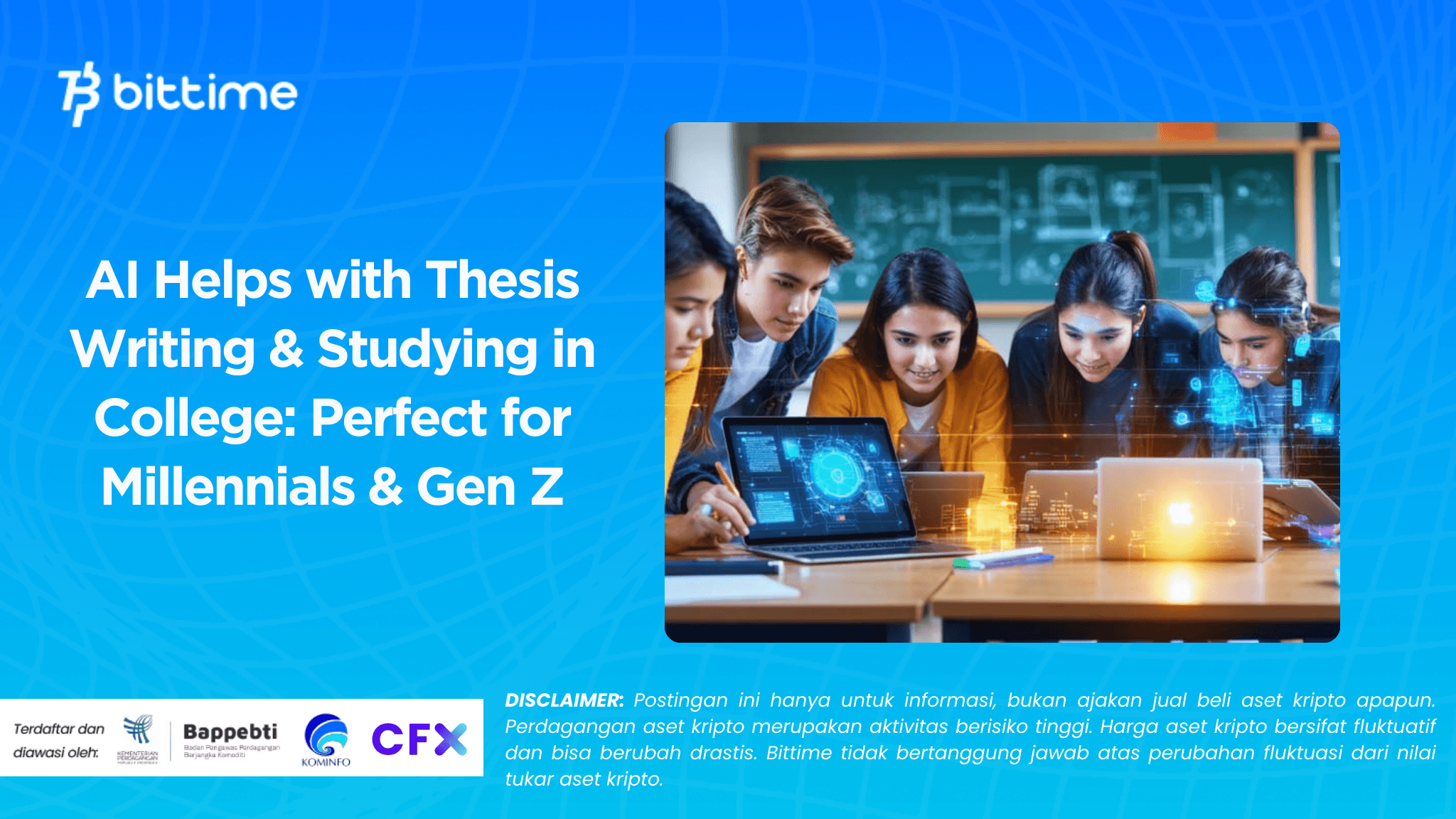
Bittime - Students are increasingly using AI to assist with their college assignments, including theses, summaries, and data analysis.
Tools like ChatGPT and other AI applications are gaining popularity because they're believed to speed up learning and completing assignments.
However, the use of AI also raises questions about academic ethics, dependability, and the quality of learning.
This article discusses how young people can use AI effectively & ethically in academic processes, its benefits & challenges based on local research, and the tools that can help.

Benefits of AI for Thesis & Learning
Here are the real benefits of AI in an academic context:
- Time efficiency: Students can compile a thesis framework, search for theories, references, or supporting data more quickly than searching manually.
- Language & grammar assistance: AI makes it easy to check grammar, writing style, paraphrase, and translate text.
- Research & literature summary: with applications such asConsensus And Elicit, students can obtain summaries of relevant journals or theories efficiently.
- Document & reference management: AI helps compile bibliographies, organize documents, and even provide recommendations for literature sources.
- Understanding difficult material: via chatbot or interactive Q&A, studentscan understand concepts that have not been mastered more clearly.
Read Also: Will AI Replace Human Jobs? Answers Amid AI Takeover Fears
AI Tools Suitable for Thesis & Study
Here are some popular tools & applications that students can use:
- ChatGPT: for brainstorming, creating outlines, clarifying concepts, and initial revisions of text.
- Consensus.app: search for theories or journal references based on research questions.
- Elicit: helps find academic literature and make summaries based on data in journals.
- Grammarly / grammar checker tool: to improve grammar & writing style.
- Reference & reference management tools: such as Zotero, Mendeley, EndNote to organize libraries.
Paraphrase & translation tools: to help understand foreign material or convert text.

Risks & Limits of Use
Even though the benefits are great, there are several things that must be considered so that the use of AI does not end up being detrimental:
- Dependence / overrelianceExcessive use of AI can discourage students from thinking critically on their own. Research suggests that critical thinking skills can be negatively impacted if AI is used excessively.
- Ethical issues & plagiarismUsing AI to generate large portions of an assignment without supervision could be considered academic misconduct. Universities warn that AI cannot replace students in writing theses.
- Impact on academic qualityWhile AI can help with summarization and ideas, the material it generates can sometimes lack depth or contain incorrect references. Validation is essential.
- Uncertainty of campus regulationsNot all universities have clear policies regarding how much AI can be used. Some lecturers oppose the use of AI in certain parts of a thesis.
Read Also: The Phenomenon of Indonesian AI Influencers and the Increasing Popularity of TikTok AI Characters
Ethical & Practical Strategies for Using AI for Your Thesis
Here are steps you can take to ensure the use of AI remains ethical and effective:
- Use AI astool, not as the main author.
- Always create original content: add your own analysis, interpretations, and personal insights.
- Verify the references and literature offered by AI. Don't use them immediately without checking their validity.
- Follow campus rules and academic guidelines regarding plagiarism and the use of AI. Consult your supervisor.
- Limit which parts AI can help with (e.g., literature research, grammar, summary) and which parts you should write yourself (data analysis, discussion, conclusion).
Read Also: AI for Side Hustle & Productivity 2025: Maximize Time & Income
Conclusion
AI has become a real part of students' academic lives, especially in helping with theses and college assignments.
Millennial & Gen Z students can leverage AI to be more efficient, but must be aware of the risks and act ethically.
By combining the right tools, wise usage strategies, and academic awareness, AI can be a powerful learning assistant — not a substitute for human critical thinking and creativity.
How to Buy Crypto on Bittime

Want to trade sell buy Bitcoins and crypto investment easily? Bittime is here to help! As an Indonesian crypto exchange officially registered with Bappebti, Bittime ensures every transaction is safe and fast.
Start with registration and identity verification, then make a minimum deposit of IDR 10,000. After that, you can immediately buy your favorite digital assets!
Check the exchange rate BTC to IDR, ETH to IDR, SOL to IDR and other crypto assets to find out today's crypto market trends in real-time on Bittime.
Also, visit the Bittime Blog for interesting updates and educational information about the crypto world. Find reliable articles about Web3, blockchain technology, and digital asset investment tips designed to enrich your crypto knowledge.
FAQ
Can the script use AI fully?
No. AI may be used as an aid (brainstorming, research, grammar, summarizing), but the core part, especially the analysis and research ideas, must remain the student's and under the supervision of the supervisor.
Is using ChatGPT considered plagiarism?
It depends on the university and the extent of the AI's contribution. If it's only for reference or proofreading, and you include the source or cite the AI when requested, it's usually acceptable. However, using AI text without modification and without acknowledgement can be considered plagiarism.
How to balance the use of AI with critical thinking skills?
Use AI as a starting point: get an idea or summary, then take your time reading the literature, analyzing it, and crafting your own arguments. Don't let AI replace your own thinking.
Does AI help if I have trouble with English?
Yes. Tools like Grammarly, translators, or even ChatGPT can be very helpful in clarifying grammar, vocabulary, or translating literature. But it's also important to understand the original meaning and context rather than relying solely on automatic translation.
How do campuses regulate the use of AI?
Some universities already have policies in place: they limit the use of AI, sometimes allowing it only for certain areas, and sometimes restricting it to formal evaluations like examinations or publications. Students should check their university's academic guidelines.
Disclaimer: The views expressed belong exclusively to the author and do not reflect the views of this platform. This platform and its affiliates disclaim any responsibility for the accuracy or suitability of the information provided. It is for informational purposes only and not intended as financial or investment advice.

.png)