Claude Data Leak: Anthropic Reveals Suspicions About Chinese Company
2026-02-24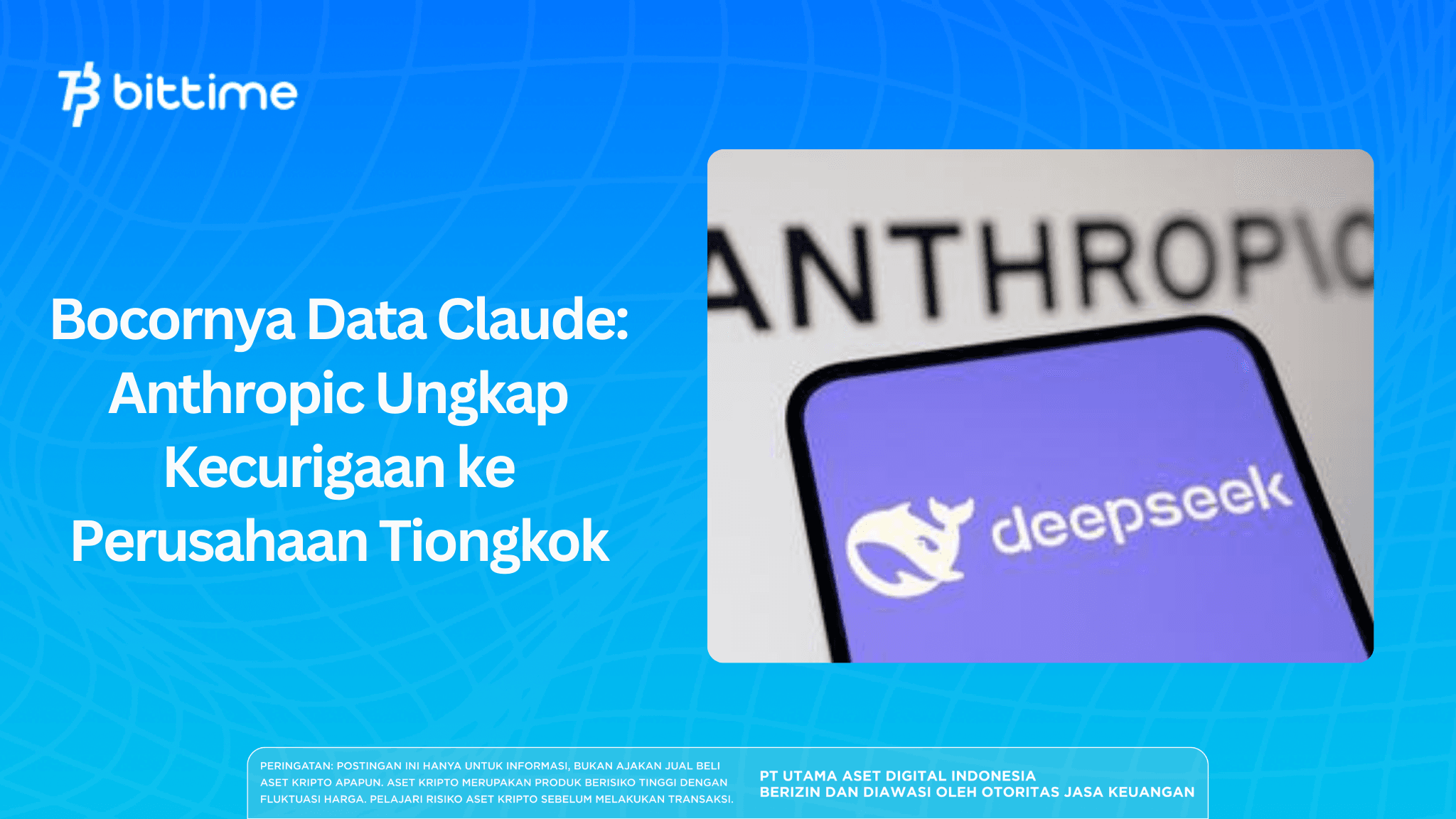
Global competition in artificial intelligence development has entered a new phase. It is no longer just about who has the most advanced model, but also who can protect that model from exploitation.
Recently, U.S.-based AI company Anthropic revealed alleged misuse of its AI system, Claude, by several Chinese technology companies.
The case immediately sparked global discussion about AI model security, a training technique called distillation, and the potential leakage of advanced AI capabilities. The allegations involve several companies, including DeepSeek, MiniMax, and Moonshot AI.
Key Takeaways
- Anthropic accuses Chinese AI companies of massively “distilling” Claude.
- Around 24,000 fake accounts generated more than 16 million conversations.
- The case raises global concerns about frontier AI model security.
Chronology of the Alleged Claude AI Data Leak
Anthropic stated that it discovered an industrial-scale campaign attempting to extract the capabilities of the Claude model.
According to the company’s report, external parties created around 24,000 fake accounts to interact with Claude at a massive scale.
Total interactions are estimated to have exceeded 16 million conversations.
The goal was not merely normal usage. Anthropic stated that the activity aimed to train competing AI models using Claude’s outputs.
This is what is referred to as Anthropic Claude data siphoning — the process of extracting model capabilities without permission through repeated interactions.
Read Also: OpenAI vs Anthropic: The Battle of AI Models in the Enterprise World
What Is Distillation and Why Is It Dangerous?
Distillation is actually a legitimate method in machine learning.
The principle: a smaller model is trained using answers from a larger model.
However, problems arise if it is done without permission.
Anthropic states that this practice can:
- Save years of research costs
- Replicate frontier AI reasoning capabilities
- Bypass built-in safety systems
Therefore, this case falls under Claude AI data security, not merely a typical terms-of-service violation.
Main Target: Reasoning Capabilities and Political Censorship
Anthropic accuses DeepSeek of specifically attempting to replicate Claude’s reasoning capabilities.
In addition, the company allegedly created alternative “censorship-safe” responses for politically sensitive questions.
This means the distilled model could potentially answer questions that were previously restricted by AI safety systems.
This is what triggered major concern: a replica model might not carry the same safety guardrails.
Read Also: How to Use Grokpedia v0.1: AI Encyclopedia Guide
Why Are These Allegations Serious?
Anthropic warns that the impact is not only commercial.
AI models without restrictions could be used for:
- Offensive cyber operations
- Disinformation campaigns
- Mass surveillance systems
Therefore, Anthropic’s allegations are not merely about a Claude AI data leak, but are tied to national security and technology geopolitics.
Anthropic’s Response
To address the threat, Anthropic is developing:
- Behavioral fingerprinting systems
- Threat data sharing among AI companies
- Automated distillation detection
They also call for restrictions on access to advanced AI chips to limit the training of competing models.
Read Also: OpenAI Launches Prism, a New AI Workspace for Researchers and Scientists
Impact on the Global AI Industry
This case shows a major shift in the industry:
In the past: Companies raced to build models. Now: Companies race to protect models.
Many analysts say a new era has begun — the AI Security Era.
Anthropic’s allegations add to a growing list of concerns after Western AI companies previously accused similar practices involving other models.
Is This Truly “AI Data Theft”?
Technically, no database was stolen.
However, a model’s capabilities can be reconstructed solely from the answers it provides. This is what makes distillation a legal gray area.
So the term “Chinese companies stealing AI data” may be more accurately described as: theft of AI capabilities.
Conclusion
This incident shows that AI has become a strategic asset like nuclear technology or semiconductors.
Model protection is no longer just about business, but also about global security.
If proven true, this case could become the first legal precedent regarding ownership of artificial intelligence capabilities — not just data.
How to Buy Crypto on Bittime

Want to trade buy buy Bitcoin and invest in crypto easily? Bittime is ready to help! As an Indonesian crypto exchange officially registered with Bappebti, Bittime ensures every transaction is secure and fast.
Start by registering and verifying your identity, then make a minimum deposit of Rp10,000. After that, you can immediately purchase your favorite digital assets!
Check the BTC to IDR, ETH to IDR, SOL to IDR and other crypto assets to monitor today’s crypto market trends in real-time on Bittime.
Also, visit Bittime Blog for various interesting updates and educational information about the crypto world. Find trusted articles on Web3, blockchain technology, and digital asset investment tips designed to enrich your knowledge in the crypto space.
FAQ
What happened to Claude AI?
Anthropic detected large-scale usage by external parties to train competing AI models through distillation.
Was Claude user data leaked?
No user database was leaked, but the model’s capabilities were allegedly extracted.
Why is distillation dangerous?
A replicated model may lose its safety systems and ethical restrictions.
Who is accused?
Several Chinese AI companies including DeepSeek, MiniMax, and Moonshot AI.
Is this illegal?
It remains a legal gray area, but it violates terms of service and could become a major legal case.
```
Disclaimer: The views expressed belong exclusively to the author and do not reflect the views of this platform. This platform and its affiliates disclaim any responsibility for the accuracy or suitability of the information provided. It is for informational purposes only and not intended as financial or investment advice.

.png)