Decentralized AI: Opening Access to Innovation and Technological Competition
2026-02-24
Bittime - Development artificial intelligenceentering a new phase. While previously the industry was dominated by large, centralized cloud-based companies, nowDecentralized AI or decentralized AIis starting to gain global attention. This model is believed to be able to createaccess to technological innovationwhich is more even and at the same time encouragingAI technology competitionhealthier.
As global AI infrastructure investment surges, a crucial question arises: will the future of AI continue to rely on centralized systems? Or will the future of technology move toward a cloud-based architecture?blockchainand open network?
Key Takeaways
- Decentralized AI opens up access to innovation without the dominance of one party.
- Blockchain strengthens transparency, security, and validation of AI models.
- An open AI ecosystem creates broader AI learning opportunities.

Register at Bittimenow and start trading crypto with a fast, safe, and easy process in the app.
Why Decentralized AI Is Becoming the Alternative to Big Tech
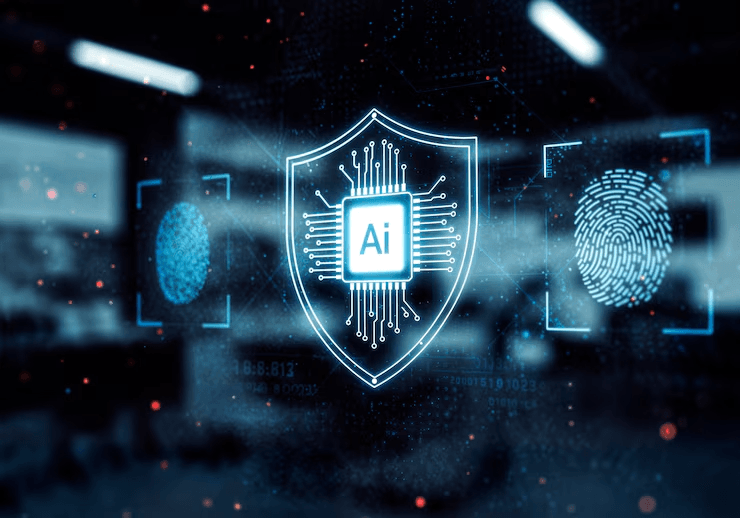
Source: freepik
Until now, AI development has been dominated by large technology companies like Amazon, Microsoft, and Google. They control cloud infrastructure, data, and the distribution of AI models.
However, the centralized model has several disadvantages:
- Concentration of power and data
- Minimal algorithm transparency
- Market monopoly risk
- High dependence on company servers
Decentralized AIpresents a solution that leverages blockchain networks and distributed computing. In this system, model validation, data storage, and computation are performed through a network of independent nodes, rather than a single entity.
This approach encouragesAI technology competitionwhich is more open and collaborative.
READ ALSO:Indonesia's Fintech Revolution: AI Innovations That Are Changing the Face of Digital Finance
Blockchain and Open AI Ecosystem
In contextAI blockchain opinion, blockchain acts as a foundation of trust. This technology enables:
- Transparent model validation
- Tracking the origin of training data
- Token-based incentive distribution
- Cryptography-based data security
Some projects like Bittensor and Akash Network show howopen AI ecosystemcan grow without relying on giant clouds.
In this ecosystem, developers, researchers, and users can contribute directly. This createsAI learning opportunitieswhich is more inclusive and competitive.
The Impact of Decentralized AI on the Future of Technology
The impact of decentralized AInot only technical, but also social and economic.
Stronger Privacy
Data doesn't have to be stored in large corporate data centers. Users have more control over their information.
Global Computing Utilization
Idle GPUs in various locations can be utilized as a shared computing network.
Faster Innovation
The open-source model allows for global iteration and collaboration without the constraints of closed licensing.
Digital Economic Justice
Network contributors receive direct incentives through tokenization.
In contextfuture technology world, Decentralized AI has the potential to reduce the gap between developed and developing countries in access to advanced technology.
Investment Opportunities and Market Growth
Centralized AI companies are currently valued at trillions of dollars, while the decentralized AI sector remains relatively small. This gap presents a significant opportunity.
The AI blockchain market is projected to grow significantly in the next few years, as the need for:
- Data security
- Efficient computing
- Model transparency
- Community-based governance
For investors and developers, this initial phase is a strategic moment to enter intoopen AI ecosystem.
READ ALSO:Humata AI: A Smart Assistant for Crypto Investors. Learn Its Functions and How It Works!
Conclusion
Decentralized AI is not just a trend, but a shift in technological architecture. By opening access to technological innovation, strengthening privacy, and encouraging healthy competition in AI technology, decentralized AI offers a new foundation for the future of technology.
While centralized models emphasize control, decentralized AI emphasizes sovereignty, collaboration, and transparency. This shift has the potential to reshape how humans build and utilize artificial intelligence in the coming decades.
How to Buy Crypto on Bittime

Want to trade sell buy BitcoinLooking for easy crypto investing? Bittime is here to help! As an Indonesian crypto exchange officially registered with Bappebti, Bittime ensures every transaction is secure and fast.
Start by registering and verifying your identity, then make a minimum deposit of IDR 10,000. After that, you can immediately purchase your favorite digital assets!
Check the course BTC to IDR, ETH to IDR, SOL to IDRand other crypto assets to find out today's crypto market trends in real-time on Bittime.
Additionally, visitBittime Blogto get various interesting updates and educational information about the world of crypto. Find trusted articles on Web3, blockchain technology, and investment tips.
FAQ
What is decentralized AI?
AI models that run on a distributed network, not controlled by a single company.
What is the difference between decentralized AI and centralized AI?
Centralized AI is controlled by a single entity, while decentralized AI is based on an open network.
How does blockchain support AI?
Blockchain provides transparency, validation, and data security.
What impact will decentralized AI have on the industry?
Improving privacy, computing efficiency, and access to technological innovation.
Is decentralized AI suitable for investment?
Many analysts see it as a long-term growth opportunity.
Disclaimer: The views expressed belong exclusively to the author and do not reflect the views of this platform. This platform and its affiliates disclaim any responsibility for the accuracy or suitability of the information provided. It is for informational purposes only and not intended as financial or investment advice.

.png)