What is RapidAI? A medical AI platform for stroke detection and modern imaging analysis
2026-07-16
The development of health AI has transformed the way hospitals and medical personnel handle critical illnesses.
One innovation gaining global attention is RapidAI, an artificial intelligence-based platform designed to help doctors analyze medical imaging results quickly and accurately.
RapidAI does not just detect abnormalities in medical images. The platform combines AI-based analysis, cross-team collaboration, and integration with hospital systems so that the diagnosis and clinical decision-making process can be done in a matter of minutes.
This technology is best known for its ability to support stroke care, but it is now also expanding into the fields of radiology, cardiovascular, and clinical research.
With the increasing need for fast and precise healthcare services, RapidAI has become an example of how medical AI can improve patient care quality while helping hospital operational efficiency.
Key Takeaways
- RapidAI is a medical AI platform that assists with CT scan and MRI analysis to support the diagnosis of critical illnesses, especially stroke.
- Deep Clinical AI technology provides deeper analysis than simply detecting abnormalities in medical images.
- RapidAI is used in more than 2,500 hospitals in over 100 countries, with support from hundreds of scientific publications and various FDA-cleared modules.
What is RapidAI?
RapidAI is a healthcare AI platform that develops Deep Clinical AI technology to assist doctors in analyzing medical imaging results such as CT scans and MRIs.
Unlike conventional imaging software, RapidAI does not just display exam result images.
This platform is capable of identifying suspected affected areas, measuring severity, performing three-dimensional visualization, and monitoring changes in a patient's condition over time.
This technology is designed to accelerate the diagnosis process while increasing the doctor's confidence in determining the appropriate medical action.
Currently, RapidAI is widely used in services for:
- Neurovascular
- Radiology
- Cardiovascular
- Clinical research (Life Sciences)
This platform has been implemented in more than 2,500 hospitals across more than 100 countries with dozens of AI modules that have received approval from United States health regulators (FDA).
Read Also: Chinese Researchers Successfully Utilize AI for the Medical Field
How Does RapidAI Work?
RapidAI works by utilizing artificial intelligence algorithms that analyze medical imaging data automatically.
When a patient undergoes a CT scan or MRI, the images produced are processed by the AI system. In a short time, the platform generates various clinical insights that help doctors understand the patient's condition.
These capabilities include:
- detecting suspected abnormalities (triage),
- determining lesion location,
- calculating important parameters such as blood flow,
- measuring severity level,
- creating 3D visualizations,
- monitoring the patient's condition progression over time.
RapidAI can also be integrated with hospital systems such as Electronic Health Records (EHR), RIS, and PACS, so medical personnel do not need to change the workflows already in use.
Be productive with AI, be smart in investing. Register on Bittime and build your portfolio now.
Why is RapidAI So Important for Stroke Care?
Stroke is a medical emergency that requires handling as quickly as possible. The faster a blockage or bleeding in the brain is identified, the greater the chance for the patient to achieve better recovery outcomes.
This is where RapidAI stroke AI plays a crucial role.
The platform is capable of analyzing CT scan and CT perfusion results in a matter of minutes, so doctors can know if the patient is still within the therapeutic window that allows for actions such as thrombectomy or reperfusion therapy.
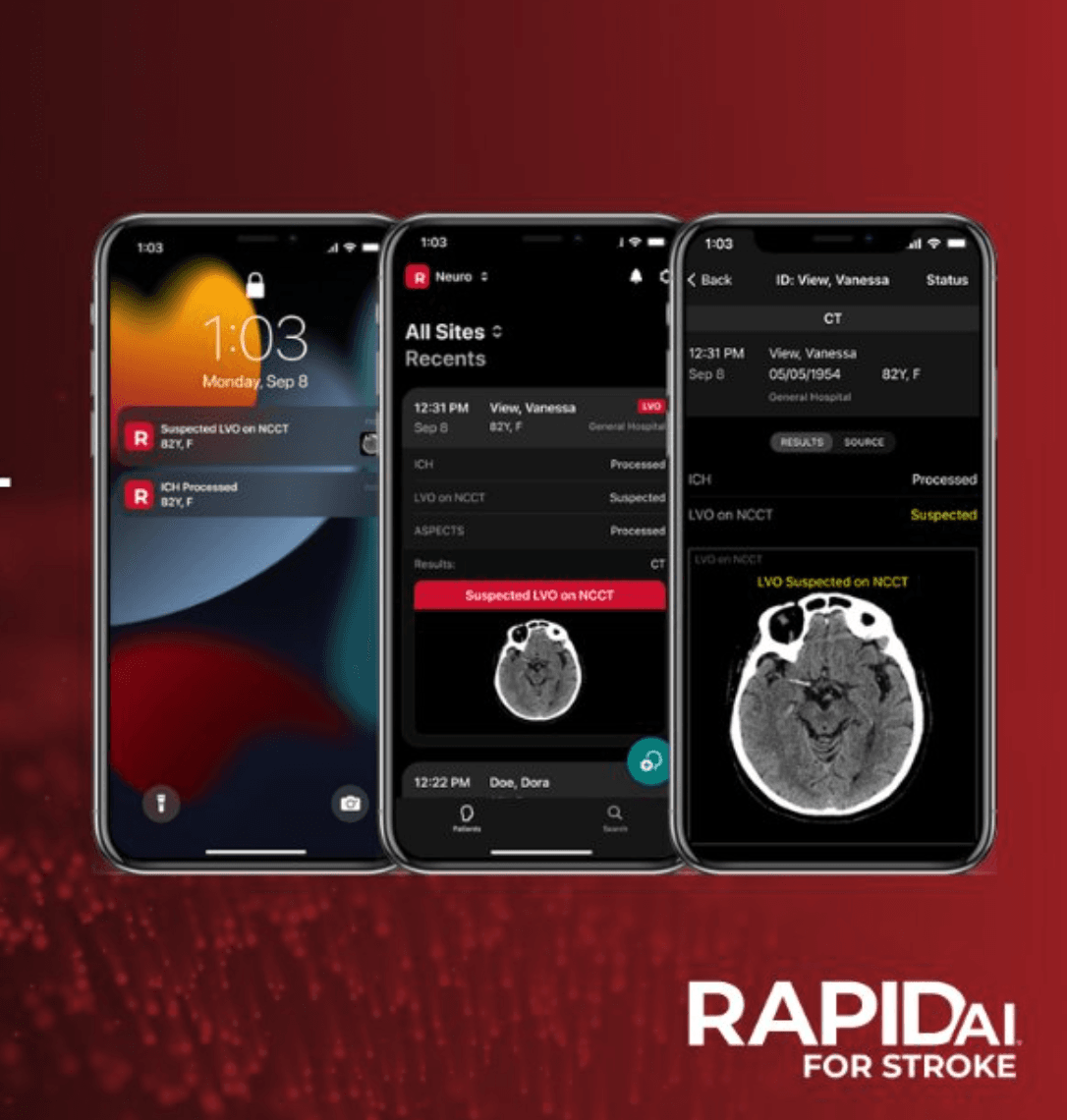
Source: x.com/RapidAI
In addition to accelerating diagnosis, RapidAI also helps coordinate between medical teams through a mobile app that allows doctors to receive real-time notifications of critical cases, view AI analysis results, and discuss directly with other specialists.
This approach helps accelerate the process from when the patient arrives in the emergency unit until medical action is taken.
Read Also: What is SuperWalk (GRND)? A Web3 Health & Move-And-Earn Application
Key Features of the RapidAI Platform
RapidAI provides various solutions that support clinical decision-making.
Deep Clinical AI
Not only detects the presence of abnormalities but also provides a more comprehensive clinical analysis regarding disease characteristics.
Rapid Enterprise Platform
The main platform that enables AI implementation in various hospital departments with cloud or on-premise integration.
Rapid Mobile App
Provides critical case notifications, access to imaging results, communication between doctors, and patient summaries via mobile devices.
Navigator Pro
Helps radiologists prioritize urgent examinations while providing AI-based analysis support.
Rapid Insights
An analytical dashboard used by hospitals to evaluate service performance, operational efficiency, and quality of patient care.
Interested in the AI crypto sector? Follow the price movements of TAO, VVV, NEAR, and ICP and find trading opportunities on Bittime.
What are the Advantages of RapidAI Compared to Conventional Analysis Systems?
The main advantage of RapidAI lies in the concept of Deep Clinical AI.
While some AI systems only function as early detection tools, RapidAI provides a more in-depth analysis of the patient's clinical condition, helping doctors make more accurate decisions.
This platform also has strong scientific validation with hundreds of research publications, dozens of clinical trials, and various modules that have received FDA approval.
In addition, interoperability is one of RapidAI's added values. Integration with various hospital systems allows for implementation without disrupting the workflow of healthcare workers.
The Impact of RapidAI on the Healthcare World
The utilization of RapidAI medical AI provides benefits to various aspects of healthcare services.
For patients, diagnosis can be made faster so the chances of receiving the right therapy become greater.
For doctors, AI helps reduce the time for medical image analysis and increases confidence in making clinical decisions.
Meanwhile for hospitals, the automation of imaging analysis can improve operational efficiency, accelerate coordination between units, and optimize resource utilization.
According to company data, the RapidAI platform now processes over 20,000 exams every day, supported by more than 750 scientific publications and dozens of clinical trials that strengthen the validity of its technology.
Read Also: What are Crypto AIs? 9 Popular AI Coins in 2026 to Watch
The Future of RapidAI
RapidAI continues to develop its platform towards increasingly integrated healthcare services.
Besides strengthening neurovascular solutions, the company is also expanding the application of AI to heart disease, general radiology, and clinical research. The development of the Enterprise Platform allows hospitals to implement various AI modules in a single, interconnected ecosystem.
In the future, the use of AI is expected not only to help detect diseases but also to support risk prediction, personalized therapy, and continuous patient monitoring.
With this approach, RapidAI shows how artificial intelligence can become an increasingly important clinical decision support tool in modern healthcare systems.
Read Also: 4 Crypto AI Agents Backed by Major Companies, These are the Top Ones!
Conclusion
RapidAI is a healthcare AI platform that utilizes Deep Clinical AI technology to assist with the analysis of CT scans, MRIs, and various other medical imaging exams.
Its advantages lie not only in its ability to detect strokes quickly but also in more comprehensive clinical analysis, integration with hospital systems, and collaboration support among medical personnel.
As AI technology evolves in the healthcare sector, RapidAI serves as an example of how digital innovation can improve diagnostic quality, service efficiency, and patient care outcomes.

After learning about the development of AI, now is the time to find out about AI-based crypto on Bittime such as digital assets AI, AGI, RENDER, TAO and many more AI coins.
Bittime is a licensed Digital Financial Asset Trader (PAKD) platform supervised by the Financial Services Authority (OJK) — where you can buy Bitcoin in Indonesia and hundreds of other crypto assets starting from IDR 10,000. The registration process is fast, safe, and you can start today.
Monitor the USDT to IDR conversion and the price movements of your favorite crypto assets in real-time. All available in one crypto investment application that can be downloaded for free on the Play Store.
Ready to start? Register now on Bittime and execute your investment strategy with a platform trusted by millions of users in Indonesia.
FAQ
What is RapidAI?
RapidAI is a medical AI platform that helps doctors analyze CT scan and MRI results to support the diagnosis of critical illnesses such as stroke, aneurysms, and other neurovascular disorders.
Is RapidAI only used for stroke?
No. In addition to stroke management, RapidAI is also used in the fields of radiology, cardiovascular, trauma, aneurysms, and clinical research.
How does RapidAI help doctors?
RapidAI automatically analyzes medical images, provides visualization of areas suspected of having abnormalities, calculates important clinical parameters, and helps with faster decision-making.
Does RapidAI replace the role of a doctor?
No. RapidAI functions as a clinical decision support system. Diagnosis and medical procedures remain the responsibility of the doctor.
What are the main benefits of RapidAI for hospitals?
RapidAI helps accelerate diagnosis, improves coordination among medical personnel, optimizes workflow, and increases operational efficiency and patient care quality.
Disclaimer: The views expressed belong exclusively to the author and do not reflect the views of this platform. This platform and its affiliates disclaim any responsibility for the accuracy or suitability of the information provided. It is for informational purposes only and not intended as financial or investment advice.

.png)