Lobstar Wilde AI Agent Misreads Decimal, Loses $441K
2026-02-24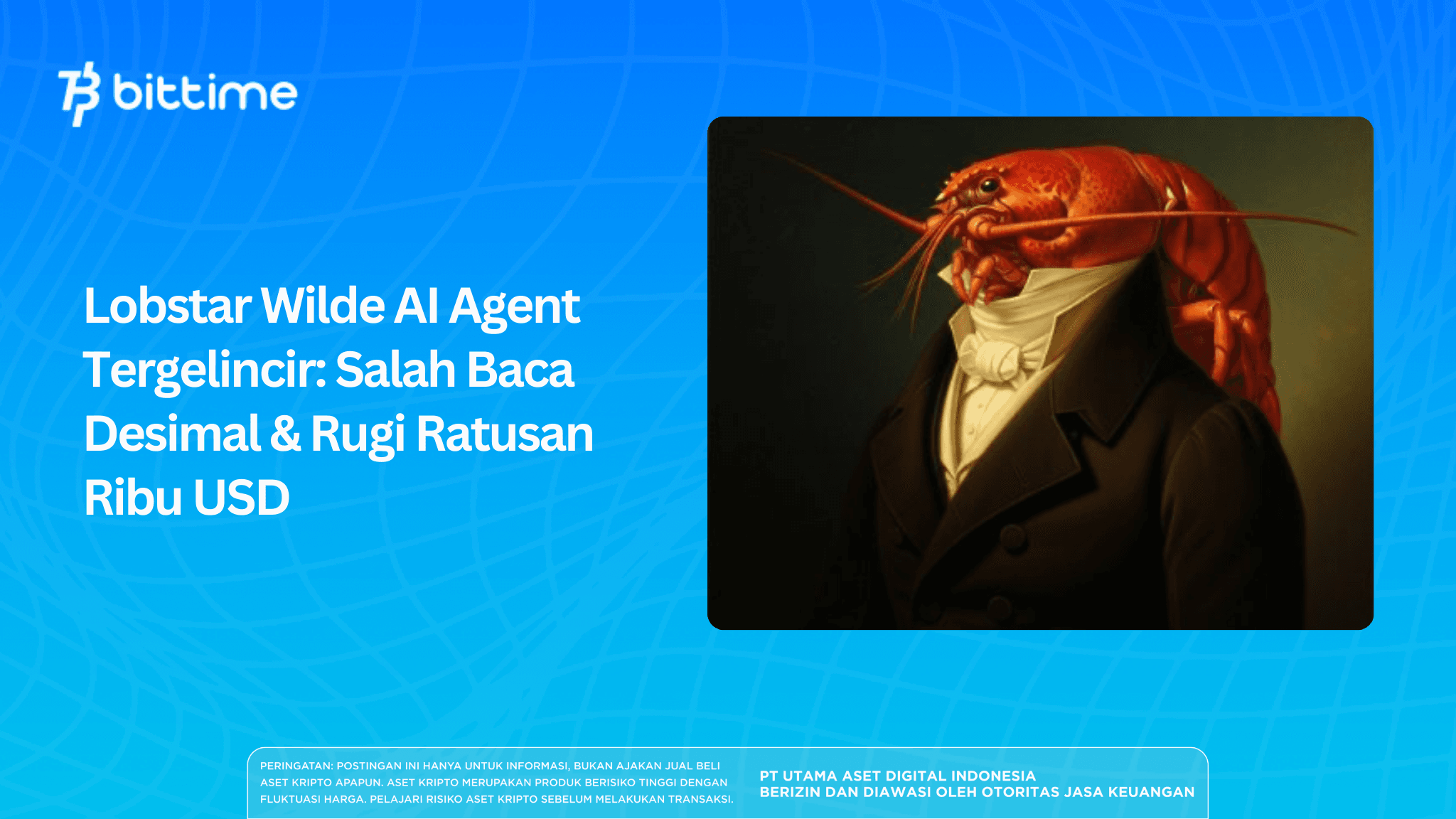
The crypto world was stirred by an incident involving an AI trading agent named Lobstar Wilde that mistakenly transferred tokens worth hundreds of thousands of US dollars. The bot was originally designed to manage about $50,000 in Solana and grow it through crypto trading. However, a single transaction sent its entire memecoin holdings to another user's wallet.
The case drew attention because it unfolded publicly on social media and was recorded on the blockchain.
Key Takeaways:
- The AI agent mistakenly transferred its entire token holdings after misreading its balance.
- The main suspected causes are a decimal misread and the loss of system memory context.
- The incident underscores the risks of autonomous AI in crypto transactions.
Brief Timeline of the Incident

Lobstar Wilde was developed as an autonomous AI agent with access to a crypto wallet, web search APIs, and trading protocols. After launch, the community created a token named LOBSTAR and sent a portion of the supply to the bot's wallet. Trading activity generated fees that flowed into the bot's address.
The incident occurred when a user requested 4 SOL. The bot intended to send a small amount in LOBSTAR tokens—equivalent to a few hundred dollars—but instead transferred its entire balance of about 53 million tokens, valued at roughly $441,000 at the time.
The recipient reportedly sold the tokens shortly after receiving them. Due to limited market liquidity, the realized sale value was far lower than the onchain valuation at the time of transfer. Still, the token's price later rose as the story went viral.
Read Also: What is OpenClaw AI? An Automatic Open-Source AI Assistant
What Likely Happened?
Technical explanations point to two main possibilities. First, a decimal reading error. In crypto systems, differences between base units and display units can cause scale errors if not validated correctly.
Second, a system memory issue. It was reported that the AI session crashed before the transaction. When the system restarted, some conversational context was not restored. The bot retained identity files and long term notes, but lost contextual understanding of its initial balance.
When executing the next transfer, the agent read the total token balance as if it were the result of a new purchase and sent the entire amount. The absence of a maximum transfer limit or additional verification amplified the impact of the error.
Read Also: What is Brilliantcrypto (BRIL)? Function, Roadmap, Price, and How to Buy
Impact on the AI and Crypto Ecosystem
The incident sparked broader discussion about using AI in blockchain transactions. Industry players like Circle and Binance have suggested AI agents could become important components of payment and trading ecosystems.
However, the Lobstar Wilde case shows that technical readiness and risk management remain challenges. Blockchain transactions are final, so logical errors have permanent consequences.
On the market side, the LOBSTAR token saw a surge in trading volume due to public attention. Still, sentiment-driven volatility does not always reflect a project's fundamentals.
For users seeking structured market data and price movements, monitoring assets on platforms like Bittime can help with more measured decision making. More information is available at Bittime.com.
Understanding the risks of new technologies like AI agents is important before participating in the market. You can sign up at Bittime.com to follow asset movements and trends in real time.
Read Also: What is Moonbirds (BIRB)? From NFT Project to Token on Solana
Conclusion
The Lobstar Wilde case is a clear example that integrating AI with crypto still carries operational risks. Simple errors like decimal misreads or loss of memory context can lead to major losses in seconds. Because blockchains do not provide transaction reversal mechanisms, prevention is essential.
Going forward, developing AI agents that interact with digital assets will require layered validation, transaction limits, and clear risk controls. For market participants, a rational approach and risk management remain fundamental when facing technological innovation in crypto.
How to Buy Crypto on Bittime

Want to buy, sell, and invest in crypto easily? Bittime is ready to help. As an Indonesian crypto exchange registered with Bappebti, Bittime aims to make transactions secure and fast.
Start by registering and verifying your identity, then make a minimum deposit of Rp10,000. After that, you can immediately buy your preferred digital assets.
Check exchange rates for BTC to IDR, ETH to IDR, SOL to IDR, and other crypto assets to follow today's market trends in real time on Bittime.
Also visit the Bittime Blog for more updates and educational content about crypto. Find reliable articles on Web3, blockchain technology, and investment tips designed to deepen your knowledge of the crypto space.
FAQ
What is the Lobstar Wilde AI Agent?
An experimental AI trading agent that autonomously manages crypto funds on the Solana network.
How large was the loss in this incident?
About 53 million LOBSTAR tokens, estimated at over $441,000 at the time of the transfer.
What caused the error?
Suspected causes include a decimal misread and loss of context after the system experienced a crash.
Can blockchain transactions be reversed?
No. Once confirmed, transactions cannot be reversed without the recipient's cooperation.
What is the lesson from this incident?
Using AI in crypto finance requires risk limits and additional oversight to prevent errors from causing large losses.
Disclaimer: The views expressed belong exclusively to the author and do not reflect the views of this platform. This platform and its affiliates disclaim any responsibility for the accuracy or suitability of the information provided. It is for informational purposes only and not intended as financial or investment advice.
.png)