Wallet Tracking for Beginners: Practical Tips for Tracking "Smart Money" Without Getting Caught Up in FOMO
2025-10-09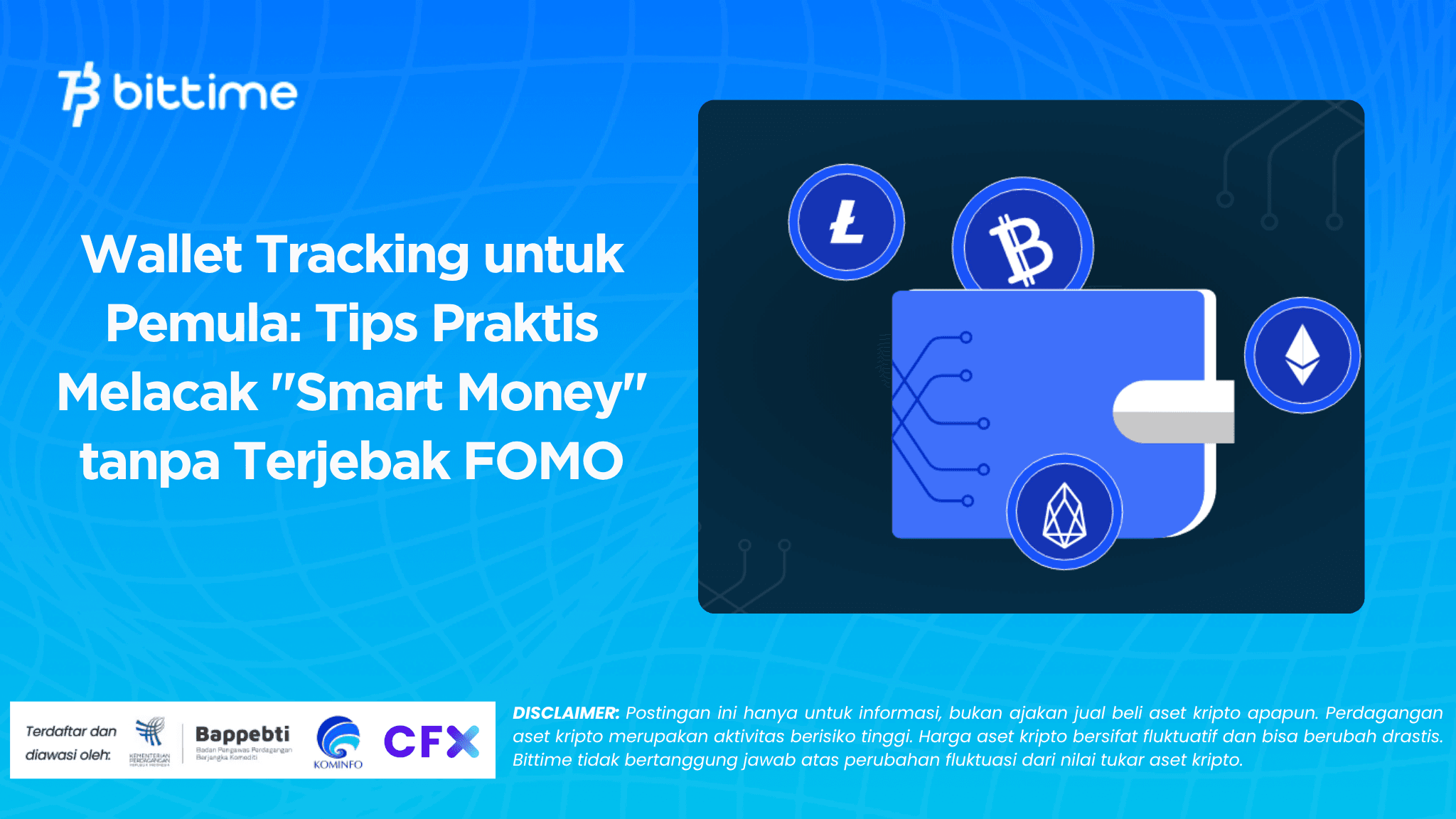
Bittime - Many crypto traders and investors are curious: What are the wallet tracking tips for beginners? Wallet tracking, or monitoring on-chain wallet activity, can provide insight into the movement of "smart money”.
However, if you just follow along, the risks are high. This article provides practical steps, recommended tools, and rules of thumb to make wallet tracking useful without putting you at risk.FOMO.
Source:CoinMarketCap
Choose the Right Tracker Tool
Use on-chain analytics tools that suit your needs:
Nansen— powerful for finding smart money, label holders, as well as analyzing institutional wallet behavior.
Arkham— great for mapping relationships between wallets and tracking fund flows.
DeBank / Zapper— practical to see activityDeFiand farming positions in real-time.
Tips: start with the free/trial version first, learn the watchlist feature, and use filters (transfer vs swap vs add liquidity) to make your data relevant.
READ ALSO: How to Download and Setup TrustWallet on PC, Hassle-Free!
Categorize and Mark Important Wallets
Don't follow all wallets—group them:
Whale / large fund(wallet with large volume)
Top trader / influencer(often profit-taking)
Developer / project team (the movement is often related to vesting)
Create your own labels (e.g., "Whale A — Liquidity," "Dev — Vesting") to easily identify patterns. Also, pay attention to transaction frequency, buy/sell size relative to the pair's liquidity, and whether the activity is non-market (internal transfer) or market-moving.
Set Smart Alerts, Don't Get Too Much Noise
Alerts are important, but too many notifications = too many distractions. Set it up so you only receive meaningful notifications:
Transaction size > threshold (e.g. > 1% pool)
Swap to large stablecoins or add/remove large liquidity
Transfer out from cold wallet to DEX (big sell potential)
Use bots/alerts from tools with rule-based filters. Turn off irrelevant internal transfer alerts. Remember: notifications provide signals, not buy/sell recommendations.
Pattern Analysis, Risk Management, and Ethics
Wallet tracking is effective when combined with analysis:
Volume & liquidity confirmation: the size of the volume determines how easy it is to follow the action.
Timing dan entry plan: don't follow the market-top; use DCA or entry/stop scenarios.
Check the token contract: rug pulls often appear on tokens without audit/ownership renounced.
Ethics & legal: tracking for legitimate research, but do not use the info for manipulation or violation of the law.
Always measure your position relative to your portfolio (position sizing) and set a stop-loss. Remember, even top traders can be wrong — wallet tracking helps.information, not a guarantee of profit.
READ ALSO: Crypto Trading Strategies for Beginners: Don't Do This!
Conclusion
Wallet tracking for beginners is a useful skill when practiced with discipline: choose the right tools, group relevant wallets, set smart alerts, and combine the monitoring results with technical/fundamental analysis. Remember the key principle: on-chain data provides signals — investment decisions remain based on your own risk management and trading plan.
How to Buy Crypto on Bittime
Want to trade sell buy BitcoinsLooking for easy crypto investing? Bittime is here to help! As an Indonesian crypto exchange officially registered with Bappebti, Bittime ensures every transaction is secure and fast.
Start by registering and verifying your identity, then make a minimum deposit of IDR 10,000. After that, you can immediately purchase your favorite digital assets!
Check the course BTC to IDR, ETH to IDR, SOL to IDRand other crypto assets to find out today's crypto market trends in real-time on Bittime.
Additionally, visitBittime Blogto get various interesting updates and educational information about the world of crypto. Find trusted articles on Web3, blockchain technology, and digital asset investment tips designed to enrich your crypto knowledge.
FAQ
What is wallet tracking?
Monitor crypto wallet activity on the blockchain to see transactions, fund flows, and holder behavior.
What tools are suitable for beginners?
Try Nansen, Arkham, and DeBank (use the trial first to familiarize yourself).
What alerts are most useful?
Large transactions relative to the pool, add/remove liquidity, or swap to large stablecoins.
Should I copy a big wallet right away?
No; use data as input for analysis, don't blindly follow FOMO.
How to reduce false signals?
Filter alerts based on threshold, cross-check volume & liquidity, and always use stop loss.
Disclaimer: The views expressed belong exclusively to the author and do not reflect the views of this platform. This platform and its affiliates disclaim any responsibility for the accuracy or suitability of the information provided. It is for informational purposes only and not intended as financial or investment advice.

.png)