Can Tokenized Stocks Earn Dividends? Here's How It Works
2026-07-03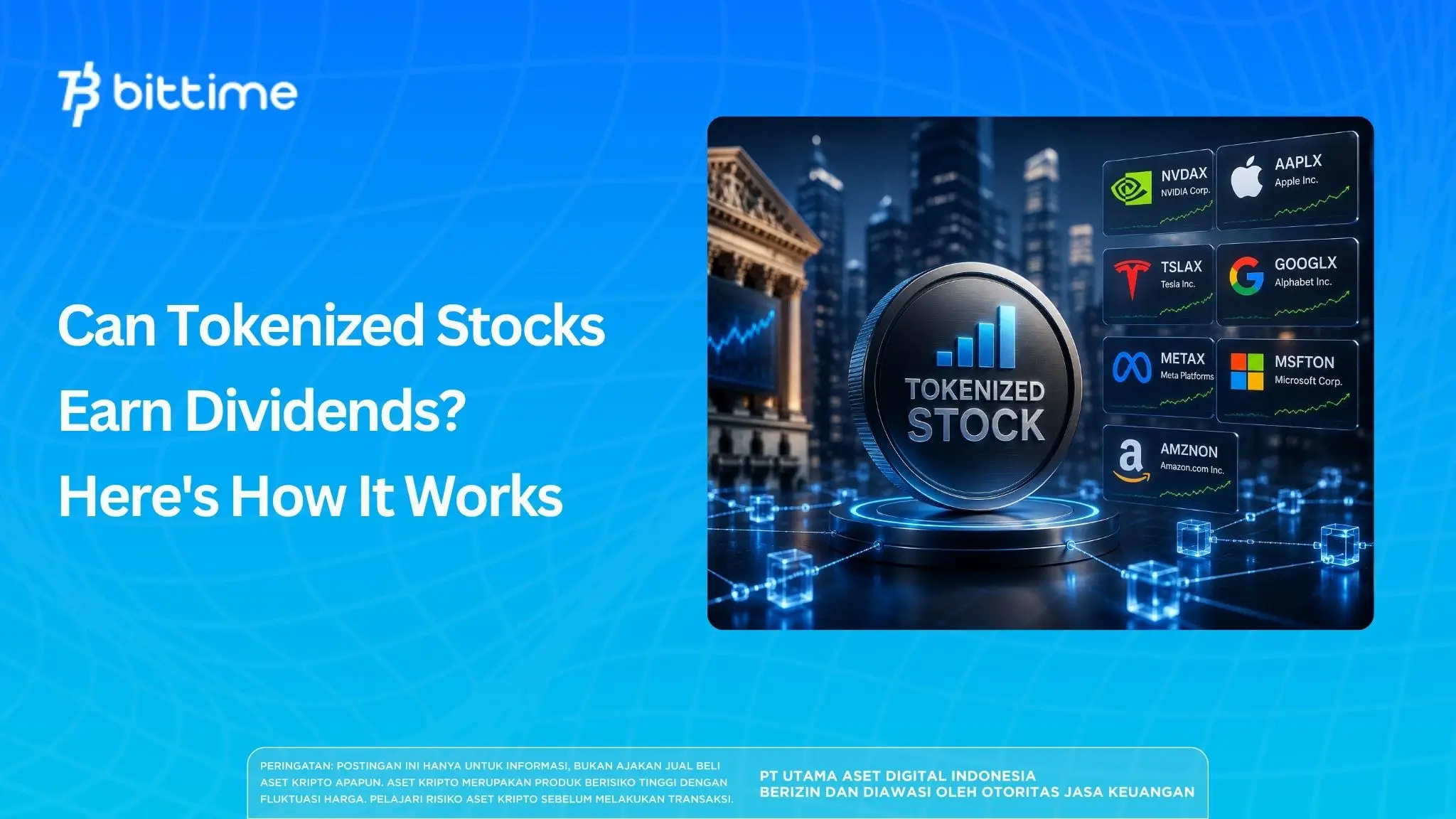
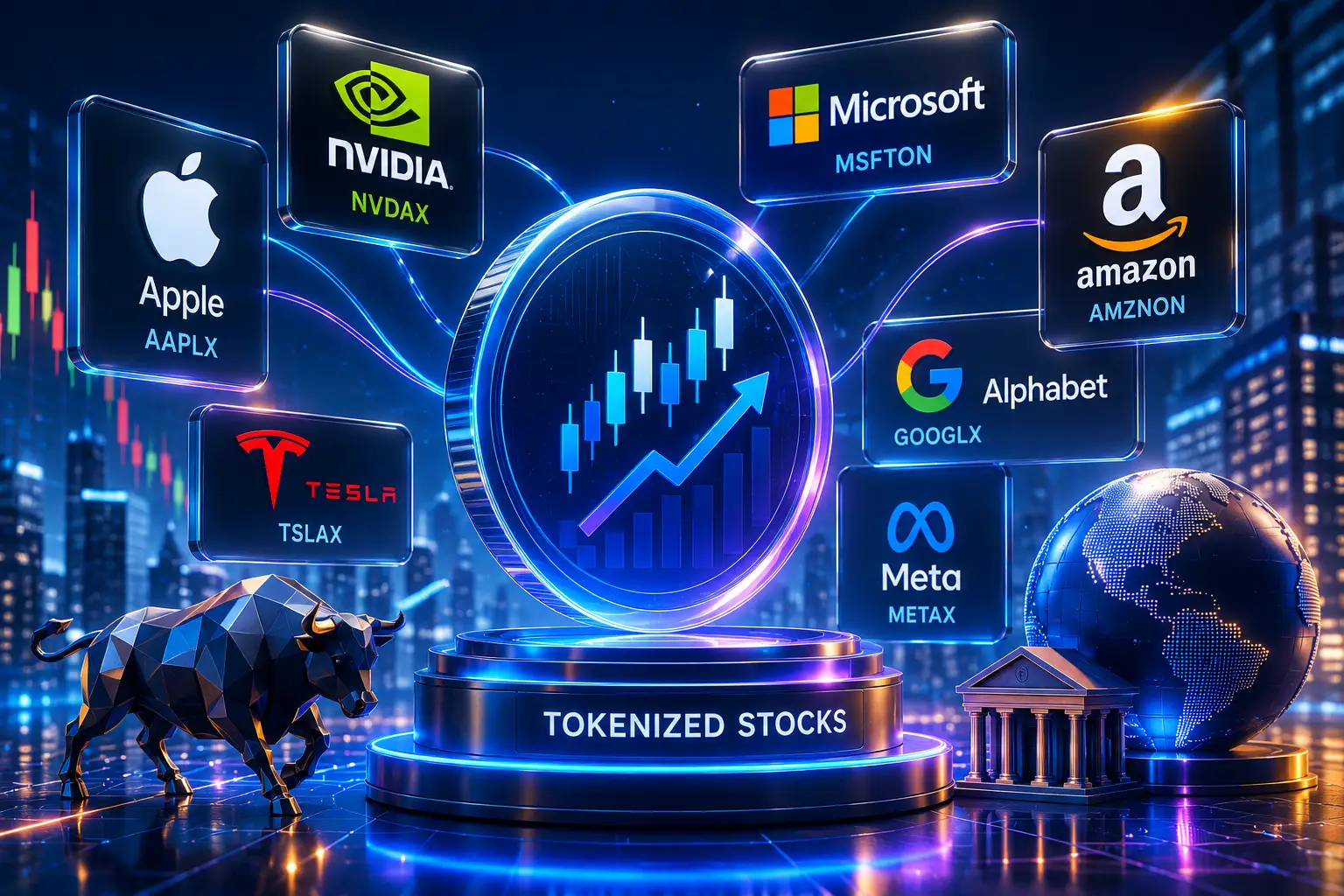
Tokenized stocks Tokenized stocks are gaining popularity in Indonesia as an easy way to access global stocks like NVIDIA, Apple, and Tesla without the need for an offshore securities account.
Each token is backed 1:1 by real shares held in a regulated custodian, so the token's value follows the price movements of the underlying stock.
However, many investors ask: can tokenized stocks earn dividends?
The answer is: yes, but the mechanism is different from ordinary shares, dividends are not paid in cash, but through an increase in the number of tokens or an automatic increase in the token value.
Key Points
Tokenized stocks are digital representations of common stock that are collateralized 1:1 by the original shares, enabling 24/7 trading and fractional purchases with small capital.
Dividends on tokenized stocks are not paid in cash, but rather through an increase in the number of tokens or an automatic increase in the token value by a smart contract.
Corporate actions such as stock splits, spin-offs, and mergers are automatically adjusted on-chain, but token holders generally do not have voting rights.
Register at Bittime now and start trading crypto with a fast, safe, and easy process in the app.
Can Tokenized Stocks Earn Dividends? Here's How It Works
Source: AI
Tokenized stocks are becoming increasingly popular in Indonesia as an easy way to access global stocks such as NVIDIA, Apple, And Tesla without the need for a foreign securities account.
Each token is backed 1:1 by real shares held in a regulated custodian, so the token's value follows the price movements of the underlying stock.
However, many investors ask: can tokenized stocks earn dividends?
The answer is: yes, but the mechanism is different from ordinary shares.
Dividends are not paid in cash to a bank account, but rather through automatic adjustments to the token balance or the value of the token itself.
Read also:The 6 Most Popular Tokenized Stocks in 2026, Including Tesla and NVIDIA
What Are Tokenized Stocks?
Tokenized stocks are digital assets that mirror the stock price of a public company, such as NVIDIA, Apple, or Tesla, at a 1:1 ratio to the actual shares held in a custodian.
Unlike regular stocks, which can only be traded during stock exchange hours, tokenized stocks can be traded 24/7, purchased in fractional amounts, and accessed globally without geographical restrictions.
However, holders of tokenized stocks generally do not have voting rights at the original company's AGM.
Voting rights remain held by the custodian who holds the original shares.
Additionally, the liquidity of tokenized stocks is typically lower than that of regular stocks, and regulations vary across jurisdictions.
Read also:Tokenized Stocks 2026 – Is Digital Stock Investing Worth It or Not?
How Dividends Work on Tokenized Stocks
When the original company distributes cash dividends, the custodian will receive the funds.
The token issuing platform then converts and distributes them to token holders, but not in the form of conventional cash.
Some commonly used mechanisms:
1. Increase the Number of Tokens
Dividends are added as additional tokens to the investor's balance.
For example, if the price of 1 ACMEX token is $100 and the dividend is $10, the investor's balance changes from 1.00 to 1.10 tokens.
2. Increase in Token Value
Dividends are automatically reinvested to increase the token's value. The balance remains at 1 token, but its value increases because it represents a larger share of the stock.
3. Direct Distribution
Some platforms pay dividends in the form of stablecoins (USDC, USDT) to investors' digital wallets.
4. Price Exposure Only
Some providers only offer price exposure without the right to dividends.
Corporate Action Mechanism on Tokenized Stocks
Corporate actions such as stock splits, spin-offs, mergers, and rights issues are also automatically adjusted for tokenized stocks:
- Stock Split: The token ratio is automatically adjusted. For example, a 1:4 stock split turns 1 token into 4 tokens at a quarter of the previous price.
- Spin-off: Platforms typically liquidate subsidiary shares and distribute the value in stablecoins, or issue new tokens.
- Merger/Acquisition:The original shares are liquidated, the platform delists the tokens, and distributes the proceeds in stablecoins.
- Rights Issue:Most platforms don't support active participation. Custodians sell rights on the open market and distribute the proceeds to token holders.
Read Also: How to Invest in Global Stocks with a Small Amount of Capital Through Tokenized Stocks
Difference between Tokenized Stocks and Regular Stocks
Tokenized Stock Regulation in Indonesia
In Indonesia, tokenized stocks are legal but limited under the supervision of the Financial Services Authority (OJK) in accordance with Law Number 4 of 2023 (P2SK Law).
Digital assets that resemble securities are categorized as Financial Sector Technology Innovations (FSIs), and only platforms that are in the Regulatory Sandbox or have special permits are allowed to serve the retail public.
From a tax perspective, based on Minister of Finance Regulation No. 50 of 2025, which came into effect on August 1, 2025, VAT on crypto assets was eliminated and replaced with a 0.21% income tax.
Oversight of the crypto asset industry has been under the Financial Services Authority (OJK) since January 10, 2025, replacing Bappebti (Commodity Futures Trading Regulatory Agency).
Read Also: Tokenised stock assets available on Bittime
Conclusion
Tokenized stocks offer an innovative way to access global stocks with little capital and high flexibility.
Dividends and corporate actions are adjusted automatically through smart contracts, although without voting rights.
In Indonesia, this instrument is gaining increasing legitimacy with clear regulations from the OJK and simpler tax policies.
For investors seeking global diversification, tokenized stocks are an attractive option with a proper understanding of their mechanisms and risks.

Interested in investing in global stocks? Check out tokenized stocks like AAPLX and NVDAX on the Bittime market.
Bittime is a licensed and regulated Digital Financial Asset Trader (PAKD) supervised by Indonesia’s Financial Services Authority (OJK) — where you can buy Bitcoin in Indonesia and hundreds of other crypto assets starting from just Rp10,000. The registration process is fast, secure, and you can get started today.
Track USDT to IDR conversions and monitor your favorite crypto assets in real time. Everything is available in one crypto investment app that you can download for free on the Play Store
Ready to start? Register now on Bittime and execute your investment strategy with a platform trusted by millions of users in Indonesia.
FAQ
Do tokenized stocks pay dividends?
Yes, but not in the form of conventional cash. Dividends are paid through token additions, token value increases, or stablecoin distributions.
What is the difference between tokenized stocks and regular stocks?
Tokenized stocks are traded 24/7, can be purchased fractionally, have no voting rights, and dividends are adjusted automatically via smart contracts.
Do tokenized stock holders have voting rights?
No. Voting rights remain with the custodian who holds the original shares.
How does a stock split work on tokenized stocks?
The token ratio is automatically adjusted. For example, a 1:4 split turns 1 token into 4 tokens at the adjusted price.
Are tokenized stocks legal in Indonesia?
Yes, it is legal and supervised by the OJK, with platforms having to enter the Regulatory Sandbox or have special permits.
How is tokenized stocks taxed in Indonesia?
VAT is removed, only 0.21% income tax is imposed according to PMK Number 50 of 2025.
Is the value of tokenized stocks always the same as the original stock?
Generally follows, but differences (spreads) may occur due to differences in liquidity and 24/7 trading hours.
What are the main risks of tokenized stocks?
Market risks, smart contract hacks, regulation, and counterparties if the token is not truly backed 1:1.
Can I buy tokenized stocks with small capital?
Yes, tokenized stocks allow fractional purchases, so investors can start with very small amounts.
What are some examples of tokenized stocks?
xStocks (TSLAX, NVDAX) and Ondo (TSLAon, MAon) are examples of tokenized stocks available in Indonesia.
Disclaimer: The views expressed belong exclusively to the author and do not reflect the views of this platform. This platform and its affiliates disclaim any responsibility for the accuracy or suitability of the information provided. It is for informational purposes only and not intended as financial or investment advice.

.png)