AI Stock Rotation to SCHD: Is Investor Funds Really Starting to Shift?
2026-11-16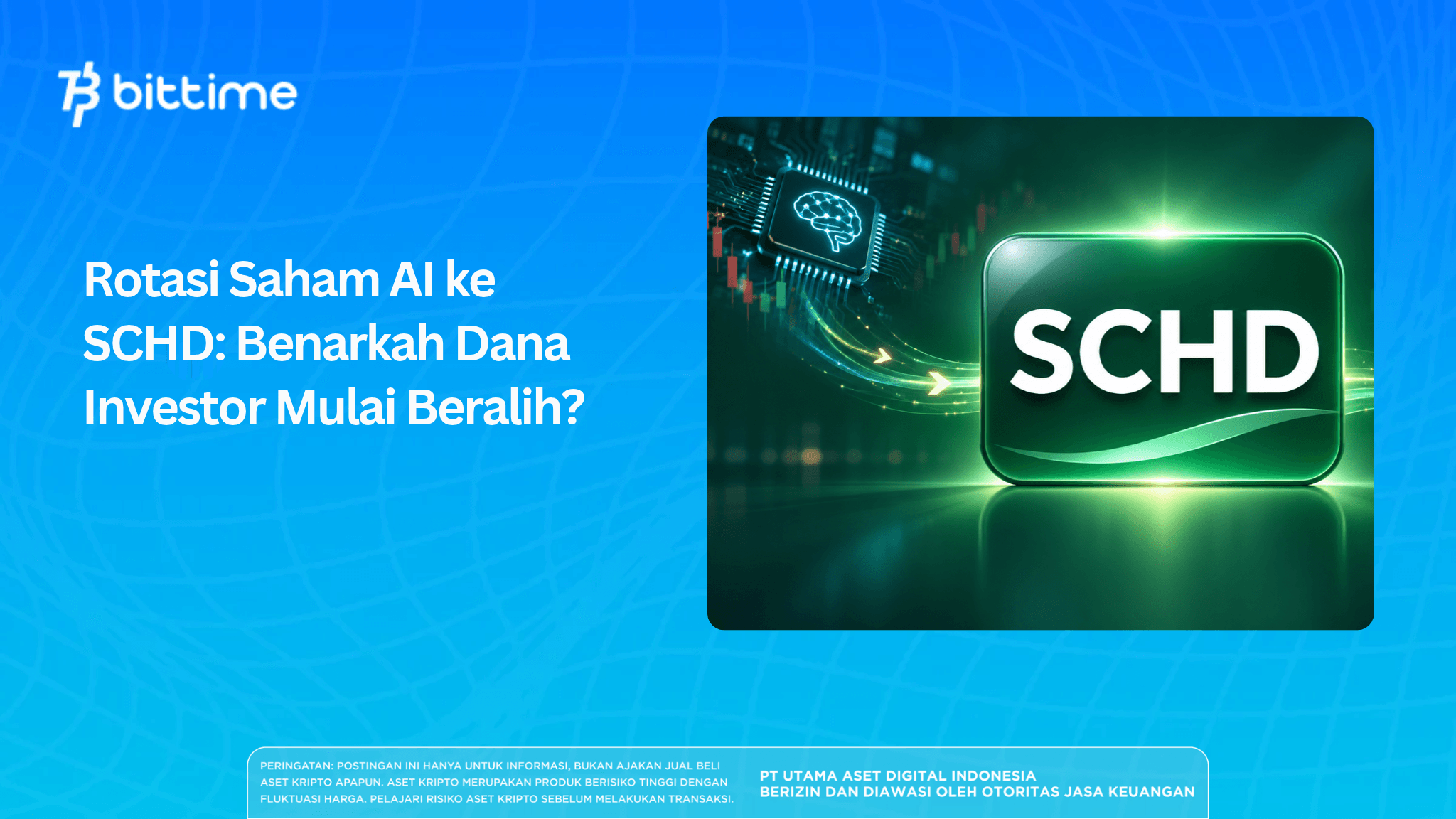
Amid the intense attention surrounding artificial intelligence (AI) stocks, a dividend ETF has been stealing the market spotlight. Talk of a rotation from AI stocks into SCHD has gained momentum after the Schwab U.S. Dividend Equity ETF (SCHD) posted strong gains in 2026, even outperforming the S&P 500 Index. Inflows into the ETF have also continued to rise as investors increasingly question the valuations of some technology stocks.
This has fueled speculation that investors are shifting some of their capital from AI stocks into dividend-focused investments. But is money that previously flowed into the technology sector really moving into SCHD? Or are other factors driving the rise of this ETF ?
Key Takeaways
- SCHD attracted approximately US$27.5 billion in inflows in 2026 through November 13.
- SCHD delivered a total return of 34.7%, outperforming VOO's 11.4% return over the same period.
- The suspected shift of funds from AI stocks into SCHD has not been directly substantiated by investor transaction data.
What Is the SCHD ETF?
The Schwab U.S. Dividend Equity ETF, or SCHD, is an ETF managed by Schwab Asset Management that tracks the Dow Jones U.S. Dividend 100 Index.
The ETF invests in U.S. companies with established dividend-payment histories and strong financial fundamentals. Its selection process considers several indicators, including cash flow, profitability, and a company's ability to sustain dividend payments.
Holdings in its portfolio include Texas Instruments, Coca-Cola, Procter & Gamble, Home Depot, and UnitedHealth. SCHD also has a relatively low annual expense ratio of 0.06%.
Unlike portfolios that pursue aggressive growth through technology stocks, SCHD places greater emphasis on business quality and dividend income. Nevertheless, the ETF's price can still rise or fall with stock market conditions.
Read also: Popular Tokenized Stocks in 2026: Tech Shares Become Investor Favorites
Is There Really a Rotation from AI Stocks into SCHD?
Discussion of a rotation away from AI stocks toward SCHD emerged as investors began reassessing the high valuations of certain technology companies.
Over the past few years, optimism about AI has driven sharp increases in the valuations of many stocks. When growth expectations become too high, investors grow more sensitive to earnings reports that fall short of forecasts.
Under these conditions, some market participants may choose to rebalance their portfolios toward dividend-paying stocks. This strategy is known as sector rotation, which involves shifting investment allocations from one sector or asset group to another.
SCHD is an appealing candidate because it holds established companies with earnings and cash flows that are relatively straightforward to evaluate.
However, an important distinction must be made. Rising demand for SCHD does not automatically mean investors are selling AI stocks to buy it.
So far, no data directly shows how much money raised from selling AI stocks has flowed into SCHD. The rotation narrative is therefore better understood as a possible shift in investor strategy rather than an established fact.
How Much Money Has Flowed into SCHD in 2026?
Interest in SCHD is evident in more than just its price performance.
According to data reported on November 13, 2026, the ETF had attracted approximately US$27.5 billion in net inflows year to date. That figure points to substantial demand for dividend-focused investment products.
SCHD has even overtaken the Vanguard Dividend Appreciation ETF (VIG) as the largest dividend ETF in the United States.
However, inflows must be interpreted correctly. The figure represents the net difference between money entering and leaving the ETF, not the entire increase in its assets under management.
Asset growth can also result from rising share prices within the portfolio. Meanwhile, fund flow data does not reveal whether buyers used new savings, proceeds from selling technology stocks, or capital from other investments.
Read also: 7 Reasons to Start Investing in Tokenized Stocks
Why Are Investors Turning to Dividend ETFs?
There are several reasons why dividend ETFs are attracting renewed interest in 2026.
One is the desire for returns that do not depend solely on share price appreciation. Dividend-paying companies allow investors to receive cash distributions as long as those companies remain able to pay them.
AI stock valuations are another consideration. When share prices already reflect high growth expectations, companies have less room for disappointment.
SCHD takes a different approach by focusing on companies that generally have established businesses and proven earning power.
Diversification is another factor. Investors whose portfolios are heavily concentrated in technology stocks may want more exposure to healthcare, energy, or consumer goods.
Even so, dividend stocks are not necessarily always safer. Their prices can still decline, and dividend payments may change with a company's financial condition.
Read also: SK Hynix vs. Micron: Which AI Memory Stock Looks More Attractive?
What Is Driving SCHD's Price Gains?
SCHD's performance throughout 2026 has not been driven solely by a growing number of investors buying the ETF.
Stocks in its portfolio have also contributed to the increase in investment value. Texas Instruments is one company that has attracted attention thanks to developments in its fundamentals.
UnitedHealth has also featured in analyses of an earnings recovery, while Home Depot is among the companies whose financial results investors are watching toward year-end.
SCHD's exposure to the energy, healthcare, and consumer goods sectors also helps distinguish its performance from that of ETFs dominated by technology companies.
As of November 13, 2026, SCHD had delivered a total return of 34.7%, while the Vanguard S&P 500 ETF (VOO) returned 11.4%.
These figures include changes in investment value and assume dividends are reinvested. Total return should therefore not be confused with an increase in the ETF's share price alone.

SCHD vs. AI Stocks: Which Is More Attractive?
Comparing SCHD with AI stocks is not as simple as choosing the investment with the highest price gains.
AI stocks offer growth opportunities driven by increasing demand for chips, data centers, computing services, and software. However, their share prices can be highly sensitive to changes in earnings expectations.
SCHD has a different profile because it prioritizes companies with strong fundamentals and a history of paying dividends.
For investors seeking aggressive capital growth, AI stocks may be more appealing. SCHD, meanwhile, may offer diversification and exposure to dividend-paying equities.
The two approaches do not have to be mutually exclusive. Investors can hold both growth stocks and dividend ETFs in the same portfolio, with allocations tailored to their goals and risk tolerance.
Read also: How to Buy Tokenized U.S. Stocks in Indonesia: Legal, Safe, and Practical in 2026!
What Is the Outlook for SCHD Through the End of 2026?
After such substantial gains, the next question is whether SCHD's price still has room to rise.
In an analysis published in November 2026, SCHD was estimated to be trading at a valuation of roughly 18.6 times the earnings of the companies in its portfolio.
Assuming part of the valuation gap with comparable investments narrows, the analysis estimated SCHD's fair value at US$38.88. This implied approximately 8% upside from the reference price used by the author.
However, that estimate is neither an official price target nor a guarantee that SCHD will reach it.
Toward year-end, investors should watch the financial reports of major portfolio holdings, including Home Depot, as well as December dividend distributions.
The direction of interest rates and movements in the energy sector could also influence sentiment. If corporate earnings continue to improve, SCHD may maintain its momentum, but higher valuations make upcoming financial results increasingly important.
Read also: U.S. Stock Tokenization: Hold Your Favorite U.S. Stocks and Earn Rewards Every Day
What Are the Risks of Investing in SCHD?
Although SCHD is known as a dividend ETF, it still faces risks that can affect its price and investment returns.
Several factors worth monitoring include:
- High interest rates. More attractive bond yields may reduce demand for dividend stocks.
- Weakness in the energy sector. Falling oil prices could put pressure on energy companies in the portfolio.
- Deteriorating earnings performance. Lower profitability can affect share prices and companies' ability to pay dividends.
- A renewed rally in AI stocks. Investors may shift their attention back to technology if the sector's growth outlook improves.
- Valuation corrections. Rapid price increases can be followed by a pullback even when business conditions remain relatively stable.
For these reasons, strong performance in 2026 should not be the sole basis for deciding to buy SCHD.
For readers following developments in AI, blockchain, and global markets, Bittime offers not only a range of cryptocurrencies but also tokenized stocks that provide exposure to movements in the value of international companies' shares in the form of digital tokens.
Sign up for Bittime now to explore the available assets, then follow the latest technology and market news on the Bittime Blog before making a decision. Always review each product's characteristics, availability, and risks, as tokenized stocks differ from owning shares directly through a traditional broker.
Conclusion
The narrative of a rotation from AI stocks into SCHD has gained traction as the dividend ETF recorded substantial inflows and impressive performance in 2026. However, there is still no evidence confirming that those inflows came directly from investors selling AI stocks.
SCHD's gains have also been supported by improving fundamentals among its portfolio holdings. Looking ahead, its performance will depend on earnings growth, valuations, interest rates, and changing market preferences.
For investors, the most important question is not simply whether capital is moving from AI into SCHD, but whether SCHD's investment characteristics suit their portfolio needs.

Bittime is a licensed Digital Financial Asset Trader (PAKD) supervised by Indonesia's Financial Services Authority (OJK) — where you can buy Bitcoin in Indonesia and hundreds of other cryptocurrencies starting from Rp10,000. Registration is quick and secure, and you can get started today.
Track the USDT to IDR conversion rate and real-time price movements of your favorite cryptocurrencies. Everything is available in one crypto investment app that you can download for free from the Play Store.
Ready to get started? Sign up for Bittime now and put your investment strategy into action on a platform trusted by millions of users in Indonesia.
FAQ
What Is the SCHD ETF and How Does It Work?
SCHD is an ETF that tracks the Dow Jones U.S. Dividend 100 Index. It invests in U.S. companies with strong fundamentals and a history of paying dividends.
Are Investors Really Moving Money from AI Stocks into SCHD?
There is no direct evidence confirming such a shift. Inflows into SCHD have increased, but the data does not show which assets investors previously sold.
Why Has SCHD's Price Risen in 2026?
SCHD's performance has benefited from gains in its portfolio holdings, improving corporate earnings, and growing interest in dividend ETFs. The energy, healthcare, and consumer goods sectors have also influenced its returns.
Is SCHD a Good Investment in 2026?
SCHD may be worth considering for investors seeking diversification into U.S. stocks and potential dividend income. However, investment decisions should still account for valuation, investment horizon, and risk tolerance.
What Are the Risks of Investing in SCHD if AI Stocks Rally Again?
SCHD could underperform technology stocks or ETFs if the AI sector regains market leadership. Shifts in investor preferences could also affect SCHD's valuation, even if its portfolio companies continue to pay dividends.
Disclaimer: The views expressed belong exclusively to the author and do not reflect the views of this platform. This platform and its affiliates disclaim any responsibility for the accuracy or suitability of the information provided. It is for informational purposes only and not intended as financial or investment advice.

.png)