SpaceX Rocket Hits the Moon Creating 18-Meter Crater, NASA Releases Before-After Photos
2026-08-19
The lunar surface has once again recorded traces of human activity. On August 5, 2026, a SpaceX rocket struck the Moon after the upper stage of SpaceX Falcon 9 impacted the surface of Earth's natural satellite. A few days later, NASA used the Lunar Reconnaissance Orbiter (LRO) to photograph the changes at the impact site.
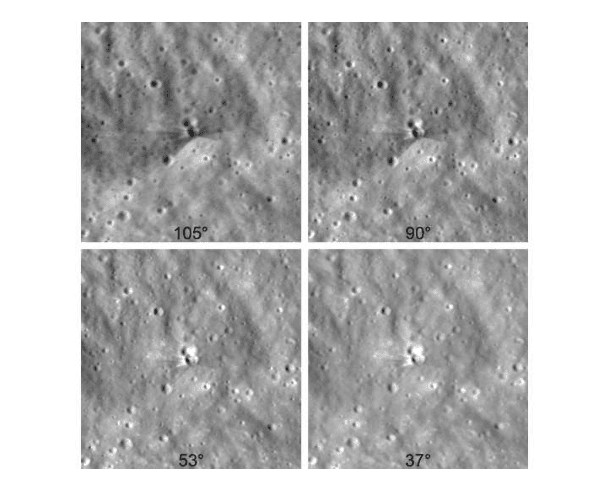
Observations revealed a lunar crater approximately 18 meters or 60 feet wide. NASA then compared surface conditions before and after the event using LRO imagery, making the changes from the impact clearly visible.
Key Takeaways
- The Falcon 9 upper stage hit the lunar surface on August 5, 2026.
- NASA estimates the new crater is about 18 meters wide and less than 3 meters deep.
- LRO took images of the site on August 11-12, 2026, and found surface material ejected by the impact.
SpaceX Rocket Hits the Moon, NASA Finds New Crater
The impact occurred when the spent Falcon 9 upper stage struck the lunar surface. What fell to the Moon was the upper stage, not the entire rocket in its full configuration.
NASA then used the Lunar Reconnaissance Orbiter (LRO) to examine the impact site. The spacecraft has been orbiting the Moon since 2009 and is one of NASA's primary instruments for mapping and studying the lunar surface.
LRO captured images of the site on August 11 and 12, 2026, about six days after the impact. The Narrow-Angle Camera (NAC) on LRO allowed researchers to see surface changes at high resolution.
According to NASA, comparing images before and after the impact revealed a new feature not seen in earlier pictures. This change is visual evidence of a crater formed by the Falcon 9 upper stage impact.
If you are following developments in technology and digital assets, you can register on Bittime to access various available crypto asset trading features.
18‑Meter Moon Crater – How Big Was the Impact?
Source: Phys
NASA's analysis estimates the newly formed crater is about 60 feet or 18 meters wide. Its depth is estimated at less than 10 feet or about 3 meters.
These dimensions show that human-made objects can leave clearly visible changes on the Moon's surface. However, this crater remains relatively small compared to the many natural craters formed by asteroid and meteoroid impacts throughout lunar history.
In addition to the new depression, NASA found surface material scattered around the site. The high‑energy impact caused lunar dust and rock to be ejected from the collision point.
Read Also: Nvidia's $500 Billion AI Funding – Will AI Crypto Tokens Benefit?
The depth estimate should be read correctly. NASA determined depth based on image characteristics, including shadows visible at the site, so the approximately 3‑meter figure is an estimate, not a direct measurement using instruments on the surface.
The Moon's conditions make such traces particularly valuable to scientists. The Moon has virtually no atmosphere to produce weather like on Earth, so there is no rain or wind to rapidly erode new structures.
Fresh material exposed by the impact can also appear brighter than the surrounding surface. Over time, that material will undergo changes from solar radiation, solar wind, and micrometeoroid impacts.
NASA's Before-After Photos Reveal Lunar Surface Changes
One of the most interesting aspects of this event is NASA's ability to show changes through before-after photos of the Moon.
LRO has an archive of lunar surface images that can be compared with newer pictures. By comparing two images from the same location at different times, scientists can find new features that appeared after an event.
This method is known as temporal pair comparison. NASA has used similar approaches to find new craters from impacts by celestial bodies as well as human-made spacecraft.
Read Also: SpaceX Announces First Earnings on August 4, 2026 – What's the Impact on Investors?
In the Falcon 9 case, the pre‑impact image served as a reference to show that the crater did not exist before. The post‑impact image then displayed the new depression and the surrounding ejected material.
LRO was about 60 miles (97 kilometers) above the lunar surface during the observations, according to Forbes. The NAC camera can also detect surface features just a few feet across.
The result is not just documentation photos. Before-after imagery helps scientists study how the lunar surface reacts when struck by objects traveling at high speed.
Falcon 9 Is Not the First Human‑Made Object to Hit the Moon
The Falcon 9 impact adds to the list of human‑made objects that have left marks on the lunar surface.
NASA has previously used LRO to find several impact sites of spacecraft. In 2023, for example, LRO identified a new crater likely associated with Russia's Luna 25 impact.
NASA also documented the impact site of the GRAIL spacecraft. Those two probes were intentionally directed to crash into the Moon at the end of their missions, creating craters estimated to be about 5 meters across.
Another case was the Hakuto‑R Mission 2 by Japanese company ispace. LRO observed surface changes at the site of that spacecraft's hard landing in 2025.
Each impact provides scientists with unique data. The object's size, speed, impact angle, and the characteristics of the lunar soil all influence the crater's size and shape.
Read Also: Popular Tokenized Stocks in 2026: Technology Stocks Become Investor Favorites
Why Is NASA Monitoring the Crater from the SpaceX Rocket?
Observing the new crater has broader scientific value than simply recording a rocket accident.
NASA uses LRO data to understand the regolith – the layer of loose material covering the lunar surface. When an object strikes the surface, that material can be ejected and form specific patterns around the crater.
Impact data can also help scientists understand the natural crater‑forming process. By knowing the characteristics of the impacting object and the size of the resulting crater, researchers can compare it to craters caused by meteoroids and asteroids.
These observations are increasingly relevant as lunar exploration activity grows. As more spacecraft are sent to the Moon, the chances of hard landings or impacts that leave surface changes also increase.
LRO plays a key role in this process. The spacecraft not only documents traces of past missions but also helps NASA study potential sites for future robotic and human missions.
Conclusion
The impact of the SpaceX Falcon 9 upper stage on August 5, 2026, created a new crater on the Moon about 18 meters wide and less than 3 meters deep, according to NASA analysis.
The before‑after photos captured by LRO show surface changes and ejected material, while also providing scientific data on how lunar regolith responds to impacts by human‑made objects.
After learning about these developments, now is the time to explore AI-based crypto on Bittime such as digital assets AI, AGI, RENDER, TAO, VVV, and many more AI coins.

Bittime is a licensed Digital Financial Asset Trader (PAKD) platform supervised by the Financial Services Authority — where you can buy Bitcoin in Indonesia and hundreds of other crypto assets starting from Rp10,000. The registration process is fast, secure, and can be started today.
Monitor USDT to IDR conversion rates and real-time price movements of your favourite crypto assets. All available in one crypto investment app that can be downloaded for free from the Play Store.
Ready to start? Register now on Bittime and execute your investment strategy on a platform trusted by millions of users in Indonesia.
FAQ
When did the SpaceX rocket hit the Moon?
The Falcon 9 upper stage struck the lunar surface on August 5, 2026. NASA then observed the site using LRO on August 11-12.
How big is the crater from the SpaceX rocket?
NASA estimates the crater is about 60 feet or 18 meters wide. Its depth is estimated at less than 10 feet or about 3 meters.
Did the entire Falcon 9 rocket fall to the Moon?
No. The part that hit the Moon was the Falcon 9 upper stage that had already completed its mission.
How did NASA know there was a new crater?
NASA compared images of the lunar surface before and after the impact using data from the Lunar Reconnaissance Orbiter. The comparison revealed a new feature at the impact site.
Have other human-made objects created craters on the Moon before?
Yes. NASA has previously documented craters or surface changes from several spacecraft, including GRAIL, Luna 25, and Hakuto‑R Mission 2.
Disclaimer: The views expressed belong exclusively to the author and do not reflect the views of this platform. This platform and its affiliates disclaim any responsibility for the accuracy or suitability of the information provided. It is for informational purposes only and not intended as financial or investment advice.

.png)