Crypto Futures Regulation in Indonesia, the US, Europe, and Asia: A Complete Guide
2026-09-03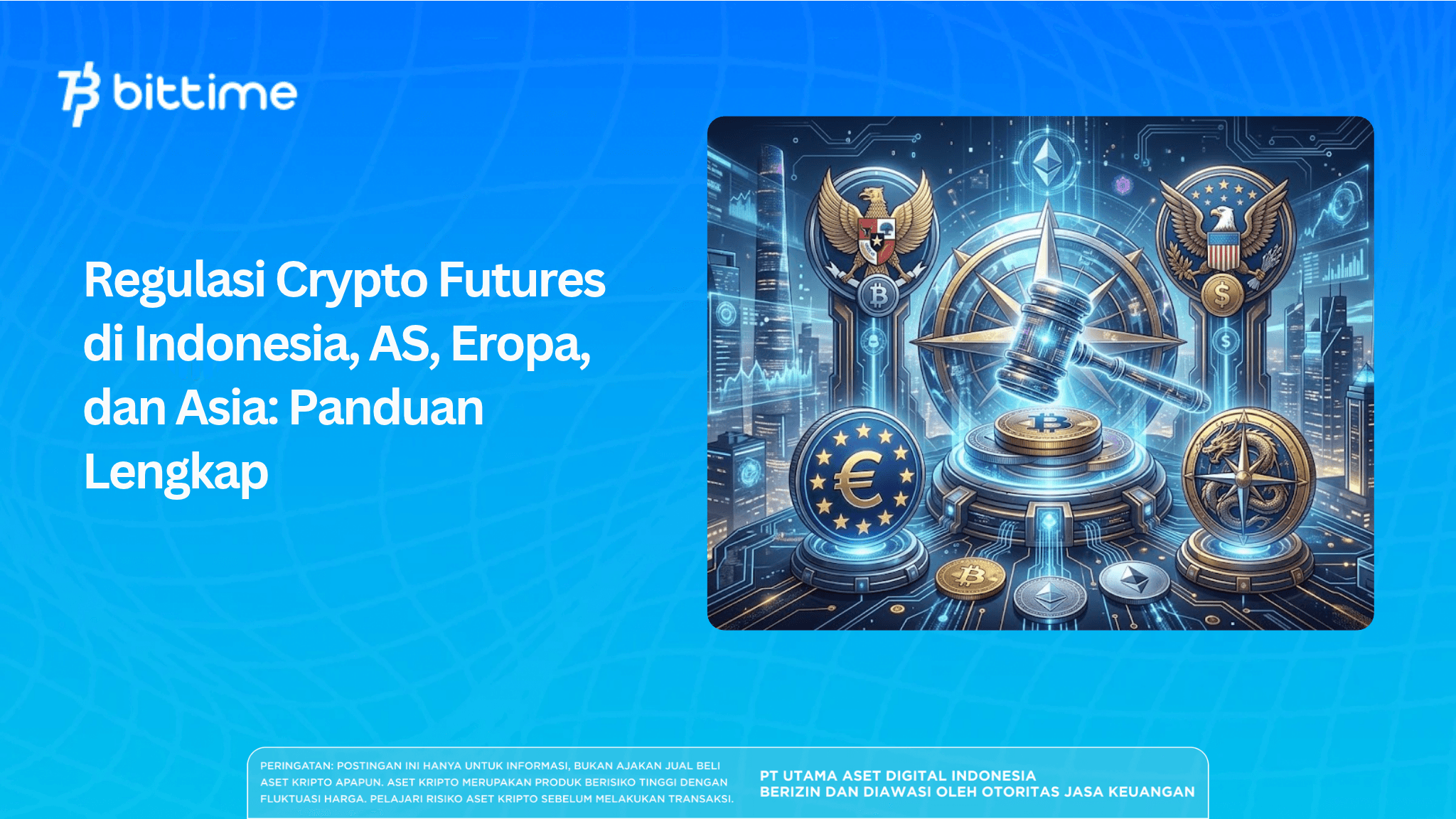
The development of crypto futures has prompted many countries to clarify regulations governing digital asset derivatives trading. These products allow traders to take positions based on the price movements of crypto assets without having to own the underlying assets directly.
In Indonesia, discussions surrounding crypto futures regulations have continued to develop as digital financial assets, including crypto assets, have gained a clearer regulatory framework. The latest regulations place particular emphasis on crypto asset derivatives trading, including security, oversight, and user protection.
Key Takeaways
- Crypto futures regulations differ from country to country based on each regulator's approach.
- Indonesia has begun regulating crypto asset derivatives through an official oversight framework.
- Consumer protection is a major focus in global futures trading.
What Are Crypto Futures and Crypto Asset Derivatives?
Before understanding the regulations, it is important to know the basic concept of crypto derivatives. Crypto asset derivatives are financial instruments whose value follows the price of specific digital assets such as Bitcoin or Ethereum.
Unlike spot trading, futures allow traders to enter into contracts to buy or sell assets at a specified price in the future.
Crypto derivative products are typically used for several purposes:
- Hedging or protecting asset value.
- Speculating on price movements.
- Managing market risk.
- Enhancing trading strategies.
However, crypto futures carry higher risks because they often use leverage. Small price movements can result in significant gains or substantial losses.
Because of these characteristics, regulators in various countries pay particular attention to crypto futures products.
Read also: How to Set Take Profit & Stop Loss on Bittime Futures Before and After Opening a Position
Crypto Derivatives Trading Regulations in Indonesia
Indonesia has begun building a clearer regulatory framework for digital asset trading, including crypto asset derivatives. Crypto asset derivatives trading in Indonesia is regulated under Financial Services Authority Regulation (POJK) Number 23 of 2025 concerning Amendments to Financial Services Authority Regulation Number 27 of 2024 concerning the Organization of Trading in Digital Financial Assets, Including Crypto Assets.
This regulation was issued to strengthen the regulation and oversight of developments in the digital financial asset market, including the emergence of new products or activities that resemble conventional financial instruments, such as digital financial asset derivatives. Through POJK 23/2025, the scope of digital financial assets has been expanded to include crypto assets and other digital financial assets, including digital financial asset derivatives.
Under these rules, the organization of crypto asset derivatives trading must comply with applicable provisions, including regulatory approval, governance of trading operators, trading mechanisms, as well as the implementation of prudential principles and consumer protection. Exchanges that organize digital financial asset derivatives trading must obtain prior approval from the Financial Services Authority (OJK).
Several important aspects addressed by crypto derivatives trading regulations in Indonesia include:
- Oversight of digital financial asset trading operators.
- Compliance with operational standards and operator governance.
- Transparency of trading mechanisms and product information.
- Risk management in digital asset derivatives activities.
- Consumer protection through the application of prudential principles.
With these regulations in place, crypto derivatives trading in Indonesia is directed to develop within a more structured digital financial ecosystem. The rules also provide legal certainty for industry participants while helping users understand that crypto futures products have characteristics and risks that differ from direct crypto asset trading (spot trading).

(Source: Generated-AI image)
The Role of Regulators in Overseeing Crypto Futures in Indonesia
In crypto futures trading, regulators play an important role in ensuring that the market operates transparently and securely.
Oversight focuses not only on the products being traded, but also on platform operators and user protection mechanisms.
Some of the key areas of regulatory attention include:
- Trading system security.
- Risk management.
- Fee transparency.
- User education.
- Prevention of illegal activities.
With clearer rules in place, users can understand that crypto futures are not simply an opportunity for quick profits, but also an instrument that carries certain risks.
Read also: How to Transfer USDT from Spot to a Bittime Futures Account: A Complete Guide
Crypto Futures Regulations in the United States
The United States takes a stricter approach to crypto asset derivatives trading. Oversight is carried out by several agencies, particularly regulators responsible for commodity and securities markets.
For crypto futures products, commodity regulators play a major role because many digital assets are treated as commodities in certain contexts.
Platforms offering crypto futures in the US must meet compliance requirements, including:
- Regulatory registration and oversight.
- Reporting of trading activities.
- Market security standards.
- Protection against price manipulation.
The United States is one of the largest markets for crypto derivatives because it has a well-developed trading infrastructure.
However, the debate over the classification of crypto assets remains an important issue in determining regulatory jurisdiction.
Read also: Safe and Smooth Crypto Withdrawals: What Should You Pay Attention To?
Crypto Futures Regulations in Europe
Europe takes an approach based on a unified regulatory framework for digital assets. These regulations aim to establish common standards across member states.
Within the European ecosystem, crypto assets are subject to rules covering digital asset issuers, crypto service providers, and user protection.
For crypto asset derivatives, regulators focus on:
- Information transparency.
- Investor protection.
- Risk management.
- Service provider compliance.
The European approach tends to balance technological innovation with financial system stability.
Crypto Futures Regulations in Asia
In addition to Indonesia, several Asian countries have also begun developing regulations for crypto derivatives trading.
Each country takes a different approach based on its market conditions and financial policies.
Singapore
Singapore is known for an approach that supports blockchain innovation while continuing to prioritize risk oversight.
Singapore's financial regulator oversees digital asset activities through licensing requirements and service provider compliance rules.
Japan
Japan was one of the earlier countries to establish a legal framework for crypto assets.
Crypto derivatives trading is supervised under standards similar to those applied to traditional financial products.
Hong Kong
Hong Kong is developing digital asset regulations with the goal of becoming a regulated crypto trading hub.
Its approach emphasizes platform licensing, investor protection, and legal certainty.
Read also: Indonesia's RWA Market Grows, Ondo Finance Reveals the Driving Factors
Differences in Global Crypto Futures Regulatory Approaches
Each country has a different approach to regulating crypto futures.
Indonesia tends to build an oversight framework to ensure the industry develops in a controlled manner. The United States focuses more on asset classification and derivatives market oversight.
Meanwhile, Europe and several Asian countries seek to strike a balance between innovation and consumer protection.
The main differences are generally found in:
- The competent regulatory authority.
- The legal status of crypto assets.
- Platform requirements.
- The level of investor protection.
Read also: RWA Market Value Grows 380%, Bittime: Indonesian Investor Interest Strengthens
Consumer Protection in Crypto Futures Trading
One of the main reasons crypto futures regulations are established is to protect users.
Futures carry high risks due to leverage and significant market volatility.
Regulators generally focus on several aspects:
- Clear risk information.
- Platform security systems.
- Prevention of market manipulation.
- Transaction transparency.
Traders need to understand that regulations do not guarantee profits, but rather serve as a mechanism for creating a safer market.
Bittime Futures and the Development of Crypto Futures in Indonesia
As interest in digital asset trading continues to grow, futures services such as Bittime Futures are becoming part of an increasingly professional crypto ecosystem.
For users interested in learning about crypto futures, it is important to understand how derivative contracts work, the risks of leverage, and trading regulations before beginning to trade.
You can also sign up on Bittime to get the latest information about crypto futures, regulatory developments, and the latest digital asset news.
Conclusion
Crypto futures regulations continue to evolve in various countries as the use of crypto asset derivatives increases. Indonesia, the United States, Europe, and other Asian countries have different approaches to regulating futures products.
Through its latest regulations, Indonesia has begun providing a clearer framework for trading digital financial assets, including crypto derivatives. Meanwhile, other countries focus on market oversight, platform licensing, and investor protection.
Before using crypto futures, make sure you understand the trading mechanism, leverage risks, and the rules of the platform you use. Follow the latest regulatory developments so that your trading strategy remains based on accurate information.

Bittime is a licensed Digital Financial Asset Trader (PAKD) platform authorized and supervised by the Financial Services Authority — where you can buy Bitcoin in Indonesia and hundreds of other crypto assets starting from IDR 10,000. The registration process is fast and secure, and you can get started today.
Monitor USDT to IDR conversions and the price movements of your favorite crypto assets in real time. Everything is available in one crypto investment app that can be downloaded for free from the Play Store.
Ready to get started? Sign up on Bittime now and execute your investment strategy with a platform trusted by millions of users in Indonesia.
FAQ
What are crypto futures?
Crypto futures are derivative contracts that allow traders to take positions based on predicted price movements of crypto assets without having to own the assets directly.
Are crypto futures legal in Indonesia?
Crypto futures can be traded within the applicable digital financial asset regulatory framework and must comply with the rules governing supervised trading operators.
What are the main risks of trading crypto futures?
The main risks of crypto futures are high volatility and the use of leverage, which can magnify both profits and losses.
What is the difference between crypto futures and spot trading?
Spot trading involves purchasing an asset directly, while futures use contracts based on the future price movements of an asset.
Which country has the strictest crypto futures regulations?
The United States and several European countries have strict rules regarding derivatives market oversight and investor protection.
Disclaimer: The views expressed belong exclusively to the author and do not reflect the views of this platform. This platform and its affiliates disclaim any responsibility for the accuracy or suitability of the information provided. It is for informational purposes only and not intended as financial or investment advice.

.png)