IBM's Project Lightwell: How Is OpenAI's AI Used for Cybersecurity?
2026-06-23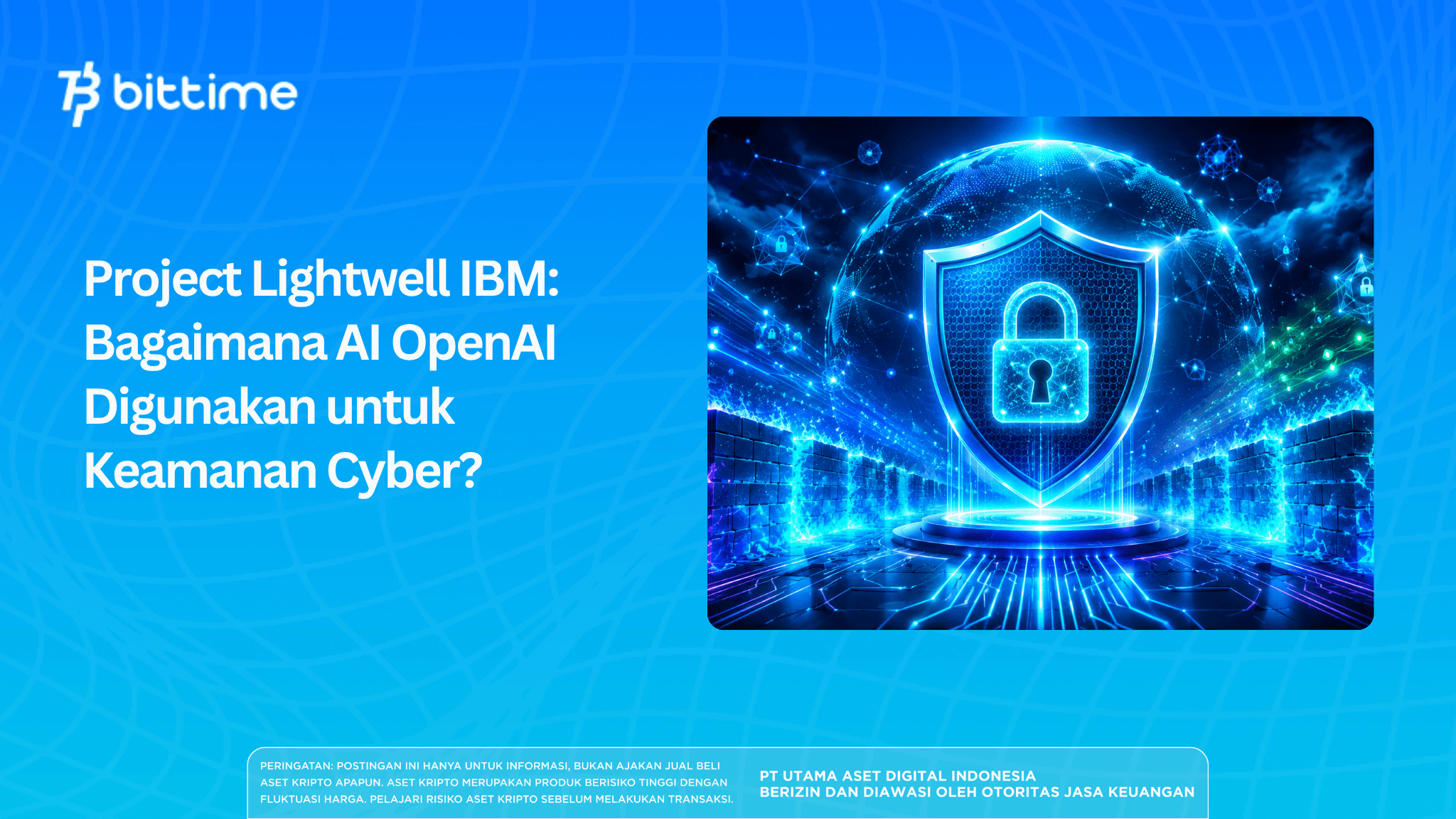
The world of cybersecurity is entering a new era. On June 22, 2026, IBM announced a strategic partnership with OpenAI through the OpenAI Daybreak Cyber Partner Program.
This collaboration immediately drew attention because it involves IBM’s Project Lightwell—a US$5 billion initiative developed in partnership with Red Hat to secure open-source software in the enterprise supply chain.
Many IT professionals and CISOs are now asking: How exactly is OpenAI’s AI being utilized within IBM’s Project Lightwell? How does it differ from traditional security tools? And most importantly, can it truly help companies detect code vulnerabilities faster and more accurately?
Key Takeaways
- Project Lightwell IBMintegrating OpenAI's frontier AI models to significantly accelerate code vulnerability detection and remediation compared to traditional methods.
- OpenAI AI is used for automated code review, exploitability validation, and remediation recommendations, with read-only access to the client repository to maintain full security and control.
- This initiative is part ofIBM's broader strategy to help companies address cyber threats that increasingly leverage AI, while strengthening open source supply chain security.
Register at Bittime now and start trading crypto with a fast, safe, and easy process in the app.
Background: Why Are IBM and OpenAI Collaborating on Cybersecurity?
Cyberattacks are becoming increasingly sophisticated. Attackers are now leveraging AI to identify vulnerabilities, create malware that is harder to detect, and carry out large-scale supply chain attacks. Meanwhile, companies are struggling to secure their ever-larger and more complex codebases, especially those that rely heavily on open-source components.
IBM, through IBM Consulting, recognizes the urgent need for tools that can work faster and with greater precision. OpenAI brings cutting-edge model capabilities that excel at understanding code, context, and vulnerability patterns.

(Image source: AI Image Generated)
The result is an integration that not only detects issues but also helps security teams take action with greater confidence.
This partnership was announced at just the right time. Just one month earlier (May 2026), IBM and Red Hat launched Project Lightwell as an enterprise security clearinghouse for open-source software. Now, with the addition of OpenAI’s AI capabilities, the project has become far more powerful.
Read also:Why Did Norway Ban ChatGPT and Generative AI for Elementary School Children?
What is IBM's Project Lightwell?
Project Lightwell IBMis a major US$5 billion initiative launched by IBM and Red Hat. Its goal is simple but ambitious: securing the open source software used by nearly every modern enterprise.
Project Lightwell works by deploying a global team of engineers and AI tools to:
- Scanning and validating open source components
- Performing patching and remediation
- Managing risk across the enterprise software supply chain
In June 2026, IBM expanded Project Lightwell by integrating AI models from OpenAI. This enabled smarter automation in code review and vulnerability detection.
Read also:Claude AI Will Soon Mandate KYC, Will User Data Remain Safe?
How is OpenAI AI Used for Cybersecurity in Project Lightwell?
Here's the most interesting part. OpenAI isn't just "added," it's being deeply integrated into IBM's security workflow.
Following how it works practically:
- Faster and More Precise Vulnerability DetectionOpenAI's AI model analyzes codebases at scale. It doesn't just look for signature patterns like traditional SAST/DAST tools, but also understands code context, data flow, and potential exploit paths. As a result, vulnerability identification time can be significantly reduced.
- Exploitability ValidationAI doesn't just say "there's a bug here," it also assesses how likely it is to be exploited in a real-world environment. This is incredibly helpful for security teams, often overwhelmed by hundreds of alerts daily.
- Automated Code Review and RemediationAfter identifying issues, AI provides specific code fix recommendations. The development team can immediately review and implement patches more quickly. This feature is one of the key advantages.code security with AI.
- Operations Within the Client EnvironmentThis solution works with accessread-onlyto the customer code repository. No changes are made without human approval. All analysis is done through the platform.IBM Consulting Advantage, so that it remains controlled and safe.
- Scalability from Application Evaluation to Continuous MonitoringInitially, it can be used to evaluate a specific application. Over time, it can be expanded to include continuous monitoring as the code evolves.
Read also: What is Kolivo AI? KOL Relevance vs. Popularity: A Key Difference for Brands
The Real Benefits of AI for Application Security and Enterprise Cyber Defense
This partnership provides several concrete benefits for the company:
- Speed of Response to ThreatsThreats that leverage AI must be countered with AI. Project Lightwell + OpenAI helps defenders match the speed of attackers.
- Reducing the Workload of Security TeamsMany alerts that previously had to be reviewed manually can now be automatically prioritized based on their actual risk level.
- Better Supply Chain ProtectionBecause of its focus on open source, the company is protected from attacks targeting third-party components — one of the most common attack vectors today.
- Integration with Existing WorkflowsBecause it runs within the client environment and is supported by IBM Consulting, adoption is faster.smoother than new point product solutions.
Read also:What Is Humanize AI? How to Make AI Writing More Natural
Challenges and Things to Watch Out For
While promising, the integration of AI for cyber security still has limitations:
- AI can produce false positives or false negatives, so it still requires human oversight.
- OpenAI's AI models are trained on public data — it's possible they may be less than optimal for certain proprietary or niche code.
- The cost of implementation and integration into an already complex system can be a consideration for medium-sized companies.
- Data regulations and compliance (especially where the code is sensitive) must remain strictly adhered to.
Companies need to view this as augmentation, not a total replacement for human security teams.
What Does This Mean for the Future of Cybersecurity?
The IBM-OpenAI partnership through Project Lightwell marks a larger trend:AI-native securityIn the future, nearly every aspect of cybersecurity—from threat hunting to vulnerability management to incident response—will increasingly rely on powerful AI models.
For companiesFor Indonesia, which is undergoing digital transformation and heavily utilizing open source, this is a positive development. Tools like these can help close the security capability gap that has been difficult to reach due to limited resources.
However, successful implementation still depends on a well-thought-out strategy, good governance, and a combination of AI technology and human expertise.
Conclusion
IBM’s Project Lightwell, powered by OpenAI’s AI capabilities, represents a significant step forward in AI for cybersecurity. With a focus on faster code vulnerability detection, exploitability validation, and smarter remediation, this initiative helps companies tackle increasingly complex threats.
For CISOs, security teams, and developers, now is the perfect time to start evaluating how similar technologies can be integrated into their defense strategies. Cybersecurity is no longer just about tools—it’s about how quickly and intelligently we can respond.
If your company is considering enhancing its AI-powered application security or code security capabilities, IBM’s Project Lightwell is worth adding to your evaluation list. Start by understanding your current open-source exposure and discuss it with your internal team or a trusted consultant.

Now that you’ve learned about the latest developments in AI, it’s time to explore AI-based cryptocurrencies on Bittime, such as AI these AI coins AI, AGI, RENDER, TAO and many more AI crypto.
Bittime is a licensed and regulated Digital Financial Asset Trader (PAKD) supervised by Indonesia’s Financial Services Authority (OJK) — where you can buy Bitcoin in Indonesia and hundreds of other crypto assets starting from just Rp10,000. The registration process is fast, secure, and you can get started today.
Track USDT to IDR conversions and monitor your favorite crypto assets in real time. Everything is available in one crypto investment app that you can download for free on the Play Store
Ready to start? Register now on Bittime and execute your investment strategy with a platform trusted by millions of users in Indonesia.
FAQ
What is IBM's Project Lightwell?
Project Lightwell is a $5 billion initiative by IBM and Red Hat to secure open source software in the enterprise. Now enhanced with OpenAI's AI integration to accelerate code vulnerability detection and remediation.
How is OpenAI AI used in cybersecurity in this project?
OpenAI's AI is used to deeply analyze code, detect vulnerabilities, assess exploitability, and recommend fixes. All of this is done with read-only access to maintain security.
Is this solution only for large companies?
Currently, it's focused more on enterprises due to its complex scale. However, over time, similar models will likely become more widely available through IBM Consulting services.
Can AI completely replace humans in code security?
Not yet. AI can be very helpful in accelerating and prioritizing, but final decisions, validating business context, and remediation still require human expertise.
When will Project Lightwell with OpenAI become available to customers?
The announcement was made in June 2026. Phased implementation has already begun through IBM Consulting, primarily for enterprise clients requiring large-scale application evaluations.
Disclaimer: The views expressed belong exclusively to the author and do not reflect the views of this platform. This platform and its affiliates disclaim any responsibility for the accuracy or suitability of the information provided. It is for informational purposes only and not intended as financial or investment advice.

.png)