Beginners Must Know! Here's What to Prepare for Before Trading Crypto Futures
2026-07-21
Futures trading or futures contract trading is a trading activity that allows you to speculate on the price movements of an asset without having to physically own the asset.
Unlike spot trading, futures trading uses contracts that require buyers and sellers to execute transactions at an agreed-upon price and time in the future.
The potential profit comes from the difference between the contract price and the actual market price at maturity.
For beginners interested in trying futures trading, there are a number of important preparations that need to be understood to avoid making mistakes and the risk of major losses.
Key Points
Futures trading is a contract that requires the buyer and seller to buy or sell an asset at an agreed price and time in the future.
Before starting futures trading, beginners should understand the underlying asset and create a trading plan with entry, stop-loss, and exit points.
Futures trading has three main types: long trading (buying when the price rises), short trading (selling when the price falls), and spread trading.
Trade crypto futures safely and conveniently. Register at Bittime and start your trading journey.
What is Futures Trading?
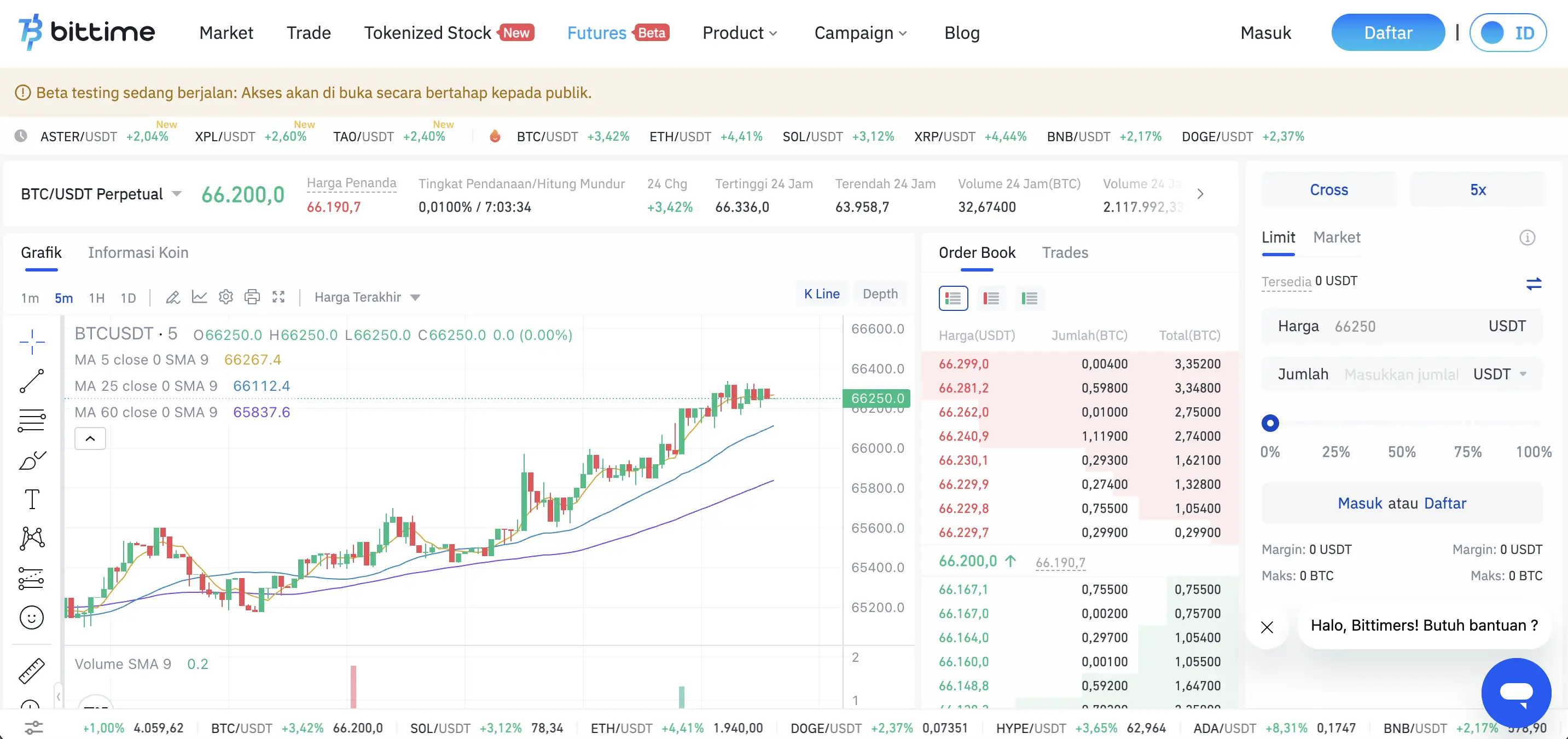
Futures Trading Bittime.com
Futures tradingA futures contract is a derivative trading transaction on a futures exchange. This contract contains information about the amount of the underlying asset to be sold or purchased at a future date.
The main principle of futures trading is the execution of transactions between buyers and sellers based on contracts that have been agreed upon in advance.
The difference or gap between the strike price and the actual market price is called the margin, which is the main object of futures trading.
Read Also:Profit-Taking Strategy During a Bearish Market with Crypto Futures
Types of Futures Trading
In general, there are three types of futures trading that need to be understood:
1. Long Trading
Traders buy futures assets and profit when the market price rises compared to the contract price.
2. Short Trading
The opposite of long trading, this occurs when the commodity price falls below the contract price. Traders profit from the sale of futures contracts.
3. Spread Trading
Traders purchase different futures contracts with the same underlying asset, aiming to profit from widening or narrowing spreads due to variations in contracts and expiration dates.
Read Also:Understanding Leverage Strategies in Crypto Futures for Safer Trading
Preparation Before Trading Crypto Futures
Before starting futures trading, beginners need to make some important preparations:
1. Understand the Underlying Asset
Make sure you understand the underlying asset type of the futures contract you choose, such as currencies, commodities, or financial instruments. Each asset has different price sentiment factors, and therefore different trading strategies are required.
2. Master the Basic Principles of the Futures Market
Learn about futures exchange products and how they work. Understand the contract content and legal implications, and understand the speculative opportunities and margins involved.
3. Know the Risks
Every futures transaction has risks.
Make sure you pay attention to and anticipate the existing risks, and ensure that the level of risk is still bearable.
4. Create a Trading Plan
A trading plan is a plan that helps anticipate the risk of loss and optimize profit opportunities. Clearly define entry, stop-loss, and exit points:
- Entry
Market entry time is based on the golden cross signal (the intersection of the 50-day and 200-day price fluctuation lines).
- Stop Loss
The maximum loss point that can be tolerated is ideally around 5% of the purchase price.
- Exit
The trading stop point is determined by continuously monitoring price fluctuations, depending on the trading model and the goals you want to achieve.
5. Choose the Right Trading Platform
Choose a trading platform that is easy to use, offers a variety of order types, and has fees and commissions that suit your needs.
Additional Tips for Beginners
- Start with small capital and low leverage to understand the mechanisms of futures trading without major risks.
- Use a demo account if available to practice without the risk of losing real money.
- Monitor news and macroeconomic factors that affect the prices of the assets you trade.
- Don't get carried away by emotionsremain disciplined in the trading plan that has been made.
- Always use stop loss to protect capital from large losses.
Conclusion
Futures trading offers significant profit opportunities but also carries significant risks. For beginners, thorough preparation is crucial: understanding the underlying asset, mastering futures market principles, recognizing the risks, creating a trading plan, and choosing the right platform.
With sufficient discipline and education, futures trading can be an effective instrument for optimizing your investment portfolio.

Bittime adalah platform Pedagang Aset Keuangan Digital (PAKD) berizin dan diawasi oleh Otoritas Jasa Keuangan — tempat kamu bisa beli Bitcoin di Indonesia dan ratusan aset kripto lainnya mulai Rp10.000. Proses registrasi cepat, aman, dan bisa langsung dimulai hari ini.
Pantau konversi USDT to IDR dan pergerakan harga aset kripto favoritmu secara real-time. Semua tersedia dalam satu aplikasi investasi kripto yang bisa diunduh gratis di Play Store.
Siap mulai? Daftar sekarang di Bittime dan eksekusi strategi investasimu dengan platform yang sudah dipercaya jutaan pengguna di Indonesia.
FAQ
What is futures trading?
Futures trading is the trading of futures contracts that require buyers and sellers to buy or sell an asset at an agreed price and time in the future.
What is the difference between long and short trading?
Long trading is buying a futures asset when the price is expected to rise, while short trading is selling a futures asset when the price is expected to fall.
What is spread trading?
Spread trading is buying different futures contracts with the same underlying assets to take advantage of widening or narrowing price differences.
What is meant by margin in futures trading?
Margin is the difference between the agreed contract price and the actual market price, which is the source of profit or loss in futures trading.
What is stop loss?
Stop loss is the maximum loss point that can still be tolerated, ideally around 5% of the contract purchase price.
Disclaimer: The views expressed belong exclusively to the author and do not reflect the views of this platform. This platform and its affiliates disclaim any responsibility for the accuracy or suitability of the information provided. It is for informational purposes only and not intended as financial or investment advice.
.png)