Why Are the Indonesian National Armed Forces and the Indonesian National Police (Polri) Involved in Tax Oversight?
2026-07-22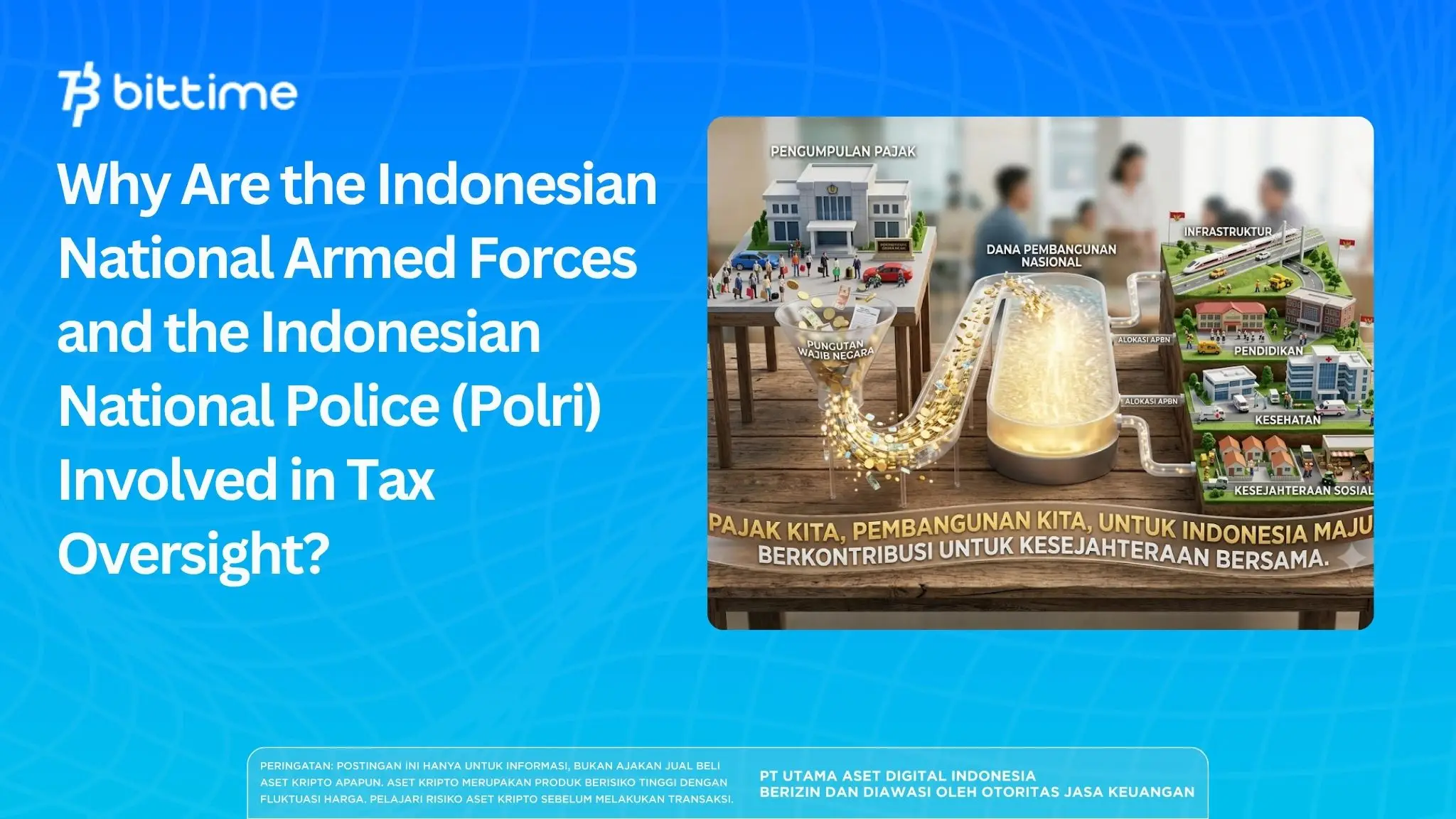
The discourse on involving the TNI and Polri in monitoring taxpayer compliance has become a hot topic of discussion in society.
The Directorate General of Taxes (DGT) of the Ministry of Finance emphasized that the involvement of regional officials, including Babinsa (TNI) and Bhabinkamtibmas (Polri), is limited to supporting information gathering and coordination at the village/sub-district level, not to conduct tax audits or collection.
This policy is not actually new; it has been in place since 2020 and was reaffirmed in Circular Letter of the Director General of Taxes No. SE-8/PJ/2026 concerning Guidelines for Taxpayer Compliance Monitoring.
However, this step has drawn criticism from the Civil Society Coalition, which believes that the involvement of military personnel in fiscal matters blurs the boundaries between civilian and military authority and has the potential to create a politics of fear at the grassroots level.
Key Points
The involvement of the TNI (Babinsa) and Polri (Bhabinkamtibmas) is to support information gathering and coordination, not for inspection or tax collection.
This policy has drawn criticism from the Civil Society Coalition, which believes that the involvement of military personnel in fiscal matters blurs the boundaries between civilian and military authority.
The Directorate General of Taxes (DGT) emphasized that this coordination is not a new policy, having been running since 2020 and confirmed through SE-8/PJ/2026.
Understand tax policies and manage your digital finances wisely. Register at Bittime, a trusted crypto trading platform in Indonesia.
What is the Content of the TNI and Polri Involvement Policy?

Source: AI
Based on SE-8/PJ/2026, the Directorate General of Taxes (DGT) monitors taxpayer compliance through two methods:
1. Field Data Collection
Visiting the residence, place of domicile, place of business activity, or location of independent work of the taxpayer or related party.
2. Non-field Data Collection
Through the use of available information technology and administrative facilities.
In this context, Babinsa and Bhabinkamtibmas function as information networks at the regional level.
Both of them act as information liaisons in the field through regional and community development, not as implementers of inspections or tax collection.
The Directorate General of Taxes (DGT) emphasized that all tax administration processes remain the authority of the DGT, and that TNI/Polri officers do not have the authority to conduct tax audits or collection.
Read Also:Are there fees and taxes when buying and selling USDT to IDR?
Why is this policy necessary?
The Directorate General of Taxes requires information support from various parties to ensure that data regarding tax subjects and objects is more accurate.
This step is projected as an extensification effort to map taxpayer potential and reach economic sectors that have not been optimally touched by fiscal authorities.
In addition to coordinating with regional authorities, the Directorate General of Taxes also relies on technology-based instruments such as compliance risk management (CRM), geo-tagging-based mapping, and the Coretax tax administration system as primary tools for improving taxpayer compliance.
Read Also:The 0% JHT Tax is Still Being Reviewed. Will JHT Disbursements Really Be Tax-Free?
Criticism from the Civil Society Coalition
The Civil Society Coalition for Security Sector Reform rejects the plan to involve Babinsa in tax oversight for several reasons:
1. Blurring the Boundaries of Authority
Oversight and tax collection are functions of civil administration. The involvement of uniformed officers in building information networks down to the village level is seen as a form of militarization of civil space.
2. Contrary to the TNI Mandate
According to Law No. 34/2004 in conjunction with Law No. 3/2025 concerning the Indonesian National Armed Forces (TNI), the military's primary duty is to uphold national sovereignty and defense. Military Operations Other Than War (OMSP) have strict limitations and do not include monitoring citizens' economic compliance.
3. Potential Privacy Breach
Data related to income, assets, and business transactions constitutes sensitive information. Collecting this information by networks outside the DGT structure increases the risk of data misuse.
4. Politics of Fear
The presence of the military in tax matters is feared to give rise to a politics of fear at the grassroots level, especially among small business owners, farmers, fishermen, and informal workers.
5. Wrong Approach
Sustainable compliance can only be built through trust, transparency, improved service quality, and fairness of tax burdens, not through fear.
Read Also:Indonesian Crypto Exchange with the Lowest WD Fees
TNI and DJP Response
The Head of the Indonesian National Armed Forces Information Center, Major General Muhammad Nas, stated that there had been no discussion regarding the involvement of territorial soldiers in tax oversight matters.
"There hasn't been any discourse or discussion in that direction. There aren't any regulations yet, right? There hasn't been any discussion," he said.
Meanwhile, Director General of Taxes Bimo Wijayanto emphasized that coordination with regional officials only serves as a supplement when the DGT requires additional information.
He also emphasized that the circular was internal to the DGT and did not need to be polemicized.
Read also:What Is a Patriot Bond and How Does It Work?
Types of Taxes in Indonesia
To understand the context of tax oversight, it's important to understand the types of taxes applicable in Indonesia. Generally, taxes are divided into central and regional taxes:
- Central Tax (collected by the Central Government through the Directorate General of Taxes)
- Value Added Tax (VAT):Tariff 12% (effective 1 January 2025)
- Income Tax (PPh):Progressive rates for individuals (5%-35%) and 22% for business entities
- Stamp Duty (BM):Charged for the use of certain documents
- Luxury Goods Sales Tax (PPnBM):Charged on certain luxury BKP
Regional Tax (collected by the Regional Government)
- Motor Vehicle Tax
- Land and Building Tax (PBB)
- Hotel, Restaurant, Entertainment Tax
- Advertising Tax, Parking, and others
Tax Collection System in Indonesia
Indonesia implements three tax collection systems:
1. Self-Assessment System:Taxpayers calculate, pay, and report their taxes independently. This applies to income tax and VAT.
2. Official Assessment System:The tax officer who determines the amount of tax owed. Applies to regional taxes.
3. Withholding Assessment System:A third party (treasurer/company) deducts tax. This applies to Income Tax Articles 21, 22, 23, and VAT.
Conclusion
The involvement of the TNI and Polri in tax supervision is still in the discussion stage and has drawn pros and cons.
The DGT emphasized that this coordination is only to support information collection and not for tax audits or collection.
However, criticism from civil society regarding the potential militarization of civilian space and violation of privacy needs to be taken into account.
This policy still requires further discussion, particularly regarding the legal framework and limitations on the authority of security forces in fiscal matters.

Bittime is a licensed and regulated Digital Financial Asset Trader (PAKD) supervised by Indonesia’s Financial Services Authority (OJK) — where you can buy Bitcoin in Indonesia and hundreds of other crypto assets starting from just Rp10,000. The registration process is fast, secure, and you can get started today.
Track USDT to IDR conversions and monitor your favorite crypto assets in real time. Everything is available in one crypto investment app that you can download for free on the Play Store
Ready to start? Register now on Bittime and execute your investment strategy with a platform trusted by millions of users in Indonesia.
FAQ
Will the TNI and Polri collect taxes?
No. The Directorate General of Taxes (DGT) emphasized that the Indonesian National Armed Forces (TNI) and the Indonesian National Police (Polri) only assist in information gathering and coordination, not in collecting or auditing taxes.
What is the legal basis for the involvement of the TNI and Polri?
The legal basis is the Circular Letter of the Director General of Taxes Number SE-8/PJ/2026 concerning Guidelines for Supervision of Taxpayer Compliance.
Will Babinsa supervise taxes?
Babinsa and Bhabinkamtibmas act as information networks at the regional level, not as tax audit implementers.
Why does the DGT involve regional officials?
To support information gathering and coordination in order to improve tax compliance and map potential taxpayers.
What are the criticisms of this policy?
The main criticisms are the potential militarization of civil space, violation of privacy, and the politics of fear in society.
What was the TNI's response?
The Head of the Indonesian National Armed Forces Information Center stated that there had been no discussion regarding the involvement of territorial soldiers in tax matters.
Disclaimer: The views expressed belong exclusively to the author and do not reflect the views of this platform. This platform and its affiliates disclaim any responsibility for the accuracy or suitability of the information provided. It is for informational purposes only and not intended as financial or investment advice.

.png)