New OJK Regulation on Digital Financial Assets Takes Effect – What You Need to Know
2026-09-08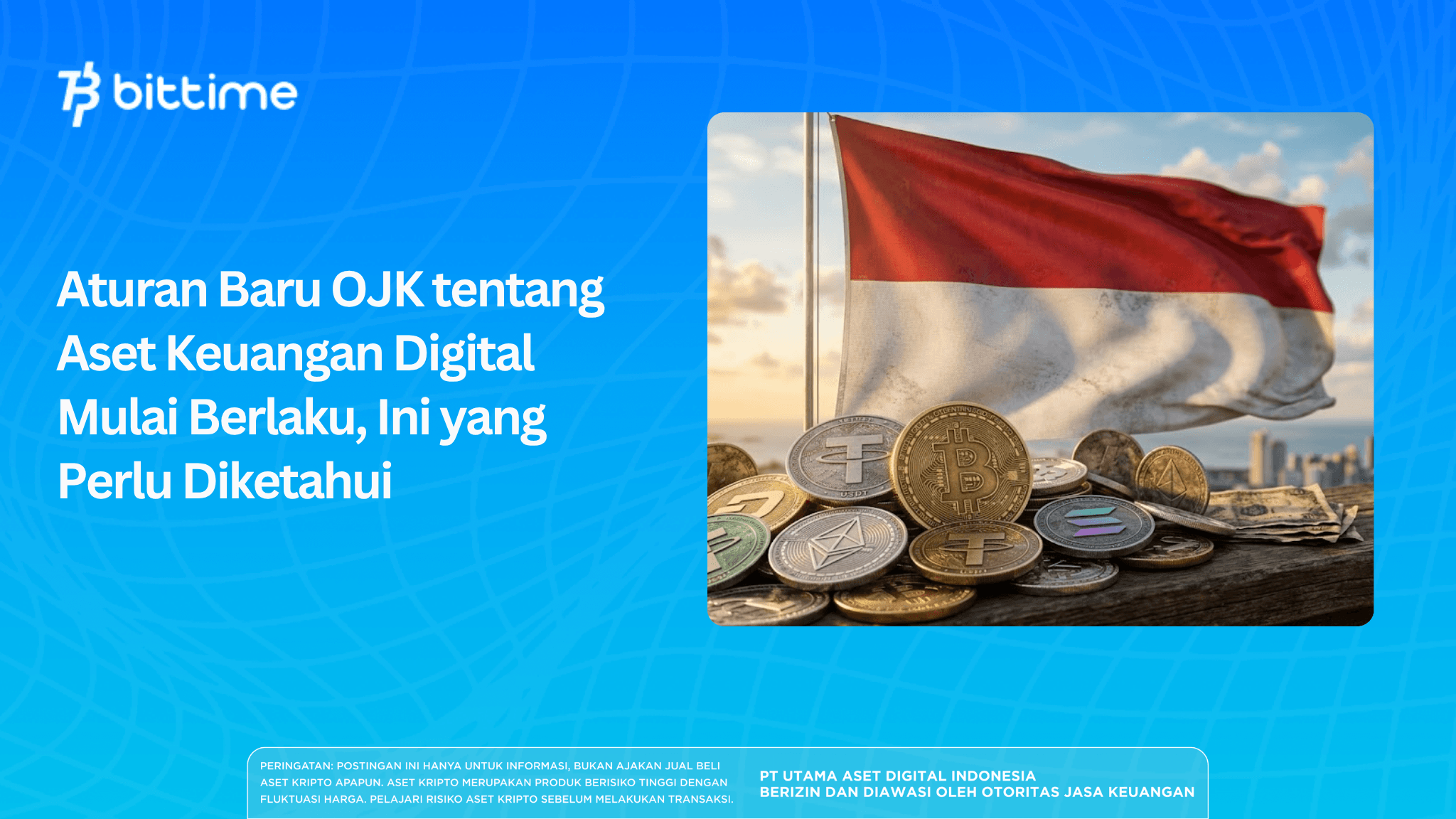
PADK Number 3 of 2026 was issued by the Financial Services Authority (OJK) on 30 June 2026 and officially took effect two months later, on 1 September 2026. That gap was not without reason — digital financial asset operators needed time to adjust their reporting systems before the regulation could truly be implemented.
This OJK crypto asset regulation focuses on one specific thing: how Exchanges, Traders, Clearing Houses, and crypto asset custodians report to the regulator — from the format, to the types of reports, to the deadlines for submission.
For those of you following crypto regulation in Indonesia, PADK 3/2026 is important not because it changes the types of assets that can be traded, but because it revamps the behind‑the‑scenes reporting governance of the digital financial asset industry.
Key Takeaways
- PADK Number 3 of 2026 was issued on 30 June 2026 and took effect on 1 September 2026, serving as the implementing guideline for POJK Number 23 of 2025.
- The regulation sets out the mechanisms and formats for reporting by digital financial asset trading operators, covering monthly, quarterly, annual, and incidental reports.
- The Exchange is also required to evaluate the Digital Financial Asset List at least every three months and report the results to OJK within a maximum of five business days.
Who Counts as a Digital Financial Asset Operator?
Before discussing reporting, it is important to understand who is classified as a digital financial asset trading operator under PADK 3/2026. According to this regulation, the scope includes:
- Exchange — the party that operates the digital financial asset market, including establishing the Digital Financial Asset List that may be traded.
- Clearing and Settlement Guarantee Institution — the party that handles clearing, guarantee, and settlement processes, including derivative transactions of digital financial assets.
- Custodian Manager — the party that stores consumers' digital financial assets.
- Trader — the platform that serves buying and selling transactions of digital financial assets directly to consumers.
- Other parties designated by OJK — an open category for additional entities that may be designated by the regulator in the future as the industry develops.
Each of these parties now has more detailed reporting obligations than under previous rules. It should be stressed that the existence of this regulation shows that Indonesia's crypto asset industry operates under structured oversight — not that the value or profitability of crypto assets themselves is guaranteed by OJK.
As an illustration, crypto asset transactions in Indonesia may only be conducted through operators that have obtained OJK licences. One such operator is Bittime, a licensed crypto asset trading platform that also complies with the reporting requirements under PADK 3/2026.

Source: Generated Image
Read Also: Latest Indonesian Crypto Tax 2026: Complete CARF Guide
Types of Reports That Must Be Submitted to OJK
The core of PADK 3/2026 lies in the reporting section. This regulation contains operational guidelines as well as the formats for several reports, covering evaluation reports on Digital Financial Assets, monthly reports, self‑risk management assessment reports, annual activity reports, incidental reports, and requests related to report submission.
Broadly speaking, operators are required to submit two categories of reports to OJK:
1. Periodic Reports, which are further divided into three:
- Monthly — submitted no later than 10 business days after the reporting period ends.
- Quarterly — submitted no later than 15 business days after the reporting period ends.
- Annual — submitted no later than 30 April of the following year.
2. Incidental Reports, which are submitted outside the regular schedule, usually related to specific events or conditions that OJK needs to be informed of promptly.
Interestingly, this PADK also establishes report quality standards: every report must be prepared completely and correctly.
"Complete" means not omitting material information or facts, while "correct" means it matches the actual condition and does not contain false information. These standards serve as a benchmark for OJK when assessing operator reporting compliance.
Read Also: Bittime Welcomes OJK's New Rules for Crypto Influencers
The Exchange's Obligation to Evaluate the Digital Financial Asset List
In addition to routine reporting obligations, PADK 3/2026 also sets out a specific role for the Exchange in maintaining the quality of the Digital Financial Asset List — the official list of crypto assets and other digital assets that may be traded in Indonesia.
The Exchange is required to evaluate the assets on the list at least once every three months, and/or whenever necessary. The results of this evaluation must then be submitted to OJK no later than five business days after the evaluation is finalised.
This periodic evaluation mechanism is important because the Digital Financial Asset List is not static — assets that once met the criteria may be removed if their condition changes, and vice versa.
With the mandatory regular evaluation, OJK ensures that the asset selection process on the exchange does not stop at the initial listing stage, but is continuously monitored throughout the time the asset is actively traded.
Read Also: Digital Financial Asset and Crypto Asset Pocket Book 2.0
Where Does This Regulation Come From?
PADK 3/2026 does not stand alone. It was issued as an implementing guideline for POJK Number 23 of 2025 concerning amendments to POJK Number 27 of 2024 on the Operation of Digital Financial Asset Trading, including Crypto Assets.
In other words, this PADK is a subordinate regulation that translates the implementation provisions and reporting procedures in a more technical manner, rather than altering the substantive business or licensing rules.
With the implementation of PADK 3/2026, several reporting provisions in OJK Circular Letter (SEOJK) Number 20 of 2024 are gradually revoked and replaced by more detailed new formats and mechanisms.
This is part of the consolidation of digital financial asset regulation under a single authority — in line with the transfer of crypto asset regulatory and supervisory duties from Bappebti to OJK that began in early 2025.
Read Also: Crypto Futures Regulations in Indonesia, the US, Europe, and Asia: A Complete Guide
Conclusion
PADK Number 3 of 2026 is essentially a technical regulation that streamlines how digital financial asset operators — Exchanges, Clearing Houses, Custodians, and Traders — report to OJK, complete with report types, formats, and respective deadlines.
This regulation marks progress in the governance and reporting of Indonesia's crypto asset sector, but it does not mean that crypto assets become risk‑free or that their value is guaranteed by OJK. For industry players and users alike, understanding this reporting framework helps to see how oversight of the digital asset sector in Indonesia continues to evolve over time.
Check the prices of Bitcoin (BTC), Ethereum (ETH), XRP, Solana (SOL), GRAM, and BNB, as well as top memecoins like DOGE. You can trade directly on Bittime!

Bittime is a licensed Digital Financial Asset Trader (PAKD) platform, registered and supervised by the Indonesian Financial Services Authority — where you can buy Bitcoin in Indonesia and hundreds of other crypto assets starting from Rp10,000. Registration is quick, secure, and you can start today.
Monitor the USDT to IDR conversion rate and real‑time price movements of your favourite crypto assets. All available in one crypto investment app available for free download on the Play Store.
Ready to start? Sign up now on Bittime and execute your investment strategy on a platform trusted by millions of users in Indonesia.
FAQ
What is PADK Number 3 of 2026?
PADK 3/2026 is a regulation of the OJK Board of Commissioners that sets out the mechanisms and formats for reporting by digital financial asset trading operators — including crypto assets — to OJK.
When does PADK 3/2026 take effect?
This regulation was issued on 30 June 2026 and officially took effect on 1 September 2026.
Who is required to comply with this regulation?
Digital financial asset operators, which include Exchanges, Clearing and Settlement Guarantee Institutions, Custodian Managers, Traders, and other parties designated by OJK.
What types of reports are covered by this PADK?
There are Periodic Reports (monthly, quarterly, annual) and Incidental Reports, plus evaluation reports on the Digital Financial Asset List and self‑risk management assessments.
Does PADK 3/2026 mean crypto assets are guaranteed safe by OJK?
No. This regulation only governs reporting mechanisms and operator governance, not a guarantee of value, profitability, or freedom from risk of crypto assets.
Disclaimer: The views expressed belong exclusively to the author and do not reflect the views of this platform. This platform and its affiliates disclaim any responsibility for the accuracy or suitability of the information provided. It is for informational purposes only and not intended as financial or investment advice.

.png)