Injective SICI: NVIDIA GPU Leasing Futures with up to 10x Leverage
2026-10-27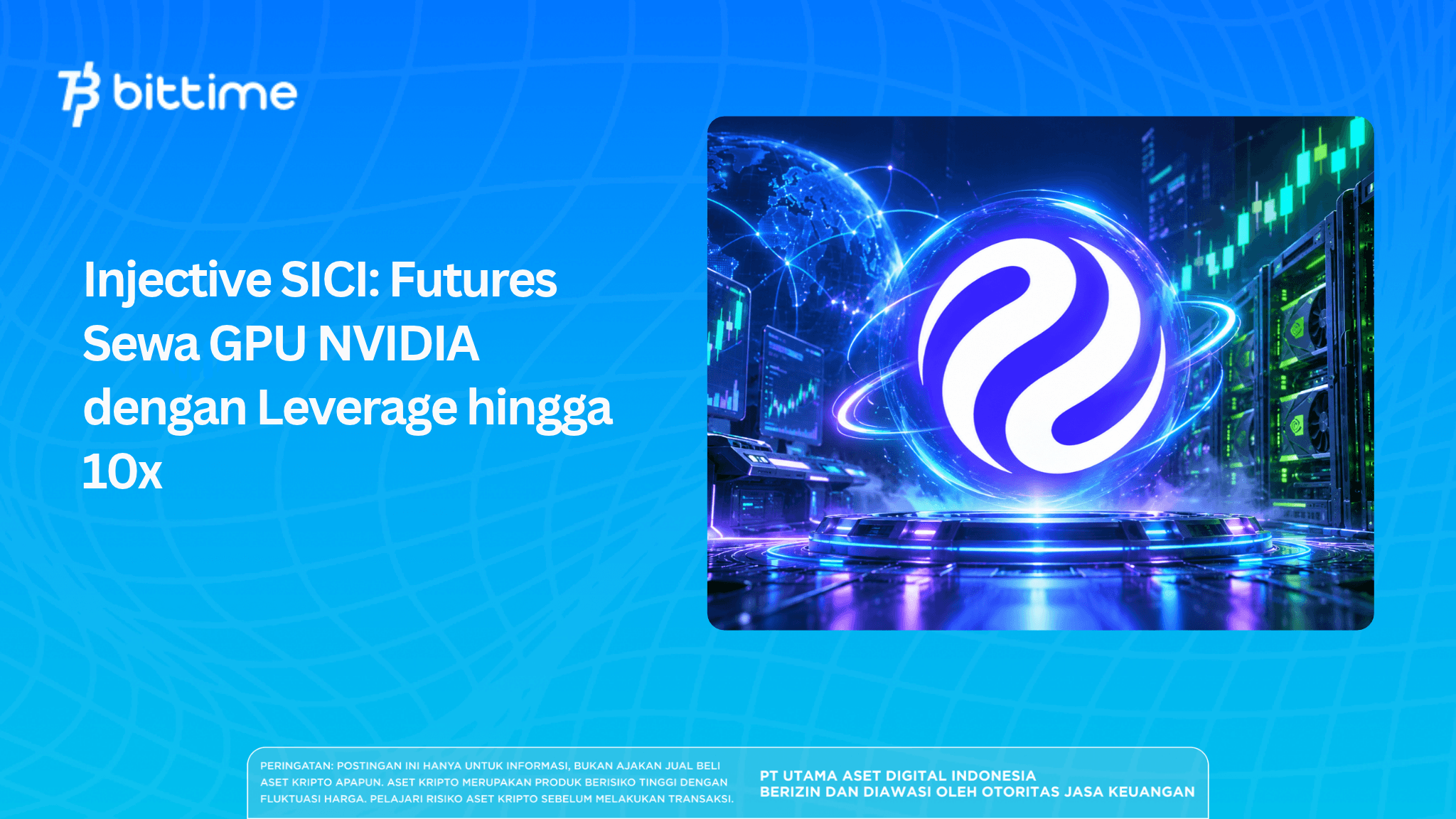
Injective SICI launched on October 26, 2026, opening trading for contracts that track a rental-price index for five NVIDIA GPUs. Through perpetual futures with up to 10x leverage, traders can take positions when they expect AI computing costs to rise or fall.
For AI companies, changes in rental rates can affect operating costs. SICI offers a way to trade these changes, but how does it work, and can it help reduce business risk? Here is an explanation of the index, examples of its use, and factors to check before opening a position.
Key Takeaways
- SICI combines rental-price movements for five NVIDIA GPUs into a single index.
- Perpetual contracts allow long and short positions, with USDC used as margin and leverage of up to 10x.
- Its usefulness depends on market conditions and users’ needs, while leverage magnifies potential losses.
What Is Injective SICI?
SICI stands for Super Intelligence Compute Index, an index that measures changes in GPU rental costs. The index serves as the reference for a perpetual market on the Injective network.
To understand the product, distinguish between two things: the index tracks changes in the reference price, while the perpetual contract is the instrument being traded. Opening a position means taking on risk from changes in the contract price; it does not provide ownership of hardware or GPU usage hours.
Perpetual contracts do not have an expiration date like certain dated futures contracts. However, maintaining a position still requires sufficient margin and may incur costs while the trade remains open.
SICI juga berbeda dari INJ. Analyzing computing rental costs and analyzing the network token require different data, so a positive outlook for one does not automatically apply to the other.
Read also: CoinDCX Hack: 15.99 Million USDT Lost, Initially Called a False Alarm
Which GPUs Are Included in the SICI Index?
SICI includes five devices with fixed weightings:
- NVIDIA H100 SXM 80GB: 40%.
- NVIDIA B200: 25%.
- NVIDIA H200: 15%.
- NVIDIA A100 SXM 80GB: 10%.
- NVIDIA GeForce RTX 4090: 10%.
LO:TECH compiles reference prices, normalizes each component, and then combines them according to these weightings. The published value uses a seven-day rolling average and is updated hourly.
SICI is expressed in index points. Therefore, its value cannot be read directly as the dollar amount required to rent a GPU for one hour.
This distinction matters when reviewing offers from computing providers. A discount on one device from one service is not enough to explain the index’s overall movement.
Hourly updates do not mean that every rate change is immediately reflected in full. The rolling average incorporates previous observations, so the measurement time should be considered when comparing data.
How Do GPU Futures With 10x Leverage Work?
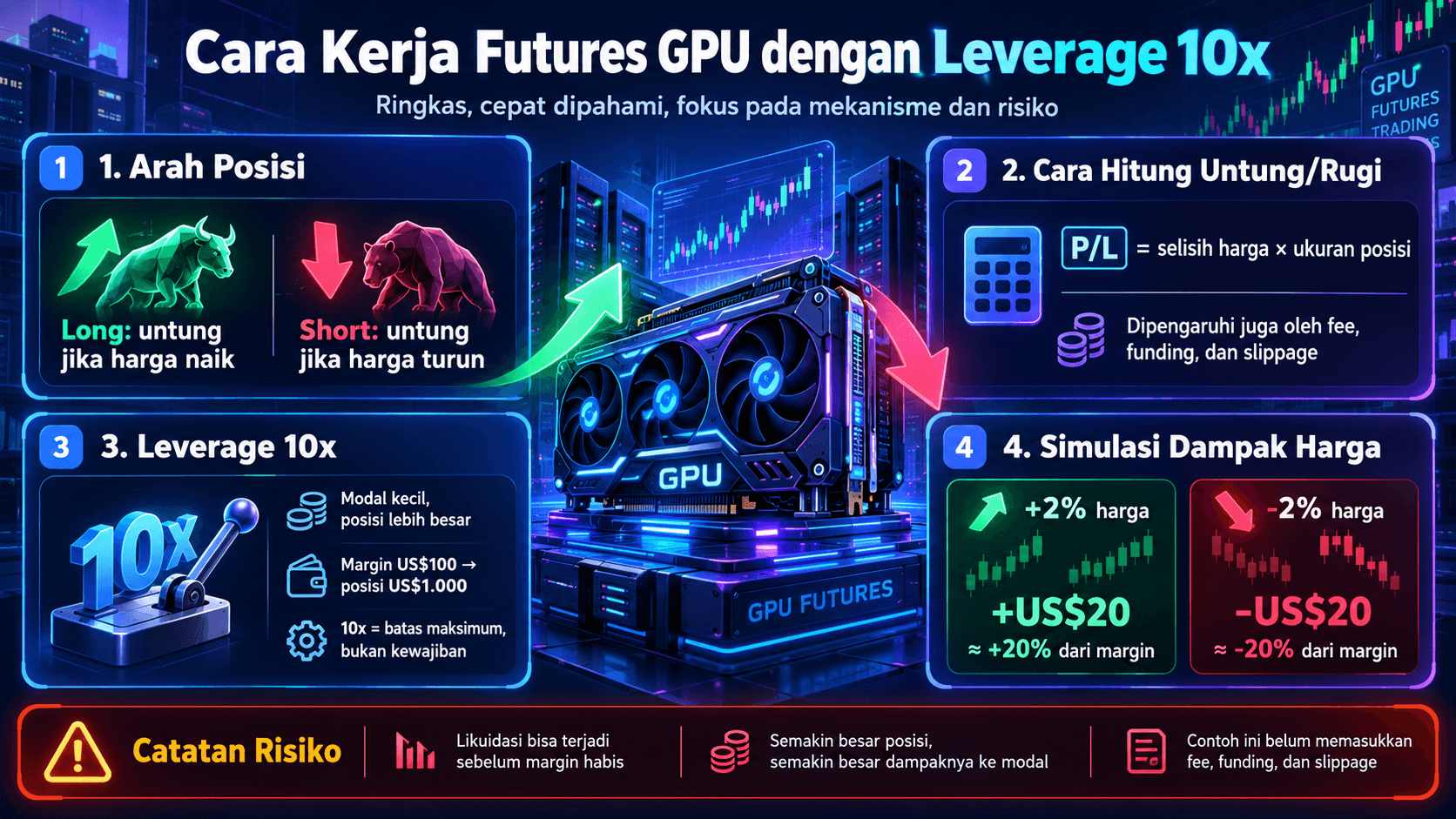
Traders can open a long position when they expect the contract price to rise. Conversely, a short position is used when they expect the price to fall.
Profit or loss depends on the difference between entry and exit prices, position size, and trading costs. Correctly predicting the direction does not necessarily result in a net profit if the cost of maintaining the position is too high.
Leverage allows traders to open positions larger than the margin they provide. “Up to 10x” indicates the maximum leverage offered, not a level every trader should use.
Example of How Leverage Affects Capital
Suppose you provide US$100 in margin to open a long position worth US$1,000. In a simplified example, a 2% increase in the contract price produces a gross profit of US$20.
Conversely, a 2% decline results in a gross loss of US$20. This means that the price movement is already equivalent to 20% of the initial margin.
This example excludes transaction fees, funding, and slippage. It illustrates how position size determines the impact of price movements on capital.
Liquidation does not necessarily wait until the entire margin has been lost. A position may be closed earlier, depending on maintenance-margin requirements and the market’s valuation method.
Read also: Why JPMorgan Blocked AI Agents From Customer Accounts
Why Can GPU Rental Prices Change?
To assess opportunities in NVIDIA GPU futures, you need to understand the GPU rental market. AI’s popularity alone is not enough to determine the direction of rental rates.
Demand and Available Capacity
When renter demand increases while capacity remains limited, rates may come under upward pressure. However, additional hardware from providers can ease that pressure.
Therefore, reports of increased AI usage should be weighed against supply growth. Rising demand does not always lead to higher prices if capacity grows faster.
Hardware Choice and Workload Efficiency
Renters typically consider a device’s ability to complete a task, not just its hourly cost. A more expensive GPU may still be attractive if it completes the workload much faster.
Changing requirements can also shift hardware preferences. For example, a workload that requires more memory cannot necessarily be moved to another GPU simply because a cheaper option is available.
Competition and Service Terms
Prices can vary based on rental duration, location, availability, or service guarantees. Low-rate offers should be assessed alongside their terms to ensure a fair comparison.
For traders, the implication is straightforward: use multiple indicators to develop a market view. A single provider promotion or AI project announcement is not enough to justify a position.
Read also: LayerZero Zero Mainnet Set to Launch on November 30: Meet lzATLAS
Who Can Use SICI?
Traders can use the contract to take positions based on their expectations for changes in computing costs. For businesses, a potentially more relevant use is reducing the impact of changes in costs or revenue.
Consider a company that must renew its GPU rental contract in a few months. If it is concerned that rates may rise, it could evaluate a long position as part of a hedging strategy.
Conversely, a capacity provider concerned about falling rates could evaluate a short position. Profits from the contract could potentially offset some of the decline in rental revenue.
These examples illustrate possible uses; they do not guarantee that contract results will offset changes in business costs. Position size, trade timing, and how closely the reference asset matches the exposure will still determine the outcome.
Why Is Hedging Not Always Suitable?
A company’s bill may relate to only one type of GPU under a specific contract and rate. The index, meanwhile, combines several components that may move differently.
This mismatch is called basis risk. A company may face a higher bill even when the index moves relatively little.
Cash-flow needs must also be considered. A hedge may require additional margin before its benefits are reflected in operating costs, so the strategy still requires careful planning.
Read also: MSCI Considers Downgrading Indonesia: What Could It Mean for the JCI?
Four Things to Check Before Trading SICI
1. Position Size and Loss Limits
First, determine how much money you can afford to lose if your prediction is wrong. Then assess whether the position size fits within that limit.
Starting with a loss limit helps prevent decisions driven solely by the pursuit of maximum leverage. Also check the liquidation price and the conditions that could change it.
2. Market Depth
Check order-book depth and the bid-ask spread before trading. When available orders are thin, the execution price may differ significantly from the price shown on screen.
This also applies when exiting a position. A trading plan should account for the possibility of rapid market moves or declining liquidity.
3. Costs of Maintaining a Position
Check transaction fees and the funding mechanism for the relevant contract. Depending on market conditions and contract rules, funding may be a payment or a receipt.
These costs should be considered in relation to how long the position will remain open. A strategy that appears profitable before fees may produce a different result once all expenses are included.
4. Reference Data and Access Security
Learn how the platform values positions and handles data disruptions. This information helps explain why the index price, trading price, and liquidation valuation price may differ.
When accessing the application, check the website address and wallet permission requests. Account security remains important even when your market analysis is thorough.
Read also: Samsung Solana: USDC Coming Soon to 82 Million Galaxy Devices
What Does This Mean for Injective and INJ?
Analytically, a new market can expand network usage if it attracts sustained activity. To assess its progress, monitor liquidity, open interest, and application integrations after launch.
Trading volume alone does not reveal the market’s overall quality. High activity should be considered alongside execution costs and users’ ability to open or close positions.
Its relationship with the price of INJ also requires separate analysis. A product launch alone is not enough to conclude that token demand or its price will increase.
Readers who want to learn more about crypto services can sign up for Bittime and explore the available products before trading.
Conclusion
Injective SICI introduces a derivatives market benchmarked to computing costs. Its practical value lies in helping users understand the traded price and choose a position size suited to their needs.
Before making a decision, check the contract specifications, fees, and actual liquidity. Use this understanding as a starting point when exploring crypto products, including services available on Bittime.

Bittime is a licensed Digital Financial Asset Trader (PAKD) platform regulated and supervised by the Financial Services Authority (OJK) — where you can buy Bitcoin in Indonesia and hundreds of other crypto assets starting from IDR 10,000. Registration is fast and secure, and you can get started today.
Track the conversion rate for USDT to IDR and monitor the real-time price movements of your favorite crypto assets. It is all available in one crypto investment app that you can download for free from the Play Store.
Ready to get started? Sign up for Bittime now and put your investment strategy into action with a platform trusted by millions of users in Indonesia.
FAQ
What is Injective SICI?
SICI is the Super Intelligence Compute Index, which serves as the reference for a perpetual contract on Injective. The product is linked to changes in GPU rental costs.
Is SICI a new token?
In its launch announcement, SICI was introduced as an index along with a perpetual market that tracks it. Do not confuse it with a token that can be bought and held through spot trading.
Is trading SICI the same as buying NVIDIA stock?
No. SICI contracts do not provide ownership of NVIDIA shares. The company’s stock price and hardware rental rates can move differently.
Does 10x leverage mean ten times the profit?
There is no guarantee of profit. Leverage magnifies the effect of price movements on margin, so losses can also increase rapidly.
Can AI companies use SICI to hedge?
The contract can be assessed for this purpose if its movements align with the costs being hedged. Companies still need to account for index mismatch, margin requirements, and trading costs.
Disclaimer: The views expressed belong exclusively to the author and do not reflect the views of this platform. This platform and its affiliates disclaim any responsibility for the accuracy or suitability of the information provided. It is for informational purposes only and not intended as financial or investment advice.
.png)