LayerZero Zero Mainnet Releases November 30th, Meet lzATLAS
2026-10-21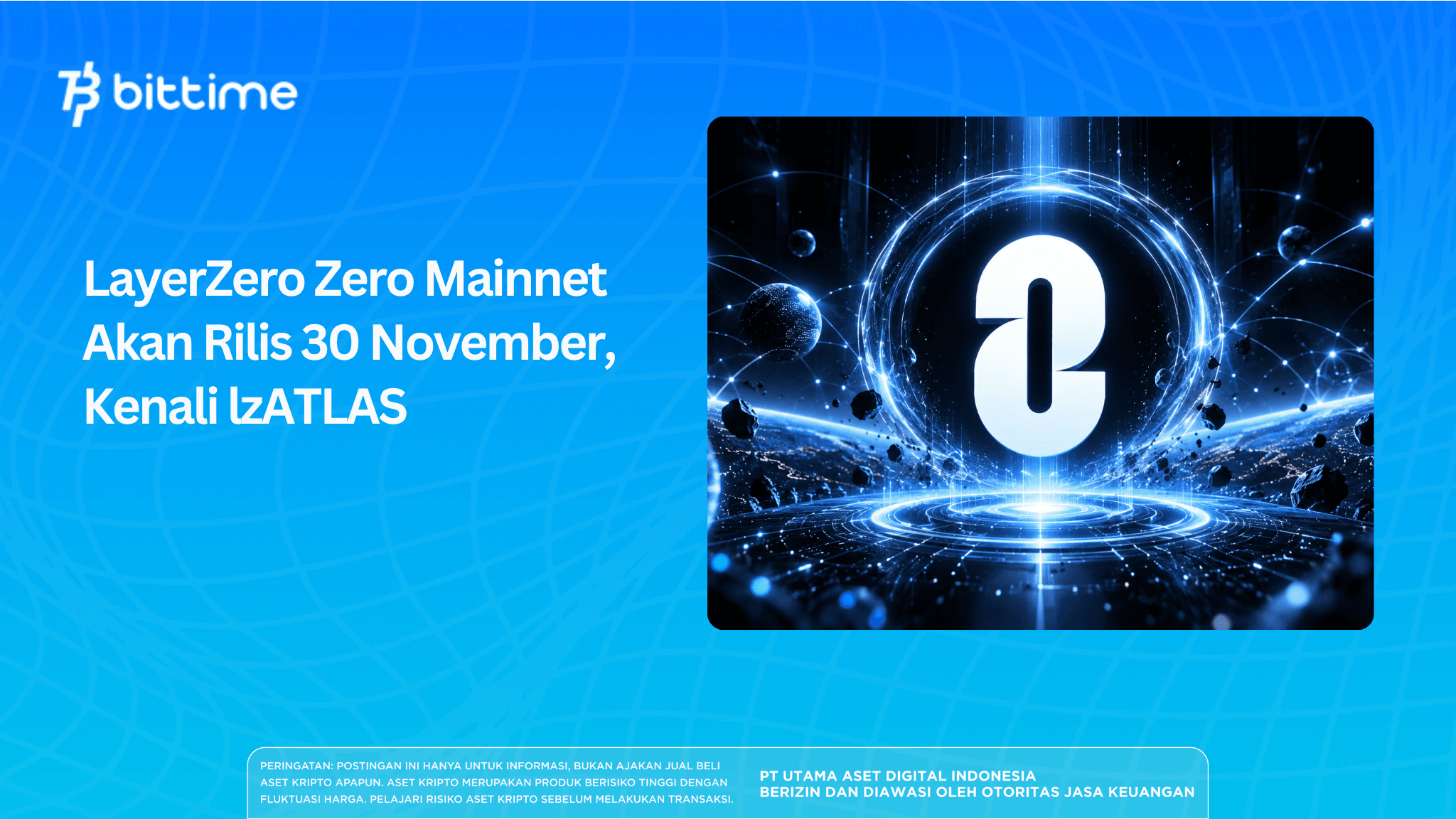
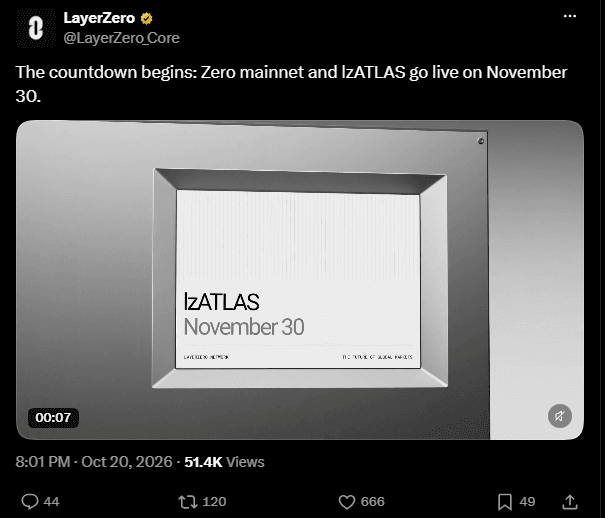
LayerZero Zero Mainnet is scheduled to launch on November 30, 2026, alongside lzATLAS, the first application set to run on the network. The launch expands the LayerZero ecosystem through interconnected blockchains and trading infrastructure.
For users and ZRO holders, it is important to understand each product's function and how its activity relates to the token. This article covers the launch schedule, Zero technology, lzATLAS's role, and indicators that can be used to assess its progress.
Key Takeaways
- Zero Mainnet and lzATLAS are scheduled to launch on November 30, 2026, initially focusing on Open ATLAS.
- Zero is the blockchain, while lzATLAS provides the trading engine for platforms that integrate it.
- ZRO has functions in the network's design and fee mechanism, but its economic impact will depend on actual usage.
LayerZero Zero Mainnet Launch Schedule: What Will Be Released?
An announcement reported on October 20, 2026, said Zero Mainnet and lzATLAS would launch together. The initial phase focuses on open markets, while institutional use is still being tested.
A mainnet is the primary network for operational activity, unlike a testnet, which is used for testing. However, launching a network does not automatically mean that every application and feature will become available at the same time.
As of October 21, 2026, Zero Mainnet remains scheduled for launch. The launch time and time zone have not been confirmed in the materials reviewed, so its access time in Western Indonesia Time (WIB) cannot yet be determined.
Users should wait for operational instructions before adding the network, connecting a wallet, or transferring assets. Those instructions should explain which services are available and the requirements for using them.
What Is LayerZero's Zero Blockchain?
Zero is a blockchain developed to support financial infrastructure. Its design separates transaction execution from the process of verifying the results using cryptographic proofs.
It differs from LayerZero's interoperability technology, which helps connect assets and applications across blockchains. Zero provides the environment in which applications operate, while interoperability supports connections between networks.
This distinction helps avoid the misconception that LayerZero only begins operating after Zero launches. The November schedule refers to the Zero blockchain product and lzATLAS.
Getting to Know Atomicity Zones
Zero uses parallel execution environments called Atomicity Zones. Each zone performs application workloads while remaining within a single network security protocol.
Under this design, validators check zero-knowledge (ZK) proofs without having to repeat the entire transaction execution. The approach aims to increase capacity while keeping verification workloads light.
The product page states that the system can scale to up to 2 million transactions per second per zone. This is a claim about technological capacity, not the number of transactions already processed by the public mainnet.
Once the network is live, its capacity should be compared with operational results. Transaction success rates, network stability, and sustained usage will provide a more complete picture.
Read also: Is MANTA Still Worth Buying? An Analysis of Manta Network's Prospects
What Is lzATLAS and How Does It Work?
lzATLAS, referred to as ATLAS in the product materials, is exchange infrastructure that does not provide its own consumer application. Other platforms build user interfaces and services on top of this trading engine.
This means users can interact through platforms that integrate ATLAS rather than having to use a single application called ATLAS. The user experience and access terms depend on each service.
ATLAS's Four Main Functions
ATLAS combines the following processes:
- Matching: pairs buy and sell orders.
- Clearing: calculates the parties' obligations after a trade.
- Settlement: completes the transfer of assets or obligations.
- Risk management: applies rules to control trading exposure.
Combining these functions allows developers to use shared infrastructure. They remain responsible for building products and user experiences suited to their target markets.
Performance Targets Are Not the Entire User Experience
The product materials list ATLAS capacity of 200,000 transactions per second at mainnet launch and a median latency of 965 microseconds for perpetual trading. These figures come from developer publications and were not independently tested for this article.
The trading engine's speed also does not represent the entire time experienced by users. Internet connectivity, interface processing, order transmission, and transaction settlement should be assessed separately.
Read also: Samsung Solana: USDC Coming Soon to 82 Million Galaxy Devices
Open ATLAS and the Scope of the Initial Launch
Open ATLAS is planned as the initial configuration, with more than a dozen trading platforms expected to be available at launch. This figure describes planned integrations, so the status of each platform should still be checked when the service begins operating.
To assess ecosystem progress accurately, distinguish between three stages:
- Announcement: a platform or feature is included in the plan.
- Testing: the integration is checked before operational use.
- Production: the service is active within its stated scope and terms.
Institutional testing has reportedly included potential use cases involving U.S. stocks and fixed-income instruments. This does not prove that all those products will be available to general users on the first day.
Before choosing a service, check supported instruments, access regions, fees, and asset custody mechanisms. Do not assume that every ATLAS-based platform offers the same features.
Read also: What Is Aero? Understanding the Unified Liquidity Layer for Ethereum
What Is the Relationship Between Zero Mainnet and ZRO?
Zero documentation describes ZRO as the native token, with functions related to network security through delegated proof of stake, gas payments, and governance. ATLAS trading platforms can also stake ZRO to qualify for higher fee discounts.
These functions connect the token to network activity and trading services. However, the existence of usage mechanisms does not indicate how much demand will actually develop.
How to Interpret the Buyback and Burn Mechanism
The published model allocates 75% of trading fees remaining after the platform or venue's share to buying and burning ZRO. This percentage is not calculated from total transaction value or all gross fees.
For illustration, if US$100 in fees remains after the venue's share, a 75% allocation equals US$75. This calculation explains the proportion only; it is not an estimate of ATLAS revenue.
Buyback value will depend on the fees actually generated. Therefore, transaction volume and the fee-sharing structure must be known before estimating potential token purchases.
Will the Launch Increase ZRO's Price?
The launch schedule may attract market attention, but it does not guarantee a price increase. Investor reactions are also influenced by crypto market conditions, token supply, prior expectations, and implementation results.
More useful indicators after launch include trading activity, fee revenue, and actual buyback and burn execution. These data can help assess whether product usage produces the expected economic impact.
Read also: SEC Proposes New Crypto Custody Rules: Key Points Explained
Benefits and Risks for Users
For developers, shared infrastructure could reduce the need to build an entire trading system from scratch. Benefits for users should be reflected in execution quality, fees, liquidity availability, and ease of use.
On the other hand, integration increases reliance on shared components. Disruptions to the trading engine or network may affect connected services.
The difference between testing conditions and real-world use also matters. Activity spikes, transaction variations, and application issues can produce an experience that differs from initial performance figures.
Users can assess service quality by checking completed transactions and published incident reports. Avoid judging security solely by the number of partners or transactions per second.
Read also: DogeOS Testnet Is Now Open: What Does It Do for Dogecoin?
5 Things to Monitor Ahead of Zero Mainnet
- Schedule updates. Confirm that the launch date, time, and stages match the latest announcement.
- Access instructions. Use official website addresses and documentation before connecting a wallet.
- Active platforms. Check which services are already available, not just the names on an integration list.
- Operational performance. Monitor transaction success, disruptions, and execution quality once the network is running.
- Actual ZRO usage. Look for verifiable data on fees and token activity.
Record the date of each check so outdated information is not mistaken for current conditions. If access instructions are not yet available, wait for an update rather than following links from unclear sources.
If you want to use a crypto trading service, you can sign up for Bittime and check the available assets and features. This process is separate from accessing Zero Mainnet or ATLAS-based platforms.
Conclusion
LayerZero Zero Mainnet is scheduled to launch alongside lzATLAS on November 30, 2026. The launch brings together a blockchain and trading infrastructure with usage and fee mechanisms linked to ZRO.
The next step is to check which services are actually active and compare their results with the initial plans. If using Bittime, review asset availability and service terms before trading.
Bittime is a licensed Digital Financial Asset Trader (PAKD) platform supervised by Indonesia's Financial Services Authority (OJK)— where you can buy Bitcoin in Indonesia and hundreds of other crypto assets starting from IDR 10,000. Registration is quick and secure, and you can get started today.
Track the USDT to IDR conversion and real-time price movements for your favorite crypto assets. Everything is available in one crypto investment app that can be downloaded for free from the Play Store.
Ready to get started? Sign up for Bittime now and execute your investment strategy on a platform trusted by millions of users in Indonesia.
FAQ
When will LayerZero Zero Mainnet launch?
Zero Mainnet is scheduled to launch on November 30, 2026, alongside lzATLAS. The launch time and time zone have not been confirmed in the materials reviewed.
What is the Zero blockchain?
Zero is a blockchain developed by LayerZero that separates transaction execution from verification. Its design uses parallel environments and ZK proofs to support scaling.
What is lzATLAS used for?
lzATLAS provides a trading engine covering matching, clearing, settlement, and risk management. Other platforms can build user-facing services on top of this infrastructure.
Does lzATLAS have its own trading app?
The product materials describe ATLAS as infrastructure without its own consumer application. User access depends on platforms that integrate its technology.
How is Zero Mainnet related to ZRO?
ZRO has roles in Zero's security, gas, and governance design. The ATLAS model also includes staking benefits and buybacks and burns, with the economic outcome depending on actual activity.
Disclaimer: The views expressed belong exclusively to the author and do not reflect the views of this platform. This platform and its affiliates disclaim any responsibility for the accuracy or suitability of the information provided. It is for informational purposes only and not intended as financial or investment advice.
.png)