JPMorgan's Reason for Blocking AI Agents from Customer Accounts
2026-10-21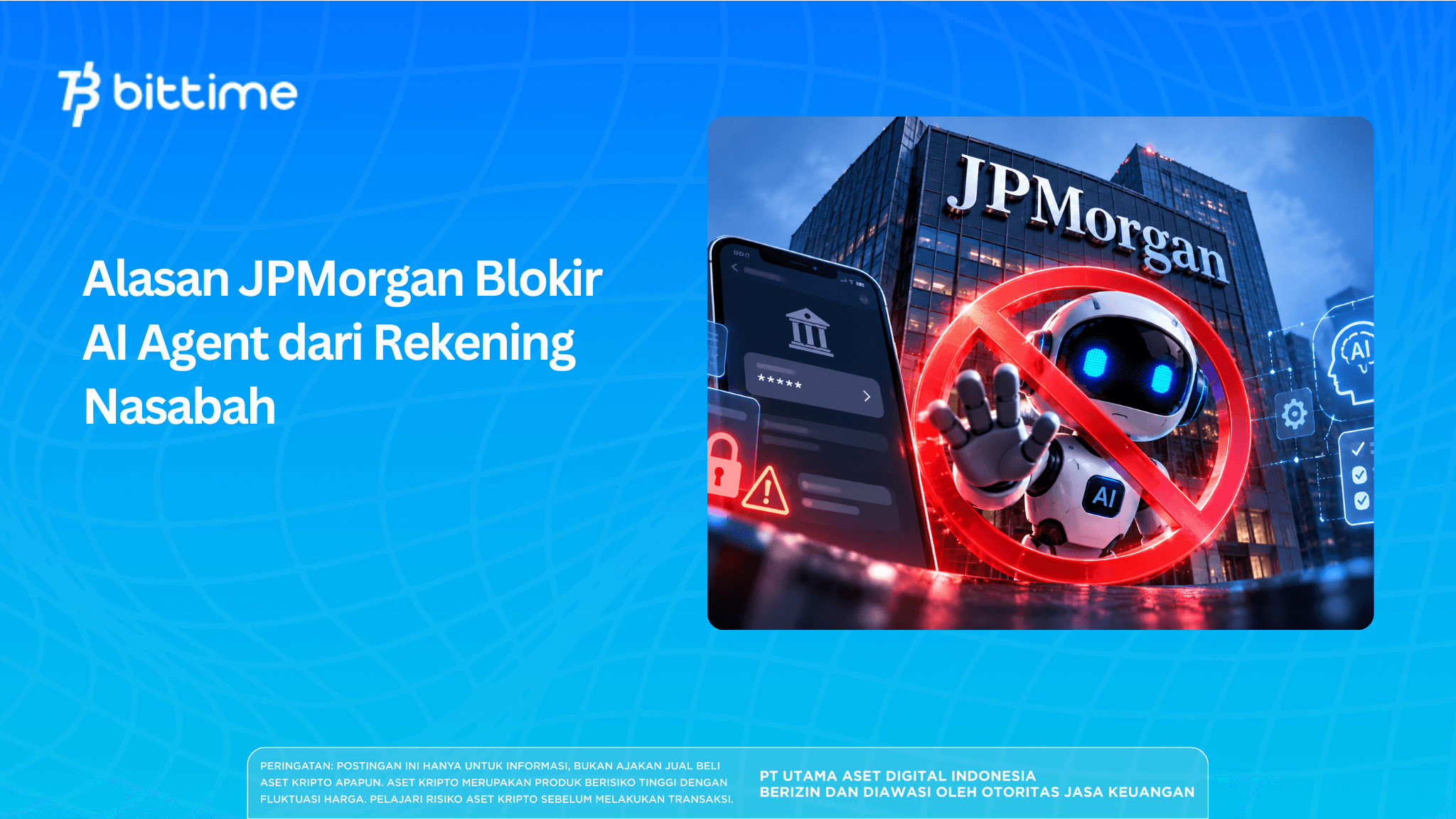
The reasons JPMorgan blocks AI agents center on security risks and customer protection when external agents access accounts or act on users' behalf. The reported restrictions cover third parties that obtain customers' banking credentials and then use them to log in.
The issue is not simply whether AI can help manage money, but how much authority it is given. To understand this policy, you need to distinguish between access to information, permission to transact, and connection methods approved by the bank.
Key Takeaways
- JPMorgan restricts direct access by external AI agents, with a focus on security and control over accounts.
- Sharing data through an approved connection is different from handing login credentials to a third party.
- Customers need to check the scope of permissions, how to revoke access, and liability terms before using financial AI services.
Why JPMorgan Blocks AI Agents from Customer Accounts
During the discussion of third-quarter results on October 13, 2026, Jamie Dimon expressed concerns about external agents that could pose risks to the bank and its customers. He also highlighted the possibility of numerous agents acting in an uncontrolled manner and questions of liability for their use.
This context matters because account access has different consequences from using AI to summarize an article. If a system has the authority to take action, a misinterpretation could affect users' data or money.
However, explaining a risk does not prove that a specific incident has occurred. Access restrictions should also not automatically be interpreted as reports of data breaches or customer losses caused by AI agents.
In practical terms, every integration needs to answer who accesses the account, what actions are permitted, and how its activity can be stopped. These three questions help distinguish limited automated assistance from overly broad access.
Read also: What Is JPMON and How to Buy JPMON on Bittime
What Kind of Access Is Restricted?
Logging in with customer credentials
The reported restrictions target third-party services that obtain customers' login details to access accounts on their behalf. JPMorgan continues to distinguish this approach from authorized data sharing through open banking providers.
Credentials include the information used to prove your identity when logging into an account. Giving them to another application can make access boundaries harder to understand than granting permission for specific functions.
Reading data and making transactions
Access to balance information is not the same as permission to move funds. An application may need transaction history to create a spending summary without needing payment authority.
Users should therefore check permissions separately. A statement that an application is “connected to an account” does not explain whether it only reads information, prepares instructions, or can execute transactions.
The scope of restrictions also needs to be understood in terms of the product and access method. Do not conclude that all third-party financial applications stop working simply because a bank restricts external agents.

The Difference Between Bank Chatbots and Autonomous AI Agents
Chatbots are generally used through conversation, for example to answer questions about services. AI agents can be designed to plan steps and use other software to complete tasks.
However, a product name is not enough to determine its capabilities. A chatbot may have transaction functions, while a particular AI agent may only have permission to read data.
A more useful distinction for users is the system's actual authority. Check whether it only provides advice, prepares actions for approval, or can execute actions without further consent.
For example, AI that summarizes spending only needs to read relevant data. AI that pays bills requires additional settings for recipients, amounts, payment timing, and confirmation.
These examples illustrate possible uses; they do not describe features automatically available at JPMorgan. Each service needs to be assessed based on its documentation and the permissions actually granted.
Read also: JPMorgan Increases Bitcoin ETF Holdings as Institutional Investors Return
Risks of AI Agents Accessing Accounts
1. Overly broad instructions
An instruction such as “optimize my money” does not specify a destination account, amount limits, or funds needed for regular payments. If that instruction is translated into action, the user may get a result that differs from their original intent.
In a hypothetical scenario, funds moved in pursuit of higher returns could reduce the balance set aside for bills. This example illustrates the importance of task boundaries, rather than proving that such an incident has happened to JPMorgan customers.
2. Permissions that exceed what is needed
An expense-tracking application does not always need access to every account. The more information you share, the more data you entrust to another party's management.
The practical question is whether each permission is necessary for the function you use. If the reason for an access request is unclear, ask for an explanation before proceeding.
3. Difficulty tracing actions
When multiple services are connected, users need to know who sent an instruction and which system executed it. Activity history becomes important for checking the differences between instructions, approvals, and results.
Without adequate records, resolving problems can become more complicated. Users also find it harder to confirm whether access has been fully terminated.
4. Unclear liability
Agreeing to use an application does not automatically establish who bears every type of loss. The terms of service, form of authorization, applicable law, and facts of the incident still need to be examined.
Chase's digital services agreement contains provisions on the consequences of giving others access to credentials. These terms need to be read in the context of the service and should not be generalized into a legal determination for every AI transaction case.
Read also: JPMorgan's $500 Million Investment Sends Numeraire Soaring: How High Could NMR Go?
Open Banking vs. Sharing Bank Passwords: What Is the Difference?
In an approved data-sharing connection, a bank can provide a mechanism for customers to choose which information to share with an application. This differs from giving a third party your password to operate the account as if they were its owner.
An example of an official Chase integration uses an API with token-based security. Customers authenticate within the bank's environment, while the application receives permitted data without having to store their banking username and password.
An API enables communication between systems, while an access token is used in the technical authorization process. A token in this context is not a traded crypto asset.
Nevertheless, using an API does not automatically guarantee that every connection is secure or approved. The provider's identity, data types, purpose of use, and access duration still need to be checked.
Access controls users can review
On September 25, 2026, Chase announced the phased rollout of its Data Security Center. Its functions include reviewing connected applications, managing permissions, access duration, and shared accounts, and disconnecting connections where available.
These controls show that restrictions on external agents coexist with the management of third-party connections. The focus is on how access is granted and controlled.
Users should review permissions when their needs change. An application that is no longer used does not need to retain access simply because it was once connected.
Read also: What Is J.P. Morgan Chase and What Is Its Role in Modern Banking?
What Does This Mean for Customers and the Banking Industry?
The convenience of automation has limits
Customers who want to delegate financial tasks to external agents may encounter integration limits. Some processes may still require the bank's application or direct approval.
This reduces convenience for some automated workflows. On the other hand, restrictions can help maintain control over actions with financial consequences.
For application providers, integrations need to clarify agent identity, permissions, activity logging, and termination mechanisms. AI's ability to understand instructions alone does not address all of these operational requirements.
Competition for deposits is also part of the discussion
Industry analysis highlights the possibility that AI agents could make it easier to move funds to accounts offering higher returns. This change could affect how banks compete to retain deposits.
However, this potential business impact must be distinguished from the security reasons stated by the company. Without additional evidence, the article cannot establish protecting bank profits as a proven motive for the policy.
Controlled automation remains a direction for development
Other reporting discusses a business-to-business payment trial using identified agents to execute payments already approved by buyers. This case differs from unrestricted access to consumer accounts, and details about its scale and allocation of liability remain limited.
The lesson is the importance of limiting tasks and keeping approvals visible. The trial does not prove that JPMorgan has reopened access to external agents.
Read also: JPMorgan Chase (JPMON) Price Prediction 2026–2030
5 Things to Check Before Giving AI Financial Access
- Connection method. Make sure the process is recognized by the bank, rather than merely claimed to be compatible by the application.
- Scope of permissions. Distinguish between reading balances, viewing transactions, and executing payments.
- Action limits. Check amounts, recipients, and approval requirements if the service supports transactions.
- How to terminate access. Know where to find the settings to revoke the connection and check its status.
- Data terms and complaint procedures. Review information storage, support contacts, and procedures for unrecognized activity.
Do not paste passwords, PINs, or OTP codes into an AI conversation to request help. For security settings, use the bank's application or website that you already recognize.
For Indonesian readers, JPMorgan's policy does not automatically apply to local banks. Check each provider's terms because integration methods and service requirements may differ.
If you also want to use digital asset services, you can sign up for Bittime after understanding its terms and account security measures. Registration is a separate service from JPMorgan account access or AI agent integrations.
Conclusion
JPMorgan's reasons for blocking AI agents relate to access security, control over actions, and responsibility for account use. These restrictions should be understood in terms of connection methods, rather than as a ban on all uses of AI.
A practical step for customers is to review connected applications and limit permissions to what they need. Apply the same checks before signing up for or connecting other digital financial services.

Bittime is a Digital Financial Asset Trader (PAKD) platform licensed and supervised by the Financial Services Authority (OJK), where you can buy Bitcoin in Indonesia and hundreds of other cryptocurrencies starting from IDR 10,000. Registration is quick and secure, and you can get started today.
Track the USDT to IDR conversion rate and your favorite cryptocurrencies' price movements in real time. Everything is available in one crypto investment app that you can download for free from the Play Store.
Ready to get started? Sign up for Bittime now and put your investment strategy into action on a platform trusted by millions of users in Indonesia.
FAQ
Why does JPMorgan block external AI agents?
JPMorgan has expressed concerns about the risks that external agent access poses to customers and the bank. The reported restrictions cover third parties using customer credentials to log in and act on users' behalf.
Does JPMorgan ban all uses of AI?
That conclusion cannot accurately be drawn from this account access policy. The discussion focuses on external agents and how they interact with the bank's systems, rather than all uses of AI.
What is the difference between open banking and sharing bank passwords?
Approved data-sharing connections can provide limited access through the bank's authorization mechanisms. Sharing a password gives another party login information and does not itself limit their actions.
Is customer consent enough to give AI access to an account?
Customer consent must still comply with the access methods and terms applied by the bank. Permission to read data also does not automatically grant permission to make transactions.
Who is responsible if AI makes an incorrect transaction?
The answer depends on the form of authorization, the terms of service, applicable law, and the facts of the incident. Keep approval and transaction records, then contact the bank through official channels if you find unrecognized activity.
Disclaimer: The views expressed belong exclusively to the author and do not reflect the views of this platform. This platform and its affiliates disclaim any responsibility for the accuracy or suitability of the information provided. It is for informational purposes only and not intended as financial or investment advice.

.png)