June 2026 Inflation at 3.34%, Exceeding Estimates: What Impact Will This Have on Society?
2026-07-02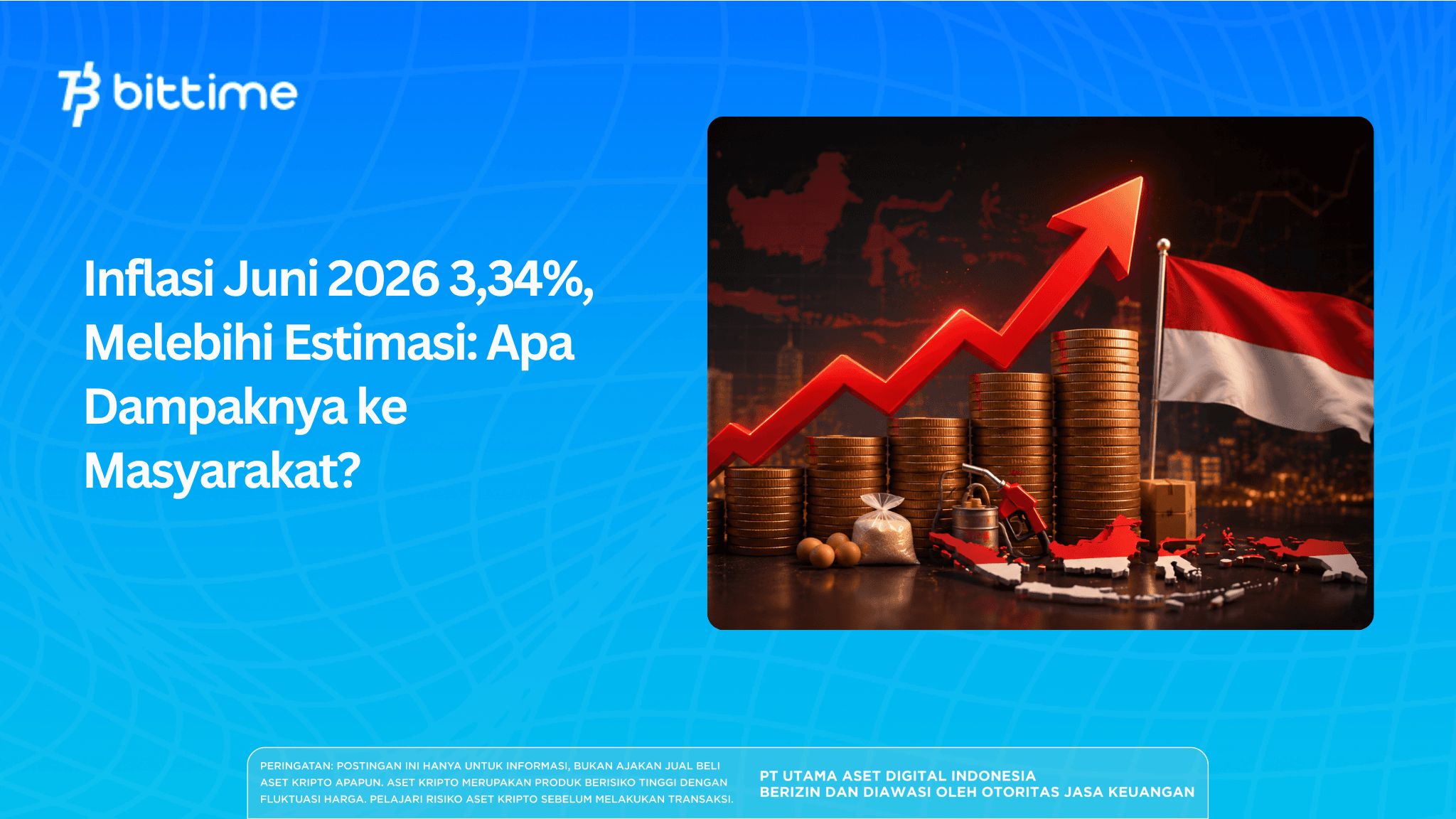
Inflation in June 2026 became a public concern after the Central Statistics Agency or BPS recorded that Indonesia's annual inflation rose to3,34% year-on-yearThis figure is higher than the May 2026 inflation rate of 3.08% and exceeds the consensus estimate of June inflation at around 3.2%.
Key Takeaways
- Inflation in June 2026 reached 3.34% annually, with monthly inflation of 0.44% and calendar year inflation of 1.79% according to BPS.
- The main causes of inflation in June came from increases in the prices of food, gasoline, airfares, lubricants, and gold jewelry.
- The impact on society is felt through transportation costs, grocery shopping, decreased purchasing power, and the potential postponement of non-primary consumption.
Register at Bittime now and start trading crypto with a fast, safe, and easy process in the app.
What is Inflation in June 2026 and Why is it in the Spotlight?
Inflation is the general increase in the prices of goods and services over a period of time. When inflation rises, the same amount of money buys fewer goods than before. This is why inflation figures are not only important to economists but also closely related to people's daily lives.
In June 2026,BPS recorded year-on-year inflation of3,34%with the Consumer Price Index or CPI of111,89On a monthly basis, June inflation was recorded0,44% month-to-month, while the calendar year inflation reached1,79%.
This figure has drawn attention because it is approaching the upper limit of Bank Indonesia's inflation target. Reuters reported that inflation in June 2026 moved closer to the upper limit of BI's target, which is in the range of 1.5% to 3.5%.
In other words, Indonesian inflation cannot yet be called out of control. However, the rise to 3.34% clearly signals that price pressures are starting to increase.
Read also: JCI Today: Analysts Predict Mixed Movement Amid Global Sentiment
The Cause of Inflation in June 2026: Not Just Food
Many people immediately associate inflation with the price of basic necessities. While this is not entirely true, inflation in June 2026 was not solely driven by food.
Statistics Indonesia (BPS) data cited by IDNFinancials shows that annual inflationary pressures primarily stemmed from three major categories: food, beverages, and tobacco; personal care and other services; and transportation.
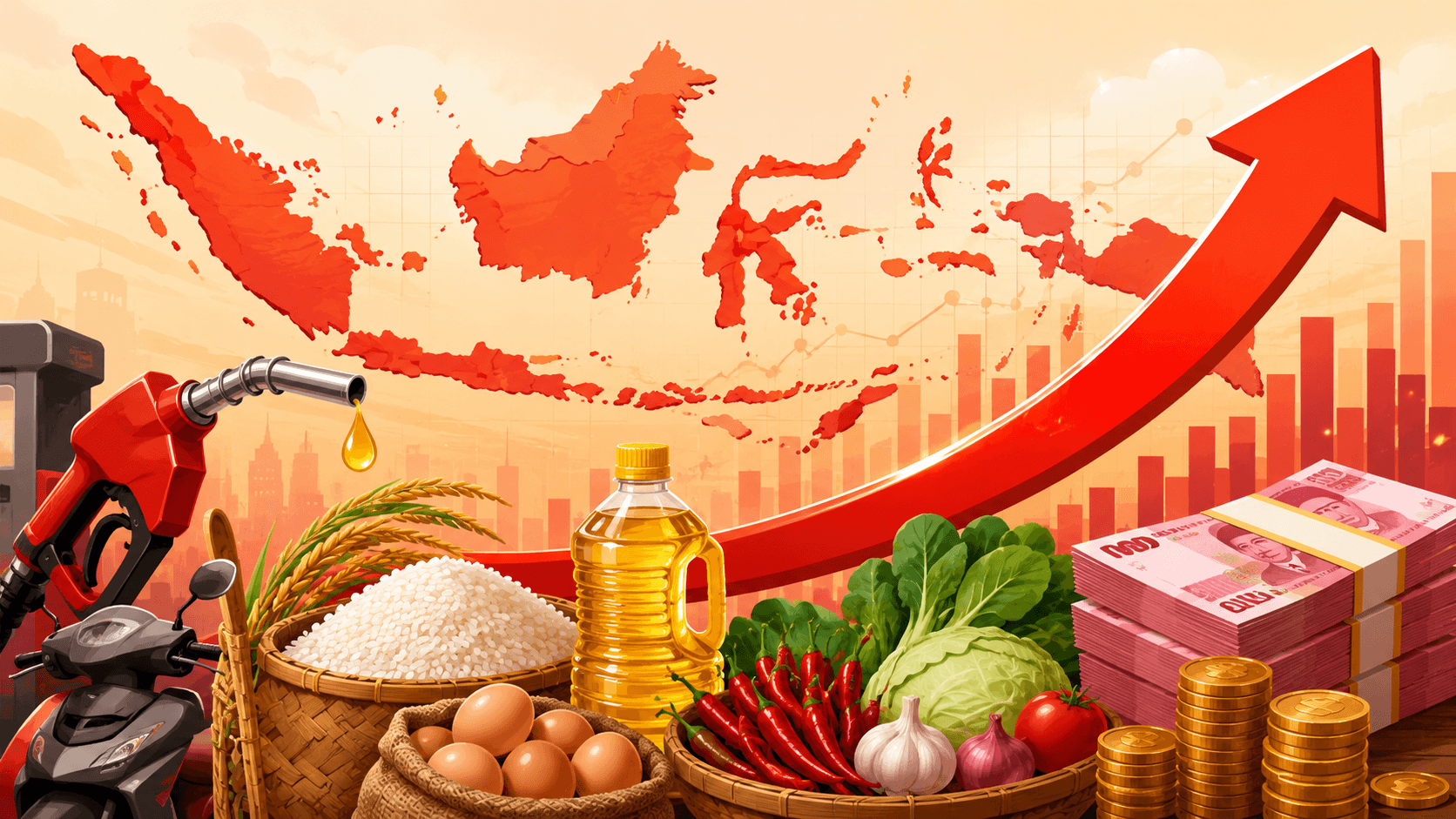
(Sumber: Generated-AI image)
Here are the main causes.
1. Food Prices Still Put Pressure on Household Spending
The food, beverages, and tobacco group recorded an annual inflation rate of 4.67% and contributed 1.36% to overall inflation. Commodities driving inflation in this group include fresh fish, rice, cooking oil, and red chili peppers.
The impact is felt most acutely by low- and middle-income families. The reason is simple: the lower a household’s income, the larger the portion of its budget spent on food.
If the prices of rice, cooking oil, chili peppers, fish, onions, or other kitchen staples rise simultaneously, families will typically make several adjustments:
- Reduce purchases of certain side dishes.
- Switch to a cheaper brand or quality.
- Reduce the frequency of eating out.
- Postpone the purchase of non-essential items.
- Reset daily budget.
This is what makes food inflation feel heavier than inflation in other groups of goods.
2. Increase in Non-Subsidized Fuel Prices Drives Transportation Inflation
One of the most widely cited causes of inflation in June 2026 was the rise in the price of unsubsidized fuel. Antara reported that Pertamina Patra Niaga raised the price of Pertamax from Rp12,300 to Rp16,250 per liter effective June 10, 2026, while Pertamax Green 95 rose from Rp12,900 to Rp17,000 per liter.
The Central Statistics Agency (BPS) noted that increases in gasoline prices, airfare, and lubricants or motor oil were the main drivers of monthly inflation in June 2026. The transportation sector experienced 2.29% month-to-month inflation and contributed 0.28% to the monthly inflation rate.
The effects of fuel price hikes do not always stop at the gas station. Energy costs can spill over into several areas:
- Private transportation costs.
- Goods logistics costs.
- Shipping service rates.
- Food prices depend on distribution between regions.
- Small business operating costs.
- Travel ticket prices during the holiday season.
This is the reason why fuel price increases are often considered economically and socially sensitive.
Read also:Is JHT Taxable? Here's the Latest Tax Deduction Scheme and Rates
3. Airfares Increase During School Holidays
Besides gasoline, airfares are also a driver of transportation inflation. The Central Statistics Agency (BPS) stated that airfares were among the dominant commodities driving monthly inflation in June 2026, along with gasoline and lubricants.
Airfare increases are usually related to the surge in demand during the holiday season. In June, the school holidays encourage more families to travel. When demand increases while capacity is limited, ticket prices tend to rise.
The impact isn't just felt by tourists. Rising airfares also affect:
- Intercity worker mobility.
- Family travel expenses.
- Business travel expenses.
- Distribution costs for certain goods.
- Household vacation budget.
For middle-class families, rising airfares can mean vacation plans are cut back, postponed, or replaced with road trips.
4. Gold Jewelry Pushes Personal Care Group
IDNFinancials reports that the personal care and other services group experienced annual inflation of 10.10%, contributing 0.69% to the overall rate, driven by a rise in the price of gold jewelry.
For some Indonesians, gold is more than just a consumer good. It is often used as a form of savings, a wedding gift, a dowry, and even a family hedging instrument.
The rise in the price of gold jewelry has impacted:
- Cost of weddings and family events.
- Jewelry prices for savings.
- Household expenditure of a socio-cultural nature.
- Public perception of the high cost of living.
Although not everyone buys gold every month, rising gold prices still have an impact on inflation components and household economic sentiment.
Read also:CDIA vs BBCA: Which Stock is More Attractive to Buy Right Now?
Fuel Price Increase Inflation: How Big is the Impact?
The increase in non-subsidized fuel prices is one of the most easily felt factors. Energy experts from the University of Padjadjaran, Yayan Satyakti, assessed that the increase in Pertamax could increase inflation by around 0.3–0.7 percentage points, with the impact most pronounced in June, July, and August 2026.
What needs to be understood is the effect of fuel biasIt appears in two forms.
Direct impact
The immediate impact occurs when people pay higher gasoline prices. Pertamax users immediately feel the increase in daily transportation costs.
For example:
- The cost of transporting school children has increased.
- The cost of working is going up.
- Weekend travel costs are rising.
- Online motorcycle taxi or taxi expenses can also be adjusted.
Indirect impact
Indirect impacts arise when fuel price increases affect logistics and production costs. Goods shipped from outside the city, products that rely on refrigerated transportation, and small businesses that use operational vehicles may experience increased costs.
These effects don't usually appear immediately. Some traders and manufacturers hold prices at first, then adjust them when costs become unbearable.
Read also: BIS 2026 Warning: Stablecoin Risks for Developing Countries
The Impact of Inflation on People's Purchasing Power
The impact of inflation on purchasing power is a crucial issue for society. When prices rise faster than incomes, purchasing power decreases. This means people have to spend more money to buy the same goods.
Some of the most obvious impacts are as follows.
1. Monthly Shopping is Getting Tighter
Families that typically have a fixed budget for groceries will begin to feel the pinch. The prices of rice, cooking oil, fish, chilies, onions, and other basic necessities significantly impact the stability of the household budget.
If income does not increase, families need to adjust their shopping lists:
- Buy in smaller quantities.
- Changing brands.
- Reduce expensive side dishes.
- Cook more often yourself.
- Reduce snacks or additional consumption.
2. Daily Transportation Costs Increase
Rising gasoline prices increase daily travel costs. The impact varies depending on the type of vehicle, distance traveled, and type of fuel used.
The groups that feel the most pressure are usually:
- Commuter worker.
- Online motorcycle taxi driver.
- MSME actors with operational vehicles.
- Families who live far from school or work.
- Small traders who take goods from the main market.
If transportation costs increase, money that could have been used for savings or other needs will end up being used for mobility.
3. Non-primary consumption is postponed
When the prices of basic necessities rise, people tend to postpone non-essential expenses. This can include dining out, vacations, electronics purchases, new clothes, and even home renovations.
For the national economy, a decline in non-primary consumption can impact the retail, tourism, restaurant, and service sectors. Therefore, inflation is not only a household problem but also affects the business world.
4. Vulnerable Groups Are More Stressed
Inflation is felt most severely by lower-income groups. They have tighter budgets. When prices rise, their options become more limited.
Vulnerable groups include:
- Informal workers.
- Daily labor.
- Elderly people without a fixed income.
- A family with many dependents.
- Micro SMEs with thin margins.
- Households that still have large installments.
For this group, 3.34% inflation isn't just a statistic. It could mean reduced food quality, delayed healthcare costs, or reduced education spending.
Read also: Investment Strategy When Gold Prices Drop: What Should You Do?
Is 3.34% Inflation Still Safe?
On a macro level, inflation of 3.34% remains within Bank Indonesia's target range of 1.5% to 3.5%. However, it is approaching the upper limit.
This means that this situation is not yet an emergency, but it requires vigilance. There are three reasons why inflation in June 2026 could be considered a "yellow light."
1. Inflation Exceeds Estimates
Consensus had expected June inflation to be around 3.2%, but the actual figure was 3.34%. This difference indicates stronger price pressures than market expectations.
2. Pressure Comes from Many Sources
Inflation doesn't originate from just one commodity. Pressure arises from food, gasoline, transportation, airfares, lubricants, and gold jewelry. This combination makes inflation more pronounced.
3. The after-effects of fuel can still appear
The June increase in non-subsidized fuel prices could have a ripple effect into July and August, especially if logistics costs and service rates adjust accordingly.
Energy expert Yayan Satyakti also assessed that the impact of the Pertamax price increase would be most pronounced from June to August.
Read also: What is the MSCI Emerging Market Index and why is Indonesia's status a focus for investors?
What Can Communities Do?
The public certainly cannot control national inflation, but they can manage their financial strategies so that the impact is not too severe.
Here are some practical steps you can take.
1. Monthly Production Audit
Record your major expenses for one month. Focus on four major items:
- Food.
- Transportation.
- Instalment.
- Regular bills.
From there, look for items that can be reduced without sacrificing basic needs.
2. Prioritize Basic Needs
When inflation rises, prioritize. Prioritize essential needs, such as nutritious food, transportation to work, school fees, healthcare, and essential bills.
Postpone spending that is purely for personal use.
3. Reduce Energy and Transportation Waste
Rising fuel prices make transportation efficiency crucial. Here are some ways to achieve this:
- Combine several affairs into one trip.
- Use public transportation whenever possible.
- Share a vehicle with family or coworkers.
- Reduce unnecessary travel.
- Maintain your vehicle to ensure more efficient fuel consumption.
4. Compare Prices Before Shopping
For kitchen needs, small price differences can make a big difference if done regularly. Compare prices at traditional markets, convenience stores, wholesalers, and shopping apps.
Simple strategies like making a shopping list can also prevent impulse buying.
5. Prepare an Emergency Fund
Inflation makes expenses more difficult to predict. Therefore, an emergency fund becomes even more important. It doesn't have to be large right away; start with a small but regular amount.
New to crypto investing? Bitcoin (BTC) and Ethereum (ETH) are among the most popular starter cryptocurrencies to explore and trade on Bittime.
What Should the Government Do?
From a policy perspective, inflation in June 2026 requires a targeted response. The focus should not be solely on lowering inflation, but also on preventing a significant decline in purchasing power.
Some important steps include:
1. Maintaining Food Stock and Distribution
Since food contributes significantly to annual inflation, the government needs to ensure a secure supply of rice, chilies, cooking oil, onions, fish, and other essential commodities.
2. Monitor the Effects of Fuel Price Increases
The increase in non-subsidized fuel prices could lead to changes in consumption patterns. If Pertamax users switch to Pertalite, the government needs to ensure the supply of subsidized fuel remains uninterrupted.
3. Protecting Vulnerable Groups
Social assistance, targeted subsidies, and support for micro-SMEs can help maintain people's basic consumption.
4. Maintain Inflation Expectations
Public communication is also crucial. If the public and businesses expect prices to continue rising, some producers may raise prices more rapidly. Such expectations can exacerbate inflation.
Conclusion
The June 2026 inflation rate of 3.34% serves as an important signal for the public and policymakers. While the figure remains within Bank Indonesia’s target range, it is approaching the upper limit and is higher than the consensus estimate.
The causes of June’s inflation are not isolated. There is pressure from food, gasoline, airfare, lubricants, and gold jewelry. The food, beverage, and tobacco group contributed significantly to annual inflation, while transportation was the main driver of monthly inflation.
For the public, the impact is felt in grocery expenses, transportation costs, non-essential consumption, and purchasing power. Therefore, household financial strategies need to be more disciplined: audit expenses, prioritize basic needs, save on transportation, and set aside an emergency fund.
Inflation is not just a number in a BPS report. Inflation is a reality visible in markets, gas stations, travel tickets, and household wallets.

Start diversifying your portfolio today. Bittime also offers digital gold assets like XAUT and PAXG for hassle-free gold investing!
Bittime is a licensed and regulated Digital Financial Asset Trader (PAKD) supervised by Indonesia’s Financial Services Authority (OJK) — where you can buy Bitcoin in Indonesia and hundreds of other crypto assets starting from just Rp10,000. The registration process is fast, secure, and you can get started today.
Track USDT to IDR conversions and monitor your favorite crypto assets in real time. Everything is available in one crypto investment app that you can download for free on the Play Store
Ready to start? Register now on Bittime and execute your investment strategy with a platform trusted by millions of users in Indonesia.
FAQ
What will Indonesia's inflation be in June 2026?
Statistics Indonesia (BPS) recorded annual inflation of 3.34% in June 2026. Monthly inflation was recorded at 0.44%, while calendar-year inflation reached 1.79%.
What caused inflation in June 2026?
The main drivers were rising prices for food, gasoline, airfares, lubricants, and gold jewelry. BPS also noted transportation as the primary driver of monthly inflation in June 2026.
Does the increase in fuel prices affect inflation?
Yes. The increase in non-subsidized fuel prices, particularly Pertamax, has contributed to transportation inflation. The impact can be felt directly on travel costs and indirectly on logistics costs.
What is the impact of inflation on purchasing power?
Inflation causes the prices of goods and services to rise, so the same amount of money buys less. The impact is felt on monthly shopping, transportation, installments, and non-essential consumption.
Is 3.34% inflation dangerous?
It cannot yet be considered dangerous from a macro perspective as it remains within BI's target range. However, because it is approaching the upper limit and exceeding estimates, this inflation requires vigilance.
Disclaimer: The views expressed belong exclusively to the author and do not reflect the views of this platform. This platform and its affiliates disclaim any responsibility for the accuracy or suitability of the information provided. It is for informational purposes only and not intended as financial or investment advice.
.png)