Islamic Ruling on Digital Gold 2026: Latest Fatwa Explained
2026-04-14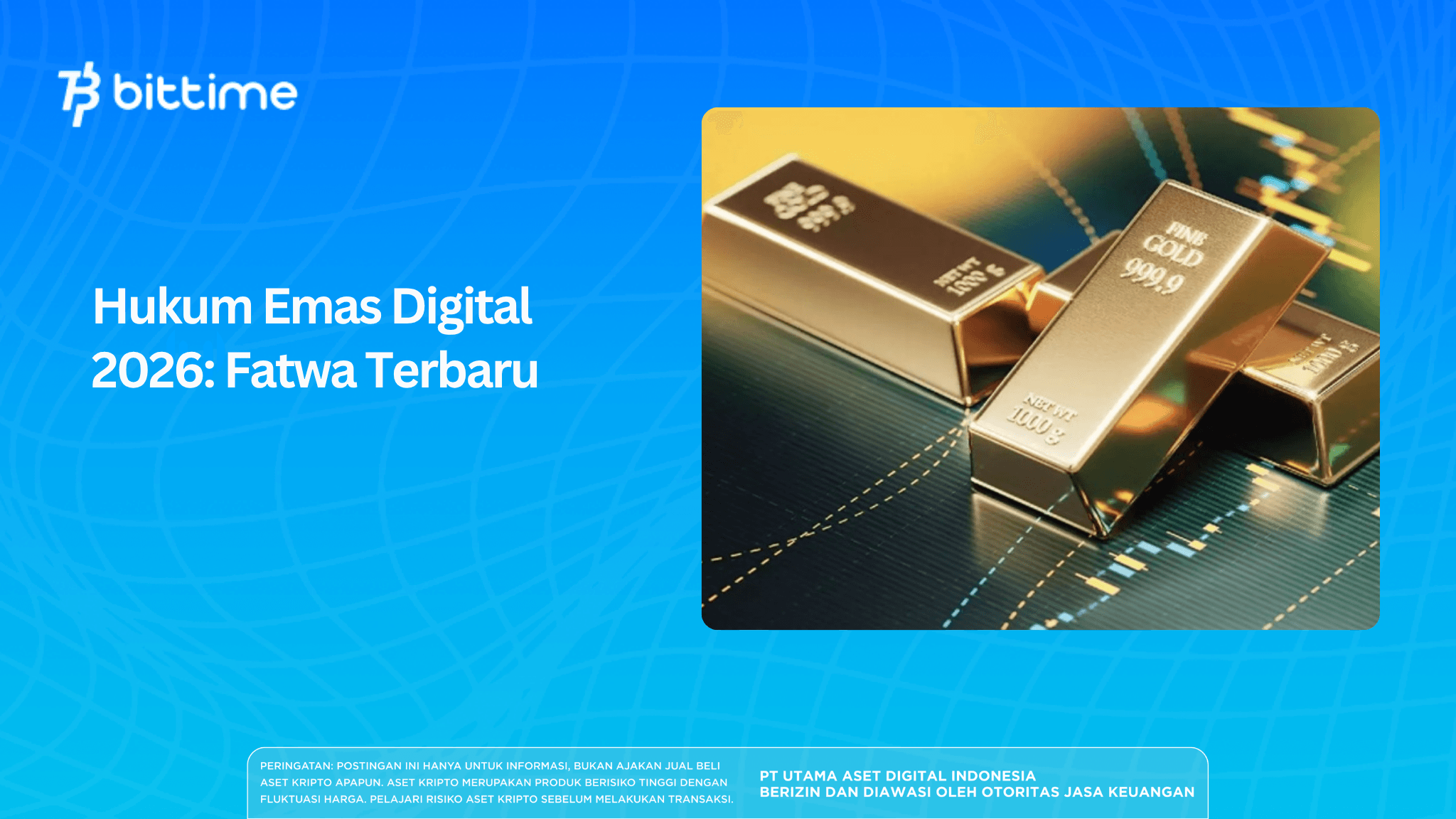
As interest in digital investment continues to grow, digital gold has become one of the most attractive options — convenient, affordable, and accessible with small amounts. But behind its ease of use, a crucial question arises for Muslim investors: is digital gold halal or haram?
This isn't merely a legal technicality — it goes to the heart of faith-conscious investing. This article provides a comprehensive look at the Islamic ruling on digital gold, covering its syariah foundation, the latest MUI fatwa, and the conditions that must be met for a transaction to be considered valid and permissible.
Key Takeaways:
- The Islamic ruling on digital gold according to MUI is mubah (permissible), based on DSN-MUI Fatwa No. 77/DSN-MUI/V/2010 on Non-Cash Gold Trading, as long as gold is not used as an official medium of exchange.
- Digital gold is categorized as a commodity, not currency — meaning it can be traded digitally or in installments without violating syariah principles, provided specific conditions are met.
- For digital gold to be halal, the underlying physical gold must genuinely exist, the contract must be clear and transparent, and ownership must be transferable upon request.
Digital Gold in Islamic Perspective: Commodity or Currency?
Understanding the Islamic ruling on digital gold starts with a fundamental question: is gold money or a commodity? In Islamic history, gold was once an official medium of exchange. However, since no country uses gold as official currency today, its status has shifted to that of a commodity — treated like any other tradeable good.
This shift is the core legal basis that permits digital gold transactions. According to the view of Sheikh Ali Jum'ah, buying and selling gold — whether in cash or on credit — is permissible because gold is no longer an official currency but a commodity like other goods. This aligns with the 1990 decision of the Islamic Fiqh Academy of the Organisation of Islamic Cooperation (OIC), which permitted non-cash gold trading provided gold is treated as a commodity. In this framework, digital gold that represents ownership of physical gold held by a custodian falls under the same permissible category.
The MUI Fatwa on Digital Gold: What Does It Say?
Indonesia's Majelis Ulama Indonesia (MUI), through its National Syariah Board (DSN), issued the primary legal reference on this matter: DSN-MUI Fatwa No. 77/DSN-MUI/V/2010 on Non-Cash Gold Trading. The fatwa states that buying and selling gold on a non-cash basis — whether through regular sale or murabahah — is permissible (mubah, ja'iz) as long as gold is not functioning as official currency.
The fatwa also establishes three additional conditions to ensure the transaction remains halal: first, the sale price (tsaman) must not increase during the agreement period, even with an extension after the due date. Second, gold purchased on non-cash terms may be used as collateral (rahn). Third, gold used as collateral may not be resold or made the subject of another contract that transfers ownership. DSN-MUI member Muhammad Faishol has further affirmed that in principle, digital gold ownership does not contradict syariah — provided clear boundaries are in place.
Conditions for Digital Gold to Be Considered Halal
Not all digital gold is automatically halal. The answer depends heavily on the mechanisms of the platform being used. Based on syariah principles and the DSN-MUI fatwa, the following conditions must be met:
1. The physical gold must genuinely exist. The gold purchased must be real — with clearly documented specifications including weight, purity, and serial number — and must be available for physical delivery at any time.
2. The sale contract must be valid and transparent. Even in digital transactions, a clear akad (contract) must exist between the buyer and the provider, covering price, ownership mechanism, and the right to withdraw physical gold.
3. Ownership must be provable. Buyers must receive valid proof of ownership — either a digital certificate or official documentation from a platform registered and supervised by Indonesia's OJK (Financial Services Authority).
4. No gharar (ambiguity) or riba (interest). The transaction must be free from excessive speculation, interest, or practices that obscure the actual status of gold ownership.
When all four conditions are met, digital gold may be treated on par with physical gold from a syariah legal standpoint. Digital gold platforms that are licensed by BAPPEBTI and apply strict syariah principles generally already fulfill these criteria.
Conclusion
The Islamic ruling on digital gold is permissible (mubah) — neither forbidden nor obligatory. The key factor is not the digital format itself, but the contractual mechanism, the existence of real physical gold, and full transparency throughout the transaction process. Before investing, ensure the platform is officially registered and operates in accordance with DSN-MUI syariah standards.
FAQ
1. Is digital gold halal in Islam? Yes. Digital gold is halal (permissible/mubah) based on DSN-MUI Fatwa No. 77/DSN-MUI/V/2010 — provided the physical gold is real, the contract is clear, and the transaction is free from riba or gharar.
2. What does the MUI fatwa on digital gold state? DSN-MUI Fatwa No. 77/DSN-MUI/V/2010 states that non-cash gold trading is permissible (mubah) as long as gold does not serve as official currency, and three conditions regarding pricing, collateral, and ownership are satisfied.
3. Is buying and selling digital gold haram? Not automatically. Digital gold trading becomes haram if the gold is fictitious, the contract is unclear, it involves riba, or it is used for activities that violate syariah.
4. Is it safe to buy digital gold? Yes, if purchased through a platform licensed by BAPPEBTI, supervised by OJK, and backed by physical gold that can be withdrawn at any time.
5. Is zakat required on digital gold? Yes. Under MUI Fatwa No. 3 of 2003, if the value of digital gold holdings reaches the nisab threshold (equivalent to 85 grams of gold) and has been held for one full lunar year (haul), zakat must be paid.
How to Buy Crypto on Bittime?

Want to trade sell buy Bitcoins and crypto investment easily? Bittime is here to help! As an Indonesian crypto exchange officially registered with Bappebti, Bittime ensures every transaction is safe and fast.
Start with registration and identity verification, then make a minimum deposit of IDR 10,000. After that, you can immediately buy your favorite digital assets!
Check the exchange rate BTC to IDR, ETH to IDR, SOL to IDR and other crypto assets to find out today's crypto market trends in real-time on Bittime.
Also, visit the Bittime Blog for interesting updates and educational information about the crypto world. Find reliable articles about Web3, blockchain technology, and digital asset investment tips designed to enrich your crypto knowledge.
Disclaimer: The views expressed belong exclusively to the author and do not reflect the views of this platform. This platform and its affiliates disclaim any responsibility for the accuracy or suitability of the information provided. It is for informational purposes only and not intended as financial or investment advice.

.png)