Wyoming's FRNT Stablecoin Uses Blockchain: Can Other States Follow This Model?
2026-09-03
Stablecoins are generally issued by private companies.
Wyoming took a different path by launching the Frontier Stable Token, or FRNT, through a commission that is part of the state government.
This model combines US dollar reserves, short-term government bonds, independent audits, and blockchain infrastructure.
Integration of Chainlink Proof of Reserve then add a layer of on-chain verification.
This approach raises an important question: is government stablecoin such as FRNT can serve as an example for other countries or jurisdictions?
Key Takeaways
FRNT is a stable token issued by the Wyoming State Government entity and can be issued or redeemed for US$1.
Chainlink helps bring reserve verification results to the blockchain in near real time.
The Wyoming model is replicable, but requires a clear legal basis, reserve governance, audits, technology, and redemption mechanisms.
What Is Wyoming's FRNT Stablecoin?
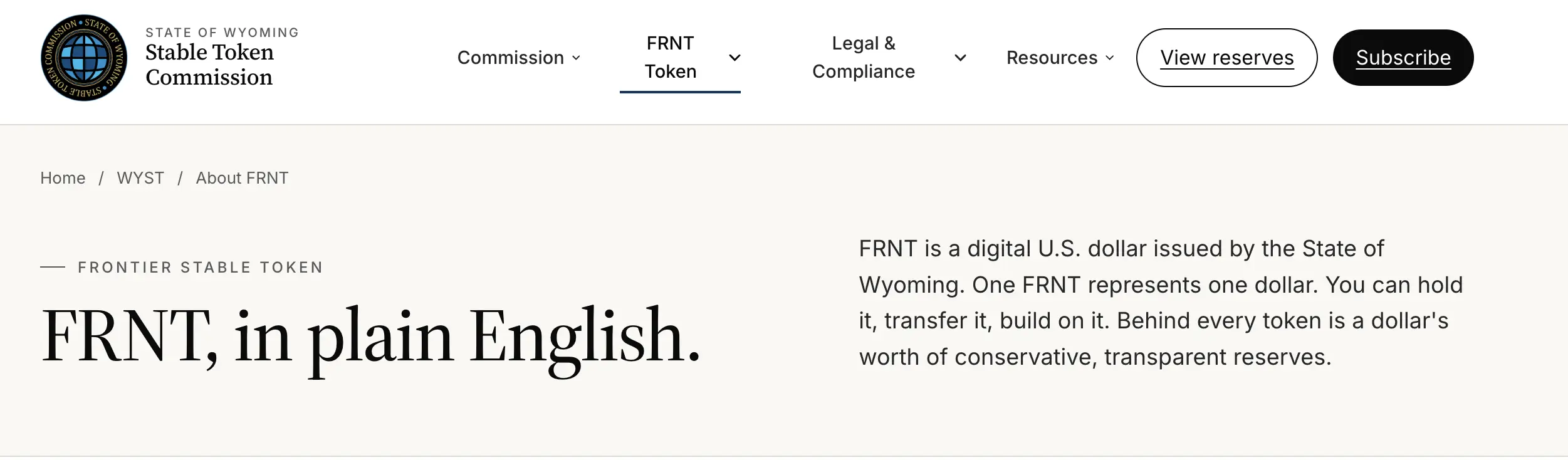
FRNT was launched to the public in January 2026 by the Wyoming Stable Token Commission. The commission was established through the Wyoming Stable Token Act of 2023 and is an official entity within the state government.
Source: stabletoken.wyo.gov
According to Wyoming Stable Token Commission official website (https://stabletoken.wyo.gov/frnt), FRNT is issued and redeemable at a fixed value of US$1.
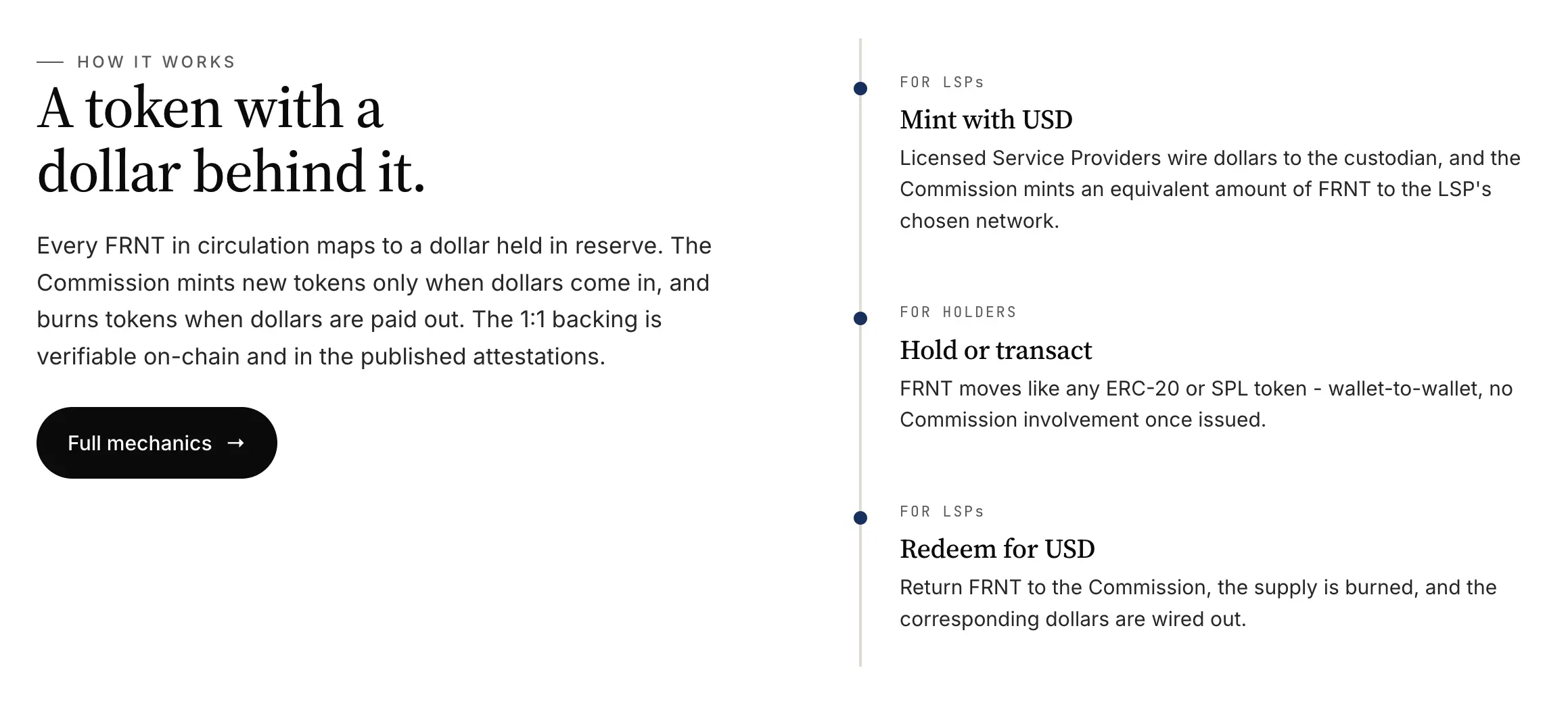
Its reserves consist of US dollars, short-term US government securities, and other permitted liquid instruments.
Wyoming also implements an overcollateralization rate of approximately 2%. This means the reserve value is targeted to exceed the amount of FRNT in circulation.
Interest income from reserve management may be used to support the Wyoming School Foundation Program.
Although issued by the state government, FRNT is not an official currency or central bank digital currency.
These tokens are also not bank deposits and do not receive FDIC protection.
This status distinguishes FRNT from cash, bank balances, or digital dollars that central banks might one day issue.
Read Also: Stablecoin vs Fiat: Know the Differences Between the Two
How Chainlink Proof of Reserve Works on FRNT
Source: stabletoken.wyo.gov
Stablecoins require a link between tokens on the blockchain and reserve assets in the real world.
Blockchain can show the number of tokens in circulation, but it cannot independently check bank balances or government bond holdings.
In the FRNT model, The Network Firm checks the reserve value and token amount based on AICPA standards.
Chainlink then brings the verified data to the blockchain in a format readable by smart contracts. The result is backup information available in near real time, not just periodic reports.
Wyoming has previously published daily attestations.
Adoptionblockchain stablecoinThis adds automatic verification on top of the check.independent, not replacing the role of auditors. This clarification is important because oracles remain dependent on the quality of data sources outside the blockchain.
The Commission is also adopting Chainlink Secure Mint features.
Based on the integration announcement, the feature is designed to prevent the issuance of new tokens if the verified reserve value is less than the total supply.
Since its implementation is still in progress, Secure Mint should not be considered a fully completed protection.
Read Also:Invest USD Dollars with USDT Staking 10% Interest for Beginners
Why is FRNT Different from Private Stablecoins?
Private stablecoin issuers manage reserves through corporate structures and are subject to relevant regulators.
FRNT uses government commissions, legislative mandates, assets in trust, and institutional reserve management partners.
The structure offers more direct public accountability.
However, labels government digital assets does not automatically eliminate technical risks or operational.
Users still need to understand liquidity, smart contracts, blockchain networks, custodians, and the redemption process.
Source: stabletoken.wyo.gov
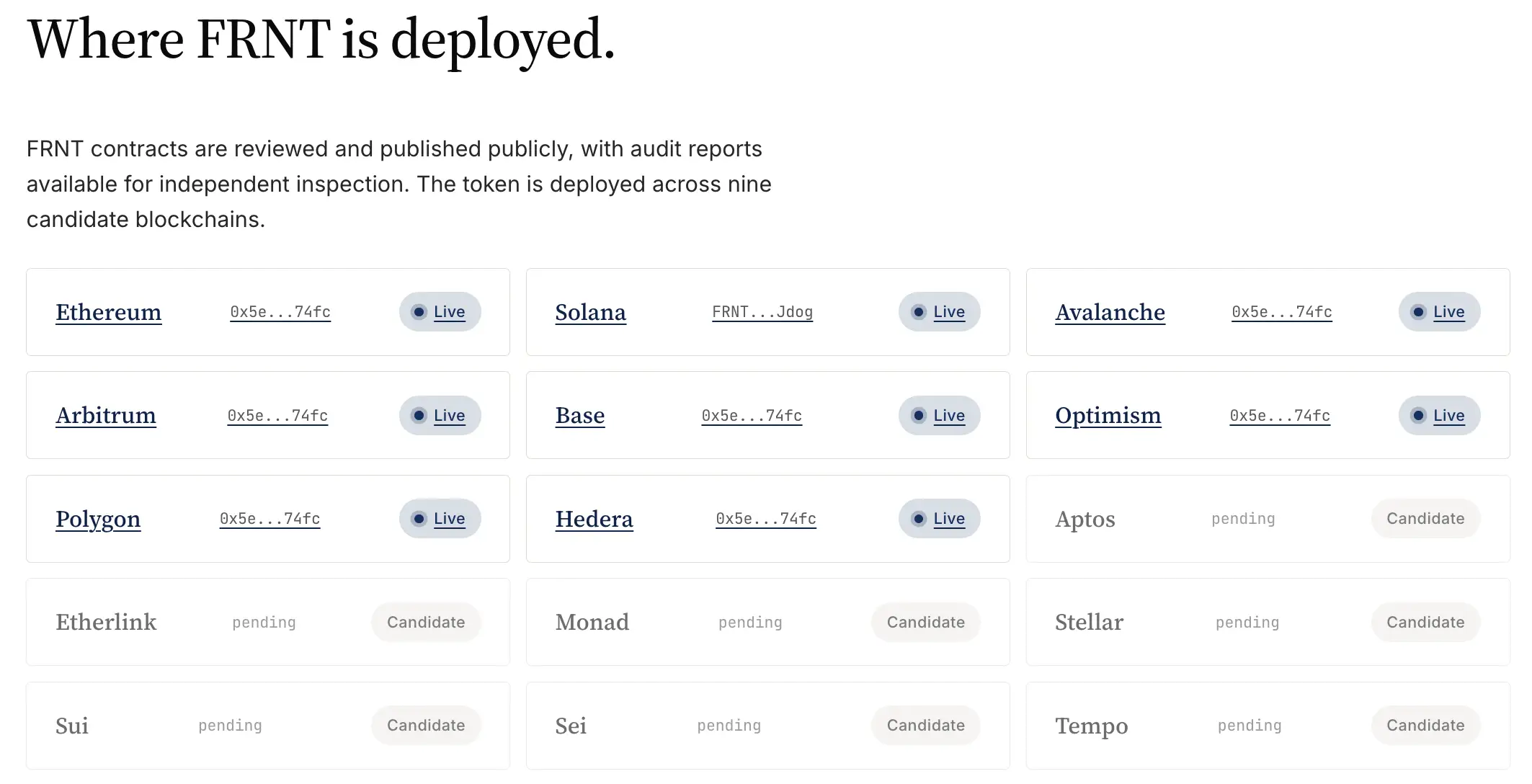
FRNT is also available on several networks, including Ethereum, Solana, Avalanche, Base, Optimism, Polygon, and Arbitrum. Cross-chain infrastructure expands usage but also increases the risk of bridges and interchain supply coordination.
FRNT's relationship with GENIUS Act
The GENIUS Act was signed into law in the United States in July 2025.
The framework requires payment stablecoins to hold fully liquid reserves, such as dollars or short-term Treasuries, and to publish the composition of these reserves monthly.
The White House explains that regulations also include consumer protection and a ban on misleading marketing claims.
This provision is an important foundation inUnited States crypto regulation.
Wyoming stated that the FRNT model exceeds these minimum standards by having daily attestation and adding on-chain backup data.
LMonthly reports only provide a snapshot at a single point in time, whereas Proof of Reserve attempts to reduce the information gap between reporting periods.
Read Also:How to Stake USDC on Bittime in 4 Easy Steps
Can Wyoming's Model Be Followed by Other States?
Technologically, the model is replicable.
Other governments can do digital asset tokenization by issuing tokens that represent claims to the currency official, then adding audits and oracles for reserve transparency.
However, technology is only one part.
The government needs to determine who the issuer is, who holds the reserves, what types of assets are permitted, and how the tokens can be redeemed.
Anti-money laundering, data protection, tax and dispute resolution rules should also be in place.
Wyoming's revenue model could be an additional consideration.
Instead of handing over all the reserve interest proceeds to private companies, some of the economic benefits are diverted to public programs.
Such a scheme may be attractive to governments looking to build a payment system while simultaneously generating new revenue sources.
However, countries with capital controls or volatile currencies cannot copy the FRNT model directly.
Government stablecoins can also come into conflict with central bank authority and monetary policy.
Because Wyoming is only a state, the FRNT continues to use the US dollar and does not create a new national currency.
To keep up to date with developments in stablecoins and other crypto assets, you can register at Bittime and utilize the educational materials as part of independent research.
Obstacles Still to Be Proven
The first challenge is adoption.
Reserve transparency does not automatically create demand from consumers, traders, or financial institutions.
FRNT still needs to prove its worth in real payments.
The next challenges include smart contract security, oracle data errors, custodial failures, and cross-chain attacks.
Proof of Reserve can strengthen oversight, but it does not guarantee that prices will always be stable or that redemptions will always proceed smoothly.
Other governments must also assess the costs of construction and oversight.
Without sufficient transaction volume, the costs of auditing, compliance, security, and technology maintenance can outweigh the economic benefits.
Read Also: USDT Dominance Is Key to Stablecoin Stability, Here Are the Facts
The Future of Global Stablecoins
FRNT shows that blockchain adoption by countries does not always have to be in the form of CBDC.
Governments can use public networks for payments and settlement, while retaining control over issuance, reserves, and compliance.
The Wyoming model has the potential to serve as a reference, especially for jurisdictions with mature digital asset regulations.
However, its success can only be assessed after evidence is available regarding the volume of use, cost efficiency, security, and smooth redemption in the long term.
Read Also:USDT vs USDC Differences: A Comprehensive Guide

Bittime is a licensed and regulated Digital Financial Asset Trader (PAKD) supervised by Indonesia’s Financial Services Authority (OJK) — where you can buy Bitcoin in Indonesia and hundreds of other crypto assets starting from just Rp10,000. The registration process is fast, secure, and you can get started today.
Track USDT to IDR conversions and monitor your favorite crypto assets in real time. Everything is available in one crypto investment app that you can download for free on the Play Store
Ready to start? Register now on Bittime and execute your investment strategy with a platform trusted by millions of users in Indonesia.
FAQ
Is FRNT issued by the United States government?
FRNT is issued by the Wyoming Stable Token Commission, not the US Federal Government or the Federal Reserve. Wyoming is a state in the United States.
Is FRNT the same as CBDC?
No. FRNT is a dollar-based stable token issued by a state entity, while CBDC is issued by a central bank as a digital form of official currency.
What is the function of Chainlink Proof of Reserve?
This system brings verified reserve data to the blockchain. Smart contracts and users can then compare the verified reserve value with the token supply.
Does Proof of Reserve guarantee that FRNT is completely secure?
No. Proof of Reserve increases transparency, but risks related to smart contracts, oracles, custody, redemption, network, and regulatory changes remain.
Why might other countries follow the FRNT model?
This model offers blockchain settlement, transparent reserves, and potential public revenue. However, its implementation requires legislation, oversight, audits, and coordination with monetary authorities.
Disclaimer: The views expressed belong exclusively to the author and do not reflect the views of this platform. This platform and its affiliates disclaim any responsibility for the accuracy or suitability of the information provided. It is for informational purposes only and not intended as financial or investment advice.

.png)