SEC Updates Rules—Are Blockchain-Based Digital Stocks Coming Soon?
2026-09-03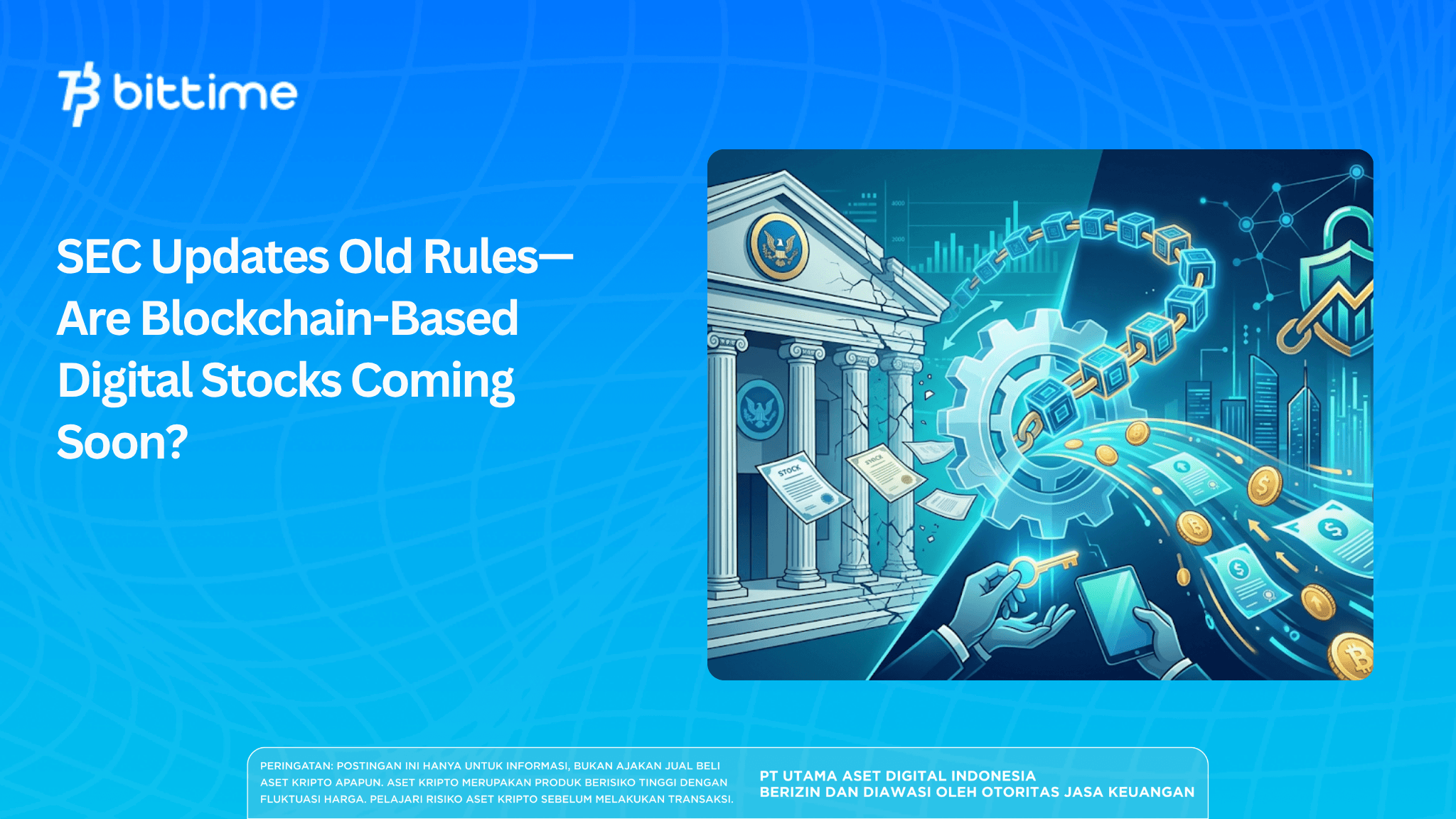
Blockchain-based digital stocks are once again attracting attention after the U.S. Securities and Exchange Commission (SEC) proposed major updates to the transfer agent rules in the United States on September 1, 2026.
These rules are important because transfer agents are responsible for maintaining official records of securities ownership, processing stock transfers, and supporting various corporate actions.
The SEC said the current rules largely date back to the late 1970s and early 1980s, when stock recordkeeping was very different from today’s digital market environment.
What makes the latest proposal particularly interesting is that it explicitly addresses developments in blockchain and the use of digital technology in securities market infrastructure.
So, does this mean blockchain-based stocks will soon become a mainstream part of the stock market?
Key Takeaways
- The SEC is proposing to modernize transfer agent rules and explicitly addresses the use of blockchain in securities recordkeeping and transfers.
- The rules could pave the way for clearer treatment of tokenized securities, but they do not mean digital stocks will immediately become available to investors.
- The main challenges remain ownership certainty, custody, investor identity, compliance, and the relationship between blockchain records and official securities records.
What Is the SEC Changing in the Transfer Agent Rules?
The SEC proposal, numbered S7-2026-30, aims to update the rules and forms governing registered transfer agents.
The SEC said these changes are necessary because transfer agent activities have become increasingly diverse, while electronic recordkeeping has become standard practice.
The changes are not merely administrative updates. The SEC also recognizes the use of blockchain technology in securities offerings and stock transfers as part of the technological environment that regulators need to consider.
In other words, regulators are beginning to position blockchain as one of the infrastructures that can be used within regulated securities markets.
However, it is important to note that this is not yet a final rule. The proposal is still undergoing public consultation, with comments due within 60 days after publication in the Federal Register.
Read Also: What Is Regulation Crypto Assets? SEC Rules for Token Fundraising
Why Are Transfer Agents Important for Digital Stocks?
In the capital market system, the most fundamental question is not only who owns the token in a wallet, but who is legally recorded as the owner of the security.
This becomes particularly important when stocks are tokenized. A token can move from one wallet to another within seconds, but regulators still need a mechanism to determine who the legitimate shareholder is, who is entitled to receive dividends, and who has voting rights.
SEC Commissioner Hester Peirce has even directly highlighted the possibility of stocks moving on-chain.
In its statement, the SEC asked for input on whether transfer agent rules should be adapted to support trading in tokenized securities and whether wallet addresses could be used as part of securities holder information.
This is where the rule update becomes important for blockchain-based securities.
Looking for exposure to U.S. stocks through tokenized stocks? Sign up on Bittime and start investing through tokenized stocks.
How Can Financial Asset Tokenization Work?
Financial asset tokenization essentially converts the representation of asset ownership into digital tokens that can be recorded and transferred using blockchain technology.
In a digital stock model, it is not enough for a token to simply have a ticker and a price. The system must establish the relationship between that token and the underlying stock.
For example, an investor may purchase a token representing shares in a company. If the token is transferred to another wallet, the system must be able to ensure that the transfer is also reflected in the legally recognized ownership records.
Therefore, blockchain digital assets in securities markets require more than just smart contracts. They also require know your customer (KYC) systems, transfer restrictions, ownership records, custody, and resolution mechanisms for errors or disputes.
The SEC has already acknowledged the possibility of using distributed ledger technology as a Master Securityholder File by a registered transfer agent, provided that all recordkeeping, reporting, examination, and protection requirements continue to be met.
Read Also: SEC and CFTC Clarify Regulations on Crypto Staking, Mining, and Airdrops
Blockchain-Based Digital Stocks Could Be More Flexible, but Not Without Limits
If the regulatory framework becomes clearer, tokenization could bring several changes to investment infrastructure.
Asset transfers could be conducted digitally, administrative processes could become more automated, and blockchain could provide transaction records that are easy to verify.
The technology could also support transactions outside traditional market hours, depending on the product structure and applicable trading rules.
However, transaction speed is not the only issue.
Investors still need protection if they lose access to a wallet, a transfer error occurs, an account becomes restricted, or a service provider experiences a failure.
This is why the SEC is not only discussing blockchain, but also updating provisions concerning recordkeeping, cybersecurity, business continuity, third-party service providers, and asset protection.
Therefore, blockchain technology does not automatically replace the existing regulatory system. Instead, blockchain must be able to operate within an investor protection framework.
Check the prices of tokenized stocks such as Amazon Tokenized Stock Ondo (AMZNON), Netflix Tokenized Stock Ondo (NFLXON), Microsoft Tokenized Ondo (MSFTON), and many more only on Bittime.
Will Tokenized Securities Soon Become Mainstream?
The opportunity is becoming more apparent, but this does not mean tokenized securities will immediately replace conventional stocks.
The underlying infrastructure is already developing. In 2026, the SEC has also received various comments on the use of blockchain as a securities recordkeeping system.
In fact, some tokenization models use regulated transfer agents to maintain the connection between digital assets and official ownership records.
This shows that the regulatory debate has shifted. The question is no longer whether blockchain can be used to record assets, but how the technology can be used without sacrificing legal certainty and investor protection.
For the industry, this clarity could provide a foundation for developing products such as tokenized stocks, blockchain-based bonds, and other capital market instruments.
Read Also: 7 Reasons You Should Start Investing in Tokenized Stocks
Implications for the Future of Blockchain Investment
If the SEC proposal evolves into rules that support broader blockchain adoption, its impact could extend beyond the crypto market.
The future of blockchain investment could become increasingly connected to traditional capital markets.
Stocks, bonds, and other financial assets could potentially have digital representations that can be processed through blockchain infrastructure, while their legal status remains within the securities regulatory framework.
For investors, this development also creates new opportunities in digital asset investment. However, investors must distinguish between tokens that genuinely represent securities ownership and tokens that merely provide exposure to an asset’s price.
This distinction determines the economic rights, voting rights, redemption mechanisms, and legal protections available to investors.
Conclusion
The SEC’s update to transfer agent rules is an important development for the blockchain-based digital stock and tokenized securities industry.
For the first time in several decades, regulators are more openly adapting securities recordkeeping infrastructure to technologies such as blockchain.
However, the proposal does not mean digital stocks will immediately replace conventional stocks. There is still a public comment process and further rulemaking to complete.
If the final framework provides certainty around ownership, custody, wallets, transfers, and official recordkeeping, blockchain could gain a stronger position within the U.S. capital market infrastructure.
Ultimately, this development is not simply about putting stocks on a blockchain, but about building a new financial market infrastructure that still provides legal certainty.
Start trading crypto with major assets such as BTC/IDR and ETH/IDR directly in the Bittime app.
Bittime is a licensed Digital Financial Asset Trader (PAKD) platform supervised by the Financial Services Authority (OJK) — where you can buy Bitcoin in Indonesia and hundreds of other crypto assets starting from Rp10,000. Registration is fast and secure, and you can get started today.
Track the USDT to IDR conversion and the real-time price movements of your favorite crypto assets. Everything is available in a single crypto investment app that can be downloaded for free from the Play Store.
Ready to get started? Sign up on Bittime now and execute your investment strategy with a platform trusted by millions of users in Indonesia.
FAQ
What are tokenized securities?
Tokenized securities are securities represented in the form of digital tokens using blockchain technology. These tokens can be designed to represent economic rights or ownership of specific securities.
What are the latest SEC rules on blockchain?
On September 1, 2026, the SEC proposed updates to the rules governing registered transfer agents through proposal S7-2026-30. The proposal considers the use of blockchain and electronic recordkeeping in securities market infrastructure.
Are blockchain-based digital stocks already legal in the United States?
Blockchain use in securities infrastructure can be permitted under certain conditions, but the SEC’s latest proposal is not yet a final rule that generally allows all stocks to be traded in tokenized form.
What are the benefits of blockchain-based digital stocks?
Tokenization could improve the efficiency of recordkeeping and transfers, enable the automation of certain processes, and provide blockchain-based transaction records.
Are tokenized securities the same as cryptocurrency?
No. Tokenized securities are digital representations of securities and are subject to a different legal framework. Cryptocurrencies such as Bitcoin have different characteristics and legal status from tokenized stocks or bonds.
Disclaimer: The views expressed belong exclusively to the author and do not reflect the views of this platform. This platform and its affiliates disclaim any responsibility for the accuracy or suitability of the information provided. It is for informational purposes only and not intended as financial or investment advice.

.png)