After Finding Bitcoin Lost 12 Years Ago, This British Man Became a Billionaire
2026-09-02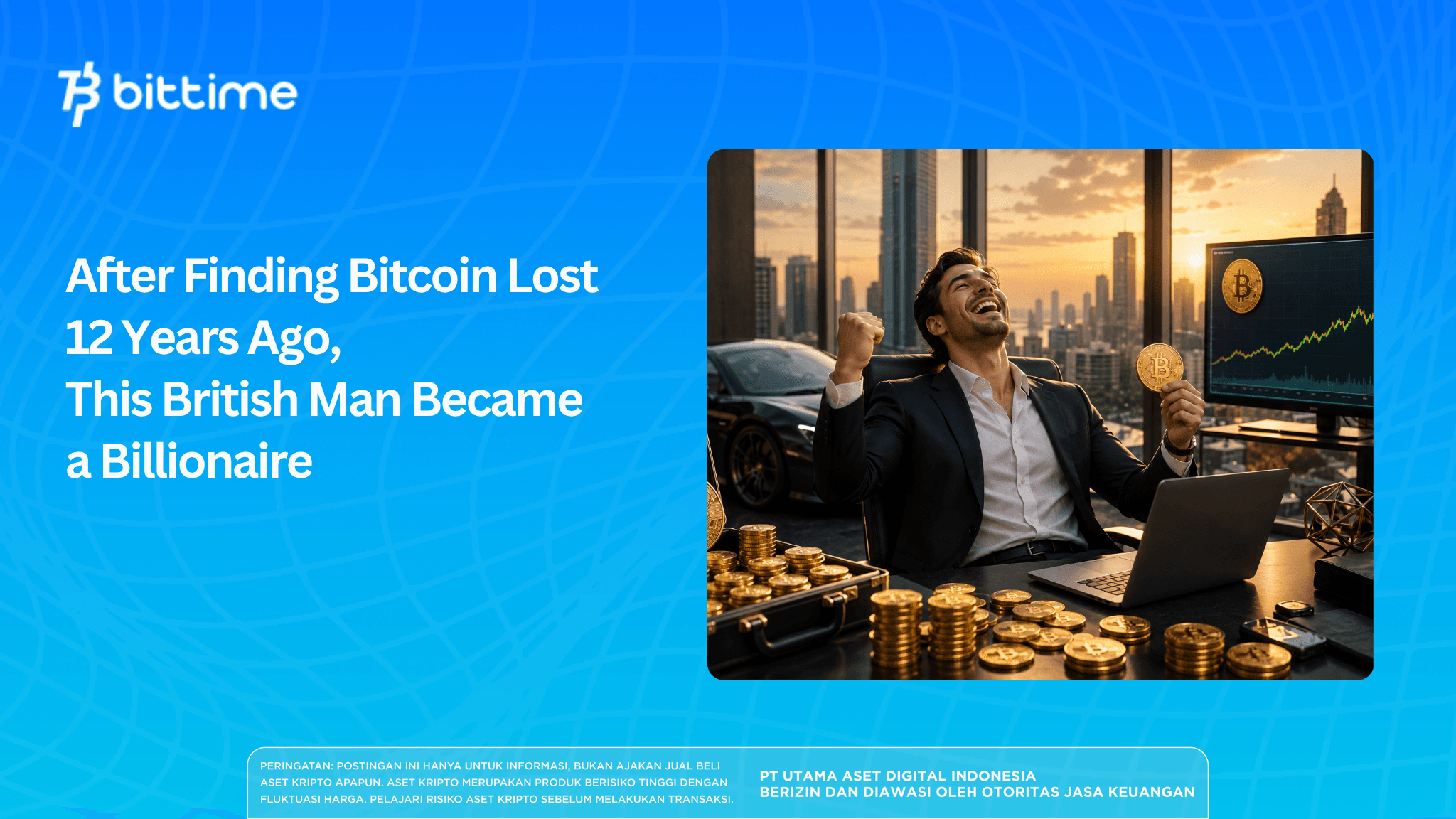
The story of Bitcoin that had been inaccessible for years has once again attracted attention after a British man named Chris successfully recovered 61 BTC that had been inaccessible since 2014.
The Bitcoin came from an investment of around £1,500 in 2011 and is now worth more than £3.3 million.
What makes this case interesting is not only the increase in Bitcoin's price. The asset had not actually disappeared from the blockchain.
Chris's Bitcoin could still be traced, but access to it was hindered after the platform where he stored the assets, Intersango, ceased operations.
After more than a decade, professional assistance with blockchain tracing and legal proceedings finally resulted in the 61 BTC being returned in May 2026.
This case demonstrates that Bitcoin recovery may still be possible under certain circumstances, especially when the owner has strong proof of ownership.
Key Takeaways
- Chris bought 61 BTC for around £1,500 in 2011 and lost access after Intersango encountered problems in 2014.
- The Bitcoin recovery process combined old documents, transaction records, blockchain tracing, and legal proceedings.
- The 61 BTC were returned in May 2026 with a value of around £3.33 million, turning the initial investment into millions of pounds.
How Did Chris's Bitcoin Go Missing for 12 Years?
Chris bought Bitcoin in 2011 after receiving a recommendation from a friend. At the time, Bitcoin was still in its early stages of development and did not have the value it has today.
He invested around £1,500 to buy 61 BTC, or approximately £2.94 per Bitcoin. The purchase was made through Britcoin, a platform that later became known as Intersango.
According to CEL Solicitors, Intersango was one of the early Bitcoin exchanges in the UK and at one point was among the platforms with the highest trading activity.
Problems emerged when Intersango began experiencing disruptions and eventually became inaccessible in early 2014. Chris could no longer withdraw Bitcoin from his account.
When access was lost, his 61 BTC were worth only around £4,000. However, the price of Bitcoin subsequently increased many times over.
For years, Chris could only watch the price of Bitcoin continue to rise without being able to access his assets. He eventually assumed that the Bitcoin could no longer be recovered.
Read Also: Claude AI Helps Recover a Bitcoin Wallet Inactive for 9 Years
Bitcoin Was Never Actually Lost from the Blockchain
This case is important because the term lost bitcoin can cause misunderstandings.
In Chris's case, the Bitcoin did not disappear from the Bitcoin network. The blockchain continued to store records of transactions and asset movements.
The problem was that Chris lost the practical ability to access or control the assets because the Bitcoin was held within an exchange system that was no longer operating.
This distinction is very important for understanding Bitcoin recovery.
Bitcoin for which the private key has truly been lost is usually much more difficult, and in practical terms cannot be recovered without access to that key.
Conversely, assets stuck on an exchange or with a custodian that can still be traced may have a recovery path if proof of ownership is available and the party controlling the assets can be identified.
In the Intersango case, blockchain tracing helped connect certain wallets with the exchange's activity.
Crypto trading is more convenient when asset security and withdrawal processes can be relied upon. Register on Bittime and start trading more safely and confidently!
How Were the 61 BTC Recovered?
Serious efforts to recover the Bitcoin only began in 2026 after Chris was encouraged by his wife to seek professional assistance.
On January 20, 2026, Chris officially sought help from CEL Solicitors. The team then gathered various old records to demonstrate that the 61 BTC belonged to Chris.
The biggest challenge was the age of the transactions. The purchase evidence was nearly 15 years old. Therefore, documents such as bank records, old account information, and ownership-related documents became important.
In addition to documentary evidence, the team handling the case also used blockchain tracing to track wallets associated with Intersango. According to CEL Solicitors, the process identified wallets that still held significant amounts of Bitcoin and were believed to be associated with former exchange users.
On May 28, 2026, a settlement was reached and all 61 BTC belonging to Chris were returned. The process from appointing the law firm to the return of the Bitcoin took around four months.
Read Also: Timothy Ronald Profile: Wealth, Businesses, and Controversies
From a £1,500 Investment to More Than £3.3 Million
The change in the value of Chris's assets demonstrates just how dramatically Bitcoin has developed over the past 15 years.
In 2011, he spent around £1,500 to buy 61 BTC. The purchase price was only around £2.94 per Bitcoin.
When his access was cut off, the value of his Bitcoin was around £4,000. After Bitcoin developed into one of the world's largest crypto assets, the value of 61 BTC increased to around £3.33 million when it was returned to Chris.
Thus, the initial investment of around £1,500 became an asset worth millions of pounds.
However, calling Chris a “billionaire” requires clarification. In the Indonesian context, the term billionaire refers to someone with wealth of at least Rp1 billion.
With assets worth around £3.3 million, Chris has indeed surpassed that threshold. However, in the context of pounds sterling or U.S. dollars, he is more accurately described as a millionaire, not a billionaire.
This distinction is important to ensure that reporting about Bitcoin billionaires remains accurate.
Convert 1 BTC to IDR - Bitcoin to Indonesian Rupiah Exchange Rate
Thousands of Bitcoin May Still Be Recoverable
Chris's case also raises a bigger question. According to CEL Solicitors, more than 5,500 BTC are believed to be associated with former Intersango users.
Using a Bitcoin price of around $78,000, their value could exceed $400 million, although the figure changes according to market prices and the ownership status of each asset.
This means that the case of the 61 BTC is not merely a story of luck for an early Bitcoin investor. Other former account holders may also have claims to assets that can still be traced.
However, recovery does not automatically mean that every former user can reclaim their Bitcoin. Proof of ownership, transaction history, the legal status of the assets, and the ability to link a wallet to an individual's claim remain important factors.
Read Also: Winklevoss Twins: Facebook Founders Who Chose to Become Bitcoin Millionaires
Lessons from the Lost Bitcoin Case
Chris's case provides important lessons for crypto investors. First, digital asset storage must take custodial risks into account.
Bitcoin stored through a third-party platform carries different risks from Bitcoin controlled directly using a private key.
Second, documentation remains important. Purchase records, transactions, emails, account information, and proof of ownership can become extremely valuable if a dispute or loss of access occurs.
Third, the term “lost Bitcoin” does not always mean that the coins have disappeared. Under certain circumstances, the assets may still exist on the blockchain, but access or ownership must be proven through technical and legal processes.
For today's investors, the case is also a reminder that Bitcoin price appreciation is not the only risk that needs to be considered. How to store, secure, and access assets is just as important as the decision to buy Bitcoin itself.
Start trading BTC/IDR with Bittime here!
Conclusion
The story of a British man finding Bitcoin after 12 years shows how crypto assets considered inaccessible may still be recoverable under certain circumstances.
Chris bought 61 BTC for around £1,500 in 2011. After Intersango ceased operating, he lost access for more than a decade.
In 2026, assistance from CEL Solicitors through evidence collection and blockchain tracing successfully recovered all of the Bitcoin.
With a value of around £3.33 million at the time of recovery, his initial investment became wealth worth millions of pounds.
More than just a story of luck, the case highlights the importance of proof of ownership, blockchain transparency, and digital asset storage security.
Bitcoin is available and ready to trade on Bittime with the BTC/USDT pair. There are also other assets on the Bitcoin BRC20 network, such as SATS and ORDI.
Bittime is a licensed Digital Financial Asset Trader (PAKD) platform authorized and supervised by the Financial Services Authority (OJK) — where you can buy Bitcoin in Indonesia and hundreds of other crypto assets starting from Rp10,000. Registration is fast, secure, and can be started today.
Monitor the USDT to IDR conversion and the price movements of your favorite crypto assets in real time. Everything is available in one crypto investment app that can be downloaded for free from the Play Store.
Ready to get started? Register on Bittime now and execute your investment strategy with a platform trusted by millions of users in Indonesia.
FAQ
Was Chris's Bitcoin really lost?
Not entirely. The Bitcoin was not lost from the blockchain. Chris lost access to the assets after the Intersango exchange ceased operating, while the assets could still be traced.
How much Bitcoin was recovered?
A total of 61 BTC were recovered and returned to Chris in May 2026.
How much was the recovered Bitcoin worth?
When returned, the 61 BTC were worth around £3.33 million. The value in dollars may change according to the price of Bitcoin.
How was the Bitcoin recovery process carried out?
Recovery was carried out by gathering old proof of ownership, including transaction records and supporting documents, and then using blockchain tracing to identify assets associated with the former exchange.
Can Bitcoin that has lost access always be recovered?
No. The possibility of recovery depends heavily on the cause of the loss of access. If the private key is truly lost, recovering the Bitcoin is usually extremely difficult. Chris's case was different because the assets could still be traced and there was evidence supporting his ownership claim.
Disclaimer: The views expressed belong exclusively to the author and do not reflect the views of this platform. This platform and its affiliates disclaim any responsibility for the accuracy or suitability of the information provided. It is for informational purposes only and not intended as financial or investment advice.

.png)