Fear and Greed Index Extreme Fear, BTC Buy Signal?
2026-04-01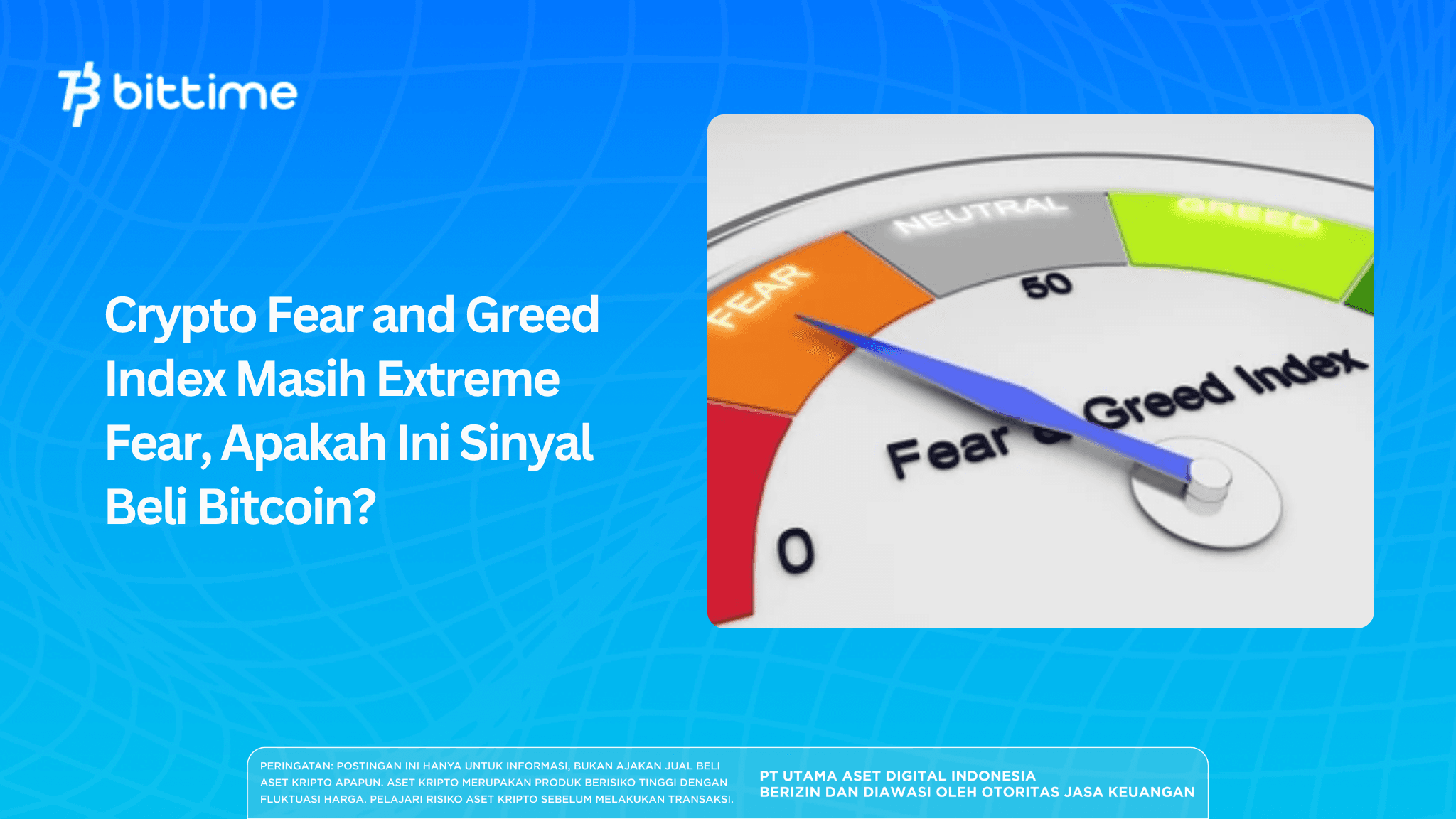
Crypto Fear and Greed Index has returned to the extreme fear zone with a score of 11 and has held there for 12 days. This negative sentiment has been ongoing since the end of January, although it briefly recovered in mid-March. This condition is often associated with buying opportunities, but the market currently shows a more complex dynamic.
Many investors remain cautious due to macro pressures such as geopolitical tensions and interest rate concerns. Even so, market data shows that Bitcoin selling pressure has not increased significantly.
Key Takeaways
- The Fear and Greed Index is at level 11 for almost two weeks
- Speculative activity is declining, indicating a more stable market
- Whales dominate, while retail investors are starting to exit
Register at Bittime now and start crypto trading with a process that is fast, secure, and easy in the app.
Understanding the Fear and Greed Index in the Current Context
The Fear and Greed Index is a sentiment indicator that combines volatility, volume, social trends, and market momentum. When the index is in the extreme fear zone, many traders see it as a contrarian signal, meaning a potential opportunity to buy when most of the market is afraid.
However, in a prolonged bearish condition, this indicator is not always immediately followed by a price increase. At present, the negative sentiment is driven more by external factors than by internal selling pressure. News related to global conflicts and economic policy is making investors more likely to avoid risk assets.
Interestingly, even though sentiment is poor, Bitcoin is not experiencing a surge in selling pressure. This suggests that some investors are choosing to hold rather than sell at low prices. In other words, the market is not completely panicking, but is more in a wait and see mode.
In conclusion, the Fear and Greed Index remains relevant as a supporting tool, but it cannot be used as the only basis for investment decisions.
Read Also: Bitcoin Fear and Greed Index: Meaning and How to Use It
Onchain Data Points to an Accumulation Phase
Onchain data provides a deeper picture than sentiment alone. Currently, short-term holders make up only around 3.98 percent of the total supply. Historically, this figure often appears when the market is approaching a bottom.
The decline in short-term activity shows reduced speculative trading. This makes the market more stable because selling pressure from fast traders is easing. On the other hand, long-term holders are becoming more dominant.
This condition usually reflects an accumulation phase. Confident investors begin buying gradually without triggering a price surge. This often happens before the market enters a recovery phase.
In addition, the lack of increased selling pressure despite negative sentiment strengthens the indication that the market is building a new base. However, this phase can last quite a while before a trend change occurs.
Read Also: Understanding the Fear and Greed Index Indicator in Crypto
Whale Dominance and Bitcoin’s Position in the Global Market
Another important change is the increasing dominance of whales. The whale ratio on exchanges has surpassed 60 percent, while retail investor participation is at its lowest point in a decade.
Historically, this condition often appears before a market turning point. When small investors leave and whales take over, the market tends to enter a consolidation phase before moving higher.
However, Bitcoin is also currently facing challenges from traditional markets. Its correlation with stocks such as the S&P 500 has weakened, and Bitcoin’s performance has lagged relatively. This makes Bitcoin look like a higher-risk asset.
The lack of retail participation also makes it difficult for the price rally to continue. Previous gains were unable to form a strong trend because of the lack of volume from small investors.
Even so, the combination of whale dominance and low selling pressure still signals that the market may be in an early accumulation phase.
Conclusion
Extreme fear is often seen as a buying opportunity, but current market conditions show that this approach requires caution. Onchain data points to accumulation and stability, while macro factors are still weighing on sentiment.
Investors should not rely on a single indicator. A combination of sentiment analysis, onchain data, and global conditions will provide a clearer picture. Opportunities may exist, but disciplined strategy is still necessary.
FAQ
What does extreme fear mean in crypto?
It shows that the majority of investors are afraid and the market is under pressure.
Is this the best time to buy Bitcoin?
Not always, additional analysis beyond sentiment indicators is needed.
What is onchain data?
Blockchain data that shows investor activity and asset distribution.
Why are whales important?
Because they have a major influence on price movements.
Why are retail investors declining?
Usually because of market uncertainty and high risk.
How to Buy Crypto on Bittime?
Want to trade and buy Bitcoin and invest in crypto easily? Bittime is ready to help! As an officially registered Indonesian crypto exchange under Bappebti, Bittime ensures every transaction is safe and fast.
Start with registration and identity verification, then make a minimum deposit of Rp10,000. After that, you can immediately buy your favourite digital assets!
Check the rates BTC to IDR, ETH to IDR, SOL to IDR, and other crypto assets to find out today’s crypto market trends in real time on Bittime.
In addition, visit Bittime Blog to get various interesting updates and educational information about the crypto world. Discover trusted articles about Web3, blockchain technology, and digital asset investment tips designed to enrich your knowledge in the crypto world.
Disclaimer: The views expressed belong exclusively to the author and do not reflect the views of this platform. This platform and its affiliates disclaim any responsibility for the accuracy or suitability of the information provided. It is for informational purposes only and not intended as financial or investment advice.

.png)