Iran vs Israel War: The Impact on the Crypto Market, Bitcoin, and Digital Gold Tokens
2026-06-12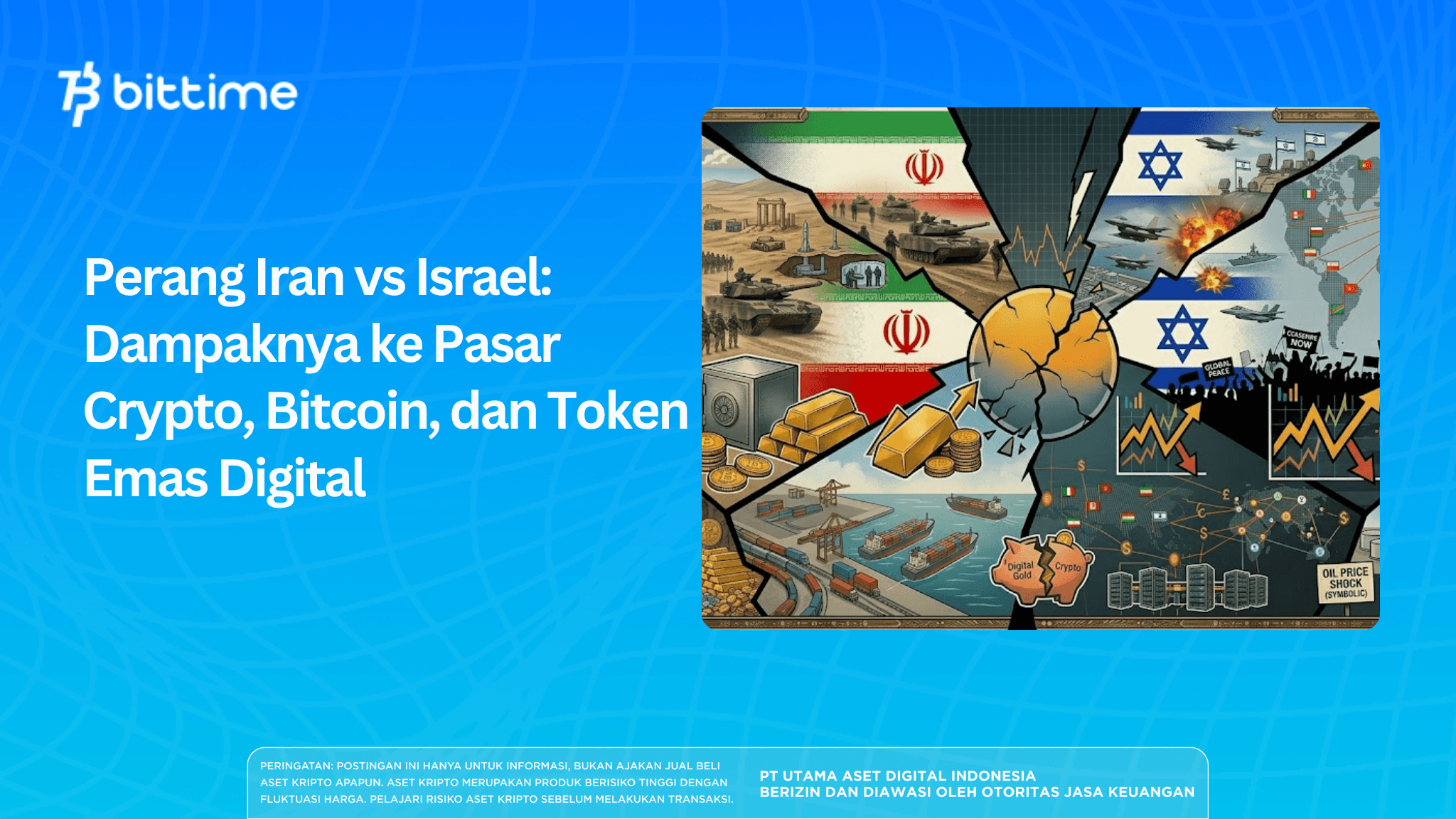
Tensions between Iran and Israel have once again shaken global markets. The conflict involving regional powers and support from major countries is triggering economic uncertainty, trade restrictions, and pressure on global stock exchanges. The impact is also felt in crypto markets, which are known to be highly responsive to geopolitical sentiment.
In such conditions, volatility rises and price movements become difficult to predict. Investors tend to seek assets considered more stable or that function as hedges. Amid these dynamics, three groups of crypto assets attract the market's attention.
See also: How the Israel–Iran War Could Change the Cryptocurrency Market
Key Takeaways:
- The Iran–Israel conflict increases volatility in stock and crypto markets
- Bitcoin shows relative resilience compared with many altcoins
- Digital gold tokens and privacy coins may attract attention during crises
Bitcoin and Market Structure Shifts
Bitcoin remains the primary barometer of the crypto market. When war news emerges, prices have faced pressure but did not breach key support around $62,000. Bitcoin market dominance has also stayed above fifty percent, indicating flows tend to return to the largest-cap asset.
Prices are currently trading around $65,700 to $66,000. Technically, Bitcoin briefly broke out of a downtrend and shows signs of a structural shift toward a more constructive phase. The demand zone near $63,000 is crucial. If it holds, a rise toward $67,500 is possible. However, a drop below $62,800 could extend selling pressure.
In the context of war, Bitcoin is often positioned as a digital-gold alternative. Its decentralized nature and cross-border transactable feature make it relevant amid disruptions to traditional financial systems. Still, volatility remains high, and short-term moves can be very sharp.
See also : Could Gold Hit New Records in 2026? Price Target $6,000
Digital Gold Tokens and Hedging Assets
Global gold prices have recorded significant gains over the past year and are now around $5,300 per ounce. During conflict, gold is once again viewed as a value-preserving asset.
On blockchain ecosystems, investors can access gold through tokens like PAX Gold and Tether Gold. These tokens are backed by physical gold reserves and traded on blockchain networks.
Their advantages lie in global liquidity and 24/7 trading access. Investors don't need to wait for conventional exchange hours to react to geopolitical news. Additionally, cross-border transfers can be faster compared with physical gold.
However, it's important to note these tokens track global gold prices. If commodity markets correct, their value will adjust accordingly. Still, the combination of a real asset and blockchain technology makes digital gold tokens an option for diversification when uncertainty rises.
See also: Israel Attacks Iran — What’s the Latest in the Crypto Market?
Privacy Coins and Crisis Sensitivity
In wartime situations, concerns about surveillance and transaction restrictions often intensify. This drives some market participants to look at coins with stronger privacy features such as Zcash, Monero, Litecoin, and Dash.
For example, Zcash experienced a monthly dip but recorded a significant annual gain. Technically, the $203–$208 area is an important zone. If prices hold, a rise to $219–$231 is possible. Conversely, a break below could trigger further selling pressure.
Privacy coins tend to be more volatile than Bitcoin. Demand can spike quickly due to psychological factors and transaction security needs. However, regulatory risk must also be considered, as some countries tighten oversight of hard-to-trace assets.
In crisis conditions, high volatility can create opportunities but also increase the risk of losses. A disciplined, data-driven approach is crucial.
See also: What’s Bitcoin’s Fate Amid the US–Iran Crisis?
Conclusion
The Iran vs Israel war shows that geopolitics directly impact crypto markets. Bitcoin is relatively more stable than many altcoins, digital gold tokens reflect movements in gold as a hedge, and privacy coins may see surges in interest as uncertainty rises. While opportunities remain, risks from volatility and changing global policies cannot be ignored. Investors should prioritize risk management and consistent market monitoring before making decisions.
How to Buy Crypto on :contentReference[oaicite:2]{index=2}?

Want to trade and buy Bitcoin and invest in crypto easily? :contentReference[oaicite:3]{index=3} is ready to help! As an Indonesian crypto exchange officially registered with :contentReference[oaicite:4]{index=4}, Bittime ensures every transaction is secure and fast.
Start by registering and verifying your identity, then make a minimum deposit of IDR 10,000. After that, you can immediately buy your favorite digital assets!
Check rates BTC to IDR, ETH to IDR, SOL to IDR and other crypto assets to find out real-time crypto market trends on Bittime.
Also visit Bittime Blog for a variety of updates and educational information about crypto. Find trusted articles on Web3, blockchain technology, and investment tips designed to enrich your knowledge in the crypto world.
FAQ
Why does geopolitical conflict affect crypto?
Because conflict raises economic uncertainty and drives fund flows toward assets considered safer or more liquid.
Does Bitcoin always rise during wars?
No. Price movements are still driven by market sentiment, global liquidity, and technical factors.
What is the function of digital gold tokens?
They provide exposure to gold prices via blockchain with flexible trading access.
Why are privacy coins in demand during crises?
Because they offer greater data protection and transaction anonymity features.
Is crypto safe during wartime?
Crypto remains high-risk. Volatility increases, so risk management is essential.
Disclaimer: The views expressed belong exclusively to the author and do not reflect the views of this platform. This platform and its affiliates disclaim any responsibility for the accuracy or suitability of the information provided. It is for informational purposes only and not intended as financial or investment advice.

.png)