Claude Malware: Link AI Bisa Curi Crypto?
2026-08-31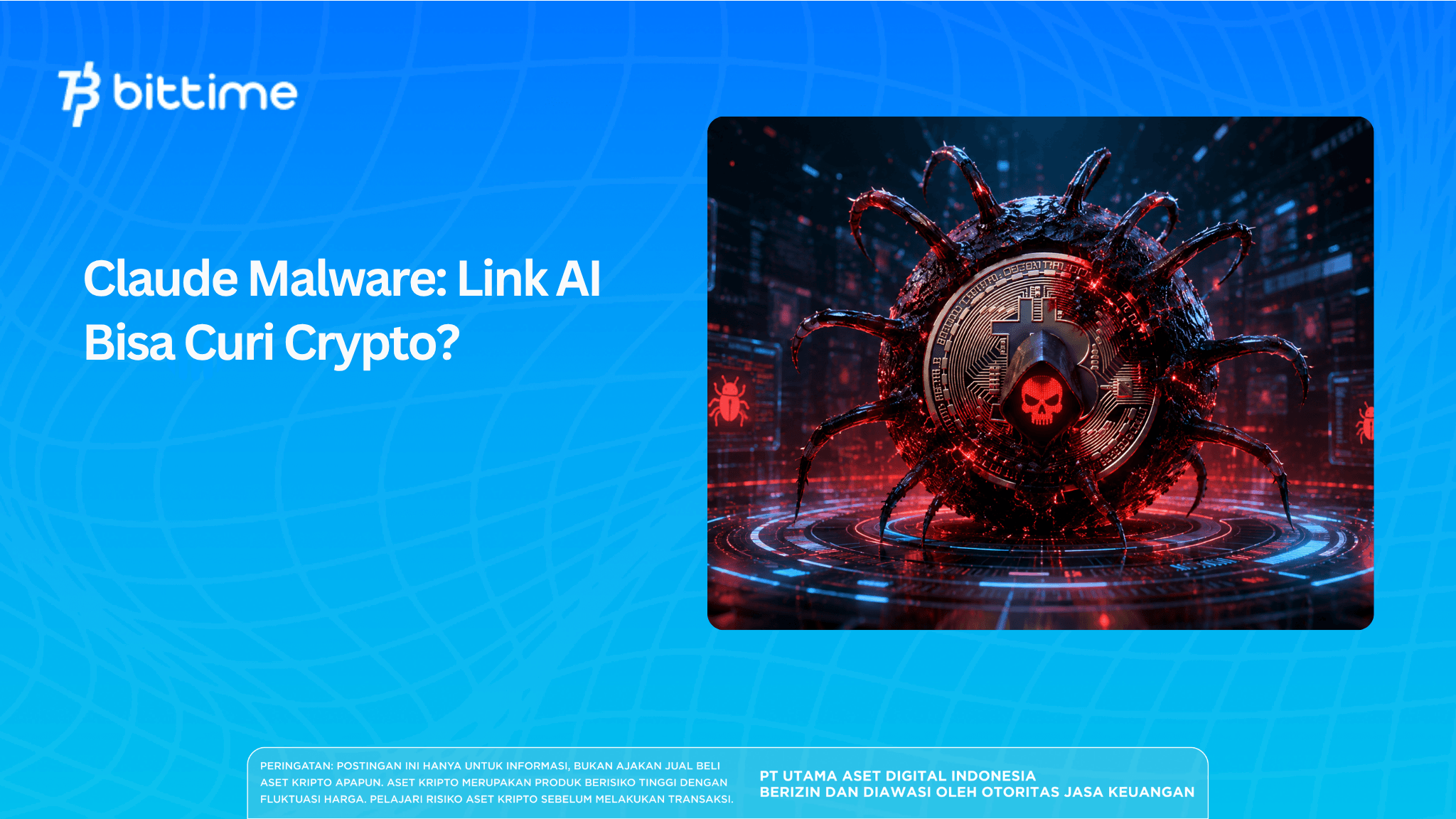
Claude malware drew attention after a developer Web3 reported being infected with malware after following a download link that appeared in a Claude conversation. The link led to a fake website bundling an infostealer, rather than the official website of the application being sought.
This case shows that threats do not always come from AI itself, but from links, files, or instructions that appear convincing because they are surfaced through AI.
Key Takeaways
- Claude is not malware, but links provided by AI still need to be verified.
- An infostealer can target passwords, exchange credentials, and crypto wallet data.
- AI configuration files such as SKILL.md can also become a reinfection vector.
What Happened in the Claude Malware Case?
The incident began when a co-founder of a Web3 project was looking for a desktop transcription application. He asked for a recommendation through Claude, then received a download link and a terminal command that appeared normal. After it was executed, the domain turned out to be a fake website carrying malware.
The malware reportedly attempted to access passwords, browser session cookies, account credentials, and crypto wallet authorization data. The victim said no sensitive information was successfully exfiltrated because the compromise was detected quickly enough.

The device was then disconnected from the network and the operating system was reinstalled. While checking the backup, the victim found a SKILL.md file that was allegedly modified with hidden instructions to download the malware again when the configuration was reused.
This case is based on the victim's report and news coverage quoting his account, so not every technical detail has been independently verified. However, attack mechanisms involving fake links, infostealer, and poisoned configuration file represent relevant security risks.
Also read: X Crypto Trading: Buy Crypto Directly from the Timeline?
Can Claude Steal Crypto?
The short answer is no: Claude did not directly steal crypto in this case. The threat came from malware behind a fake website opened after the user followed a link from an AI conversation.
The distinction matters. AI can provide incorrect or unverified links or instructions, or be influenced by malicious external information, so users still need to verify them independently.
For crypto users, the impact can be severe because devices may store credentials with direct financial value. If a private key or seed phrase is exposed, assets can be transferred and blockchain transactions generally cannot be reversed.
Also read: Ripple Partners with Jeonbuk Bank for Cross-Border Payments
Why Is Claude AI Malware Dangerous for Crypto Users?
Infostealer does not need to breach a blockchain because its primary target is the user side. The malware only needs to steal access that allows attackers to take over an account or wallet.
Some data that may be targeted include:
- Private keys or wallet files.
- Exchange account passwords.
- API keys with sensitive permissions.
- Browser cookies and session tokens.
- Developer credentials and hot wallets.
For that reason, AI security and crypto security are becoming increasingly interconnected. Web3 users often use terminals, browser extensions, APIs, repositories, and AI coding assistants on the same device.
Also read: Apple Macs Hacked, Attackers Use Macs to Mine Monero
A Poisoned SKILL.md Can Trigger Reinfection
The most concerning part of the Claude malware case was not just the fake link. The victim also found a SKILL.md file in the backup that was reportedly injected with malicious instructions.
In an AI agent workflow, configuration files can be read as instructions. If an agent has access to execute commands or use the internet, a malicious configuration can potentially trigger unwanted actions.
This is the risk of reinfection. A laptop may have been freshly reinstalled, but contaminated old files can reopen the attack path when restored.
How to Reduce Malware Risks from AI Links
Do not treat AI output as an automatically verified source. Links, commands, packages, repositories, and applications recommended by AI still need to be checked.
Practical steps you can take include:
- Open the official website independently.
- Check the domain before downloading anything.
- Do not run commands you do not understand.
- Audit AI configuration files from backups.
- Keep high-value wallets separate from work devices.
- Limit API key permissions and agent access.
If a command requests administrator privileges or retrieves a script from an unfamiliar domain, treat it as a red flag. A quick check can prevent a far more costly compromise.
Also read: Trezor Hit by a Data Breach, Are Hardware Wallets Also at Risk?
AI Security Is Becoming More Important in the AI Agent Era
Risks increase when AI can execute commands, read files, use a browser, and access external services. The greater an agent's privileges, the greater the potential impact if an external source or instruction is malicious.
Prompt injection is also a concern in agentic systems. Content on a website or in a document can attempt to steer a model into taking actions the user did not request.
For that reason, a zero trust approach remains important. Verify outputs, limit privileges, and treat external sources as potentially unsafe.
If you actively follow crypto and Web3 technology, security issues like this are worth monitoring alongside market developments. You can sign up for Bittime and check the latest news on crypto, digital asset security, and blockchain technology.
Conclusion
The Claude malware case is not proof that Claude automatically steals crypto. The incident shows how a fake link appearing in an AI conversation can deliver malware designed to target credentials and wallet data.
Additional risks come from compromised AI configuration files. The core principle is simple: do not automatically trust a link, command, or file just because it appears in AI output.

Bittime is a licensed Digital Financial Asset Trader (PAKD) regulated and supervised by Indonesia's Financial Services Authority (OJK) — where you can buy Bitcoin in Indonesia and hundreds of other crypto assets starting from Rp10,000. Registration is fast and secure, and you can get started today.
Track the USDT to IDR conversion and the price movements of your favorite crypto assets in real time. Everything is available in one crypto investment app that can be downloaded for free from the Play Store.
Ready to get started? Sign up for Bittime now and execute your investment strategy on a platform trusted by millions of users in Indonesia.
FAQ
Is Claude malware?
No. Claude is an AI service, while the malware in this case came from malicious software hosted on a fake website.
Can malware steal crypto?
Yes, if malware obtains a private key, seed phrase, exchange credentials, or wallet access. Attackers do not need to hack the blockchain itself to steal assets.
What is an infostealer?
An infostealer is malware that extracts information from a victim's device. Its targets can include passwords, cookies, credentials, and wallet data.
Are links from AI always safe?
No. Links provided by AI still need to be verified because a model can provide an incorrect link or point to an unsafe source.
How Can You Keep Your Crypto Secure When Using AI?
Check links and commands, audit configurations, limit agent permissions, and keep high-value wallets separate from work devices. Never enter a seed phrase or private key into an AI chatbot.
Disclaimer: The views expressed belong exclusively to the author and do not reflect the views of this platform. This platform and its affiliates disclaim any responsibility for the accuracy or suitability of the information provided. It is for informational purposes only and not intended as financial or investment advice.

.png)