CFTC: Kalshi vs Michigan Dispute, Who Has Authority to Regulate Prediction Markets?
2026-07-15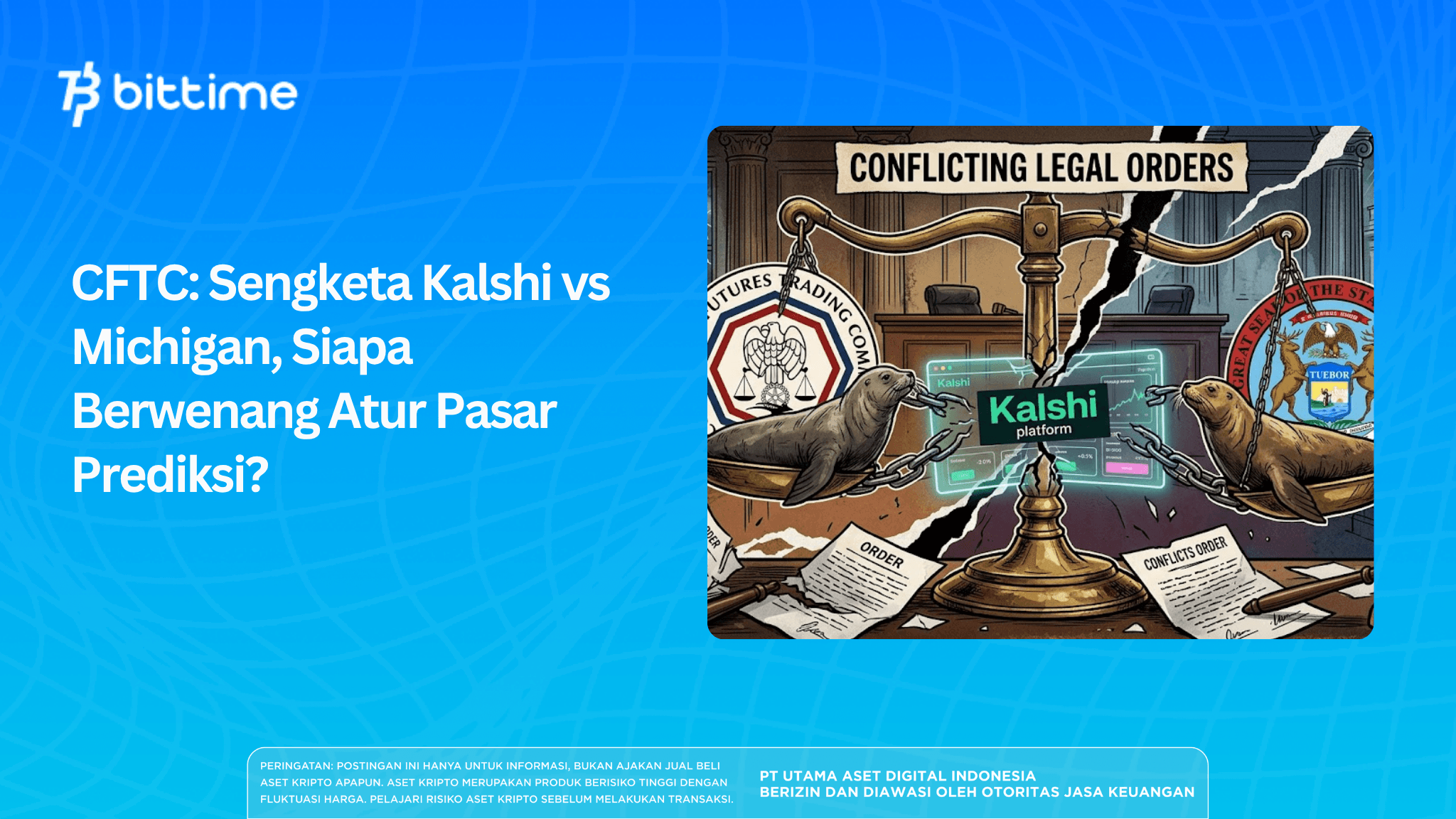
The debate regarding Kalshi vs Michigan has heated up again after the Commodity Futures Trading Commission (CFTC) took a step contrary to the state court ruling.
This decision not only affects Kalshi's operations but also opens a larger debate regarding prediction market regulation and the limits of federal and state government authority in the United States.
This case is important because it concerns the legal status of prediction contracts (event contracts) that are becoming increasingly popular.
If this dispute creates a new precedent, its impact could be felt across the entire prediction market industry, including platforms offering contracts based on sports, political, and economic events.
Key Takeaways
- CFTC halts efforts to cancel Kalshi contracts despite previous orders from the Michigan court.
- The dispute centers on a jurisdictional conflict between federal regulators and state governments.
- The final ruling has the potential to become an important precedent for the future of the prediction market industry in the United States.
Why Did the CFTC Halt the Cancellation of Kalshi Contracts?
The dispute began after the Michigan court ordered Kalshi to stop sports prediction contracts for state residents and cancel several transactions that had already been made.
To comply with the ruling, Kalshi submitted an emergency rule change to the CFTC to cancel the affected contracts. However, the federal regulator made a different decision.
On July 14, 2026, the CFTC issued an emergency order suspending that rule change so Kalshi must still settle contracts that have been traded according to market mechanisms.
In other words, transactions that have already occurred will not be canceled even though there is a Michigan court ruling. Reuters describes this step as the use of the CFTC's emergency authority to maintain certainty in the settlement of derivative contracts.
According to the CFTC, contracts that have been traded on the federal derivatives market must still be settled according to applicable rules to maintain market integrity. Unilateral cancellation of transactions is considered to create uncertainty for market participants and undermine confidence in the trading mechanism.
Register now at Bittime with a fast, secure, and easy process so you can trade and invest!
Roots of the Conflict: Who Has Authority to Regulate Prediction Markets?
The core issue is actually not about one platform alone, but about the division of authority between the federal government and the states.
Kalshi operates as a prediction contract exchange supervised by the CFTC. This platform allows users to trade contracts based on the outcome of an event, such as economic decisions, politics, and sports matches.
On the other hand, the Michigan government has a different view. The Michigan Attorney General along with the Michigan Gaming Control Board considers the sports contracts offered by Kalshi to have characteristics similar to sports betting and should therefore be subject to state gambling regulations.
Since Kalshi does not have a sportsbook license in Michigan, the state government believes that the activity violates local gambling laws.
Conversely, the CFTC argues that the contracts are part of the derivatives market under the jurisdiction of the federal regulator. Therefore, the state does not have the authority to order the cancellation of contracts that have been lawfully traded.
This difference in legal interpretation is the core of the CFTC and state jurisdiction conflict.
Also Read: Kalshi and the Political Prediction Market: Its Impact on the Crypto Industry
Why Is This Case Important for the Prediction Market Industry?
The Kalshi dispute is seen as one of the most important regulatory cases for the prediction market industry in the United States.
If the CFTC's position is strengthened by the court, prediction market operators will gain greater legal certainty because their contracts are recognized as federally regulated derivative products.
Conversely, if the court decides that states have broader authority, each state can apply different rules to prediction markets. This condition has the potential to complicate the expansion of similar platforms because they must comply with local regulations that are not always the same.
This case is also of concern to digital asset and financial industry players because it can affect the development of event contracts that have been used as hedging instruments, economic forecasts, and risk analysis.
Also Read: Polymarket vs Kalshi: Comparison of Crypto Prediction Market Platforms
What Are the Impacts on Kalshi?
In the short term, the CFTC's decision gives Kalshi room to continue settling contracts that are already running without having to cancel them.
The decision also strengthens Kalshi's position in arguing that its operations are under federal regulator supervision, not solely state gambling authorities.
However, the legal dispute is not over yet. Kalshi still faces regulatory challenges in several other states that have similar views on sports prediction markets. Therefore, the final outcome of this case will still depend heavily on subsequent legal processes.
Read Also: Prediction Markets for the 2026 World Cup: Polymarket and Kalsi Set New Records!
Impact on the Crypto Industry and Derivatives Market
Although Kalshi is not a crypto platform, this case has relevance to the digital asset ecosystem.
Many blockchain and decentralized finance (DeFi) platforms also offer prediction markets or event contracts based on digital assets. Clarity regarding which regulator has authority can influence the direction of development of similar products in the future.
For institutional investors, legal certainty is an important factor before participating in derivatives markets or prediction markets. The clearer the division of regulatory authority, the greater the chance for the industry to develop with better legal certainty.
Also Read: England vs Argentina: Who is More Favored in the Prediction Market?
Conclusion
The Kalshi vs Michigan dispute shows that the development of financial innovation often moves faster than the formation of regulation.
In this case, the CFTC chose to maintain the settlement of traded contracts because it considers the derivatives market to be under federal authority, while Michigan maintains that Kalshi's sports contracts are a form of gambling activity subject to state law.
The final outcome of this case has the potential to become an important precedent for prediction market regulation in the United States.
The ruling will not only determine Kalshi's legal position but can also affect the future of event contract platforms, digital derivatives markets, and prediction-based financial product innovations at the national level.

Monitor price developments of leading RWA assets like ONDO, LINK, and HBAR, before trading on Bittime.
Bittime is a licensed and supervised Digital Financial Asset Trader (PAKD) platform by the Financial Services Authority — where you can buy Bitcoin in Indonesia and hundreds of other crypto assets starting from Rp10,000. The registration process is fast, secure, and you can start today.
Monitor USDT to IDR conversion and real-time price movements of your favorite crypto assets. All are available in one crypto investment app that can be downloaded for free on the Play Store.
Ready to start? Register now on Bittime and execute your investment strategy with a platform trusted by millions of users in Indonesia.
FAQ
What is Kalshi?
Kalshi is a prediction market platform that allows users to trade contracts based on the outcome of an event, such as economics, politics, and sports.
Why is Michigan suing Kalshi?
Michigan considers the sports contracts offered by Kalshi to be a form of sports betting and therefore must comply with gambling laws and licensing requirements in the state.
Why did the CFTC stop the cancellation of Kalshi contracts?
The CFTC believes that contracts traded on the federal derivatives market must still be settled according to the rules to maintain market integrity and certainty.
What is the impact of this ruling on prediction markets?
This case can become a legal precedent that determines whether prediction markets fall under federal regulation or can also be regulated by individual states.
Has the Kalshi dispute been resolved?
Not yet. The CFTC's decision only relates to the settlement of contracts that are already running, while the legal process regarding regulatory authority is still ongoing.
Disclaimer: The views expressed belong exclusively to the author and do not reflect the views of this platform. This platform and its affiliates disclaim any responsibility for the accuracy or suitability of the information provided. It is for informational purposes only and not intended as financial or investment advice.

.png)