Is Brazil Carbon Asset (BrCA) Legit or a Scam? Here's What You Need to Know
2026-07-28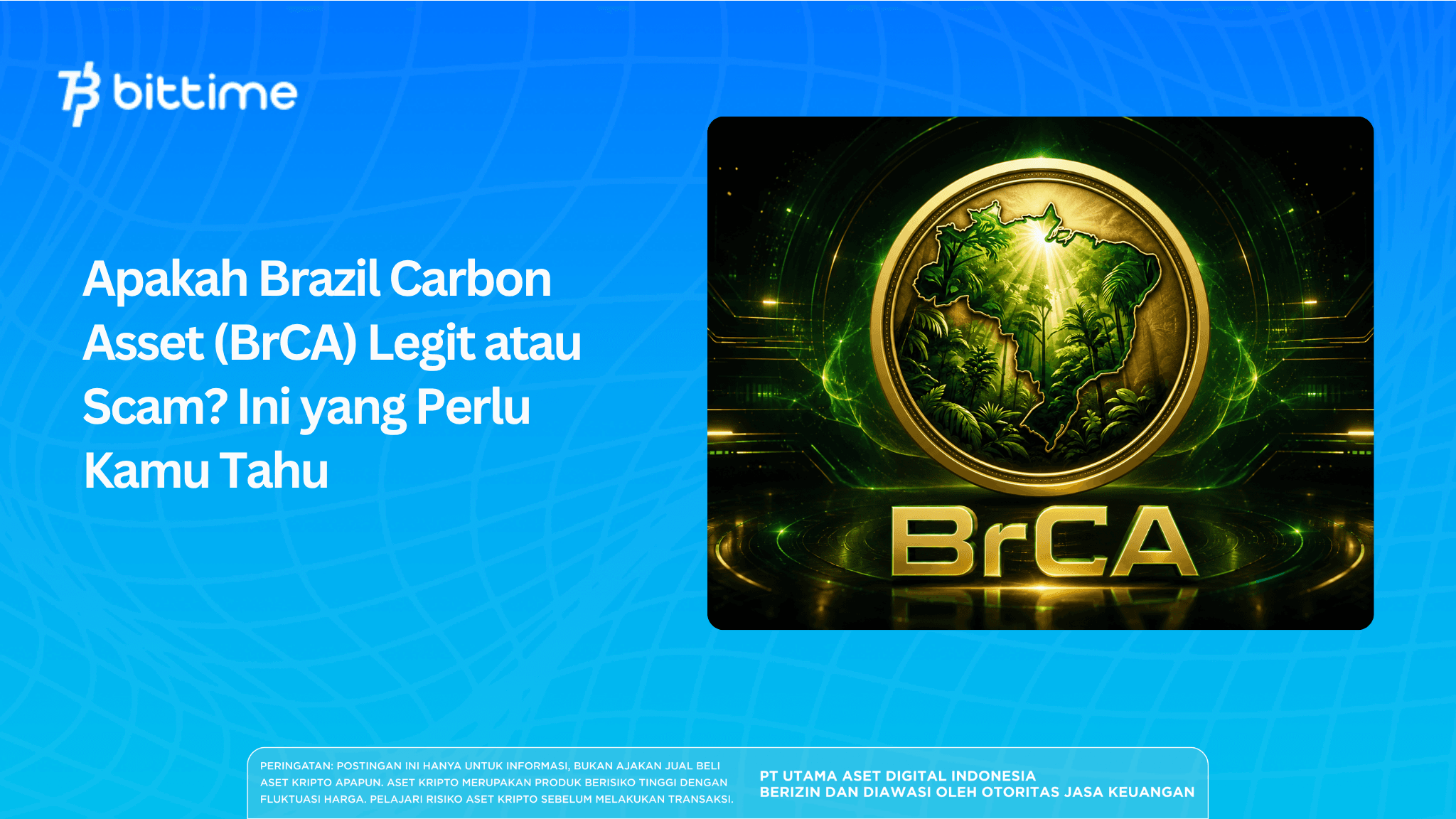
Is it Brazil Carbon Asset (BrCA) Whether the token is legit or a scam can't be determined simply by looking at claims that it's backed by carbon assets.
BrCA does have an active token on Solana, trading pairs, a project website, and a list of CPR Verde instruments and ISIN codes.
Key Takeaways
- There is not yet sufficient basis to directly call BrCA a scam, but the public evidence is also not sufficient to categorize it as a low-risk asset.
- The project publishes a list of Verde CPRs and ISIN codes, but ownership of the tokens does not automatically prove legal rights to the instrument.
- Thin liquidity, token concentration, inconsistent supply data, and audits that are still being scheduled are the main risks.
What is Brazil Carbon Asset (BrCA)?
Brazil Carbon Asset is a token Real World Asset or RWA issued on the Solana network. The project states that each BrCA token is designed to represent one metric ton of carbon dioxide equivalent, or CO₂e, attributed to CPR Verde in Brazil.
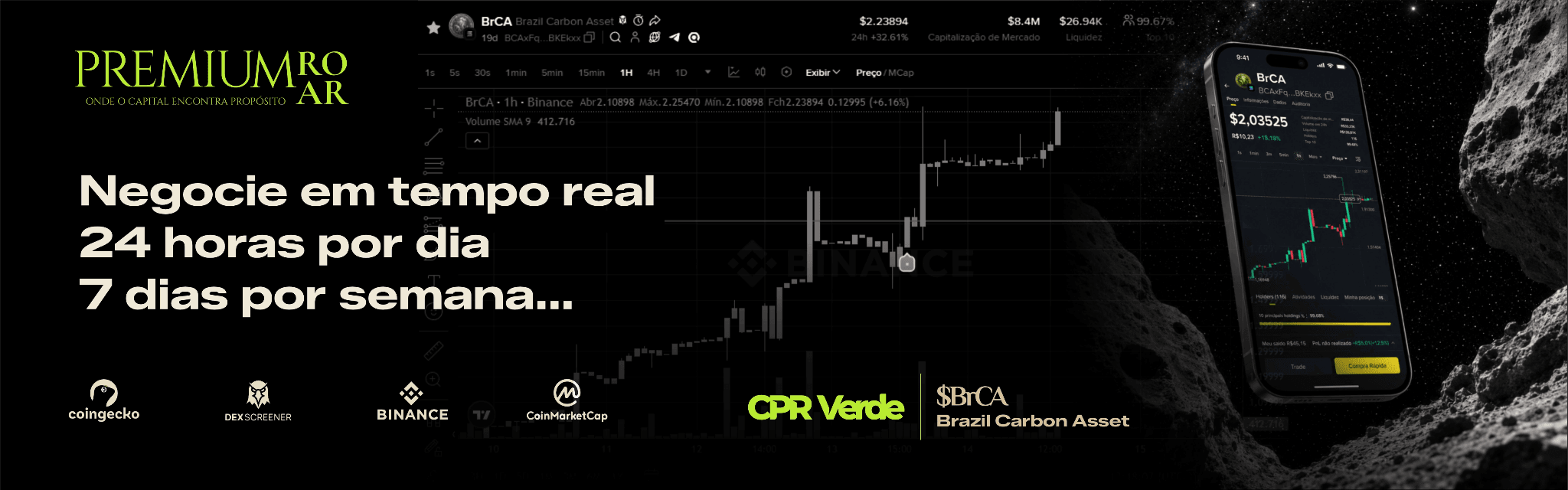
The token mint address listed in the on-chain data is:
BCAxFqs3VJGTmVsBsyYxWL2zZG6xR1kAynCKkhBKEkxx
The address is important because anyone can create another token with a similar name or ticker. Contract verification is essential before purchasing, especially since this token is still marked as unverified on one of the wallet interfaces that contains its market data.
Conceptually, BrCA seeks to connect three layers:
- Environmental instruments in the real world.
- Legal structure of the CPR Verde in Brazil.
- Transferable and tradable tokens on Solana.
The idea is quite appealing. However, blockchain only proves the existence and movement of tokens. It doesn't automatically prove that forests are truly protected, that carbon has been accurately measured, or that token holders have direct rights to the claimed CPR assets.
Read also: Is the Oil Strategic Reserve (OSR) Legit? Check the Facts Before You Get Fomo!
So, Is BrCA Legit or a Scam?
The most objective conclusion based on public information as of July 28, 2026 is:
BrCA can't be declared a scam yet, but it's also not verified enough to be called completely legit or low-risk.
There are several signs that support that this project is not just another anonymous token with no identity:
- Have a project website and communication channels.
- Includes a mint address that can be checked.
- Have an active trading market on Solana.
- Identify the main characters behind the project.
- Publishes a list of issuers, instrument codes, dates, tonnages and CPR ISINs.
- A number of ISIN codes can be found in third-party market databases that process data from official sources.
However, there are still strong reasons for caution:
- The independent audit is said to be scheduled for the second half of 2026.
- The relationship between one token and one ton of CO₂e is not accompanied by easily verifiable periodic proof of reserves reports.
- It is not clear what legal rights BrCA holders have.
- Total supply data differs between platforms.
- Market liquidity is much smaller than the valuations shown.
- One of the market trackers displayed a warning regarding contract control.
- Public documentation regarding token redemption and retirement is still limited.
Thus, BrCA is more accurately categorized as an early-stage RWA project with high verification and liquidity risks, rather than a direct fraud or an established institutional asset.
Read also: Is Digital Oil ($OIL) Legit? The Memecoin of Peter Schiff's Oil Price Narrative
What Is CPR Verde and How Is It Related?
The CPR Verde is a form of Rural Product Scheme related to the conservation or restoration of native forests and biomes in Brazil.
This instrument can be issued by rural producers, associations, and cooperatives to finance activities that generate environmental benefits.
The issuance of Verde CPRs must be accompanied by certification from an external auditor or third party explaining the environmental product supporting the instrument. CPRs must also be recorded with a central register or depository authorized by the Brazilian central bank.
Underlying environmental benefits may include:
- Reduction of greenhouse gas emissions.
- Preservation or enhancement of carbon reserves.
- Restoration of native vegetation.
- Biodiversity conservation.
- Protection of water and soil resources.
- Prevention of forest degradation.
However, CPR Verde is not necessarily identical to carbon credits already issued in the international carbon registry. CPRs are legal instruments that stipulate obligations for environmental products or services.
Their status must be distinguished from carbon credits that have been measured, verified, issued, and retired.
The association of BrCA with CPR Verde only becomes stronger if there is evidence that:
- The CPR is valid and still active.
- The carbon benefits have been calculated by competent parties.
- The number of tokens does not exceed the reserved assets.
- Assets are not collateralized or tokenized twice.
- Token holders have legally defined rights.
- Tokens are burned or retired when carbon benefits are claimed.
For those of you who want to learn about the development of real-world asset tokenization, you can register at Bittime and check out the available RWA asset options.
How Does the BrCA Project Claim?
The project states that one BrCA represents one ton of CO₂e and is designed with a parity value of approximately US$36 based on the market value of the environmental assets that support it.
Project materials also cite several CPRs from publishers such as Colonizadora Roraima Agro Industrial S.A.
The published asset list contains 19 CPR lines with information in the form of:
- Publisher name.
- Instrument code.
- Publication date.
- Due date.
- Number of tons.
- ISIN number.
The document lists issuances in January and February 2026 with maturities in 2036. The tonnage values shown range from 30,000 to 760,000 in each entry.
The existence of such a list is a positive development compared to projects that don't publish any asset information at all. However, the list still needs to be verified against source documents.
The document bears the project's logo and describes itself as an official consultation document.
It is not the same as a live report issued and signed by an independent registering entity, auditor, or custodian. The instrument code must be cross-referenced with the original records.
In addition, investors still need explanations regarding:
- Who is the legal owner of CPR.
- Has CPR been outsourced to a specialized agency?
- Are BrCA holders beneficiaries?
- How tokens are issued based on each CPR.
- Who can mint or burn tokens?
- What happens when CPR is due.
- How claims are made if the CPR issuer fails to fulfill its obligations.
Read also: Is Pons Launchpad Legit or a Scam? Learn How It Works and the Risks
Is BrCA Listed on an Official Exchange?
BrCA is available for trading through decentralized exchanges on the Solana network. Market data indicates several BRCA/SOL pairs, primarily in Raydium-based liquidity pools.
However, trading on a DEX differs from listing on a stock exchange or centralized exchange that performs the asset selection process.
Is BrCA Listed in B3?
There is no evidence that BrCA tokens are traded as securities on B3. The B3 infrastructure does provide registration, custody, over-the-counter trading, and settlement of Verde CPRs.
However, while these functions apply to CPR instruments, they do not automatically mean that the Solana tokens associated with them are recorded, guaranteed, or backed by B3.
This is important differences:
- CPR can be recorded through official market infrastructure.
- BrCA tokens are traded separately on the blockchain.
- CPR registration does not automatically constitute approval for the BrCA token.
The project has published a number of IF and ISIN codes. Some codes have also appeared on market information services that claim to use official data.This supports the existence of the instrument, but has not proven that all CPR benefits are legally and exclusively reserved for BrCA tokens.
Read also: Is Show Token (SHOW) Safe or a Scam? Check the Facts
Is There an Audit and Verification of BrCA Contracts?
On the DEX pairing page, the automated audit displays a "no issues" status. However, the same page also warns that the automated audit results may not be completely accurate. Such audits are not a substitute for a smart contract audit by an independent security firm.
Meanwhile, other price tracker pages display a contract scanner-based warning that creators may still have the ability to change aspects of the token, including metadata, transfers, fees, or supply. These technical details must be confirmed directly on the blockchain, as the authority status is subject to change.
The project materials themselves state that the independent audit and revocation of contract authority are scheduled for the second half of 2026. This means that, based on the roadmap, the audit and control strengthening process had not yet been completed when this information was reviewed.
Investors should ideally ask for the following evidence:
- Name of audit firm.
- Scope of audit.
- Audit date.
- The version of the contract that was checked.
- Hash or contract address.
- List of findings and their improvements.
- Status mint authority.
- Status freeze authority.
- Status metadata authority.
- Proof of token lockup and liquidity.
Automated audit labels only partially assess on-chain risk. They do not evaluate the validity of CPRs, carbon quality, legal contracts, or the issuer's ability to meet its obligations.
Read also:Is FireFaucet Win Legit? Here's How It Works, Its Security, and Its Earning Potential
BrCA Supply Data Inconsistent
One of the most important things to clarify is the difference in supply data.
One wallet interface lists a total supply of approximately 3.75 million BrCA and a circulating supply of approximately 1.05 million. The same platform also labels the token as unverified and displays a concentration of over 99% in the ten largest addresses.
In contrast, other market aggregators display a total and maximum supply of 1 billion tokens. These aggregators lack confirmed circulating supply data, making it impossible to accurately calculate the actual market capitalization.
The discrepancy between 3.75 million and 1 billion tokens is significant. This doesn't automatically indicate fraud, as aggregators can use erroneous methods or data. However, the project should address this inconsistency by:
- Official tokenomics statement.
- Supply data directly from the mint account.
- Complete vesting schedule.
- List of treasury and reserve wallets.
- Explanation of locked tokens.
- History of minting and burning.
- Reconciliation with CPR ton count.
Read also:Is the USFR (United States Food Reserve) Legit? Here Are the Facts
BrCA Liquidity Remains a Red Flag
In one BRCA/SOL pair examined, the price was recorded at around US$3.12 with liquidity of only around US$2,900. The pair displayed a FDV of around US$11.7 million and very limited trader activity. These figures are dynamic and subject to rapid change.
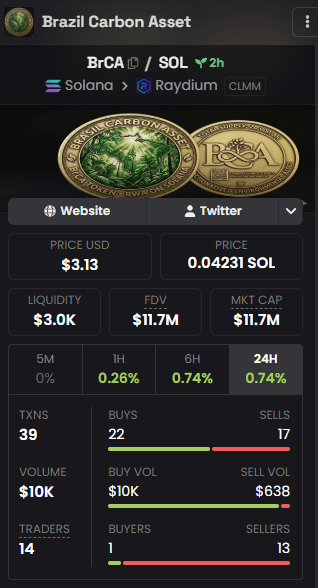
On aggregators that track multiple markets, order depths for a 2% price change ranged from tens to hundreds of dollars across the two monitored pools. This suggests that the displayed prices may not be suitable for selling large positions.
Thin liquidity creates several risks:
- High slippage.
- Prices move easily due to small transactions.
- It is difficult to sell large quantities of tokens.
- Market prices can differ significantly from the claimed value of the asset.
- Market cap or FDV looks large without sufficient capital support.
- Liquidity withdrawals can halt market activity.
The project previously stated a liquidity target of US$200,000 by July 2026 and US$1 million by the end of the year. Pool data available during the audit did not indicate that the first target had been consistently achieved.
Start trading SOL/IDR with Bittime here!
Who is the Team Behind the BrCA Project?
Public materials identify Rogério Araújo as the main figure and founder of BrCA. His professional profile mentions involvement in the capital structure, investments, and founding of ROAR.
Having a public figure is better than an anonymous project. However, the RWA team's evaluation cannot be based solely on the founder's profile.
Projects that connect agribusiness instruments, environmental assets, and blockchain require multidisciplinary expertise, including:
- Capital market and agribusiness law.
- Carbon measurement and verification.
- Financial and environmental audits.
- Smart contract.
- Custodial management.
- Digital asset compliance.
- Forest management and permanence risks.
In publicly accessible materials, the full profile of the entire team, governance structure, risk committee, custodian, and independent auditor is not readily available. This isn't evidence of fraud, but it does impair investors' ability to assess the project's accountability.
Read also:Is the NTFS (National Trust Fund System) Legit? Here Are the Facts
How is Team Analysis and Credibility?
Use the following framework to assess the credibility of the BrCA team.
Check Legal Identity
Look for the name of the legal entity, company registration number, address, management, and parties who signed the agreement with the CPR issuer.
Experience Verification
Check whether team members have relevant track records in RWA, carbon markets, agribusiness law, investments, or blockchain development.
Request Conflict of Interest Disclosure
Investors need to know the relationship between:
- Token company.
- CPR Publisher.
- Land owner.
- Auditor.
- Liquidity provider.
- The largest token holder.
Check Who Controls the Wallet
Wallet treasury, vesting, liquidity, and mint authority should all use multi signature. These addresses should also be publicly labeled.
Values How Projects Communicate
Content such as "buy," "go to the moon," or claims of potential profits are not evidence that a project is a scam.
However, such promotional style does not align with the communication standards typically expected of institutional RWA products, especially if they lack comprehensive audit and risk reporting. BrCA-related channels have previously published similar promotional messages.
Read also: What Is IF Coin? Is Robinhood Chain's Memecoin Legit or Not?
What are the risks of investing in BrCA?
1. Supporting Asset Risk
A CPR listing is insufficient without proof that the instrument is actually transferred, pledged, or held exclusively to back the token.
2. Token Holder Rights Risks
It is unclear whether BrCA holders have contractual rights to CPR, revenue, redemption, carbon benefits, or are simply tokens whose value depends on market trading.
3. Risiko Double Counting
The same ton of CO₂e could be at risk of being sold, claimed, or tokenized more than once without an integrated registry and retirement mechanism.
4. Risk Audit
Independent technical audits are reportedly still on the roadmap. Automated audits don't assess all risks of smart contracts or real-world assets.
5. Liquidity Risk
Low market depth can make users unable to sell tokens at the price shown on the screen.
6. Holder Concentration Risk
The concentration of supply in a small number of wallets can make the price very sensitive to the decisions of a single large holder.
7. Supply Data Risk
The difference in total supply between platforms makes it difficult for investors to calculate capitalization, reserve ratios, and dilution.
8. CPR Issuer Risks
If a publisher fails to meet environmental or financial obligations, enforcement proceedings may require legal mechanisms in Brazil.
9. Carbon Permanence Risk
Fires, deforestation, land use changes, or disasters can remove carbon that was previously thought to be stored.
10. The Risk of Greenwashing
The use of terms like carbon, ESG, and conservation does not guarantee quality environmental benefits. Methodologies and results should be audited.
11. Contract and Authority Risks
Unrevoked administrator controls may create a risk of changes to supply, metadata, or transfer rules.
12. Regulatory Risk
The status of RWA tokens may vary between Brazil, Indonesia, and other jurisdictions. CPR registration does not automatically grant permission to offer tokens to the public in all countries.
Read also:America Oil Reserve Agility (AMORA): Legit or Just a Narrative Token?
Conclusion: Is BrCA Worth Caring About or Being Wary Of?
BrCA is noteworthy as an environmental asset tokenization experiment that attempts to connect CPR Verde with the Solana network. The project has a verifiable token address, public figures, a DEX marketplace, and a complete CPR list with codes and ISINs.
However, this is not enough to ensure that each BrCA actually has the support of one tonne of legally redeemable CO₂e.
Based on the available information, several aspects still need to be watched out for:
- The independent audit has not been completed.
- Supply data is inconsistent.
- Liquidity is relatively thin.
- The distribution of holders appears to be highly concentrated.
- The legal relationship of tokens to CPR has not been fully explained.
- The redemption and retirement mechanisms are not yet transparent.
- Asset parity claims are not yet reflected in market prices.
- The use of B3 in the narrative could be misinterpreted as a token endorsement.
AndIn this context, it's inappropriate to immediately call BrCA a scam without evidence of fraudulent activity. Conversely, it's also premature to call it a legitimate project that meets institutional standards.
The most responsible conclusion is: BrCA is a very high-risk speculative asset that requires additional verification. Wait for audit reports, proof of reserves, supply reconciliations, and futures.legal requirements, and increased liquidity before considering large allocations.

Monitor RWA updates and market news via the Bittime Blog. Before making a transaction, verify the asset's contract, understand the product's structure, and don't consider the RWA label a guarantee of value or security.
Bittime is a licensed and regulated Digital Financial Asset Trader (PAKD) supervised by Indonesia’s Financial Services Authority (OJK) — where you can buy Bitcoin in Indonesia and hundreds of other crypto assets starting from just Rp10,000. The registration process is fast, secure, and you can get started today.
Track USDT to IDR conversions and monitor your favorite crypto assets in real time. Everything is available in one crypto investment app that you can download for free on the Play Store
Ready to start? Register now on Bittime and execute your investment strategy with a platform trusted by millions of users in Indonesia.
FAQ
Is Brazil Carbon Asset a scam?
There's not yet enough evidence to conclude that BrCA is a scam. However, audits, proof of reserves, the token holder rights structure, and the consistency of supply data still need clarification.
Is BrCA really supported by CPR Verde?
The project publishes a list of CPRs along with IF and ISIN codes. However, investors still need to verify ownership, legal binding, reserve exclusivity, and one-to-one relationship to the token.
Is BrCA listed in B3?
The BrCA token has not been proven to be traded as a security on B3. Some CPRs claiming to support it use market registration codes, but this is distinct from listing or endorsing the token.
Has the BrCA contract been audited?
Automated audits are available, but not comprehensive independent audits. Project materials indicate an independent audit and revocation of contract authority is scheduled for the second half of 2026.
Is BrCA worth buying?
BrCA should only be considered by users who understand the risks of RWAs, DEXs, thin liquidity, and potential capital loss. Before purchasing, wait for independently verifiable audit evidence and reserves.
Disclaimer: The views expressed belong exclusively to the author and do not reflect the views of this platform. This platform and its affiliates disclaim any responsibility for the accuracy or suitability of the information provided. It is for informational purposes only and not intended as financial or investment advice.

.png)